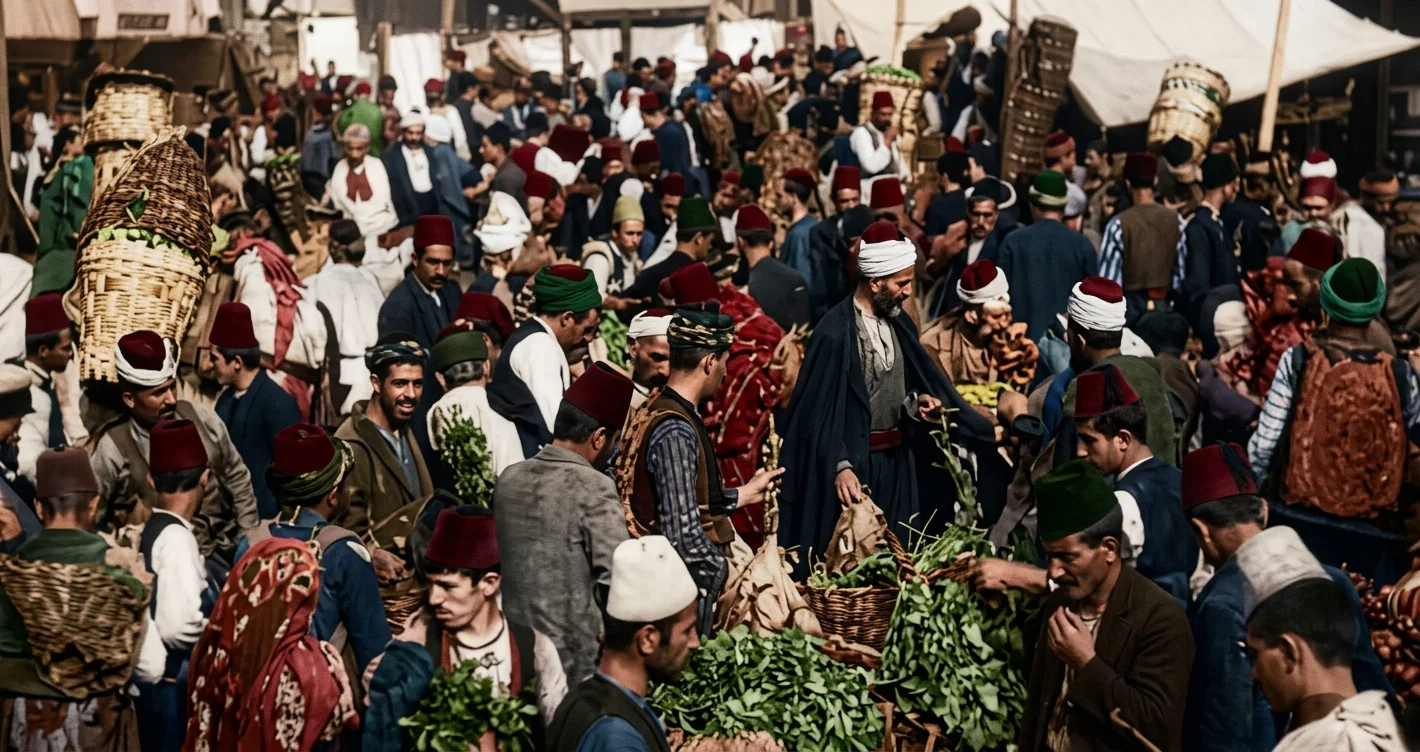
The Whole Mohammedan World Looking for Christ’s Return—The Judgment Day in Their Faith
By Melvin Munson
Two hundred thirty million Moslems scattered over the world to-day, are looking for the early return of Jesus, the Messiah. The Koran, the sacred book of Mohammed, in its many references to the life of Jesus, emphasizes the miraculous elements of His birth, ministry, and death; and it reverences the Christ of Nazareth as the Son of God. To the Mohammedan, Jesus of course takes second place to their prophet of Mecca; and although the Christ of the Koran is not the true Christ of the Bible, many Christian truths have embedded themselves in the teachings of Mohammed.
THE JUDGMENT IN THEIR CREED
The doctrine of the last Judgment looms up conspicuously in the creed of Islam, and has a large place in the minds of its followers. Samuel M. Zwemer, who was for sixteen years a missionary in Arabia, tersely states this phase of their belief as follows: “Connected with the day of Judgment are the signs of its approach; namely, the coming of the antichrist, the return of Jesus as a Moslem prince, the rising of the sun in the west, the war of Gog and Magog, and similar events.”
From the above quotation, we recognize truths similar to those taught in the Bible; and as all Adventists anticipate the second coming of Christ as the great event that will bring immortality to all Christ’s true followers, so the Moslem world look forward to the appearance of “Nābi Isa,” the prophet Jesus, as a Moslem prince, as the sign of deliverance to all the faithful of Islam.
NON-CHRISTIANS HOLDING A CHRISTIAN DOCTRINE
Animistic fetish worship; hoary Hinduism, with its gods innumerable; Buddhism, the paling “light of Asia”; and Confucianism, with “the clustered wisdom of the ages,”—these all hold the minds of the Oriental masses; but Mohammedanism stands alone among non-Christian religions of the world in the belief that Jesus will soon return.
But, strange to say, this point of contact between Islam and Christianity makes mission work among the Moslems the more difficult. The gospel of Christ appears no more attractive to the average Mohammedan than does his own faith. There are reasons for this.
Mohammed saw, as many of his followers to-day see, much contradiction in the faith and in the practice of many professed Christians; and this fact, bolstered up by a blind self-righteousness, characteristic of the devout Moslem, depreciates the value of the gospel, and closes many doors to Christian missions.
But on the other hand, the many points of contact between Christianity and Mohammedanism lend emphasis to the gospel; for they pave the way by tearing down the gods of heathenism, and putting in their place the one true God who dwells in heaven.
The doctrine, then, of Christ’s second coming is not the peculiar teaching of a few Christian sects. There are more Moslems to-day who believe in the immediate return of the Messiah than there are Christians who believe in the true premillennial return of Christ. Islam, however, looks with fearful forebodings to the coming Judgment; while the true Christian to-day joyfully waits, “looking for that blessed hope, and the glorious appearing of the great God and our Saviour Jesus Christ.”