Remarkably Burdened to Carry the Gospel to the Dark Lands—Nothing Like It Since Apostolic Days—The Book That Circulated Fifteen Million in a Year
By H. F. Brown
THE nineteenth century has witnessed a revival in the evangelization of the world such as never has been experienced since the time of the apostles.
The Missionary Zeal of the Early Church Died Out
Following the first few centuries, the spread of Christianity was slow. True, the barbarians of the north were baptized en masse when their rulers accepted the new religion. However, the missionary propaganda died out, except for a few spasmodic attempts of small evangelistic bodies.
The long, dark centuries dragged slowly by, and the heathen were left in ignorance of the return of the Lord to the world. These conditions obtained for over a millennium. Then the Reformation came, bringing liberty of thought and Bible study. Yet the Reformers felt they had too great a work at home to concern themselves with the heathen. They thought the commission of Christ to go to the entire world had rested particularly upon the apostles. The cause of missions waited a long time before it was championed.
The Beginning of the Modern Movement
The modern movement toward missions, which we see now, was begun in 1793, when William Carey sailed for India. The Baptist Missionary Society was organized to “hold the ropes” for him while he descended to the depths of heathenism. Carey’s reports from India aroused England to the call of missions, and the London Missionary Society was formed two years later.
The ship Duff, with twenty-nine missionaries, sailed to the South Seas, sent by this society. Four years later the Church Missionary Society began its career. One of its fundamental principles was, “If clergymen cannot be found, send laymen.” In Germany, also, the fires were kindled, and missionaries were sent to the fields through the already existing societies. The Netherlands Missionary Society was organized in Holland in 1797, and the Wesleyan Church formed a separate society seventeen years later.
America’s Part
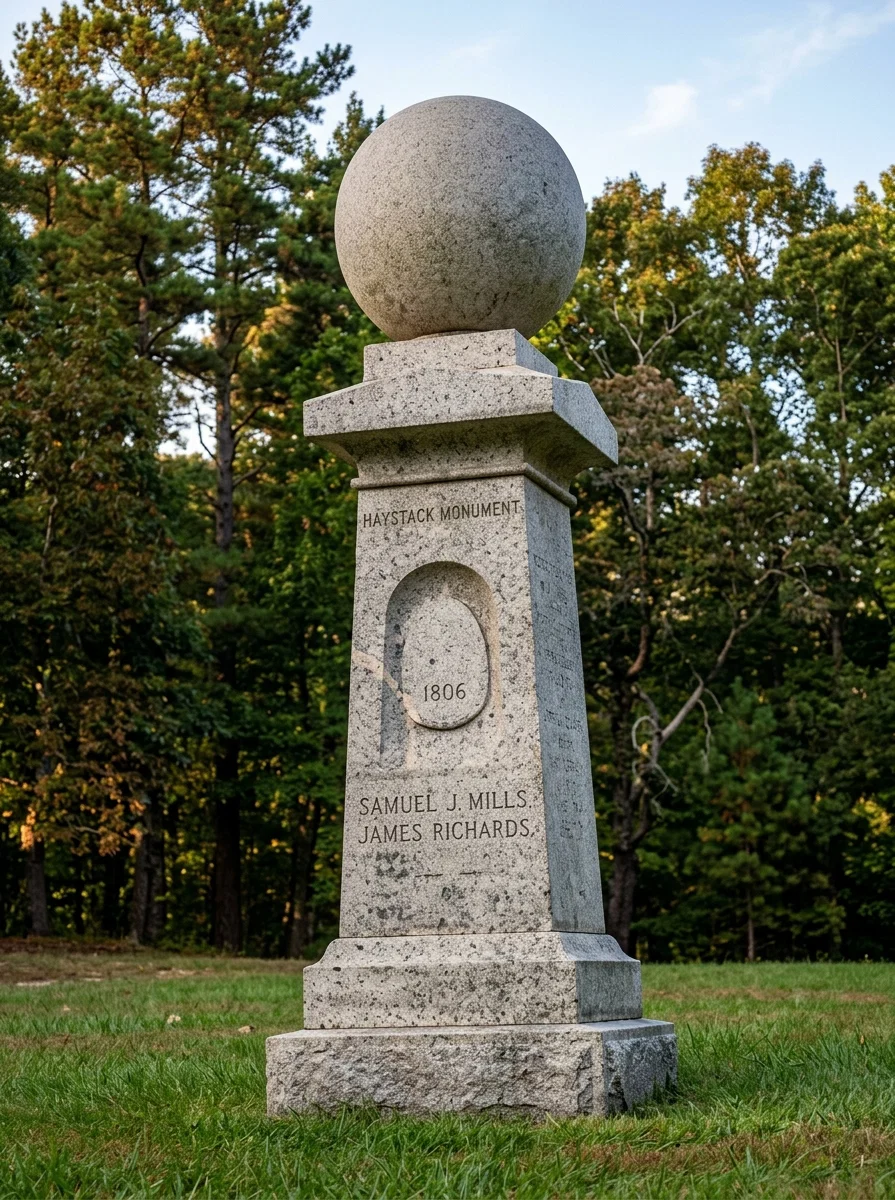
Most Christians are familiar with the beginning of the interest in foreign mission work in America. All have heard of the “haystack meeting,” in which four young men of Williams College formed a mission band. A few years later, Adoniram Judson became the first American foreign missionary. The American Board was organized in 1799 to send him to India. On the voyage, he accepted immersion as the true mode of baptism, and four years later the Baptist Missionary Union was formed to support him. These American societies, as well as the English societies, are still in operation.
The movement for missions was more firmly established in Europe by the formation of the Basel society in 1816, and the Berlin society eight years later. The Scottish society followed in another five years. Christians everywhere seemed to sense their responsibilities to the heathen.
A Comparison Between Then and Now
With these small beginnings of a century ago, let us contrast the present statistics of missions. The movement has grown until at the present time nearly every local church has its society or mission study band. Many of the larger churches support their own missionaries in the fields. The Missionary Review of the World for March, 1915, gives statistical reports of the various denominations. During 1914 approximately $35,000,000 was given throughout the world for foreign missions. A century ago there was expended in this work only a few thousand dollars. There were in the year just past almost 25,000 missionaries from Europe and America laboring in the foreign fields. There are only a few thousand less than three million converts from heathenism to Christianity at the present time. Last year, 200,000 converts were won by the American missionaries alone, or an average of 600 a day.
The Work of the Written Word
Haystack Monument
A most important factor of missionary endeavor is the distribution of the Bible. In 1804 the British and Foreign Bible Society was organized. Just a few years previous, there had been formed in England and Scotland the Religious Tract Societies. Edwin Bliss thus describes this period: “Missionary and tract societies sprang up everywhere, while across the Atlantic a number of organizations of the same general character were merged into the American Bible Society in 1816, and the American Tract Society in 1823.” At that time, the Bible was translated into only sixty-five languages. Within the past century, it has been translated into over 500 languages, and made accessible to more than 800,000,000 of the human race.
An Output with an Increasing Demand
The recording secretary of the American Bible Society, Henry Otis Dwight, said in the Missionary Review of the World, January, 1914: “In spite of the fact that there are more Bibles and portions than there were in existence two hundred years ago, there is yearly an increase in the demand for the Scriptures. The aggregate issues of all the Bible societies in the world that print the Scriptures, so far as is known, amounted in 1912 to 15,902,396 volumes.”
The Chicago Examiner of June 17, 1913, said, “For every volume of the best sellers that is issued each year, a carload of Bibles is manufactured.”
The Nineteenth Century a Prophecy of the Twentieth
It will be noticed that the dates of the forming of the various missionary societies are in a period of thirty-six years beginning in 1793. Why is this special interest in missionary work taken in the nineteenth century? Why was it not begun earlier, or left to later ages? Immense societies of young people and students whose one aim is, “The evangelization of the world in this generation,” have become numerous. Last year in Kansas City the Student Volunteer Movement for Foreign Missions had 5,000 representatives from 755 colleges and universities in the United States, met to discuss how better to carry the gospel to the world.
“We Have Waited for Him”
Why this great activity in mission circles at this special time? Jesus gave as one of the signs of His return to the earth this very movement. “This gospel of the kingdom shall be preached in all the world for a witness unto all nations; and then shall the end come.” Matt. 24:14. This movement gathers from all the nations the throng who, on seeing the heavens part as a scroll, say, “Lo, this is our God; we have waited for Him, and He will save us.” Isa. 25:9.
Both a Sign and a Precursor
This great missionary movement is necessary to announce the advent of Christ to the world, and to prepare the waiting people. The gospel is now going to all the world, giving each judgment-bound soul the opportunity to repent and be saved. The great missionary awakening of this age is in itself a sign, an unmistakable evidence that “the end of all things is at hand.”