Unwritten Music

4%

Pacific Press Publishing Association · Mountain View, California · May 18, 1915

FromSigns of the Times, Vol. 42, No. 20.

Read the full edition

Unwritten Music

Story of a Heroic Struggle
By Josef W. Hall
(With respects to K. M. Adams)
PETER Ivanhoff dragged himself slowly home from the concert hall. True, he had found employment for a few days. While it lasted, he would at least be assured of his tenement and two meals a day. But there was nothing left—not a cent for the wife and boy still in Poland, who were bravely struggling and waiting until he could send for them.
He entered his room, closed the door softly, and went to the corner. On top of the piano, the sole article of furniture in the room worthy the name, stood a framed photograph of his wife and boy. Peter sat down at the piano and gazed at it.
“My dear ones,” he sighed, “when shall I see you again?”
Naturally his fingers went to the keyboard. It responded to their touch, and soon the music was taking him to far-off scenes.
Now it pictured an old garden, and a woman standing with the moonlight playing about her cheeks. Again it was reproducing the voice of a child,—a wonderfully sweet voice, which Ivanhoff had vowed to train into the greatest contralto in the world. It hurt him worse than his fruitless struggle to reunite the family,—worse than his own disappointed ambitions,—to think of the boy’s talent, compelled to go undeveloped.
A sudden knock interrupted the reverie.
“Come,” called the musician, turning to the door.
“What, Peter! Does your new work fag you out like this?” was the hearty greeting of the newcomer. “No, I won’t come in. Wanted to tell you about Maurice. Have you heard about Maurice?”
“The poor Jew next door?”
“Poor no longer. He’s just marketed a composition that will bring him thousands and is already making him famous. Don’t know what it is like—haven’t heard it yet. Got the ‘very devil’ in it, so they say. Well, may your turn come next—or mine, Peter. Good night.”
Peter whirled back in his stool.
“Got the very devil in it!” he repeated. “Yes, that’s the kind they want. There is no more reward for art here than in the old country, and no appreciation at all—no respect for the musician. Only the sensual they love, or the strange—something with the ‘devil in it.’”
Involuntarily his hands began to strike some chords. One after another they came, until Peter was amazed at his power of creation. A strange feeling crept over him. His heart seemed to grow cold and merciless, and a cynical hatred that he could notresist took possession of his mind. He seized some blank score sheets, and seemingly without effort, wrote page after page of what came to him. When he had finished, he stood awed and terror-stricken at what he had done. Man had never written such music before.
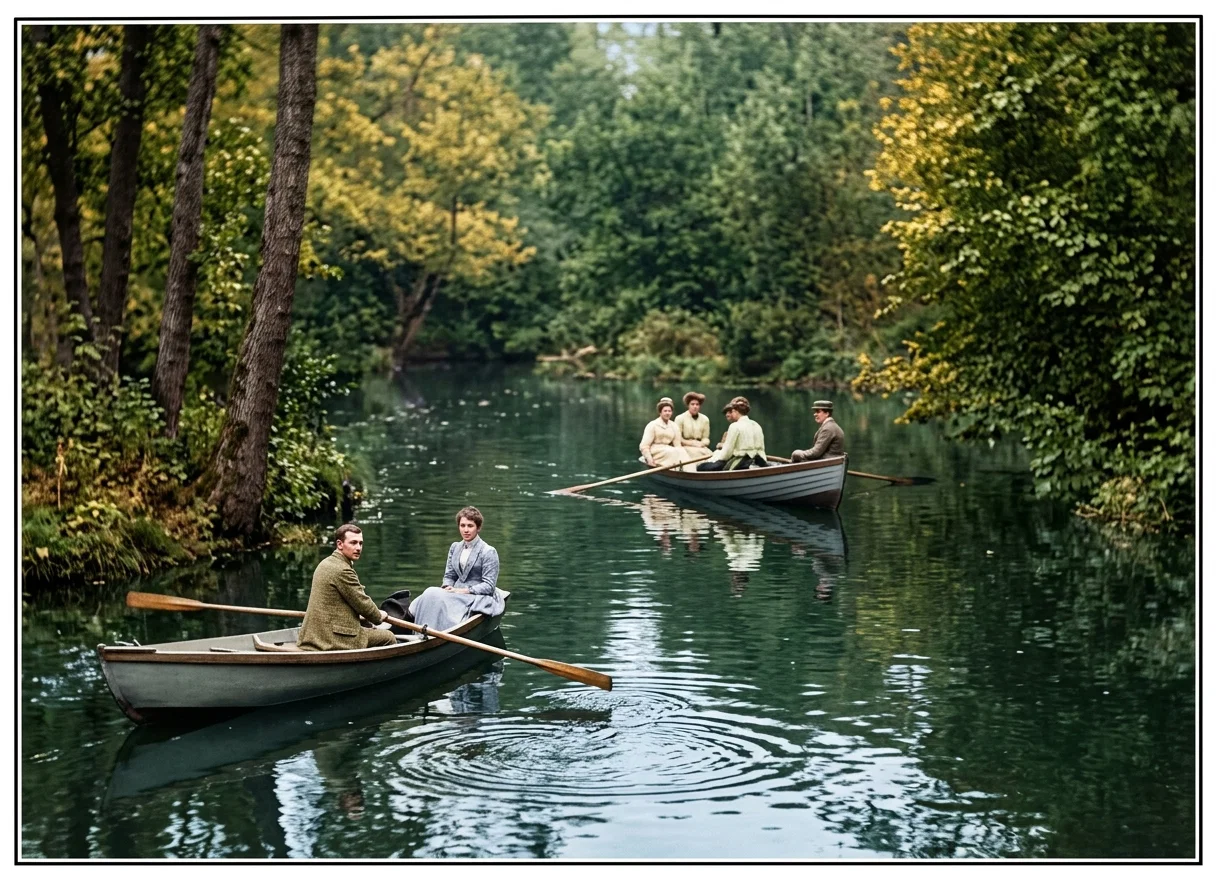
Scene on the Sligo, Near the College
It echoed the licentious, unclean thoughts of a depraved wretch, and the insolence of a demon. All the horrible cruelties of savagery were there; all the sorceries that have ever maddened the reason. The lost hopes, the unreached aims, the fruitless tears, broken hearts, and vain self-reproaches of all the ages of the misery of mankind were represented. Even all the pains of the brute world seemed to be shrieked out in the harmonies. There were the despairing sobs of the lost at the Judgment. Then the music suddenly grew hard and cynical, expressing the hopeless hatred and blasphemous effrontery of a damned soul, cursing its Creator.
“What have I done?” whispered Ivanhoff to himself.
A voice within him spoke so loud that it startled him, and he jumped from his seat, brushing the perspiration from his forehead.
“Made yourself great,” said the voice coldly. “Last night it was Maurice, but Ivanhoff is far the greater. You have destroyed hope, crushed faith, showed that love is a passion, friendship is greed, and God is a revenging tyrant. And you have made yourself the greatest artist that the world has ever known.”
Ivanhoff looked up at the picture. “Our struggle is over,” he muttered. “Now you shall come.” But the well-known faces seemed suddenly to irritate some bestial nature that had seized him. “Ugh! Why, you look hideous. I don’t need you now, anyhow. And the boy—I can’t waste my time and talent now on the training of his voice.”
Then, with a terrific effort, he came to himself. “What were you saying?” he addressed the voice.
“Wealth and honor—and men will have your bust in every—” Suddenly it grew faint and died out.
Ivanhoff, bending low over the charcoal fire, was tearing the score into long, narrow strips. Soon he returned to the piano, dropped his head on the keyboard, and sobbed—as he had once sobbed when, as a child, he had lost the last coin his mother had for bread.
Gradually the ferocious melodies charging through his mind softened. A strain of hope came in, then trust, and voice against voice was added to the chorus, until the triumphal strain of love swelled out in mighty volume. Another voice was added—a woman’s soft voice, sweetened by suffering. And as he listened, he distinguished a rich contralto, untrained and free, pouring out the pure praise of the soul of a child.
The sobs ceased, and Peter looked up long and fondly at the picture.