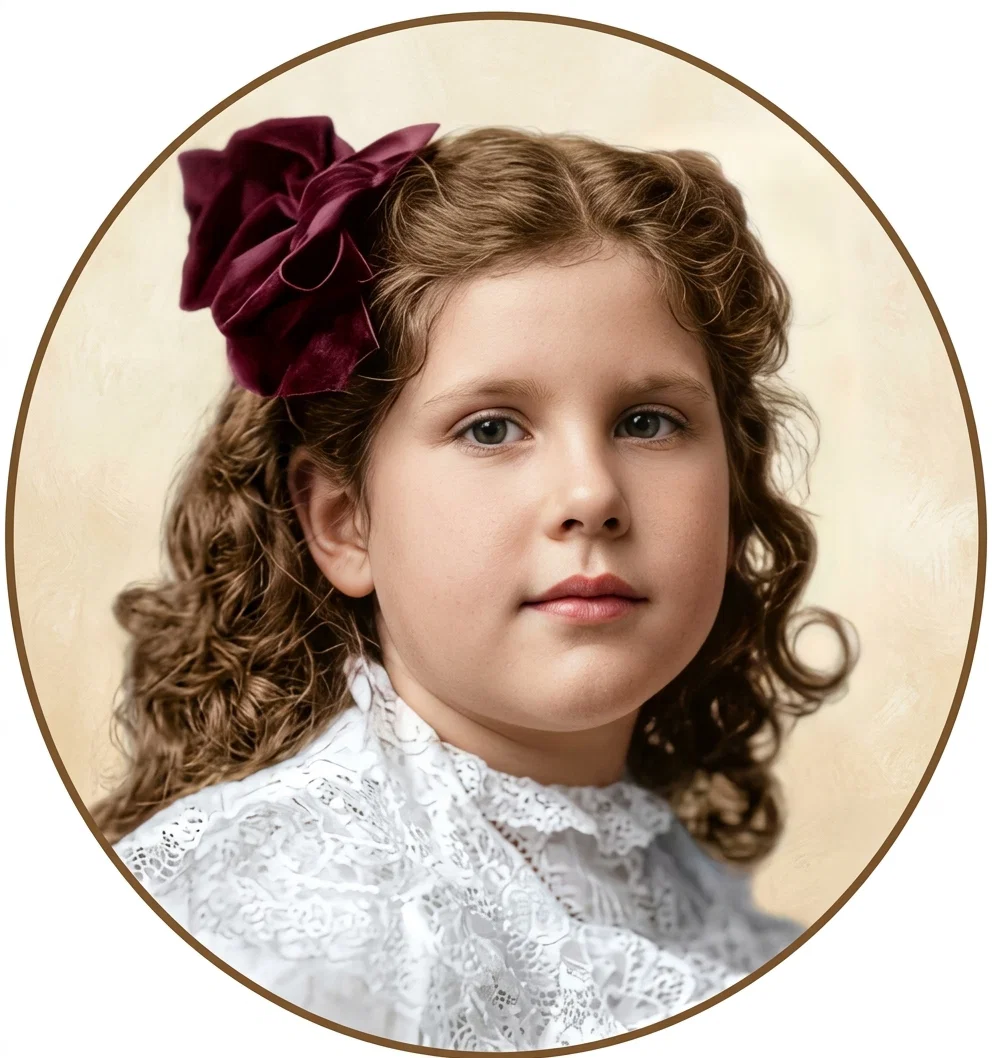
THE CHILD'S CLOTHES

5%

Pacific Press Publishing Association · Mountain View, California · Jun 1, 1915

FromSigns of the Times, Vol. 42, No. 22.

Read the full edition

THE CHILD'S CLOTHES

Defectiveness and Disease from Improper Clothing—Neatness and Beauty May Combine with Simplicity—Guard Against Fostering Pride and Vanity
By Lauretta Kress, M. D.
A very important part of the mother's duty is to clothe her children so as to keep their bodies in health. This responsibility begins at the time the child is born, and increases as the days go on. Much error is taught about the clothing of children; and as a result, sickness and disease are increasing with remarkable rapidity, because of failure to understand the organization of the body.

GARMENTS SHOULD BE FITTING

Mothers who are careful to have their own garments hygienic, are careless regarding their children. They place upon them ready-made clothing, bought at a “very reasonable price” in the shops. These have been made in large lots, without any consideration as to the form of the specific body to wear them, and do not fit. They are tight in the arm-holes, often measuring the same in the front and the back, leaving no room for expansion as the child stands erect and takes a deep inspiration. All these particulars are very essential to the development of a healthy child. There must be an abundance of room in the chest as well as about the waist.
The proper way for each mother to do in making garments for her child is to allow sufficient cloth in seams and about the chest and the waist, so that they can be made larger as the child grows. Frequent measurements of the chest and the waist should be taken, in order that the mother can be sure the clothing is not binding, or hindering the growth of the body, or displacing any organs.

ALL PARTS PROPORTIONATELY CLOTHED

Great care should also be taken to have all parts of the body clothed proportionately. The arms should not be left with a thin covering over them, while the trunk of the body has many thicknesses. The legs and the knees need, correspondingly, as much clothing as the thighs and the trunk. If these are not properly clothed, the blood on its way to the extremities and to the skin is chilled by contact with the air from both the morning and the evening breeze, and is driven internally, congesting the digestive organs, also the lungs, and other organs contained in the body.
The knees and the legs, being bare, cause a great deal of disturbance with the throat and the nose. Physicians who are studying into these things have noticed, for a number of years, that there has been an increase in disease where the arms and the legs of children have not been suitably clothed, and many deaths occur that might not have been, had some heed been given to this great essential by the mothers.
In the autumn and the winter, the limbs require to be clothed with two thicknesses of flannel or wool. Long combination under-suits coming to the ankles and the wrists, with woolen stockings coming over the knees, will keep the hands and the feet warm, and increase the assimilation of food very remarkably. If children have cold hands and feet, some disturbance of the digestion will surely follow. For colder weather, it is quite necessary that the legs and the arms should be well protected.

CARELESS CLOTHING AND ILLNESS

For out-of-door wear, there is need of extra clothing for the limbs as well as for the trunk. Many a serious illness has resulted from lack of care in this respect. Whatever degree of warmth is required for comfort for any portion of the body is necessary for other parts as well. Therefore a child's out-of-door outfit should be such as will secure an equal additional increase of warmth to the entire body proportionate to the severity of the weather.
“It is the clean, smiling face . . . that should be the chief attraction.”
Many other points in addition to that of healthfulness require consideration in the question of clothing for children. No child ought unnecessarily to be required to wear unbecoming garments. Many a little one has been made self-conscious and unhappy by being obliged to wear some article of clothing so out of harmony with beauty or good taste as to make the wearer a target for comment and even ridicule.

GRACEFUL AND ARTISTIC

Healthful garments are not, as many seem to imagine, of necessity so peculiar in design as to be ungraceful or inartistic. God has clothed the flowers of the field in beauty and loveliness, and it was certainly not intended that human flowers should be clad in ugliness. Not all the vagaries of fashion should be followed; but when purchasing or making children's clothing, the mother may aim to choose that which is adapted to the peculiarities of the intended wearer, and so to combine harmony in color and simplicity in style as to make an unobtrusive garment answer every hygienic requirement and also satisfy the innate love of the beautiful.
To dress a child simply is always in good taste; and while all the clothing should be made neatly and well, for ordinary wear it should not be of such delicate material as to subject the little wearer to the slavery of constant care lest he spoil his clothes. Not only does such a bondage of thought and care concerning dress mar the happiness and curtail the freedom of the child's activity, but it so emphasizes the subject to his mind as to foster vanity and a love of dress.
Children's attention should be called as little as possible to dress as an adornment. Teach them early in life that it is the clean, smiling face, ruddy cheeks, and upright, healthy frame that should be the chief attraction; that dress is simply the setting for the jewel; and that while it should always be whole and tidy, it should not be the thing in itself to attract admiration. Teach the principle that it is the sound body, the perfect poise, the near approach to God's ideal, that gives the charm, and not the furbelows of a fashionable attire.