The Work Stands — The Pioneers in Australia Have Reason to Rejoice — Young Men and Women Stand Ready for the Calls
As our steamer, Manuganui, pulled up to its landing place in Sydney harbor, we found awaiting us a company of old friends to give us a real Australian welcome back to their sunny land. That was a glad hour to us. We had been gone fourteen years, and had about despaired of ever returning; but here we were face to face with our Australian brethren and sisters. No faces ever looked better, and no hand-shaking ever gave us greater pleasure. It seemed like home-coming after a long absence.
Then came the program for Australia. We were to leave that day for Hobart, Tasmania, 988 miles away. After a week in Tasmania, we were to go to Adelaide, South Australia, a journey of 899 miles. A week later, we were to go to Victoria, a distance of 483 miles, for a ten days’ meeting in Melbourne and Warburton. Then we were to go to Brisbane, 1,307 miles north, to attend the Queensland camp meeting. At the close of this meeting, we were to go to Sydney, 725 miles south, for the Australasian Union Conference and ministerial institute.
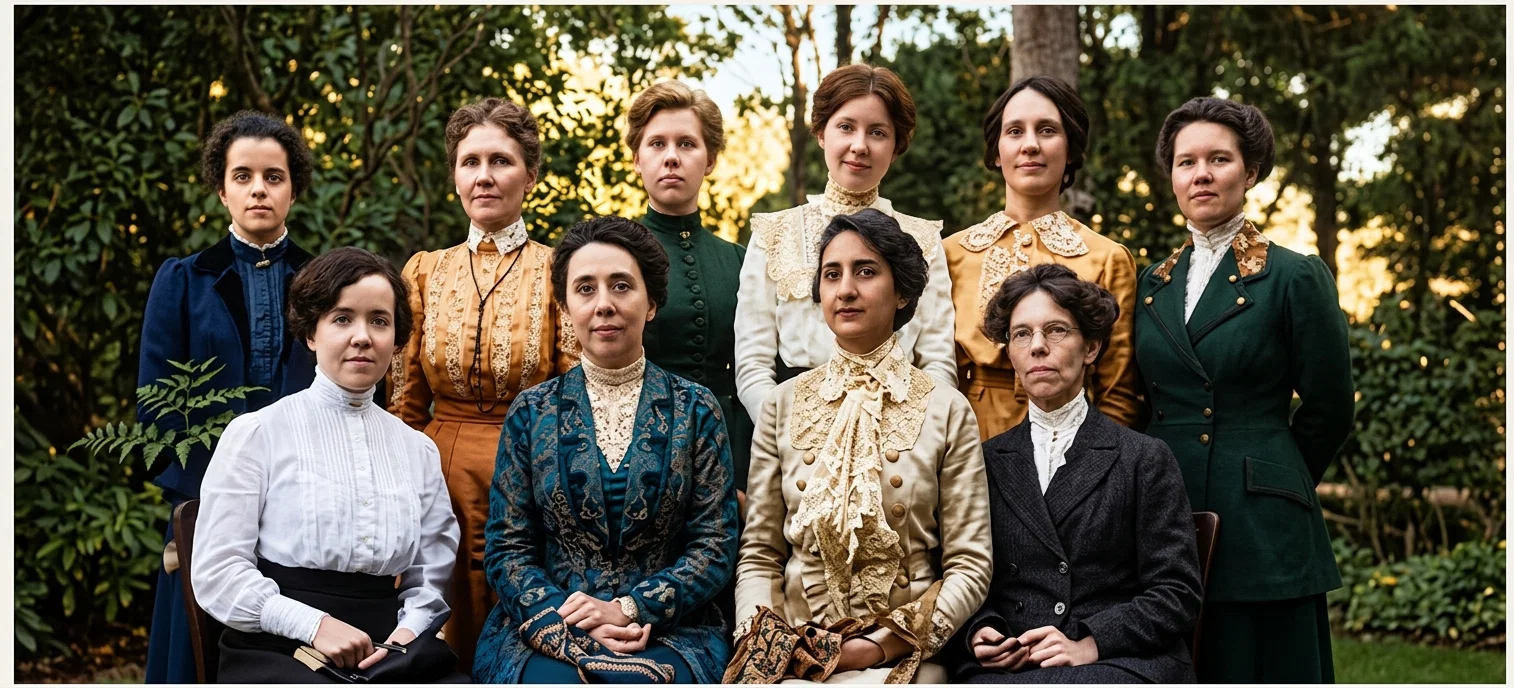
SECRETARIES OF AUSTRALASIAN SABBATH SCHOOL ASSOCIATIONS
LARGE NUMBERS ASSEMBLED
Appointments had been made for general meetings in all these centers. The brethren and sisters came together in such large numbers from the suburban churches and the surrounding country, that when our whole tour of Australia was finished, we had met a very large majority of our 5,000 members. In Tasmania, five or six wagonloads of brethren and sisters came from Bismark to Hobart, a distance of fifteen miles, for the Sabbath and Sunday services.
In all these places, we had the pleasure of meeting scores of dear friends whom we had known while living here. And we had the very great pleasure of making the acquaintance of as many more who have embraced the message during our absence.
NO RETREATING
I had traveled over all this territory while working in this field in the early days, and was quite familiar with the experiences we had in starting the work in most of these places. It was certainly most encouraging to find that our cause had not retreated from a single place in which it had once been established. In all Australia, I did not hear of one of our church buildings standing empty and idle. In a very few places, the membership may not have grown much; but in most places, it has far outgrown the capacity of the buildings provided in the early days. Brethren Haskell, Corliss, and Israel, the pioneers in this field, and many others who came out and for various reasons returned, will be glad to know that their work stands as solid as a rock.
In Melbourne and its suburbs there are a dozen churches now. The same is true of Sydney. And the little companies established in South Australia, Queensland, and West Australia have grown into well organized, self-supporting conferences. There has been no backward motion — no retreat anywhere. Our people seem to be like the bugle boy whose captain, believing that his men were exhausted, ordered him to sound the retreat. The boy put the bugle to his lips and sounded a vigorous charge. The men rallied, rushed on the enemy, and won the battle. When it was all over, the captain asked the boy why he blew a charge when he was asked to sound a retreat. “O, sir,” said the boy, “I never learned to sound the retreat.” Our brethren in Australia have never learned how to retreat. Every advance step taken has been held. Every plant set out has grown. Nothing has withered or died. This has been a source of great joy and encouragement to us.
NEW LEADERS DEVELOPED
One feature of the present situation that impressed us as we traveled over the field was the entire change of leadership in the work. The management of conferences, institutions, departments of work, and offices, is in new hands. Pastor W. L. H. Baker and Sister Baker are the only pioneers of Australia left in the field. Brother Baker is the Bible teacher in the Avondale Missionary College. Sister Hindson, who was Anna L. Ingles when she came out, although hardly a pioneer as to time, may justly be counted a pioneer in the tract society and general office work. She is still in the field doing efficient work. Brethren Gates, Fulton, Butz, and Cole were pioneers in the island work, and came to Australia at a later date. Brother Lukens came to the field only four years ago.
The great majority of the workers of all classes are brethren and sisters who have embraced the truth in the field, and later have entered the work. These brethren and sisters have become experienced and efficient preachers, leaders in conference administration, heads of departments, writers, managers of institutions, teachers, physicians, nurses, secretaries, stenographers, etc. They accept the whole message, and work as intelligently and untiringly for its advancement as any class of leaders in the world. The whole plan of our organization and method of procedure keeps all the avenues of opportunity and service open to all. The consecrated, self-sacrificing, energetic workers enter these avenues and meet with success.
MANY YOUNG MEN AND WOMEN
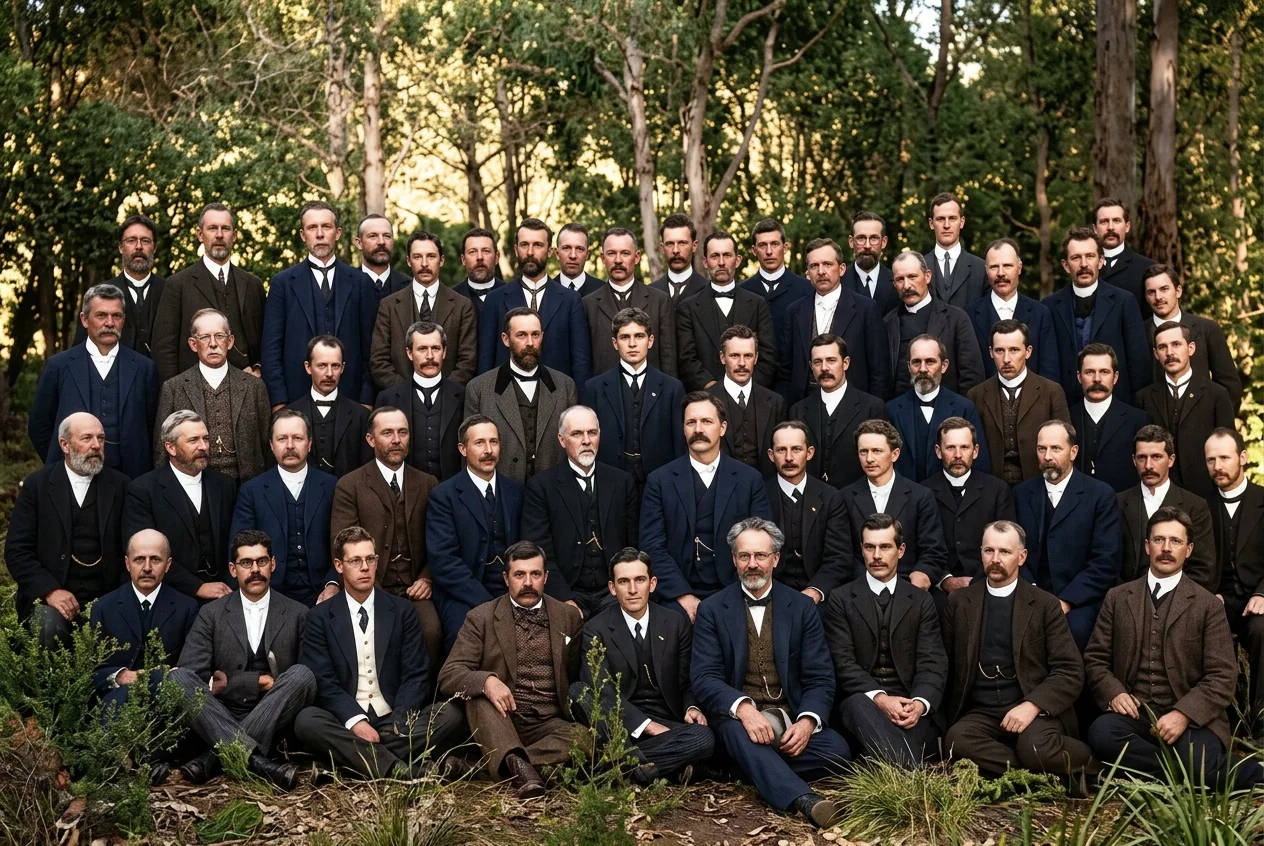
Group of Ministers in the Australasian Field
Another thing that deeply impressed us as we visited the different conferences was the large number of young men and young women connected with our cause. And these young people are giving their lives to the work of this message. There is no difficulty in securing volunteers for either the home or the foreign fields. While this is a most encouraging situation, yet it has its serious side; namely, how we are going to press all these young people into service. While they do not want to connect with the business enterprises of the world, yet they must do something. If we cannot let them enter the organized work, they must devote their energies and activities to private interests.
As I came in contact with these bright, energetic, accomplished young people, it seemed to me that this field might be drawn upon for workers in the British countries throughout the world. May not this be one of the purposes for which the Lord hastened the development of the work in this field?378
It is surely most encouraging to see how these young people come into our ranks and stay by. While some become discouraged and turn away, a far greater number remain faithful.
CONSECRATION TO FINISH THE WORK
As I met our people in different parts of the field, I endeavored to encourage them to hold on, and to consecrate all to the definite effort of quickly finishing the work of God. To this end, I tried to make clear to them what had to be done when our movement started, how much has already been accomplished, what still remains to be done, and what definite line of action must be pursued by God’s people now to finish His work in this our day.
I felt the blessed presence and approval of the Master as I went over this ground. The Holy Spirit stirred and softened the hearts of the people. Many times they were in tears. With great earnestness they united in sacred, solemn covenant to do and to give all for the finishing of this work. Quite a number who, for various reasons, had fallen out, took their stand again for the truth. All together, between fifteen and twenty were persuaded to come back to the Lord. To me this was one of the best and most comforting features of my work.
LARGE AND EAGER AUDIENCES
The presidents of the conferences, who planned my tour, arranged for me to give one or more addresses in large halls in the principal cities. At Auckland two addresses were given on Sunday in the city hall. One of these was on prohibition, and the other on the world-wide foreign missionary movement of the last century. In this latter address, we were able to give the public some idea of our foreign mission operations.
When the war broke out, we took up the Eastern question and Armageddon. The papers were full of references to both of these questions, but did not make it clear just what either one was. Our announcements to deal with them from the standpoint of the Scriptures, brought large audiences eager for light. All together, we gave twelve of these addresses in town halls, theaters, mechanics’ institutes, and temperance halls, besides a number in our churches and in tents at camp meetings.
In all my ministry, I have never had such opportunities for reaching the public as opened to us in New Zealand and Australia. Somehow the people seemed to feel that we could tell them what all these things mean. Many came to our people for an explanation. As soon as the war broke out, we began to sell a pamphlet written by Pastor Teasdale on Armageddon. A large number were disposed of in a short time. This experience shows what quick, earnest efforts we may be called upon to make in the closing days of our work.
WHERE THE WORK STARTED
Our visit to Melbourne was most encouraging. It was in this city that Brethren Haskell, Corliss, and Israel first located when they came to Australia in 1885. It was here that the first sermon was preached by our people south of the equator. It was here we printed the first line of literature in the southern hemisphere. It was here I had the privilege of making the first public appeal to Seventh-day Adventists in this field for gifts to establish our printing house in Melbourne. It was here we organized our first conference in this hemisphere and later organized the first union conference in our denomination. The labor, anxiety, and struggles that go with pioneer work, help to make the place where the work is done, and the people who are associated in the work, very dear to the pioneers.
Now in all these experiences, we had the association and helpful coöperation of many brethren and sisters who embraced the message at the very beginning of our work in Melbourne. We had learned their value and loyalty, and had come to love them very dearly. When we stepped from the train in Melbourne, we found a number of these dear old friends waiting to greet us. And later, when we had gathered in the large hall in the city for our general meeting, we were rejoiced to see the faces of so many of the old pioneers. In our conversation with those we met, we found that some of the old hands had passed away, and that a very few had become discouraged and given up the battle; but the great majority were still firm and pressing on. Our visit to Warburton, where the printing house is located, gave us the privilege of meeting a large number who were but children in those early days, but who are now in charge of the various departments of the printing house. Our public meetings in these places were blessed occasions.
Of the printing work I shall speak in another report.