THE CHICAGO OF CHINA

4%

Pacific Press Publishing Association · Mountain View, California · Jun 22, 1915

FromSigns of the Times, Vol. 42, No. 25.

Read the full edition
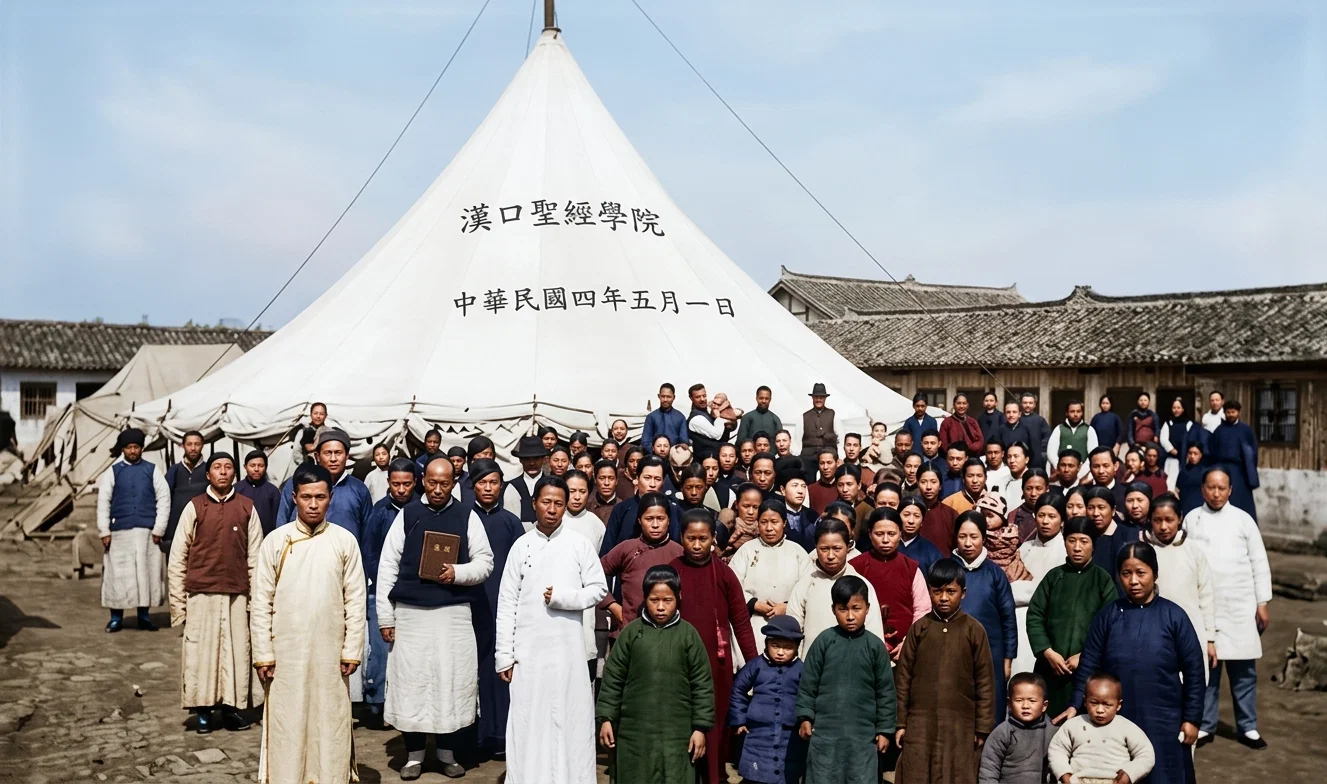
AT THE BIBLE INSTITUTE IN HANKAU, CHINA, MAY 1, 1915

“THE CHICAGO OF CHINA”

Great Inland City of Two Million — Its Railroads and Ships — Its Commercial Activities — European Nations Represented by Permanent Concessions — Transformations Among the Natives
By R. F. COTTRELL
The city of Hankau, located at the junction of the Han and the Yangtze River, is a great emporium, and has been most properly termed the “Chicago of China.” This place was first opened to foreign trade in 1861, by a treaty with Great Britain; and from that time to the present, there has been a remarkable growth in population and trade.
Although six hundred miles from the ocean, the depth of the water is sufficient, during a considerable portion of the year, to permit the largest ocean steamships to ascend to this port; while at all seasons, palatial river steamers arrive and depart daily. Also on the upper river systems, thousands of smaller steamboats and launches, besides vast numbers of native craft, ply in trade between Hankau and the numerous cities and towns of the great interior.

GREAT RAILWAY CENTER

Hankau is also becoming a great railway center. In 1901, the Peking-Hankau line was opened; and the Hankau-Canton road is now in process of construction, which, when completed, will give to China a trunk line running from north to south. Work has also been commenced on the railway that is to connect Hankau with that vast province of the west, Szechuan.
Not only is Hankau located very near the geographical center of China; but, as we have just seen, it is situated at the “cross roads” of the nation’s principal trade routes. What is sometimes termed “Greater Hankau” comprises three cities, and we might almost say, eight. On the south bank of the Yangtze River stands Wuchang, the provincial capital, which is a large, well constructed, walled city. Just opposite Wuchang, on the right and left shores respectively of the Han River, are the cities of Hanyang and Hankau. The combined population of this group is estimated at not far from two millions.

CONCESSION TO OTHER NATIONS

Hankau itself is subdivided into six sections; namely, the native city, and British, Russian, French, German, and Japanese concessions, the municipal affairs of each being administered independently of the others. For instance, Great Britain has a grant of land from the Chinese government some five hundred yards wide by one thousand in length, which is in reality English territory, under English law.

EDUCATIONAL AND MANUFACTURING

A large government mint is established in Wuchang; and beside numerous other schools, this city has a military academy and a government agricultural school. Boone College and Wesley College, mission educational institutions of the first rank, are located there. Hanyang is principally industrial, and has large steel and iron works, government arsenal, and immense lumber yards. Of the three thousand foreigners resident in this vicinity, most live in the foreign concessions of Hankau.
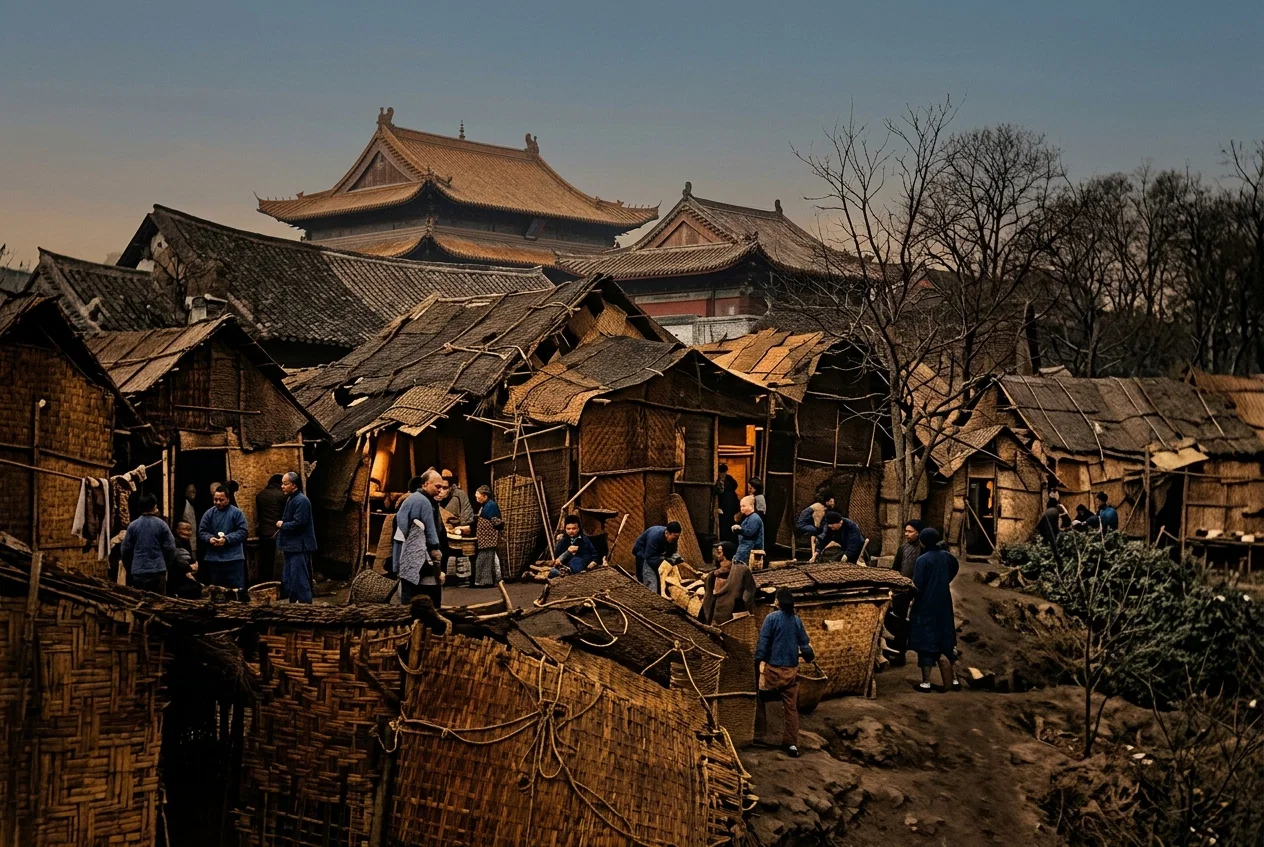
During the Chinese revolution of 1911, large portions of the native city of Hankau were burned to the ground; and more than 100,000 of the middle and poorer classes were forced to erect and live in straw huts and mat sheds. Although in many parts the city is building up rapidly, these temporary abodes are still the only shelter of more than 50,000 of the inhabitants. The most pitiable feature of all this is that not a month passes without the occurrence of several large fires among the mat sheds, thus over and over again reducing large numbers to absolute destitution. Some benevolent work on a large scale should be undertaken to provide these people with homes.

FOREIGN TRADE AND THE MISSIONARY

The same year that Hankau was opened to foreign trade, missionaries also entered and took up their work. These have increased, until this port is now a great missionary center, with its full complement of chapels, hospitals, schools, and societies for the circulation of Christian literature.
The changes that have taken place in and about Hankau, may be regarded as typical of the developments in other parts of China. In the above paragraphs, we have dwelt upon the material progress, because we cannot view such changes in a nation’s life or history as a matter of accident or chance, but must consider them as a part of God’s infinite plan and purpose.
Five years ago, our mission commenced work in Hankau. Last year, we moved our headquarters to a new place, about two miles from the city; but with the outbreak of the European war, we were not able to proceedwith the construction of buildings as we had hoped. Our Bible institute held this winter and spring has therefore been conducted in a tent; and although at times it has been very cold, on the part of the seventy-three students in attendance there has been no murmur or complaint.

HOW THEY ARE TRANSFORMED

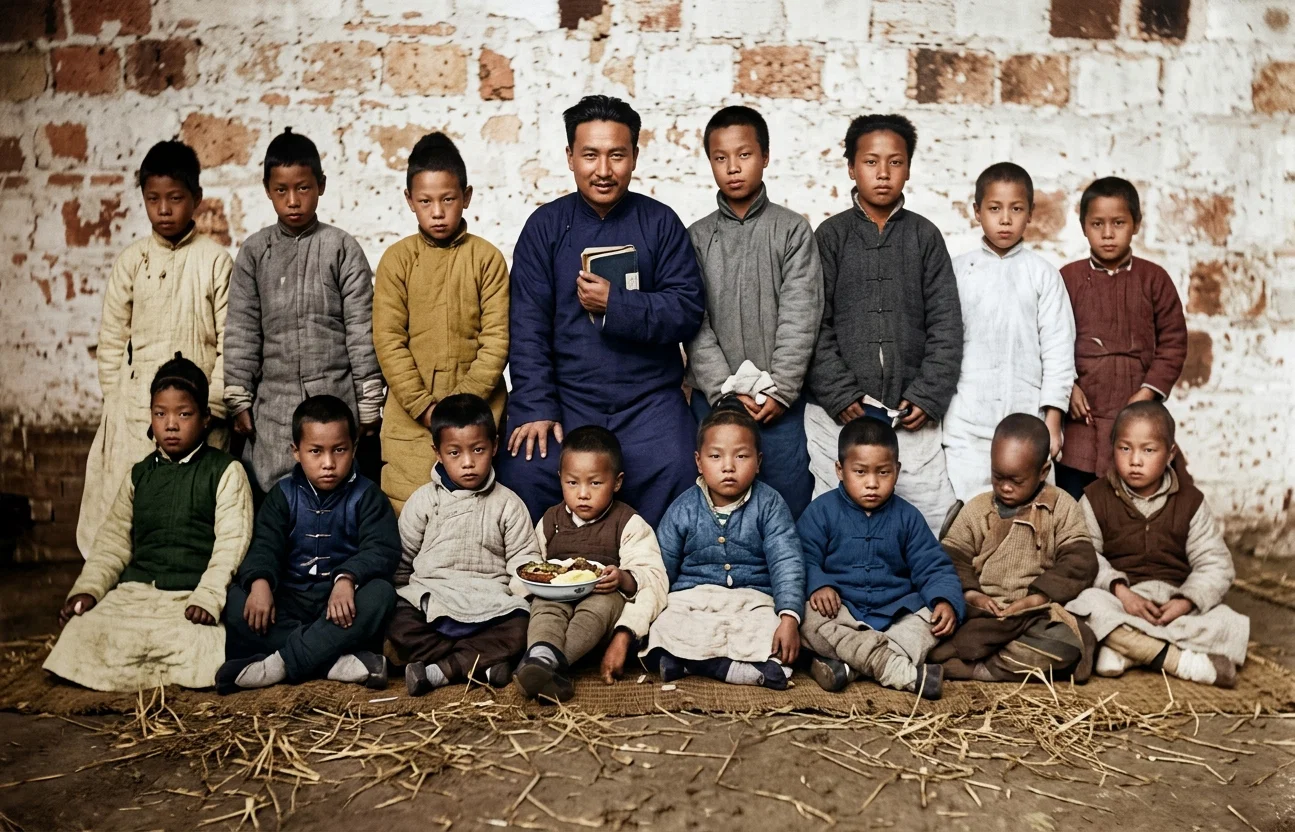
NATIVE TEACHER AND PUPILS IN PRIMARY CHURCH
SCHOOL AT SIAO GAU, HUPE, CHINA
NATIVE TEACHER AND PUPILS IN PRIMARY CHURCH SCHOOL AT SIAO GAU, HUPE, CHINA
Of the number mentioned, sixty-six were formerly idolaters, twenty-six were addicted to the use of wine and tobacco, four smoked opium, nineteen were gamblers, five practiced sorcery, two were polygamists, and one had been a Taoist priest. Now their hearts are purified and changed, and their lives are dedicated to the Master and His service.
The entrance of civilization, recent inventions, and modern thought into the dark heathen nations of the world, is one of the wonders of the present day. But a greater miracle is wrought when the image of God, that has been so nearly obliterated, is restored. And we are glad to bear witness that He who, according to His infinite wisdom, establishes empires and renovates nations, is to-day gathering a people from ancient sin to meet Him when He appears in glory.
SCENE AMONG THE MAT SHEDS, HANKAU, CHINA