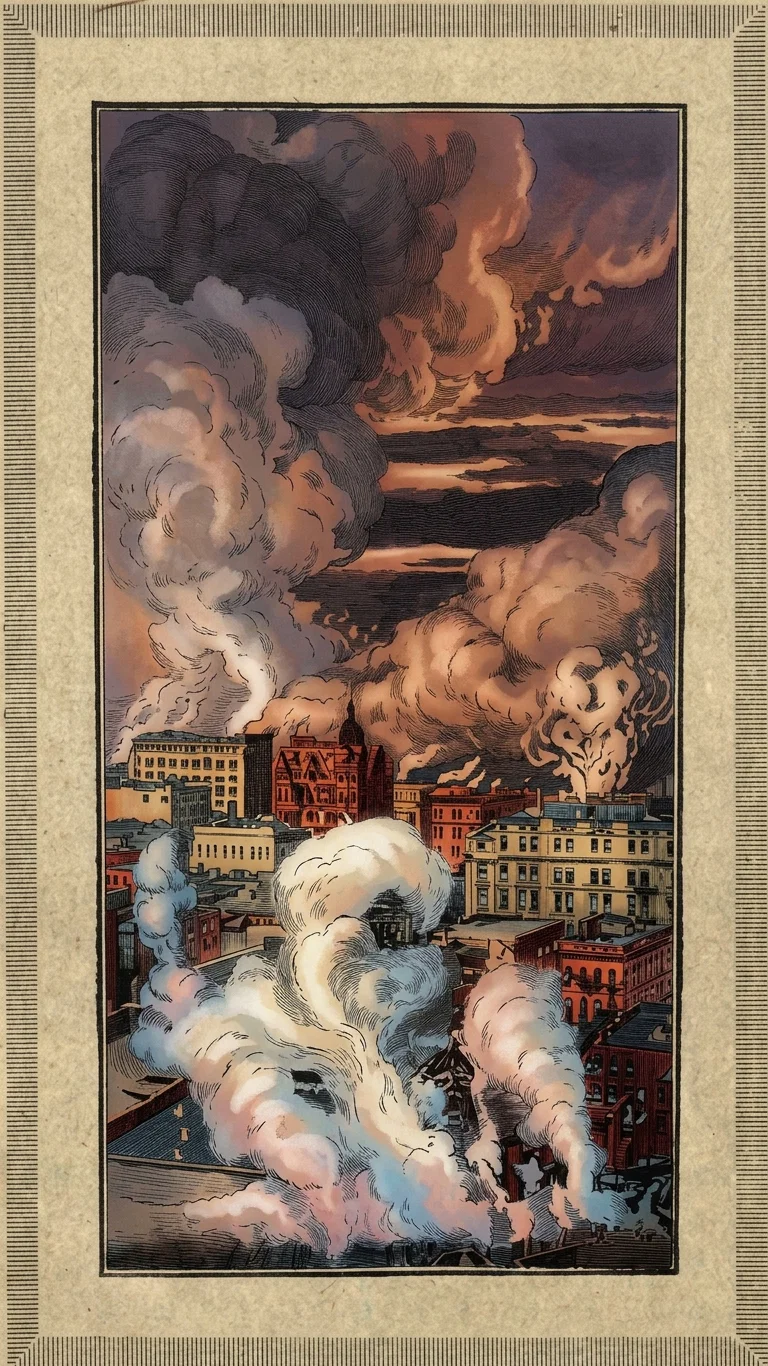
The End of the Wicked

3%

Pacific Press Publishing Association · Mountain View, California · Jan 19, 1915

FromSigns of the Times, Vol. 42, No. 3.

Read the full edition

The End of the Wicked

Will They Burn Eternally?—Does the Bible Teach Such a Doctrine?—Where the Wicked Are to Be Punished—When Death Is Finally Destroyed
By HAMPTON W. COTTRELL
In Holy Writ we read, “For the time is come that judgment must begin at the house of God: and if it first begin at us, what shall the end be of them that obey not the gospel of God?” 1 Peter 4: 17. The gospel of God, if believed in fact and obeyed, will save the penitent sinner from eternal death—the curse of God’s violated moral law.
We read “that God made man upright; but they have sought out many inventions.” Eccl. 7: 29, A. R. V. Our foreparents sought out a way to disobey God, that led them and their posterity to death. Disloyalty to God will keep the sinner in the way to eternal death. But faith in the gift of the Son of God, and loyalty to the requirements of His word, will lead one to eternal life: “for God so loved the world, that He gave His only-begotten Son, that whosoever believeth in Him should not perish, but have everlasting life.” John 3: 16.

Eternal Punishment

Popular theology has taught that the life of the wicked will never end, but that they will live eternally in torment. However, this view is not a Scriptural one. The Master said, “These [the wicked] shall go away into eternal punishment: but the righteous into eternal life.” Matt. 25: 46, A. R. V. Note that the difference between the two classes of men is that the righteous are faithful—full of faith—and law-abiding; while the wicked are sinful—full of sin, lawless. The punishment—the wages of lawlessness —is death, not torture in an endless hell; “for the wages of sin is death [eternal death]; but the gift of God [to the righteous] is eternal life through Jesus Christ our Lord.” Rom. 6: 23. Again we read, “Let the sinners be consumed out of the earth, and let the wicked be no more.” Ps. 104: 35.

As Though They Had Not Been

The prophet Obadiah, in defining the end of the wicked, said, “And they shall be as though they had not been.” Obadiah 16. If there never had been any unrepentant wicked people, there surely would be no eternal torture. “And they shall be as though they had not been.” Isaiah bears similar testimony: “Behold, the day of the Lord cometh, cruel both with wrath and fierce anger, to lay the land desolate; and He shall destroy the sinners thereof out of it.” Isa. 13: 9. Seeing the sinners are to be destroyed out of the earth in the day of the Lord, this fact will forever abolish the human theory of a second probation for sinners after the coming of Christ, and annul the doctrine of eternal torture in a lake of fire.
Malachi the prophet states that the day will come when the wicked “shall be stubble; and the day that cometh shall burn them up,” that there shall remain neither root nor branch—that they shall be reduced to ashes. There can be no eternal suffering with those who are reduced to the elements from which they were created. God desires that all men accept eternal life through JesusChrist; for we read that God so loved sinners that He gave Christ, that whosoever believes in Him—believes the word of God—should not die an eternal death, but should have eternal life. “And this is the record, that God hath given to us [repentant sinners] eternal life, and this life is in His Son.” But if men, by their words and personal conduct, choose death rather than life through Christ, God grants them their desire, and rather than torture them eternally, returns them to the elements from which He formed them.

In Fire That Can Not Be Quenched

It is elsewhere stated that the wicked will be burned in fire that can not be quenched. And men have based an argument upon this text, and drawn the unwarranted conclusion that they will live and suffer eternally. An illustration will make the text clear. If two buildings were on fire, and the flame in one were quenched, the house would remain; but if the fire in the other “could not be quenched,” the latter house would be consumed—reduced to ashes by unquenchable fire.
One Bible example of the results of unquenchable fire will satisfy those who are searching to know the truth of the future of the wicked. God told His ancient people who lived in Jerusalem that He would burn their city with unquenchable fire if they were not more faithful and loyal to Him. Said He, “Then will I kindle a fire in the gates thereof, and it shall devour the palaces of Jerusalem, and it shall not be quenched.” Jer. 17:27. “And he burnt the house of the Lord, and the king’s house, and all the houses of Jerusalem, and every great man’s house burnt He with fire.” 2 Kings 25:9. But Jerusalem is not burning now, although it was burned, as the impenitent wicked will be, with unquenchable fire.

Tormented Forever and Ever

Again, “The smoke of their torment ascendeth up forever and ever: and they have no rest day nor night, who worship the beast and his image, and whosoever receiveth the mark of his name.” Rev. 14:11. The psalmist adds, “But the wicked shall perish, and the enemies of the Lord shall be as the fat of lambs: they shall consume; into smoke shall they consume away.” Ps. 37:20. Thus we are assured that like fat, the wicked will be reduced to smoke, and it will ascend away forever.
It is written of the archdeceiver, and of certain classes of the wicked, symbolized by the beast and the false prophet, that they will be “cast into the lake of fire and brimstone, . . . and shall be tormented day and night forever and ever.” Rev. 20:10. The word “forever,” when applied to God and His people, is unlimited; but when applied to the incorrigible, sinful mortals, or to things pertaining to time, sin, and the instigator of sin, it is limited to the length of time endurance. An example or two will suffice in proof of the assertion. “David said, None ought to carry the ark of God but the Levites: for them hath the Lord chosen to carry the ark of God, and to minister unto Him forever.” 1 Chron. 15:2.
Again we read with reference to the Biblical use of the word “forever”: “If thou buy an Hebrew servant, six years he shall serve: and in the seventh he shall go out free. . . . And if the servant shall plainly say, I love my master, my wife, and my children; I will not go out free: then his master shall bring him unto the judges; . . . and his master shall bore his ear through with an awl; and he shall serve him forever.” Ex. 21:2-6. “Forever,” as used in this text, is limited to the period of time the slave shall live, and does not mean that he would be a bond servant throughout eternity, as every person who is candidly investigating for truth will be free to admit.

Eternal Fire

Sodom and Gomorrha, and other cities about them, were burned in eternal fire, and were an example of the final destruction of the wicked. In evidence we read, “Even as Sodom and Gomorrha, and the cities about them in like manner, . . . are set forth for an example [to the wicked], suffering the vengeance of eternal fire.” Jude 7. Associating with this another text, the conclusion as to the Scriptural meaning and use of the term “eternal fire” may be readily drawn by the reader himself. “And turning the cities of Sodom and Gomorrha into ashes condemned them with an overthrow, making them an ensample [example] unto those that after should live ungodly.” 2 Peter 2:6. Though burned in eternal fire, they are not burning now; but the Dead Sea is supposed to be where those cities once stood.

Destroyed from the Presence of the Lord

“And to you who are troubled rest with us, when the Lord Jesus shall be revealed from heaven with His mighty angels, in flaming fire taking vengeance on them that know not God, and that obey not the gospel of our Lord Jesus Christ: who shall be punished with everlasting destruction from the presence of the Lord; and from the glory of His power.” 2 Thess. 1:7-9. Note that their end is destruction—exterminated for eternity; and so complete is their annihilation, that they are destroyed “from the presence of the Lord, and from the glory of His power.”
The spiritual presence of the Lord is everywhere; and the wicked are to be where He is not. Where will they be? “Whither shall I go from Thy Spirit? or whither shall I flee from Thy presence? If I ascend up into heaven, Thou art there: if I make my bed in hell, behold, Thou art there. If I take the wings of the morning, and dwell in the uttermost parts of the sea; even there shall Thy hand lead me, and Thy right hand shall hold me. If I say, Surely the darkness shall cover me; even the night shall be light about me, Yea, the darkness hideth not from Thee; but the night shineth as the day: the darkness and the light are both alike to Thee.” Ps. 139:7-12.
Their destruction is also banishment from the glory of God. The poet says, “Everywhere His glory shineth.” The Bible says, “And one cried unto another, and said, Holy, holy, holy, is the Lord of hosts: the whole earth is full of His glory.” Isa. 6:3. Therefore the conclusion must be that in the final analysis the wicked will not exist.

Fire from Heaven Destroys Them

John, while on the Isle of Patmos, had a view of that last day, when sin shall be forever erased from the universe of God, and saw the vast host of the wicked, marshaled by earth’s greatest generals, coming “up on the breadth of the earth,” and compassing “the camp of the saints about, and the beloved city;” and then adds, “And fire came down from God out of heaven, and devoured them.” Rev. 20:9. But Peter, referring to the same day, the same event, and the same fire, says: “But the day of the Lord will come as a thief in the night; in the which the heavens shall pass away with a great noise, and the elements shall melt with fervent heat, the earth also and the works that are therein shall be burned up. . . . Looking for and hasting unto the coming of the day of God, wherein the heavens being on fire shall be dissolved, and the elements shall melt with fervent heat.” 2 Peter 3:10, 12.
The fire that John saw come down from heaven, Peter says, melted the elements and the earth, which locates the lake of fire—the place of the destruction of the wicked, and the erasure of sin. The lake is as broad as earth and sea. “And the devil that deceived them was cast into the lake of fire and brimstone, where the beast and the false prophet are, and shall be tormented day and night forever and ever.” Rev. 20:10. The earth is polluted with sin; and the purpose of the Lord is to melt it, and thus destroy every scar or stain that sin has made upon it. Thus the lake of fire will be the place of the wicked. And of this place the psalmist says, “For yet a little while, and the wicked shall not be: yea, thou shalt diligently consider his place, and it shall not be.” Ps. 37:10.

“Will Bring Thee to Ashes”

It is said of the devil, the beast, and the false prophet, that they are to be tormented in this fire forever and ever; but we have already cited decisions of the supreme Judge of the universe, that “forever,” when applied to things or beings of which He has determined the end, is limited to the time of their endurance. Satan’s eternal destruction is determined in the language, “Therefore will I bring forth a fire from the midst of thee, it shall devour thee, and I will bring thee to ashes upon the earth. . . . Thou shalt be a terror, and never shalt thou be any more.” Eze. 28:18, 19.

The Second Death

“But the fearful, and unbelieving, and the abominable, and murderers, and whoremongers, and sorcerers, and idolaters, and all liars, shall have their part in the lake which burneth with fire and brimstone: which is the second death.” Rev. 21:8. It is elsewhere stated that Christ gave His life that “He might destroy him that had the power of death, that is, the devil.” Heb. 2:14. Also, “For this purpose the Son of God was manifested, that He might destroy the works of the devil.” Surely, every purpose that God had in the gift of His divine Son will be accomplished.
Isaiah speaks of the lake of devouring fire and everlasting burnings, and gives assurance that no harm can come to the righteous; but to the sinner it brings everlasting destruction. Isa. 33:14, 15. And after the destruction of sin, and the lake itself, then will come the new heavens and “new earth, wherein dwelleth righteousness.” 2 Peter 3:13 and Rev. 21:1.