Each Russian Hopes to Make the Journey at Least Once—The Interesting Throngs That Gather—Improvised Sanctuary and the Ceremony in the River
By LUDWIG KRUG
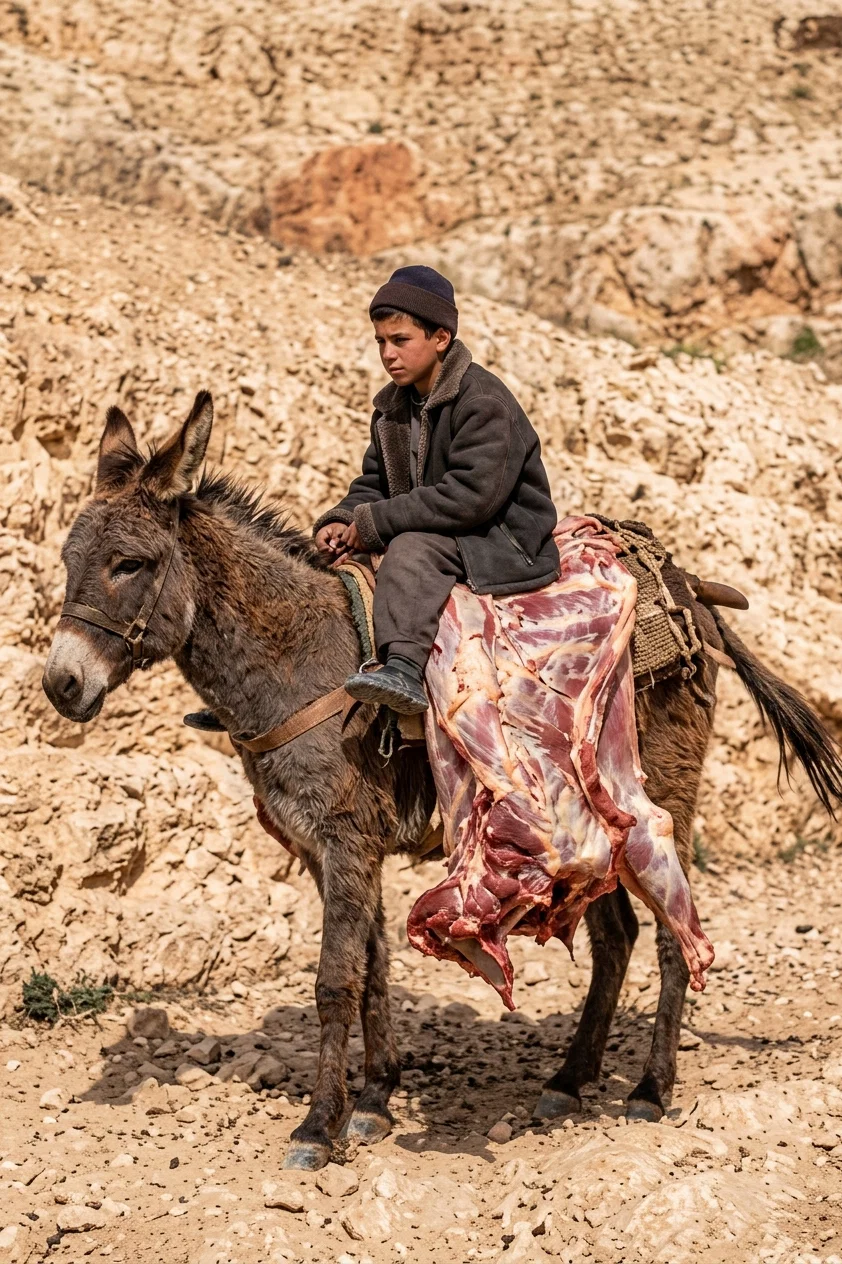
TRANSPORTING MEAT TO JERUSALEM
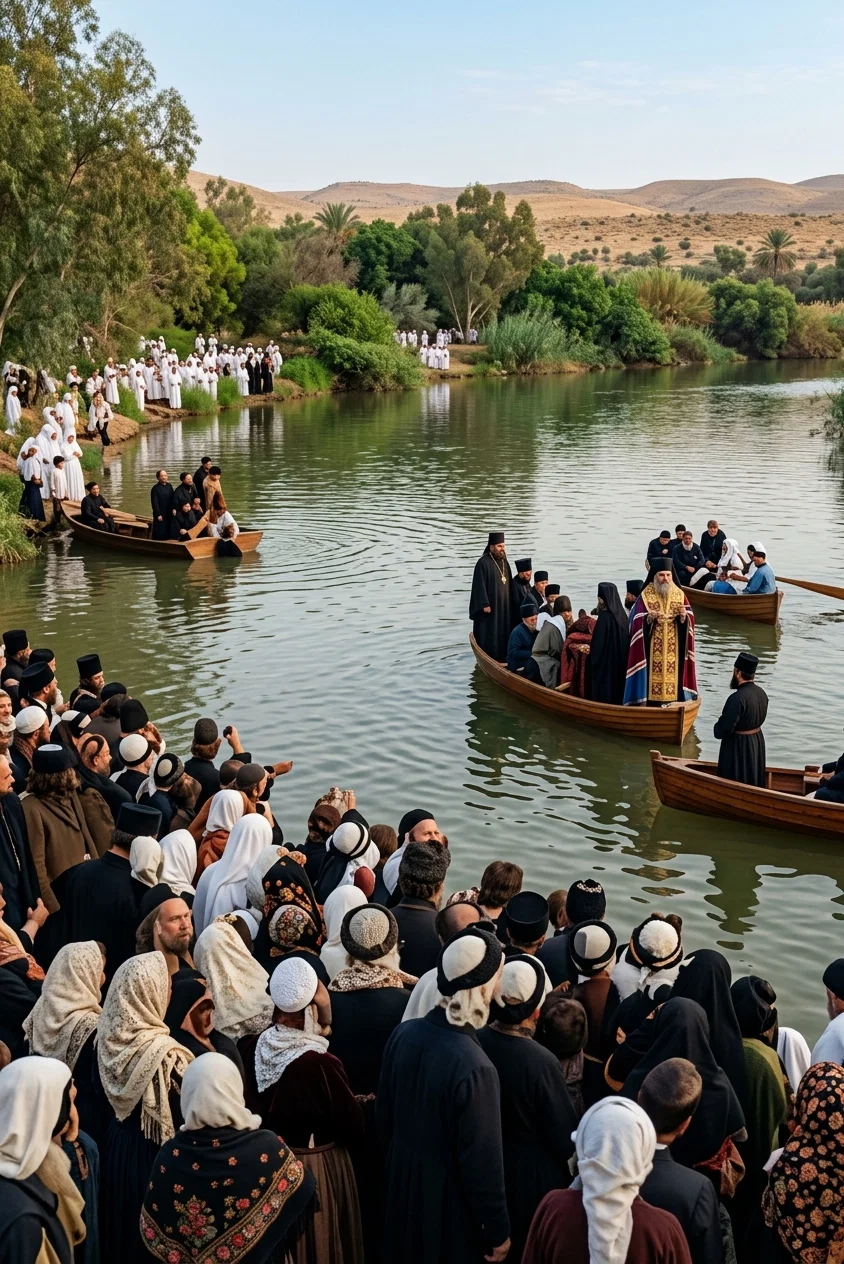
BAPTISM OF FIFTEEN HUNDRED RUSSIANS IN THE RIVER JORDAN
Each year, on January 18, the Russian pilgrims who journey to Jerusalem for the Easter Passover, celebrate a baptism in the Jordan River. The first of the Russian pilgrims arrive in Jerusalem as early as October and November. These remain, and their number is continually augmented, until just before the Grecian Easter they number six to ten thousand. And they find shelter in barrack-like houses constructed after the Russian style.
Every orthodox Russian endeavors at least once in his life to make a pilgrimage to the holy city in Palestine.
The Throngs of Pilgrims
In order to witness this baptismal service, a party of four of us set out on foot for the Jordan River. Starting from Jerusalem at 2 P.M., and arriving at Jericho at 9 P.M., we found the small hotel and shelter houses completely filled with pilgrims and sight-seers who had arrived that morning or the day previous. As I was well acquainted with the proprietor of the Russian pilgrim hotel, we asked for lodging; but the proprietor, who, as well as some of the priests, was under the influence of liquor, pretended that his accommodations were all taken. Nevertheless, I placed my hand confidentially on his shoulder, and requested him to look again, and try to entertain us. God was gracious to us; for soon the matron came and guided us to the last vacant room, containing four beds. But in order to reach our room, it was necessary for us to step over the bodies of sleeping pilgrims who covered the floor of the hall. The matron brought in the customary refreshments, and we added to these what was left over in our knapsacks, and thus our evening meal was prepared. Soon after partaking of this, we were asleep.
Very early the next morning, the hotel was alive with activity, as the pilgrims were making ready for the march to the Jordan. From the roof of the hotel, it was a very interesting sight to view the pilgrim army in long, dark lines stretching away across the plain toward the Jordan River.
We went out to the site of ancient Jericho, which lies outside the modern Jericho, and inspected the excavations that are carried on at that place, also the fountain of Elisha, which is not far away. After this, we took up the march for the place of baptism at the Jordan River, which required one and a half hours.
The Scene at the Jordan
As we approached the Jordan, a most interesting picture presented itself to our view. There among the trees stood a great number of tents decorated with Russian and Turkish flags, and sounds of loud and joyful celebration fell upon our ears. We passed through the rustic gateway to the camp by the baptismal place, which had previously been cleared of all brush and trees. The camp presented a variety of humanity. About fifteen hundred Russians had encamped there; and at the time, they were taking their meal, consisting of bread, tea, radishes, and figs.
A miniature temporary church had been built from tree trunks and sheet iron, and also a Good Samaritan service from the Russian hospital at Jerusalem was installed. There were thousands of sight-seers mingled among the throngs of Russian pilgrims, who had come to witness this interesting event. Turkish gendarmes, in their blue uniforms, with loaded rifles, patrolled the length and breadth of the camp, to maintain peace and order. Photographers had taken positions of advantage in trees and hastily erected structures. These positions were chosen days before, and were not deserted for one moment, lest their rights might be disputed by other ambitious photographers.
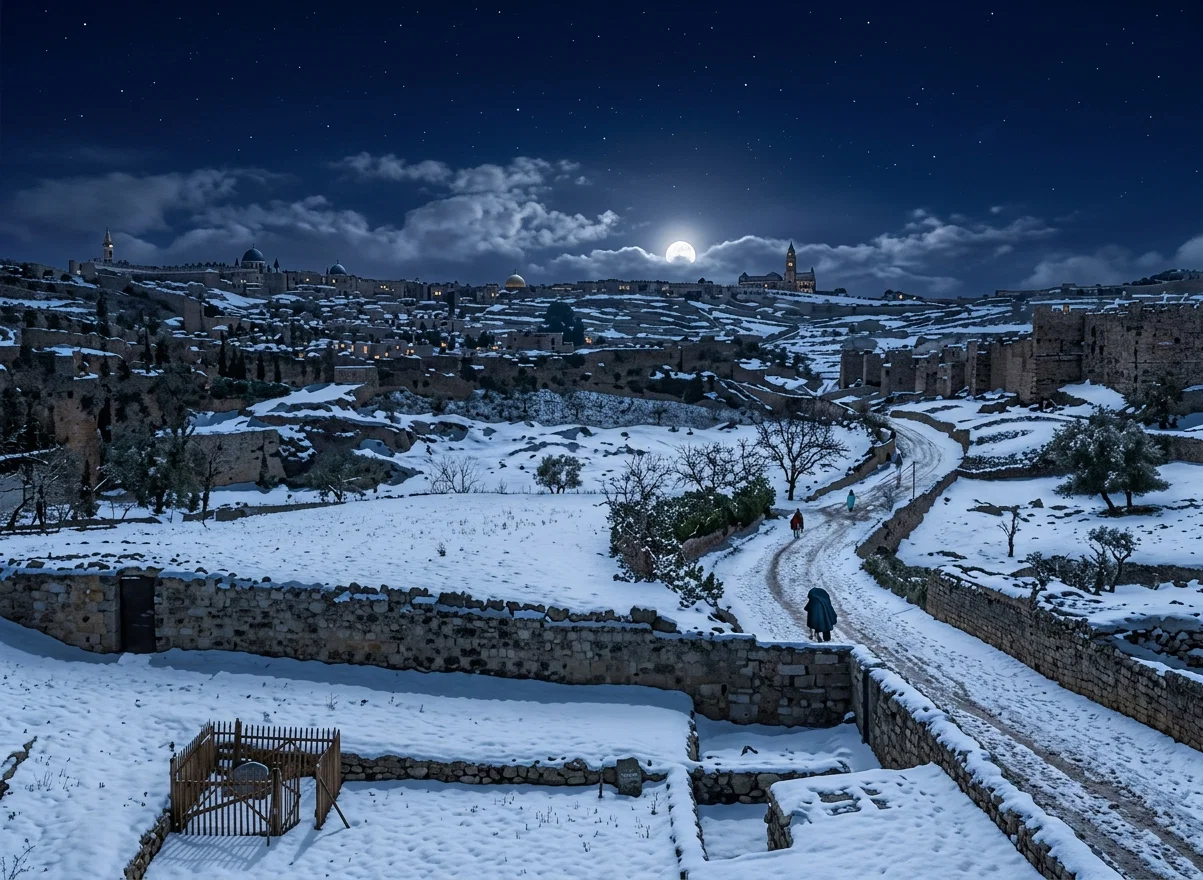
Jerusalem Covered with Snow in Wintertime
The Ceremonies and the Baptism
About 2 P.M., the Russians assembled, and filled the space before the “most holy place” in the improvised church. There they stood packed together, and quiet as sheep, crossing themselves, and listening attentively to the liturgy read by Greek and Russian priests. The light of numerous candles before the “most holy place” added a peculiar effect to the scene; while these worshipers were surrounded by crowds of noisy, blustering Arabs and Greeks.
At the close of this service, the multitude of candidates for baptism proceeded to the bank of the Jordan. Some carried bottles, intending to fill them with so-called holy water from the Jordan. They carry this water back to Russia with them, believing that it will be a protection against sickness.
Shortly after 3 P.M., the Greek clergy, led by the bishop with the insignia of the church, entered a large boat, which was slowly propelled by skillful oarsmen toward the middle of the stream, near the candidates. There the Grecian priests read again the liturgy, the program being interspersed with songs; after which the archbishop read with a loud voice Matt. 3:13-17. There was indeed a certain solemnity about all these ceremonies.
After the Greek bishop had immersed for the third time the cross that he carried, the candidates all dipped themselves three times in the Jordan. This act produced a feeling of excitement and frenzy among the Russian spectators, while the Arabs and the Greeks45accompanied the proceedings with joyful shouts and fireworks.
Carelessness and Disaster
I wondered if all this could pass off without any accident. Owing to the carelessness of the Greek priests, several persons in the mass that crowded together on the bank were injured; and after the baptismal service, it was ascertained that nine persons had been wounded, three of whom died. The next day, the body of a drunken Russian was found in the Dead Sea. The priest who was the cause of the disaster, although he greatly regretted it, was beaten almost to death by the mob of pilgrims. This tumult the Turkish gendarmes were almost powerless to suppress.
By this time, we had seen enough of the service to satisfy us, and now desired only to escape the unpleasant disturbance. Therefore taking our walking sticks, we started out for Jericho, and found shelter overnight in the same pilgrim hotel where we were accommodated on the trip out. Having been refreshed by a sound sleep, we arose at 5 A. M., and leaving the plain of Jordan, we followed along the rough ascending road that leads to Jerusalem.
On the right hand, winding through deep ravines, flowed the brook Cherith, where once Elijah was fed by the ravens. After three hours, we reached the Good Samaritan Inn, where we took breakfast; and continuing our way from there, we arrived at Jerusalem shortly after noon. The time on the journey passed quite rapidly, as we entertained ourselves by singing the beautiful songs of Zion land, strengthening mutually our faith by rehearsing our varied experiences in spiritual matters.