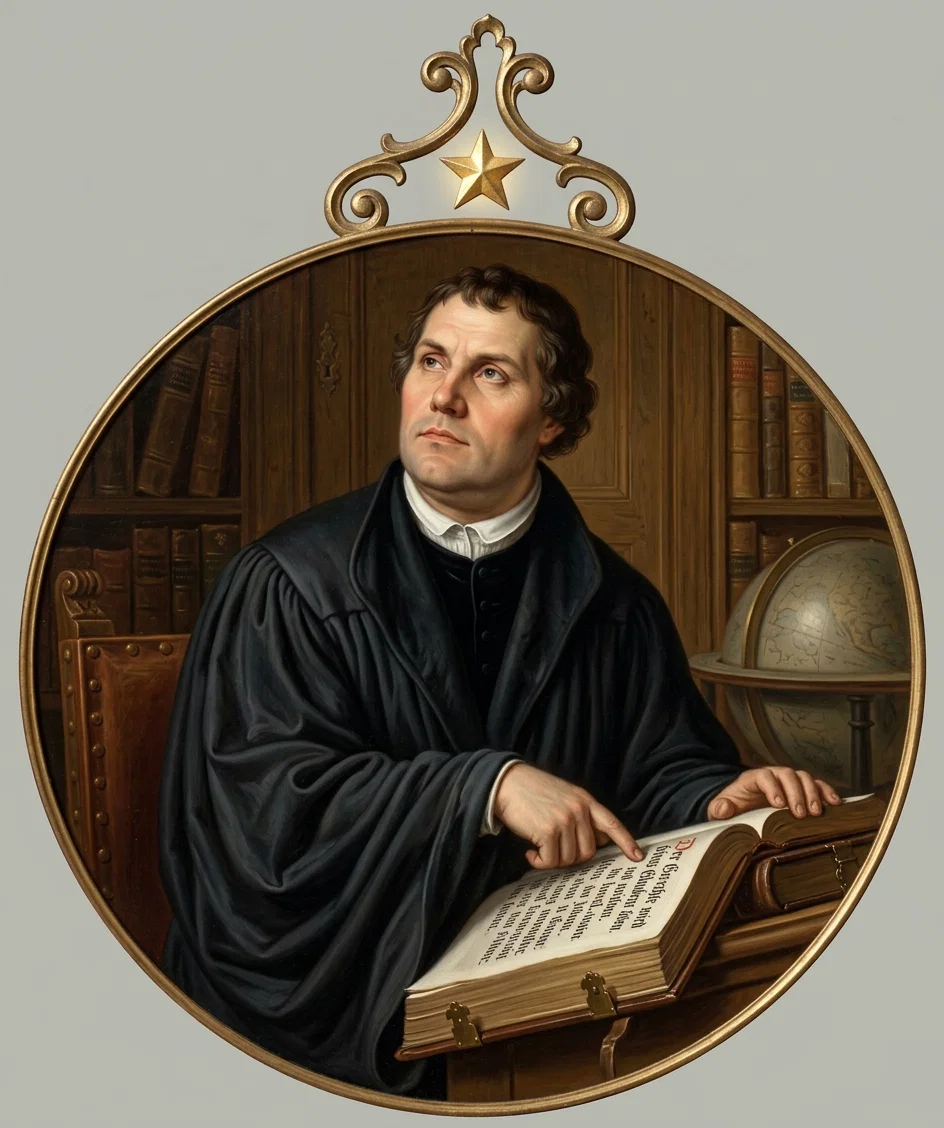
Great Reformers of the Past Refused to Accept the Aid of the State — For the Church to Seek State Aid, Indicates Weakness and Apostasy — Caesar’s Sword Not Needed to Advance the Gospel
By ARTHUR G. DANIELLS
LUTHER BEFORE THE DIET AT THE CITY OF WORMS
“I stood up against pope, indulgences, and papists, but without violence or tumult.”
THERE is at the present time an alarming tendency on the part of the church to make use of the civil power. Everywhere may be heard the clamor of professed Christians for the use of Caesar’s sword. There was a time when the leaders of the church spurned the offer of state aid to accomplish their ends. They had faith in God and in the power of His word, but they had no faith in the power of civil governments to promote the interests of religion. This was especially true of the apostles and of the Reformers of the sixteenth century. Said Luther:
“We must leave results to God. It is not we that must work, but His word. And why so? you may ask. Because the hearts of men are not in my hand as clay in the hand of the potter. We have a right to speak, but none whatever to compel. Let us preach; the rest belongs to God. If I resort to force, what shall I gain? — Grimace, fair appearances, apings, cramped uniformity, and hypocrisy. But there will be no hearty sincerity, no faith, no love. Where these are wanting, all is wanting; and I would not give a straw for such a victory.”
“I am ready to preach, argue, write; but I will not constrain any one, for faith is voluntary. Call to mind what I have already done. I stood up against pope, indulgences, and papists, but without violence or tumult. I brought forward God’s word. I preached and wrote, and there I stopped. And whilst I laid me down and slept, or chatted with Amsdorff and Melanchthon, the Word I had preached brought down the power of the pope to the ground, so that never prince or emperor had dealt him such a blow. For my part I did next to nothing; the power of the Word did the whole business. Had I appealed to force, Germany might have been deluged with blood. But what would have been the consequence? — Ruin and destruction of soul and body. Accordingly, I kept quiet, and let the Word run through the length and breadth of the land.”
“No secular sword can advance this cause. God must do all without the aid or cooperation of man. He who has most faith is the most availing defense.”
How differently many of the leaders in the churches talk and act to-day! Instead of looking to the great Head of the church to carry on His work with mighty power, their eyes are turned imploringly to the state. They appeal to the government for help. “We must have vigorous administration of law,” is the battle-cry of the church to-day. This cry is heard in the annual meetings of the churches, and from the pulpits and the religious press. Various organizations are formed to take charge of special lines of work. The masses are urged to cooperate with these organizations, and to give force to their demands by signing petitions which are presented by influential deputations to officers of the government and to legislative committees.
And what do these church leaders ask of the state? — Help — help to do the church’s work,— to promote the “Christian character of the people,” to establish the nation in “moral integrity and righteousness.” They ask that stringent laws shall be enacted and enforced to suppress vices and prevent “Sabbath” desecration. They ask that the state shall teach religion in the public schools.
This insatiable thirst of the church for the aid of the civil434power is a dangerous symptom. It reveals a separation from Jesus Christ, the Head of the church. He, through the power of His Spirit and word, is the only one that can help the church in the work it should accomplish. The state is powerless in this matter. In attempting to promote the “Christian character of the people,” it is sure to produce an effect directly the opposite. To all who are on this dangerous line we wish to say, in the words of the great apostle, we “show unto you a more excellent way.”
The Sword Not Needed by the Church
Referring to the Lord’s work in the earth, Luther said, “It is not by the sword that He will have His gospel propagated.” Such were the words of the great Reformer of the sixteenth century, and such is still the language of true Protestantism.
The sword is a carnal weapon; but the language of the true followers of Christ is, “The weapons of our warfare are not carnal.” The “sword of the Spirit” is our sword; and this, St. Paul says, is “the word of God.”
Upon one occasion, it will be remembered, one of the disciples of Christ attempted to defend Him with a sword. The Master’s command was, “Put up again thy sword into his place; for all they that take the sword shall perish with the sword.”
Her False Policy and Vulgar Weapons
D’Aubigne, in the “History of the Reformation,” speaking of the fallen condition into which the church had lapsed by resorting to worldly power, says: “She had, from false policy, had recourse to earthly instruments and vulgar weapons. When once the church had begun to handle these weapons, her spiritual essence was lost. Her arm could not become carnal without her heart becoming the same.”
This is a solemn truth, and the principle herein involved is as true to-day as it ever was. The church can no sooner call upon the state for aid and assistance than she loses her spiritual power. In this act she denies the gospel, which is “the power of God unto salvation,” rejects her lawful husband, the Lord, and unites herself in adulterous connection to Cesar. This worldliness and worldly connection is the “wine of her fornication” referred to in the Scriptures, with which Babylon, the Romish church, has made all nations drunk. And, sad to say, the daughters, the professed Protestant churches, are now seeking the same illicit union, as is manifest in their appeal to the state to enforce Sunday observance.
God Uses No Civil Force to Win Men
God constrains no one by means of force. He never compels nor attempts to compel any one to believe. His moral government is not one in which He exercises a blind and unreasoning control. To the creatures He has made He says, “Come, . . . let us reason together.” He invites them all to come and take the water of life freely, to come and be saved; but He forces no one. Neither will those who are godlike seek thus to constrain any.
Said Luther, as already quoted, “I am ready to preach, argue, write; but I will not constrain any one, for faith is voluntary.”
In This They Are Ungodlike
But in all ages, those who have assumed to take the place of God, and by law prescribe to men their religious duties, have acted very ungodlike. Because men would not believe and act in religious matters as they dictated, they have threatened them with the infliction of civil penalties, thrown them into dungeons, placed them upon the rack, and kindled around them the fires of persecution.
Thus blindly and without reason have they sought to force their opinions and practices upon their fellow men. But the men who do such things are not Christians, whatever their profession. Neither is the church which upholds such actions and pursues such a course the Christian church, however much it may claim to be.