He Arrived When the Clock of Time Pointed to the Hour—Heroism of Divine Love Displayed in Sending the Helpless Babe into a Hostile World
BY MRS. E. G. WHITE
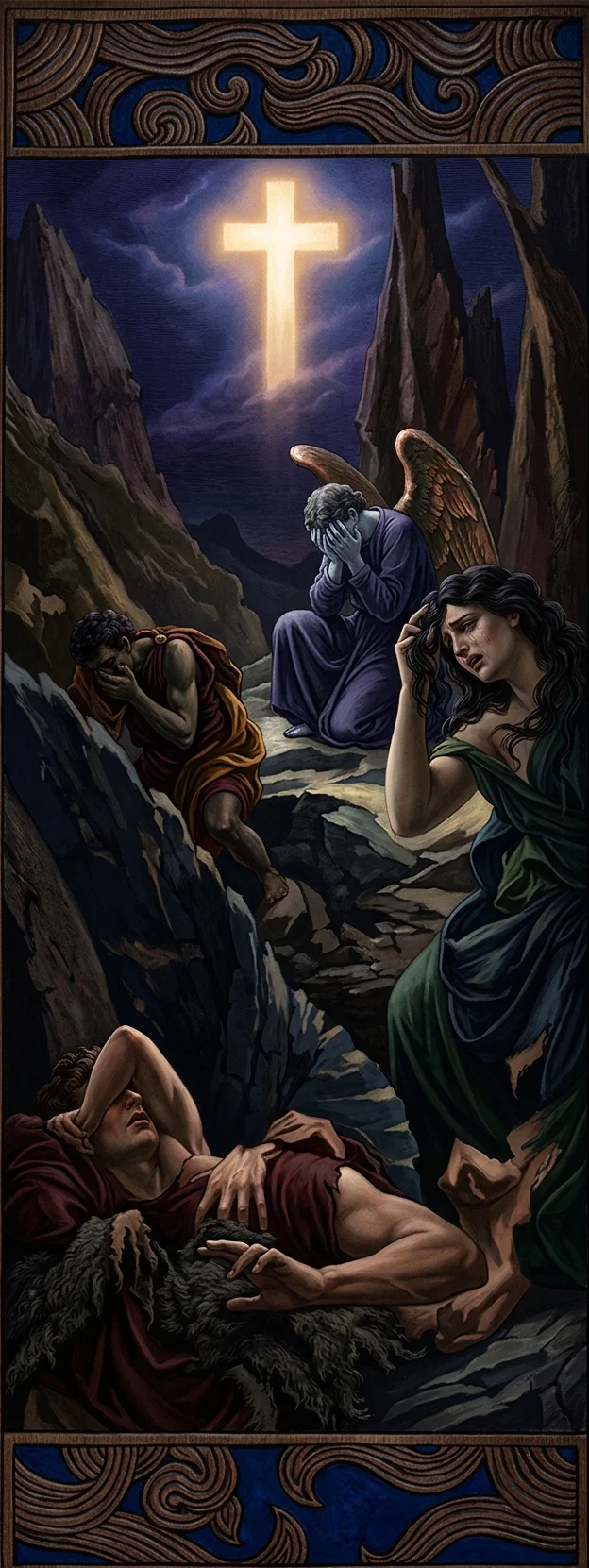
Even angels were deceived by Satan, and the night of woe settled down upon the world.
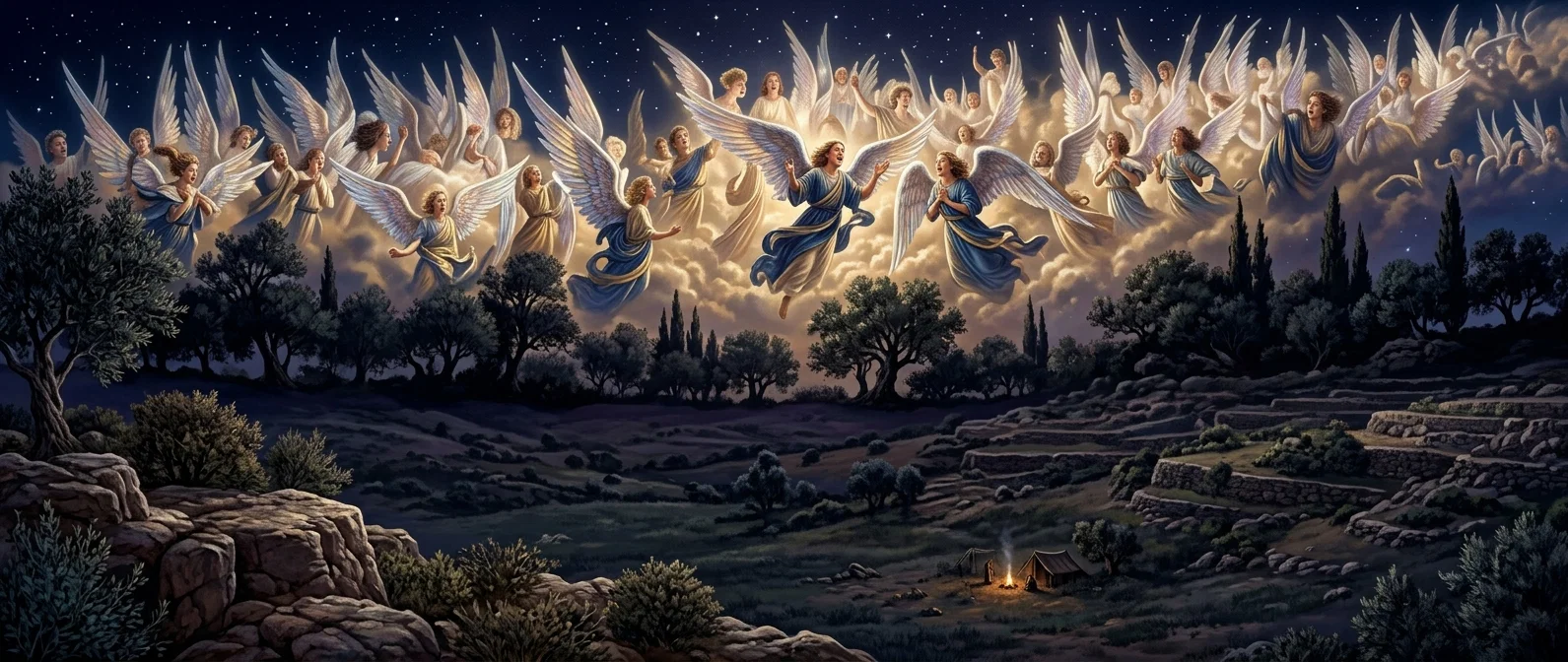
Choir of angels announced, “Christ the Lord”
THIS article is complete in itself. In its paragraphs are set forth, in a most comforting and encouraging manner, the heroism and self-sacrificing love of God and Christ in providing for the salvation of mankind. Not only is this little world concerned, but all the other worlds of the whole universe of God are studying with undivided interest the unfolding of the love and self-sacrifice of God and Christ as these attributes are revealed in the working out of the plan of salvation. We earnestly commend the article for the soul-helpful spiritual food it contains.
In previous articles, Mrs. White has traced the controversy between Christ and Satan, from its inception down to the birth of the Messiah. The next article will tell of the supreme effort of Satan to overthrow Christ in His temptation in the wilderness.
Editor.
“When the fulness of the time was come, God sent forth His Son . . . to redeem them that were under the law, that we might receive the adoption of sons.”
The Saviour’s coming was foretold in Eden. When Adam and Eve first heard the promise, they looked for its speedy fulfilment. They joyfully welcomed their first-born son, hoping that he might be the Deliverer. But the fulfilment of the promise tarried. Those who first received it, died without the sight. From the days of Enoch the promise was repeated through patriarchs and prophets, keeping alive the hope of His advent; but not all rightly interpreted the message. Century after century passed away. The voices of the prophets ceased. The hand of the oppressor was heavy upon Israel, and many were ready to exclaim, “The days are prolonged, and every vision faileth.”
Like the Stars, Prophecy Marches with Stately Accuracy
But like the stars in the vast circuit of their appointed path, God’s purposes know no haste and no delay. Through the symbols of the great darkness and the smoking furnace, God had revealed to Abraham the bondage of Israel in Egypt, and had declared that the time of their sojourning should be four hundred years. “Afterward,” He said, “shall they come out with great substance.” Against that word, all the power of Pharaoh’s proud empire battled in vain. On “the selfsame day” appointed in the divine promise, “it came to pass, that all the hosts of the Lord went out from the land of Egypt.” So in heaven’s council, the hour for the coming of Christ had been determined. When the great clock of time pointed to that hour, Jesus was born in Bethlehem.
The angels had wondered at the glorious plan of redemption. They watched to see how the people of God would receive His Son, clothed in the garb of humanity. Angels came to the land of the chosen people. Other nations were dealing in fables and worshiping false gods. To the land where the glory of God had been revealed, and the light of prophecy had shone, the angels came. They came unseen to Jerusalem, to the appointed expositors of the Sacred Oracles and the ministers of God’s house. Already to Zacharias the priest, as he ministered before the altar, the nearness of Christ’s coming had been announced. Already the forerunner was born, his mission attested by miracle and prophecy. The tidings of his birth and the wonderful significance of his mission had been spread abroad. Yet Jerusalem was not preparing to welcome her Redeemer.
Heaven Amazed at the Indifference of Men
With amazement the heavenly messengers beheld the indifference of that people whom God had called to communicate to the world the light of sacred truth. The Jewish nation had been preserved as a witness that Christ was to be born of the seed of Abraham and of David’s line, yet they knew not that His coming was now at hand. In the temple the morning and evening sacrifice daily pointed to the Lamb of God yet even here was no preparation to receive Him. The priests and the teachers of the nation knew not that the greatest event of the ages was about to take place. They rehearsed their meaningless prayers, and performed the rites of worship to be seen by men; but in their strife for riches and worldly honor, they were not prepared for the revelation of the Messiah. The same indifference pervaded the738land of Israel. Hearts selfish and world-engrossed were untouched by the joy that thrilled all heaven. Only a few were longing to behold the unseen. To these heaven’s embassy was sent.
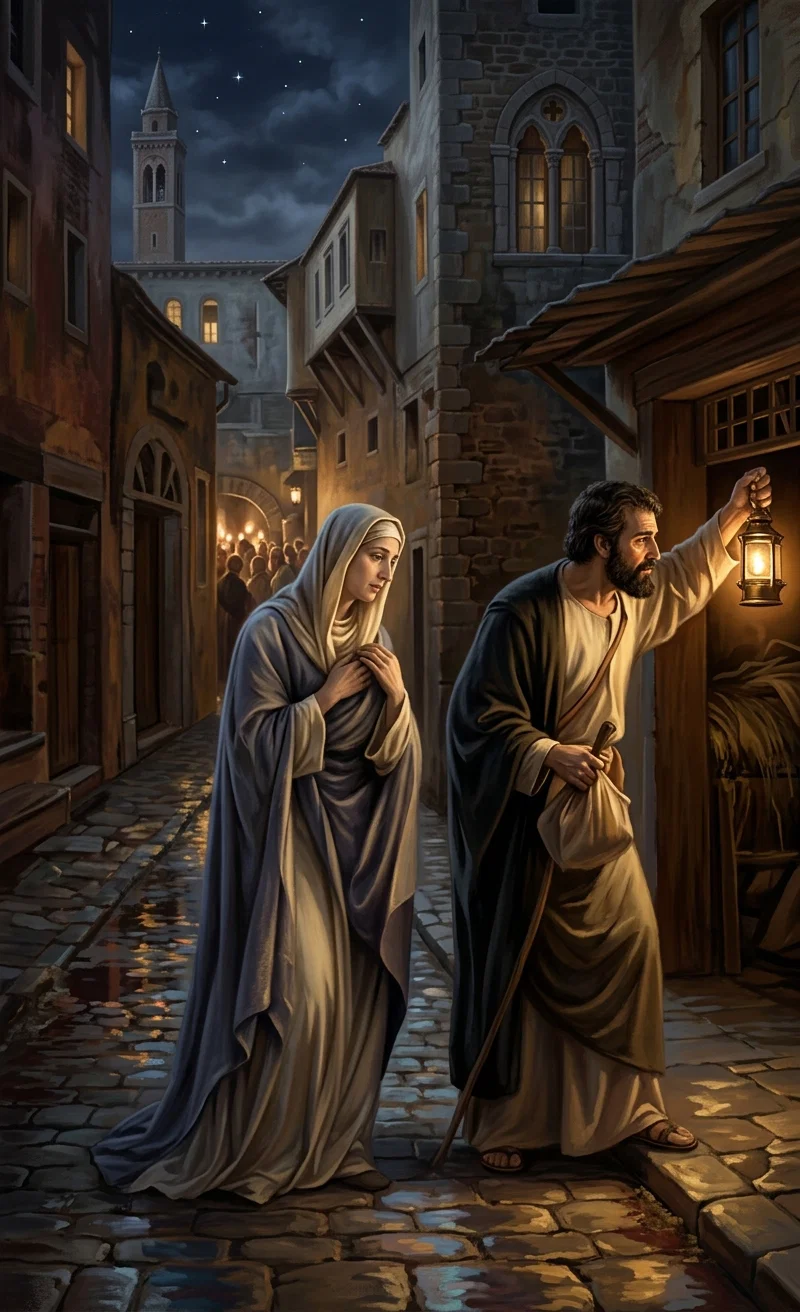
Angels attend Joseph and Mary as they journey from their home in Nazareth to the city of David. The decree of imperial Rome for the enrolment of the peoples of her vast dominion has extended to the dwellers among the hills of Galilee. As in old time Cyrus was called to the throne of the world’s empire that he might set free the captives of the Lord, so Cæsar Augustus is made the agent for the fulfilment of God’s purpose in bringing the mother of Jesus to Bethlehem. She is of the lineage of David, and the Son of David must be born in David’s city. Out of Bethlehem, said the prophet, “shall He come forth . . . that is to be ruler in Israel; whose goings forth have been from of old, from the days of eternity.” But in the city of their royal line, Joseph and Mary are unrecognized and unhonored. Weary and homeless, they traverse the entire length of the narrow street, from the gate of the city to the eastern extremity of the town, vainly seeking a resting-place for the night. There is no room for them at the crowded inn. In a rude building where the beasts are sheltered, they at last find refuge, and here the Redeemer of the world is born.
Deeper and More Tender Interest
Men know it not, but the tidings fill heaven with rejoicing. With a deeper and more tender interest, the holy beings from the world of light are drawn to the earth. The whole world is brighter for His presence. Above the hills of Bethlehem are gathered an innumerable throng of angels. They wait the signal to declare the glad news to the world. Had the leaders in Israel been true to their trust, they might have shared the joy of heralding the birth of Jesus. But now they are passed by.
In the fields where the boy David had fed his flock, shepherds were still keeping watch by night. Through the silent hours, they talked together of the promised Saviour, and prayed for the coming of the King to David’s throne. “And, lo, the angel of the Lord came upon them, and the glory of the Lord shone round about them: and they were sore afraid. And the angel said unto them, Fear not: for, behold, I bring you good tidings of great joy, which shall be to all people. For unto you is born this day in the city of David a Saviour, which is Christ the Lord.”
The heavenly messenger had quieted their fears. He had told them how to find Jesus. With tender regard for their human weakness, he had given them time to become accustomed to the divine radiance. Then the joy and glory could no longer be hidden. The whole plain was lighted up with the bright shining of the hosts of God. Earth was hushed, and heaven stooped to listen to the song,—
“Glory to God in the highest.
And on earth peace, good will toward men.”
As the angels disappeared, the light faded away, and the shadows of night once more fell on the hills of Bethlehem. But the brightest picture ever beheld by human eyes remained in the memory of the shepherds. “And it came to pass, as the angels were gone away from them into heaven, the shepherds said one to another, Let us go now even unto Bethlehem, and see this thing which is come to pass, which the Lord hath made known unto us. And they came with haste, and found Mary, and Joseph, and the Babe lying in a manger.”
Departing with great joy, they made known the things they had seen and heard. “And all they that heard it wondered at those things which were told them by the shepherds. But Mary kept all these things, and pondered them in her heart. And the shepherds returned, glorifying and praising God.”
Divinity Unites with Humanity
The story of Bethlehem is an exhaustless theme. In it is hidden “the depth of the riches both of the wisdom and knowledge of God.” We marvel at the Saviour’s sacrifice in exchanging the throne of heaven for the manger, and the companionship of adoring angels for the beasts of the stall. Human pride and self-sufficiency stand rebuked in His presence. Yet this was but the beginning of His wonderful condescension. It would have been an almost infinite humiliation for the Son of God to take man’s nature, even as it was when Adam stood in his innocence in Eden. But Jesus accepted humanity as weakened and defiled by four thousand years of sin. Like every child of Adam, He accepted the results of the working of the great law of heredity. What these results were is shown in the history of His earthly ancestors. He came with such a heredity to share our sorrows and temptations, and to give us the example of a sinless life.
Satan in heaven had hated Christ for His position in the courts of God. He hated Him the more when he himself was dethroned. He hated Him who pledged Himself to redeem a race of sinners. Yet into the world where Satan claimed dominion, God permitted His Son to come, a helpless Babe, subject to the weakness of humanity. He permitted Him to meet life’s peril in common with every human soul, to fight the battle as every child of humanity must fight it, at the risk of failure and eternal loss.
Revealed to Angels as Well as Men
By coming to dwell with us, Jesus was to reveal God both to men and to angels. He was the Word of God—God’s thought made audible. In His prayer for His disciples He says, “I have declared unto them Thy name,”—“merciful and gracious, long-suffering3and abundant in goodness and truth,”—“that the love wherewith Thou hast loved Me may be in them, and I in them.”
But not alone for His earth-born children was this revelation given. Our little world is the lesson-book of the universe. God’s wonderful purpose of grace, the mystery of redeeming love, is the theme into which “angels desire to look,” and it will be their study throughout endless ages. Both the redeemed and the unfallen beings will find in the cross of Christ their science and their song. It will be seen that the glory shining in the face of Jesus is the glory of self-sacrificing love. In the light from Calvary it will be seen that the law of self-renouncing love is the law of life for earth and heaven; that the love which “seeketh not her own” has its source in the heart of God; and that in the meek and lowly One is manifested the character of Him who dwelleth in the light which no man can approach unto.
Weary and homeless, they traverse the entire length of the narrow street . . . vainly seeking a resting-place for the night. There is no room for them at the crowded inn.