Should Sunday Observance Be Enforced by Law?—Recent Pronouncement by the Papal Delegate to the United States
BY OUR WASHINGTON CORRESPONDENT
THE Washington Times, one of the leading daily newspapers of Washington, D. C., recently announced its intention to inaugurate a campaign “in the interests of Sunday churchgoing.” In the prosecution of this proposed campaign, it purposes to publish regularly in its Saturday issues, during the next twelve months, a series of half-page articles giving “reasons why people should attend some place of worship on Sunday.”
As introductory to this campaign, Archbishop Bonzano, the papal apostolic delegate to the United States, took occasion to address a special communication to the Times on the subject, in which he attempts to explain who changed the Sabbath from the seventh to the first day of the week, why the change was made, and why laws enforcing the observance of Sunday are proper and right. Coming from such a source,—the personal representative of the pope to the United States,—the statements are of special interest.
WHAT THE PAPAL DELEGATE SAYS
The communication referred to appeared in the Times of Saturday, October 11, 1913, under the caption, “Why Sunday Is the First Day of the Week,” and reads as follows:
“We know by the light of our reason that there is an obligation for man to adore his Creator, God Almighty. Natural law requires that every human being shall devote some part of his time to acts of divine worship, but it does not fix or determine any particular time for the fulfilment of this obligation. For the people of Israel, in the old law, there was a specified time for it, because God Himself condescended to appoint a day on which they were to discharge this duty toward their Maker. He set apart the seventh day of the week for this purpose in commemoration of the day on which He rested from the work of creation.
“In the new law the time for fulfilment of this obligation was changed by the apostles from the Sabbath, or the seventh day of the week, to Sunday, or the first day of the week, primarily to commemorate the resurrection of Jesus Christ, who early in the morning on the first day of the week arose, glorious and triumphant, from the dead. Hence it is that, in Scripture, the first day of the week is called the ‘Lord’s day.’” Apoc. 1: 10.
“Other reasons for this change were: Because it was on this day that the apostles received their commission, as apostles, from Jesus Christ, with the same power and authority which He, as man, has received from His Father. ‘As the Father has sent Me,’ He said to them, ‘so I send you’ (John 20: 21), and because it was on this same day that they received from Christ the power of forgiving sins. It was also on this same day of the week that the Holy Ghost came down upon the apostles, and that the faith and law of Christ was for the first time solemnly published to the world by them.
“The manner in which Christians are bound to keep holy the first day of the week consists in their abstaining from all unnecessary servile work and in occupying themselves with some positive act of divine worship.
“Since the law of God in this matter is, therefore, so clear, and since the determination of the time for the fulfilment of this duty has been reasonably changed from the day of Saturday to that of Sunday, it is very much to be desired that all who claim to be Christians should faithfully discharge their duty in this regard. So much, at least, is their duty of conscience.
“From the faithful observance of Sunday the commonwealth, as well as the individual, derives much good, both of the spiritual and of the temporal nature. And hence it is that, in view of this good, society should be greatly concerned in enacting laws for the observance of Sunday, and most careful in seeing that they are put into practise.”
We have reproduced this communication in full in order that the reader may see just what the special representative of the papacy to this country has to say upon the change of the Sabbath, and Sunday legislation,—two questions of prime importance to Rome. And inasmuch as the papacy just now is seeking to regain her lost supremacy in the Old World by capturing the New, and thus establishing a universal supremacy throughout the whole world, these questions are of special interest and of immense importance to all the people of this nation and of the whole world.
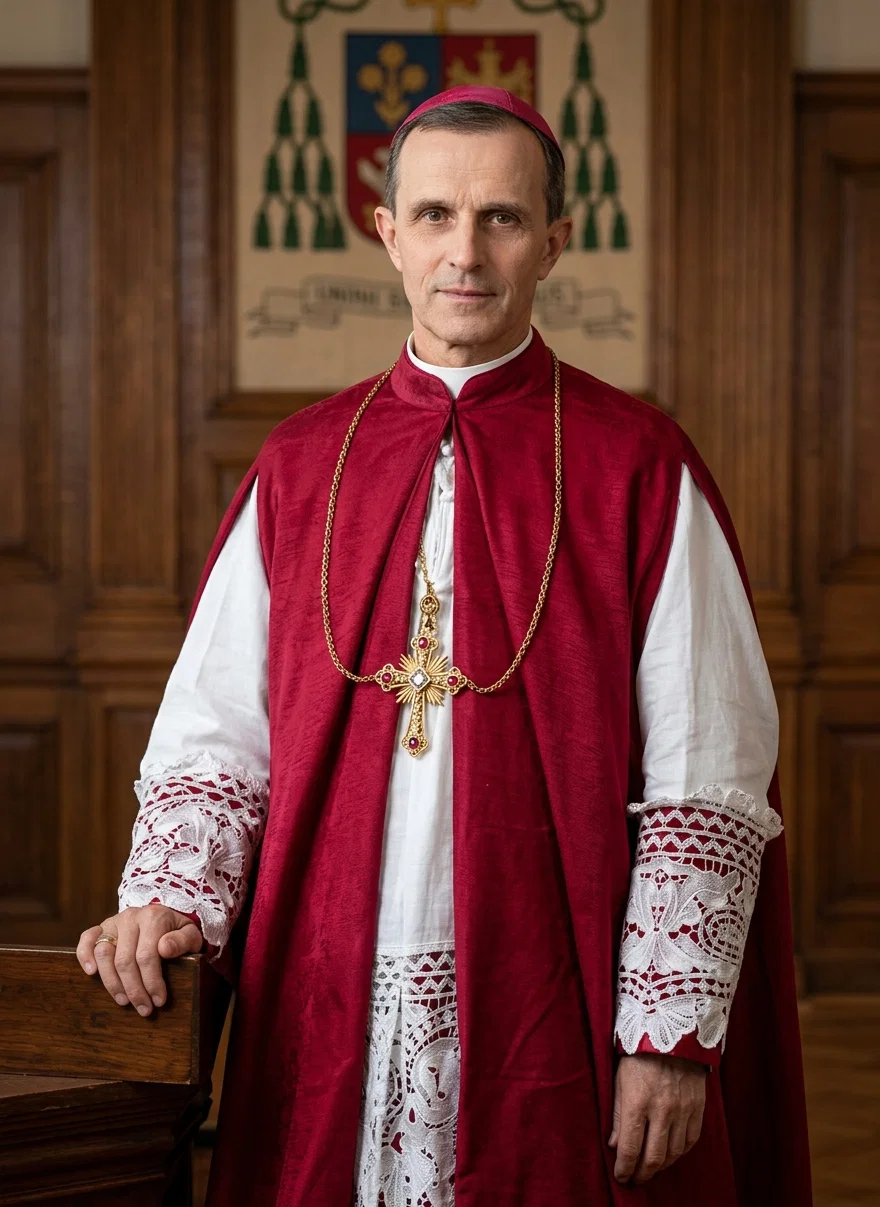
ARCHBISHOP BONZANO
Let us therefore examine some of the statements made by Mr. Bonzano in his communication to the Times. First let us note what he says respecting the question as to —
WHO CHANGED THE SABBATH
According to this latest semipapal pronouncement, the time for fulfilling the duty enjoined by the divine Sabbath commandment “was changed by the apostles from the Sabbath, or the seventh day of the week, to Sunday, or the first day of the week.”
No proof is given for this assertion, but the responsibility for the act of changing the Sabbath here referred to is boldly charged to the apostles. If the statement is correct, then the apostles changed the law of God, a thing which Christ Himself said He came not to do. See Matt. 5: 17-19.
In so important a matter, the record of the alleged change should be clear, explicit, and unmistakable. What proof, we therefore ask, is there in the Scriptures that the apostles changed the Sabbath? That there is none is admitted by both Catholic and Protestant writers. Thus Cardinal Gibbons, in his work “The Faith of Our Fathers,” page 111, says:
“You may read the Bible from Genesis to Revelation, and you will not find a single line authorizing the sanctification of Sunday.”
In like manner Dr. Lyman Abbott, in the Christian Union for June 26, 1890, said:
“The current notion that Christ and His apostles authoritatively substituted the first day of the week for the seventh day is absolutely without any authority in the New Testament.”
The statement made by Mr. Bonzano, therefore, that the apostles changed the Sabbath, is without Scripture warrant, and, in the absence of such proof, must be regarded as false. The apostles made no such change.
The following from “The Convert’s Catechism of Catholic Doctrine,” by the Rev. Peter Geiermann, C. SS. R., page 50, comes much nearer the truth:
“Q. Why do we observe Sunday instead of Saturday?
“A. We observe Sunday instead of Saturday because the Catholic Church, at the Council of Laodicea (A. D. 336), transferred the solemnity from Saturday to Sunday.”
The writer of this conveys the correct idea. The change of the Sabbath was the work of the Catholic Church rather than that of the apostles, and it was made in the centuries following apostolic times, and after all the early apostles were dead.
The Council of Laodicea, held in A. D. 364, wrongly given in the foregoing quotation as A. D. 336, in its twenty-ninth canon, enjoined the observance of Sunday as the Lord’s day, and anathematized those who should continue to observe the seventh day, the day specified in the Sabbath commandment.684
This, however, was but one of a series of acts on the part of the Roman Catholic Church, beginning with that of Victor, bishop of Rome, in A. D. 196, in which the Eastern churches were excommunicated by that haughty prelate because they refused to heed his injunction to celebrate the Passover on Sunday in conformity with the practise of the churches of the West, and extending to acts of councils and decrees of popes during centuries following, by which the Sabbath was changed. The change was not the work of a day, but, like the apostasy from which it came, and of which it was and still is a part, was brought about gradually, step by step, through a long process of years.
Upon such foundation as this rests the Sunday sabbath; and with no better warrant than this for its observance, we are told by this papal apostolic delegate to the United States that “Christians are bound to keep holy the first day of the week.”
Christ was crucified on Friday, and rose from the dead on Sunday; but neither the one event nor the other made a sabbath out of the day on which it occurred. Though all the events mentioned by Mr. Bonzano, and more, may have occurred on the first day of the week, that gave no foundation for changing the Sabbath, and making a day of rest out of Sunday. When God made the seventh-day Sabbath, He Himself first rested upon the day; and then, by definite and explicit appointment, He gave it to man as the Sabbath, or day of holy rest. Gen. 2:2, 3; Ex. 20:8-11. But the Sunday sabbath is wanting in both respects. Christ neither rested upon that day, nor commanded His followers to do so. What He did not do, Christians are not bound to do; and what He did not teach or command, no Christian church has a right to teach or command.
Concluding his communication to the Times, Mr. Bonzano, true to Catholic doctrine and tradition, sets up —
A DEFENSE FOR SUNDAY LEGISLATION
Because of the good to the individual and the commonwealth accruing “from the faithful observance of Sunday,” it is alleged that “society should be greatly concerned in enacting laws for the observance of Sunday, and most careful in seeing that they are put into practise.”
Here we have the papal principle and the papal program in a nutshell — religion by law. Because religion is good, the state should enforce it! This is the logic of Rome. But no greater error was ever promulgated among men. Upon this very principle the Inquisition itself, with all its persecutions and monstrous horrors, was carried on during the Dark Ages. Because religion was a good thing, the papal ecclesiastics of those times reasoned, just as Mr. Bonzano now reasons, that it was the duty of the state to enforce it upon the people, and to proscribe, persecute, and put to death all who refused to accept the religion thus laid down and doled out with an iron hand.
Good religion is a good thing. But no religion which craves the power of the state by which it may force itself upon men irrespective of faith, conviction, and conscience, is good. By this very act it brands itself with the mark of Cain, who was a murderer.
The bane of all ages has been the union of church and state, the result of which, in the end, has invariably been religious persecution. And during the past sixteen hundred years, as history abundantly testifies, both in Europe and America, Sunday legislation has played a very prominent part in effecting and perpetuating such unions. Through this means more than any other the early church, in its apostasy, rode into power. And, as the Bonzano article here quoted shows, by this means this same apostasy aims to retain its hold upon the civil power, and wield it to its own advantage and aggrandizement.
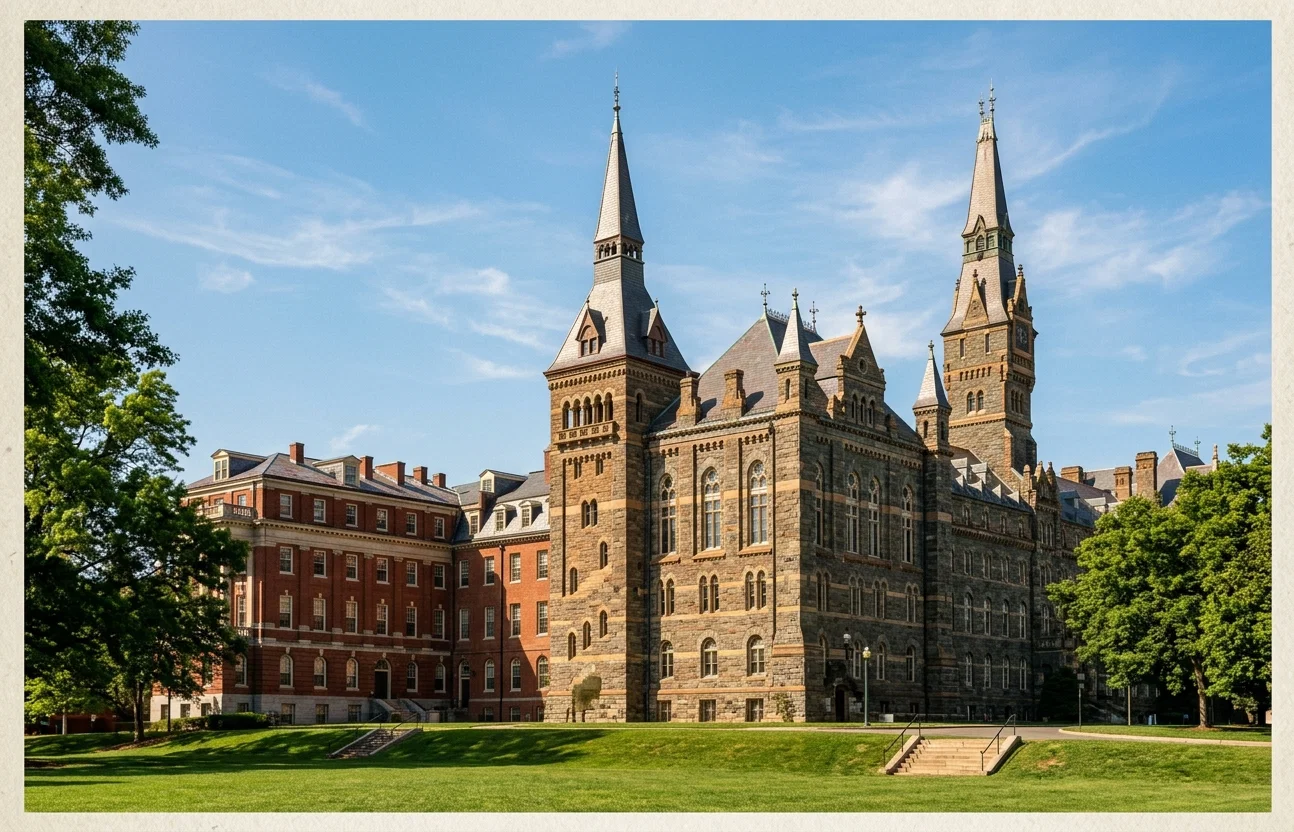
Georgetown College, in Georgetown, or West Washington, D. C. It is the oldest and largest Jesuit college in the United States. The first building was erected in 1789.
Were the people of these United States as wide-awake as they might be, and as true as they should be to the principles upon which the national government was founded, they would not only repeal every Sunday law now found upon the statute-books, but would look with suspicion upon any man or any religion which dared to advocate them in this land of far-famed freedom.