The Sons of Eli—No. 2

7%

Pacific Press Publishing Association · Mountain View, California · Oct 14, 1913

FromSigns of the Times, Vol. 40, No. 40.

Read the full edition

The Sons of Eli—No. 2

By Mrs. E. G. White
The sacrifice of the peace-offerings, which were made as an expression of thanksgiving to God, afforded a favorable opportunity for unscrupulous priests to enrich themselves at the expense of the people.
THE Lord had, through Moses, given the most explicit directions concerning the sacrificial offerings. But selfish, avaricious priests, to serve their own interests, had departed from these instructions. The sacrifice of the peace-offerings especially, which were made as an expression of thanksgiving to God, and were presented in great numbers when the people assembled at the annual feasts, afforded a favorable opportunity for unscrupulous priests to enrich themselves at the expense of the people. The Lord had directed that the fat of the peace-offering should be burned upon the altar as a type of the great Sacrifice. A specified portion, the breast and the right shoulder, with some minor parts, were given to the priest as his perquisite. The remainder was to be eaten by those who brought the offering.
Infinite Wisdom had foreseen that the clamor of appetite, and a covetous desire for gain, might lead the priest to appropriate to himself the sacrifices solemnly devoted to the Lord. That there might be no room for confusion or misunderstanding, the most exact and minute directions had been given.
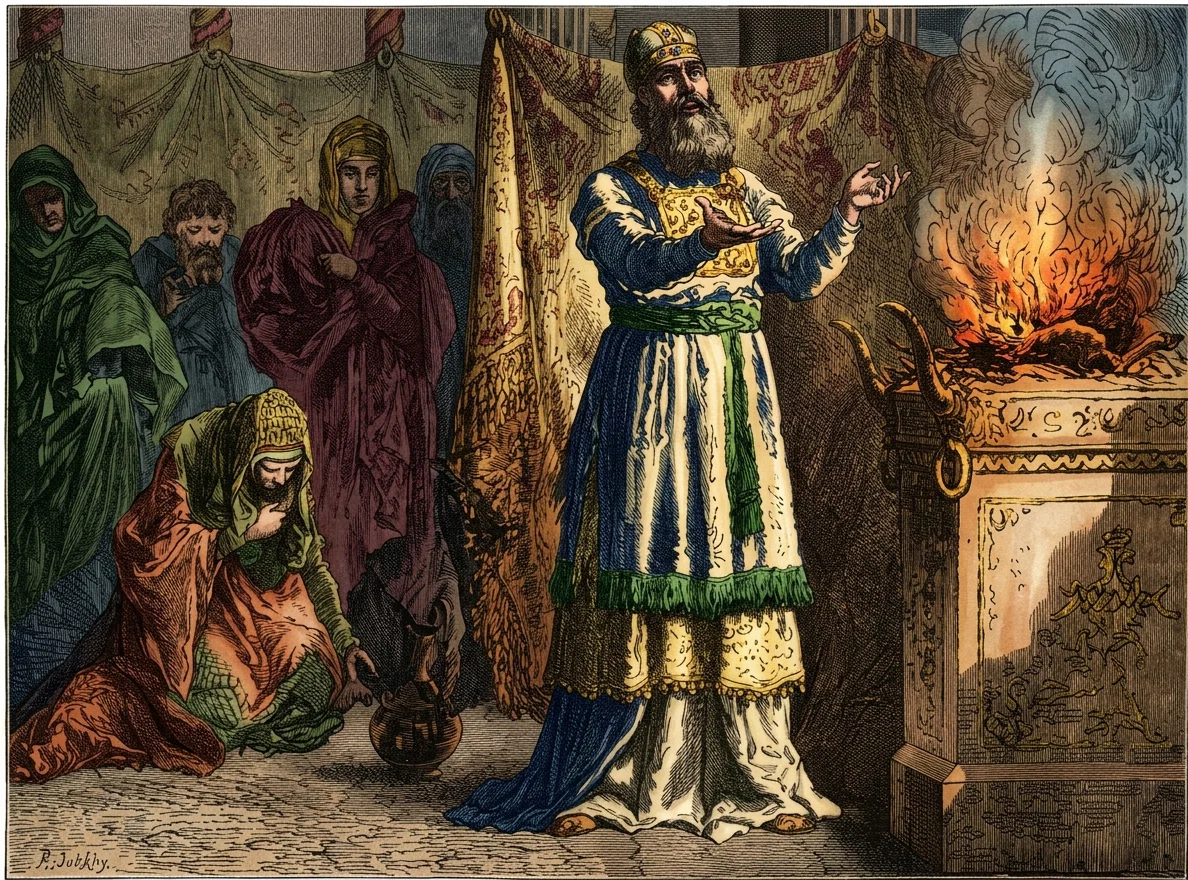
Hophni and Phinehas, the sons of Eli, disregarded the laws of the sanctuary more boldly than had any of their predecessors. While they arrayed themselves in the sacerdotal garments and ministered before the Lord, they cared only for the gratification of their own debased appetites and passions. The priests not being content with their rightful share of the peace-offerings, it had become customary for one of their servants to come while the offerers were cooking their portion in some apartment adjacent to the sanctuary, and to carry away whatever could be taken up with the flesh-hook. The great numbers of sacrifices offered, made this a considerable addition to the priest’s perquisite.
But even this departure from the Lord’s commands failed to satisfy Hophni and Phinehas. They desired the fat, which the Lord had expressly stated should never be eaten, but burned on the altar as an offering to Himself. As they had learned to despise the authority of their father, they now despised the authority of God, and sent their servants to demand the flesh of the peace-offerings before the fat had been separated from it. When the offerer remonstrated, “Let them not fail to burn the fat presently, and then take as much as thy soul desireth,” the answer was, “Nay; but thou shalt give it me now; and if not, I will take it by force.” The people stood in awe of the priests, and submitted to their unlawful claims, robbing themselves of their rightful share of the offering. Thus appetite, selfishness, and avarice triumphed, exerting their evil influence upon the people at the very time when every heart should have been directed in penitence and faith to the great Sacrifice which was to take away the sins of the world. These things had a telling influence upon the people, and they were fast losing all sense of the sacredness of the sacrificial offerings, and of the importance of attending upon the services of the sanctuary.
The recreant priests added licentiousness to the dark catalog of their crimes; yet they still polluted by their presence the tabernacle of the Lord, and, laden with sin, dared to come into the presence of a holy God. As the men of Israel witnessed the corrupt course of the priests, they thought it safer for their families not to come up to the appointed place of worship. Many went from Shiloh with their peace disturbed, their indignation aroused, until they at last determined to offer their sacrifices themselves, concluding that this would be fully as acceptable to God as to sanction in any manner the abominations practised in the sanctuary.
The worship which Jehovah Himself had ordained, was despised and neglected because associated with the sins of wicked men. This was a critical time for the people of God. Ungodliness, profligacy, and even idolatry prevailed to a fearful extent among them. And where now was the priest and judge of Israel? Eli was not ignorant of the course pursued by his sons. Faithful men, who mourned over the corruption of the priesthood, presented the matter in its true character before him. The indignation of the people had been aroused, and complaints were coming to him from every side. He had passed over these transgressions till he dared remain silent no longer.
But the aged father still manifested the same partiality which he had ever shown his wayward sons. He took no decisive measures to bring them to justice, but mildly remonstrated with them, as with persons of tender conscience, who had for once fallen under temptation:
“And he said unto them, Why do ye such things? for I hear of your evil dealings by all this people. Nay, my sons; for it is no good report that I hear: ye make the Lord’s people to transgress. If one man sin against another, the judge shall judge him: but if a man sin against the Lord, who shall entreat for him?”
Eli had long known that his sons were not what God would have them be. He knew that they did not give to Israel an example worthy of imitation. But he was growing old, and the burden of official care rested heavily upon him. Some one must assist him in bearing this responsibility. Should he deal justly with his sons, they would be speedily rejected from the priestly office, and punished with death. He dreaded thus to bring public disgrace and condemnation upon them. By passing over their crimes again and again without punishment, his own abhorrence of sin was lessened, and in his efforts to shield them, he became accessory to their guilt.
God held Eli, as priest and judge of Israel, accountable for the moral and religious standing of his people, and in a special sense for the character of his sons. The most severe punishment should have been meted out to them, as due the insulted honor of God, and as needful to counteract the influence of their daring sacrilege and grossimmorality. Well had it been for Eli and for all Israel, had the high priest manifested such zeal for the honor of God, and such a desire to avert His wrath, as had been shown by the tribe of Levi in slaying the worshipers of the golden calf. On that occasion the priests, at God’s command, executed justice upon the leaders in transgression, without regard to rank or kindred. Those who faithfully performed this painful duty, were approved and honored of the Lord.
Had not Eli’s love for his wicked sons surpassed his zeal for the honor of God, he would have pursued a similar course. He should have exercised his authority to repress crime and uphold righteousness, thus saying to all Israel: “Sin is sin, even if found in the sons of the high priest; and altho a most painful duty devolves upon me as a father, God shall not be dishonored by my sons before the people. Holiness and iniquity shall not be confounded in the minds of Israel, because men in high position dare to sin.” But the aged priest loved ease and peace; and rather than endure the pain and strife of meeting and resisting wrong, he remained silent, and suffered the work of iniquity to go on, and the clouds of divine wrath to gather above a guilty nation.