The Impassable Gulf—Did the Rich Man Go into a Literal Burning Hell?—Is the Story a Parable?—What Does It Teach?
By HAMPTON W. COTTRELL
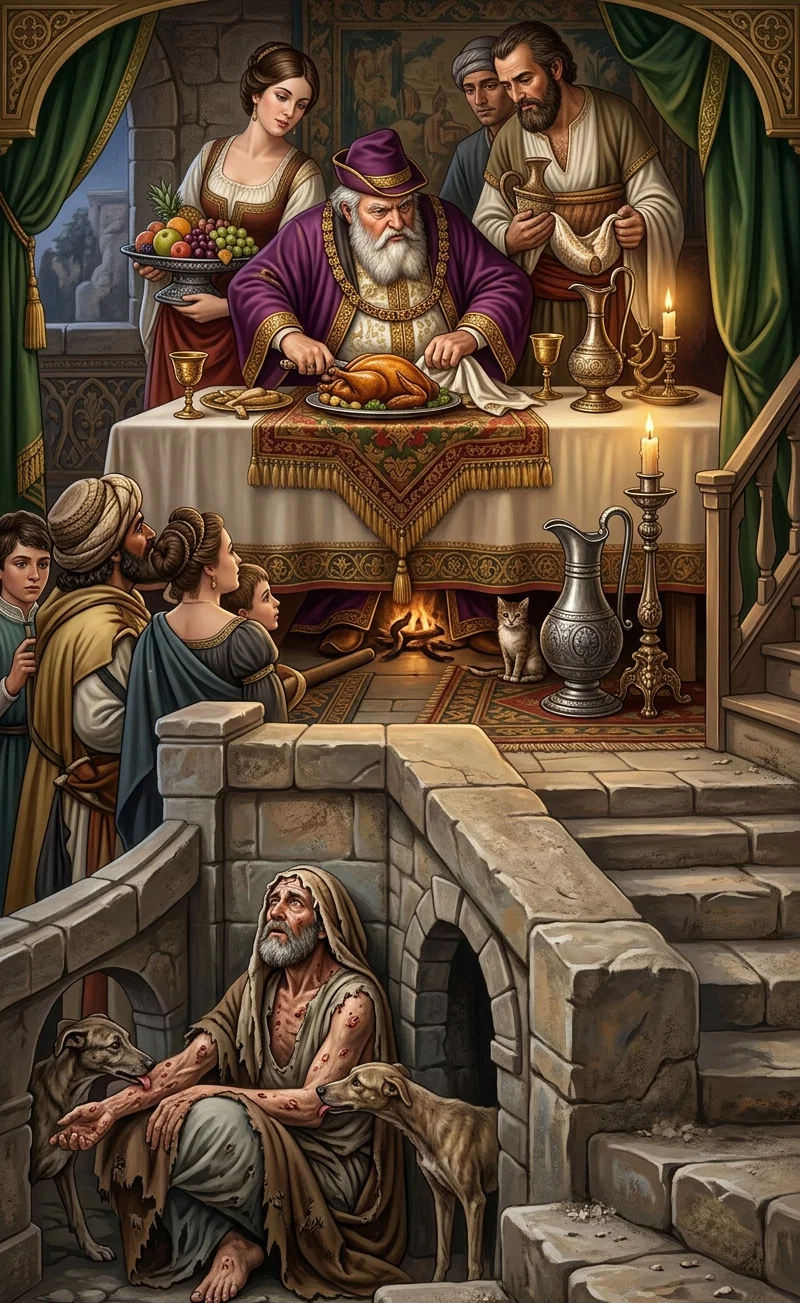
“God . . . calleth those things which be not [but are to come] as though they were.” Rom. 4:17. Thus Christ spoke in the parable of the rich man and Lazarus, which is one of a series of parables, and was set forth to represent the final rewards of both the wicked—self-centered, covetous, and self adorers—and the righteous—unselfish, liberal, and Deity worshipers. The rich man—the wicked—is represented as being robed in “purple and fine linen,” and faring “sumptuously every day.” Luke 16:19. We do not understand that the Saviour designed to teach that because a man is rich in this world’s goods, he is doomed to eternal loss; but rather, only those who worship riches in preference to worshiping God, and retain their wealth wholly for selfish purposes, failing to supply food, clothing, and the necessary medical aid to those of their fellow men who are less fortunate in life than themselves; and, as in the parable, permitting the dogs to minister to such.
The Self-Opinionated Also
The personnel of the class for which the rich man stands, evidently includes those who, though they have not monetary wealth, are so self-opinionated that they are blinded to the needs of others to whom they might render helpful service, and to the extension of the gospel of God’s salvation.
The Master further states that “the rich man also died, and was buried; and in hell he lifted up his eyes, being in torments, and seeth Abraham afar off, and Lazarus in his bosom. And he cried and said, Father Abraham, have mercy on me, and send Lazarus, that he may dip the tip of his finger in water, and cool my tongue; for I am tormented in this flame. But Abraham said, Son, remember that thou in thy lifetime receivedst thy good things, and likewise Lazarus evil things; but now he is comforted, and thou art tormented. And beside all this, between us and you there is a great gulf fixed: so that they which would pass from hence to you can not; neither can they pass to us, that would come from thence.
“Then he said, I pray thee therefore, father, that thou wouldest send him to my father’s house: for I have five brethren; that he may testify unto them, lest they also come into this place of torment. Abraham said unto him, They have Moses and the prophets; let them hear them. And he said, ‘Nay, Father Abraham: but if one went unto them from the dead, they will repent. And he said unto him, If they hear not Moses and the prophets, neither will they be persuaded, though one rose from the dead.’” Luke 16:22–31.
The Great Gulf That Is Fixed
This parable teaches men the eternal gain or loss sustained in this world as determined by the course one pursues in life. If this life is spent in the uplifting of humanity to the glory of the Deity, it leaves the individual on the side of the gulf toward the city of God. The course of conduct men take in this life constitutes the gulf that is fixed between the righteous and the wicked, as photographed in the parable; so that gulf can not be crossed, as the life can not be lived over again. On the other side of the picture may be seen the one who spends this life—influence and money—for self glorification, on the opposite side of the fixed and uncrossable gulf, doomed to eternal loss.
“one who spends this life—influence and money—for self glorification.”
The five brethren mentioned in the parable, who are in need of help, represent the class of men and women who are living now, but have no personal acquaintance with Christ, and no knowledge of the pending future. They are represented as having “Moses and the prophets [the Bible]; let them hear them.”
Must Make the Choice Now
This parable is a clarion note to all men that if they would live eternally, they must make that choice now, in this life, or be forever lost.
But if it be contended that this was a literal occurrence, not a parable, then let us notice a few of the inconsistencies connected therewith:
1. Abraham was dead. Lazarus died, and took up his abode in “Abraham’s bosom.” Verse 23. Could one literal man find a place of abode in the bosom of another?
2. The rich man requested that Lazarus be sent to his relief—“dip the tip of his finger in water, and cool my tongue.” Verse 24. Would one drop of ice water have been sufficient to cool the crisping tongue of the rich man?
3. Would not the one drop of water have been boiling hot, if not entirely evaporated, by the time it passed through the writhing flames of torment?
4. The unrolling of the divine scroll reveals the popular theological dilemma in which those are found to be who hold that the lesson of the rich man and Lazarus was a literal occurrence and taught the existence of a lake of fire awaiting the wicked at death; for it would prove that the soul of the rich man had a tongue, which is not conceded by those who believe in the inherent immortality of the soul. It would also prove that the spirit of Lazarus had a literal finger, which is diametrically opposed to the theory.
5. “The dead know not anything, neither have they any more a reward; for the memory of them is forgotten. . . . Neither have they any more a portion forever in anything that is done under the sun.” Eccl. 9:5, 6. Surely, then, this lesson of Christ was a parable, and should be a constant rebuke to all covetous, self-loving people, and tend to show the vanity of trusting in self or riches.