The Uncertainties of Evolution

2%

Pacific Press Publishing Association · Mountain View, California · Mar 2, 1915

FromSigns of the Times, Vol. 42, No. 9.

Read the full edition

The Uncertainties of Evolution

It Is Founded on Speculation — None of Its Advocates Account for Life — Admissions of the Defenders of the Doctrine — The Eye Caused Darwin to “Shudder”
By W. C. Dunscombe, M. D.
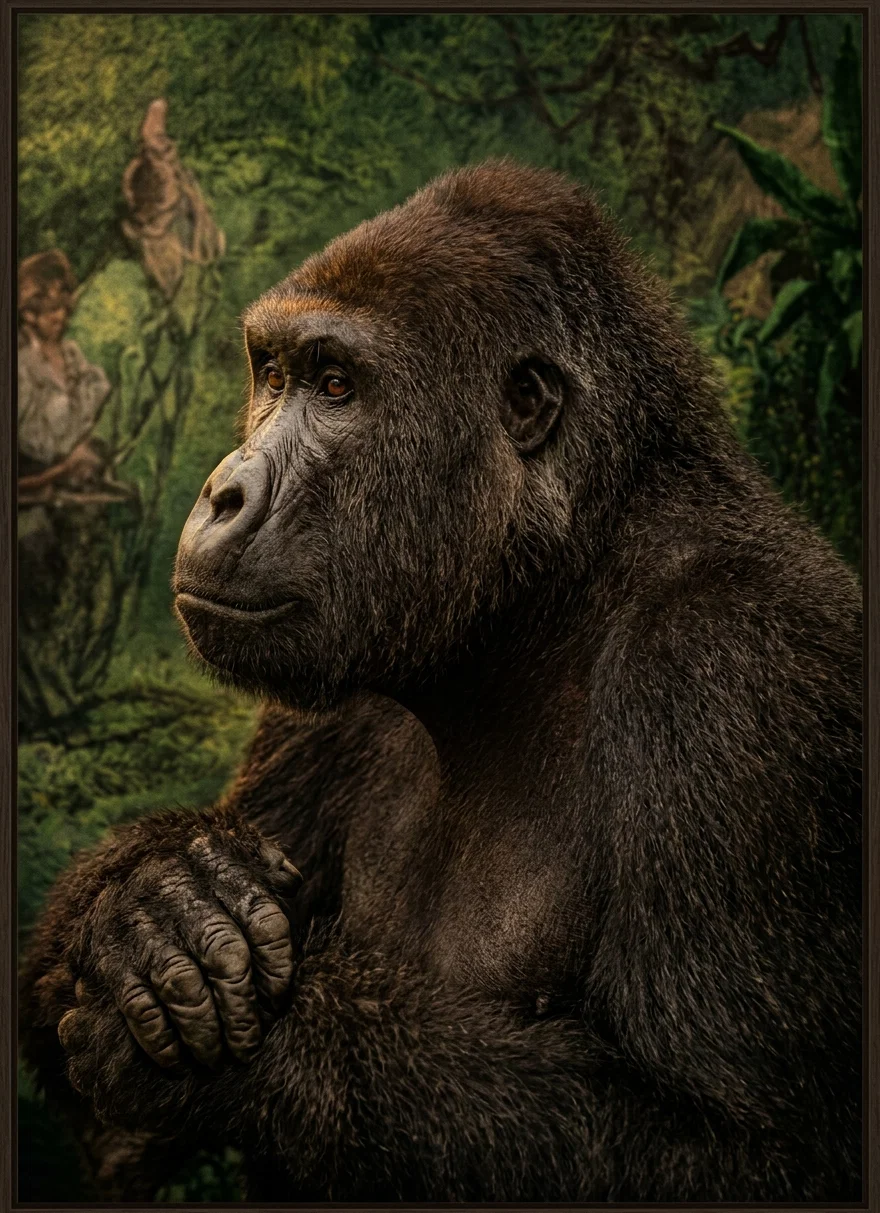
Can it be possible that the Creator was shut up to the expedient of developing man through such a creature?
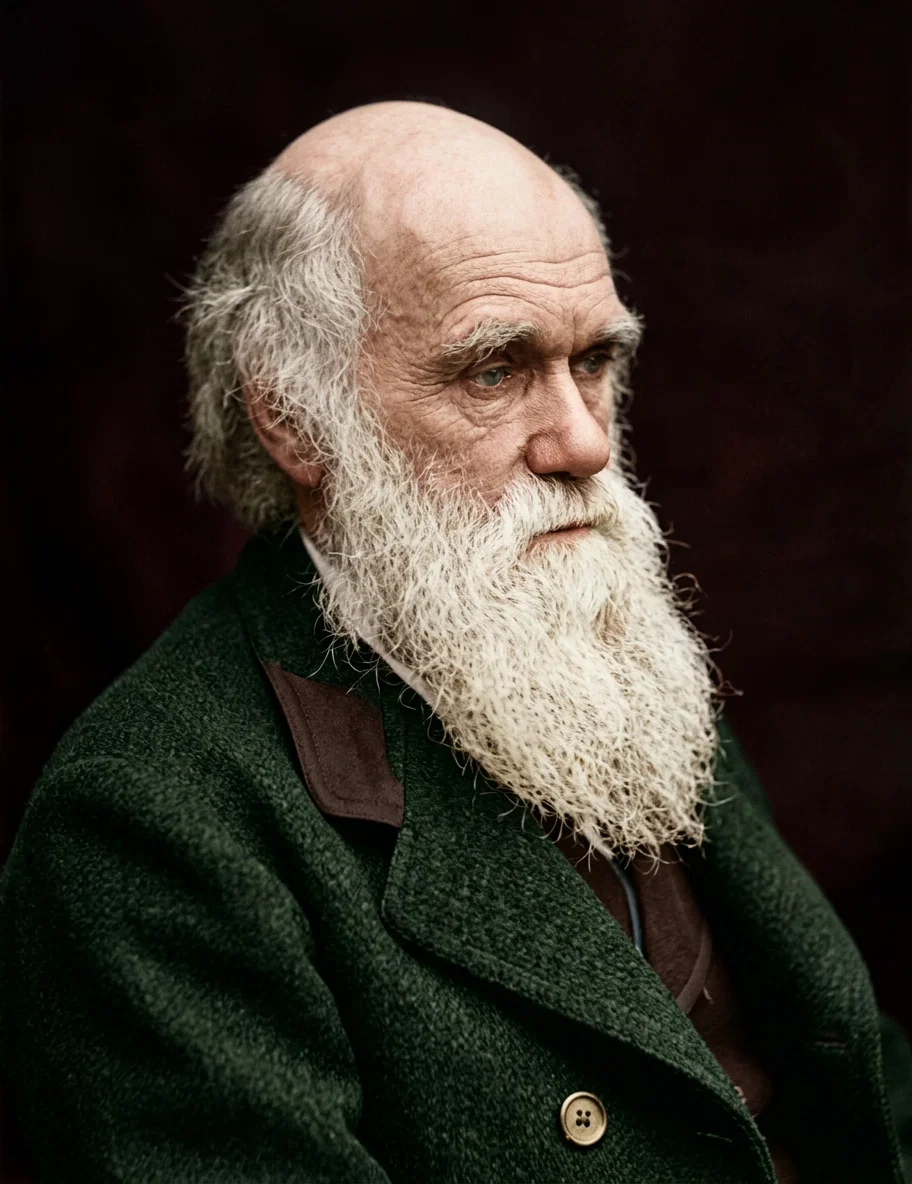
Charles Darwin, who in his "Descent of Man" and his "Origin of Species" taught that man developed from a monkey
The pendulum of human thought swings generally between the extremes of enthusiastic, unreasoning over-belief, and cold, calculated unbelief. The pride of man, and his unwillingness to accept the only true way of salvation, have led him to a ceaseless endeavor to elaborate theories that shall explain the origin of life in such a way as to make man his own savior.

The Tendency to Exaggeration

In scientific as well as philosophic investigation, there is a strong tendency to strain the truth to exaggeration and over speculation. As an instance in point we may quote the announcement made by Professor Huxley in 1868, that the gelatinous matter found in the ooze of the beds of the deep seas was a sheet of living matter stretching around the globe. Many scientists welcomed this discovery as the bridge between living and dead matter. At last, they exclaimed, the miracle of creative activity has been banished. But it was soon found — and Huxley frankly admitted his error — that this shining mass of jelly was nonexistent as a widely extended sheet of living protoplasm.
Among those who advocate evolution, there are many schools, or sects, with widely differing theories; and the resultant confusion is great. Evolution presupposes existence. It must start with something which it takes for granted, out of which all other forms must be evolved. Evolution simply indicates the manner in which the transformation of different animals has taken place down through the ages. It can never explain the origin of life. Students of evolution are liable to confuse the terms “causation” and “development.” In the theory of evolution, a spontaneous power of natural selection exercised by environment is made to evolve that which lives and wills.

Connection Between Life and Death

But it has been definitely proved, as any one can observe, that there is a retrograde development of plants and animals under the influence of environment. The evolution of living matter from dead material is supposed to have occurred at some time, but this process has never been observed. Of its causes and nature, so-called science knows nothing.
With all the advance of science, and its unwearied investigations, the gap that separates living matter and dead material is as wide as ever. There is nothing known to science but shows that all life has arisen from that which has lived before.
Leaving out the power that “spake, and it was done,” life and death are as far apart as ever. Looking back over the thousands of years during which we have accurate historical records, we may frankly maintain that man and the ape have come no closer together.

The Ape and the Man

Professor Dana, of Yale, is very explicit in pointing out the following: “The existing man apes belong to lines which lead up to them as the ultimatum,—they are the highest order,—while between them and the lowest, from the standpoint of intellectual development, of human tribes, there exists a great gap. The cubic capacity of the brain of the most degenerate of human types is more than twice as great as the most developed brains of the ape orders. There are all possible gradations from the lowest limit in development of men and apes to the highest limit. But between man and apes there is a great gap which has never been filled.”
Professor Virchow, of Berlin, states that no precursor of man has ever been found,—not even a fragment of him. Such a precursor is and ever has been a speculation. We find that all the theories which contradict the Bible are mere speculations, with no substantial basis of fact to rest upon.
Even Professor Huxley, one of the greatest expositors of Darwinism, asserts that there exists no intermediate link between man and the apes.

In the Water and in the Trees

In Mr. Darwin’s writings, he has given full play to the imagination. In one of his letters to Sir Charles Lyell he wrote, “Our ancestor was an animal which breathed water, had a great swimming tail, etc.” In “The Descent of Man” we read, “Our progenitors were covered with hair and were no doubt arboreal in their habits.” In one place man’s ancestor is a water animal, and in another an animal moving around in trees.

“Probably” and “Undoubtedly”

All through his writings, there is a great tendency to clinch his statements by such terms as “probably,” “undoubtedly,” “no doubt.” Shall we cast aside God’s word for such reasoning, or shall we demand facts?
From Mr. Darwin’s book “The Descent of Man,” page 105, we read: “The most ancient progenitors in the kingdom are the vertebrata, at which we are able to obtain an obscure glance. . . . Apparently consisted of a group of marine animals. . . . These animals probably gave rise to a group of fishes, . . . and from these the ganoids . . . must have been developed. From such a fish a very small advance would carry us on to the amphibians. . . . The birds and reptiles were once intimately connected together. . . . But no one can at present say by what line of descent the three higher and related classes, namely, mammals, birds, and reptiles, were derived from either of the two lower vertebrate classes. In the class of mammals the steps are not difficult to conceive which led from the ancient monotremata to the ancient marsupials. . . . We may thus ascend to the lemuridæ; and the interval is not wide from these to the simiidæ. The simiidæ then branched off into two great stems, the New World and the Old World monkeys; and from the latter, at a remoter period, man, the wonder and the glory of the universe, proceeded. . . . If a single link in this chain had never existed, man would not have been what he now is. Unless we skillfully close our eyes, we may, with our present knowledge, approximately recognize our parentage.”
Are there no “serial” steps that lead from one to another?—There are, for we read, “We must imagine,” instead of, “We have discovered,” certain intermediate forms between reptiles and fish, and fish and mammals, reptiles and birds, etc.

Speculation Leads to Confusion

It is this tendency to speculation that creates the confusion in the religious world to-day. We do not care to know what Mr. Darwin believes, but what he can prove. As a noted critic has well remarked, “If we were to modify the ‘believes’ and ‘convinced,’ the charm of Mr. Darwin’s book would be spoiled.” It is simply Mr. Darwin’s theory, and he attempts to explain all existing facts by this theory, with such arguments as, “it must have been,” “probably,” “apparently,” “undoubtedly,” etc. By such arguments, everything in creation is explained. By such means, he invents a theory, and makes the facts fit into it.
Mr. Herbert Spencer, himself an evolutionist, in his “Principles of Sociology,” volume 1, page 93, makes one notable statement: “In considering the different types of man, it is probable that the retrogression has been as frequent as the progression.” Indeed, all the history in existence to-day shows us that most of the races of earth have at one time been in a higher state of civilization and culture than at present. Shall we not, then, take the plain statement of God’s word, that man in the beginning was made in the image of God,—that he was made perfect, and that he has, because of the degrading influence of sin, become a degenerate? We have assurance that man to-day is a degenerate, because we have had with us here on earth One born in the likeness of man, who yet lived a sinless and perfect life.
Evolution is simply a process of supportingone hypothesis by a number of subsidiary hypotheses. The fundamental weakness of the primary hypothesis and of all the subsidiary hypotheses is that they are not borne out by facts.
I quote from Mr. Herbert Spencer: “The doctrine of evolution will help us realize primitive ideas in imagination, and then to discern them as actually existing.” But we who prefer to take God’s word rather than imagination, will demand facts instead of hypotheses.
From the evidence so far brought forward, we cannot believe that man and the apes have been brought any nearer together except by scientific “imagination.”

Darwinism Has Not Succeeded

Professor Virchow, before the German and Vienna anthropological societies, in 1890, testified as follows: “Darwinism has not up to the present time succeeded in demonstrating man’s descent from the ape or any other animal. In vain have the links which should bind man to the ape been sought,—so far not a single one has been recorded.” “The so-called ‘pro-anthrops’ (foreman) has never been found. At present we only know that among prehistoric men none have been found that stand nearer to the ape than the men of to-day.”
In contrast to the theories without facts, we have the Mosaic record, which is in perfect accordance with every known fact and every divine revelation, and which is true to our inmost convictions.
From this maze of fallacious theories we turn to the plain statement of the Scriptures, “He spake, and it was done; He commanded, and it stood fast”; and the miracles of Christ while here upon earth fully attest that this statement is true.

Darwin in the Fog

In attempting to explain the origin of the first living creature or cell, Darwin himself was in a mist,—a maze. In his book “The Origin of the Species,” he cheerfully concedes the existence of God as an explanation of the origin of the species. In other places he denies it, and claims the origin of man to be the result of the operation of certain laws. The plain truth of the whole matter is this: Darwin had so completely given his mind up to forming these human theories, that he had become incapable of thinking higher thoughts.
In “Life and Letters,” volume 1, page 101, he mournfully confesses, “My mind seems to have become a machine for grinding out general laws out of masses of general facts, but why this should have caused atrophy of the part of the brain alone on which the higher tastes depend, I cannot tell.”

Feared to Trust the Monkey

In a letter to Mr. Graham he also says: “With me the horrid doubt always arises whether the convictions of a man’s mind which has developed from the mind of lower animals, are of any value or at all trustworthy. Would any one trust the convictions of a monkey’s mind, if such a mind has any convictions?”
Darwin’s disciples have adopted a more atheistic attitude than he himself. Professor Haeckel, for instance, glories in the fact that the doctrine of descent as taught by the great English scientist has banished from the universe the vaunted goodness of the Creator. Another disciple, Vogt, in his book, maintains “that Darwin’s theory turns the Creator, without any hesitation, out of doors, inasmuch as it does not leave any room for the agency of such a being. The first living germ being granted, out of this the whole creation develops by natural selection.”

Not Creators of Life

Life has been affirmed again and again to be but chemistry and mechanics. This has been asserted so often that millions of people have come to believe it. But we have yet to have proof of the first germ of life ever produced in a chemical laboratory. Evolutionists are continually making an appeal to nature’s laws as if law itself were a cause of the order of the universe instead of being an expression of that order. Law itself necessarily presupposes a presiding and regulating intelligence. In itself it can never be a cause. The term “government by law” should be rendered, “government according to law.” Tennyson has beautifully said:
“God is law, say the wise. O my soul, let us rejoice! For if He thunder by law, the thunder is yet His voice. Speak to Him then, for He hears, and spirit with Spirit may meet. Closer is He than breathing, and nearer than hands and feet.”
This one-sided application to the investigation of nature’s operations seems to have dwarfed Mr. Darwin’s intellect. As a student, music charmed him. In later life, he found it intolerable. Parts of his brain had atrophied from disuse. He complains of color blindness as to the existence of God.

Feared to Make the Admission

When his friend Lyell pointed out the necessity of the continual intervention of creative power, Darwin was sorely troubled, for he wrote in answer, “I cannot see this necessity, for its admission would make natural selection valueless.”
Again he said in “Life and Letters,” volume 2, page 82, “The formation of a strong variety or species, I look at as almost wholly due to the selection of what may be incorrectly called chance variations or variability.”

The Eye Made Him Shudder

But Mr. Darwin was strongly exercised about the eye and other indications of design in nature. The adaptation of the eye to its functions is so complete that in writing to Asa Gray he said, “The eye to this day gives me a cold shudder.” He also adds, “My reason tells me that I ought to conquer this cold shudder.”—“Life and Letters,” volume 2, page 275. Mr. Darwin humorously calls natural selection his deity.
Darwin’s own letters are the best commentary on his “Origin of the Species.” In “Life and Letters,” volume 2, page 315, he says, “I myself could write a more damning criticism of the ‘Origin of the Species’ than any which has yet appeared.” In trying to explain everything, his way was full of difficulties, and he acknowledged them. In another place he says, “I candidly agree with you, that the difficulties of my notions are terrific.”

Devoted to a “Phantasy”

“Often and often a cold shudder has run through me, and I have asked myself whether I may not have devoted my life to a phantasy.”—“Life and Letters,” volume 2, page 354.
In “The Descent of Man” we have the mournful confession, “I perhaps attributed too much to natural selection in not considering structures which are neither beneficial or injurious.”
Again, in “Origin of Species”: “No one ought to feel surprised at much yet remaining unexplained on the ‘Origin of the Species.’”
To crown all, when Professor Haeckel in Germany insisted upon introducing into schools a new system of thought based on the doctrines of the descent of man, Professor Virchow, the veteran pathologist, openly withstood him, maintaining the necessity of guarding against the danger of constructing systems as doctrines out of mere possibilities.

A Striking Contrast

Even Professor Drummond, the latest champion of the evolution theory, has to confess: “Darwinism has put the whole question out of focus, and it remains so at the present day. Modified on its own levels, it may be true; but allowed to stand alone, it becomes false and pernicious.” “At present there is not a chapter of the record that is not incomplete, not a page wholly finished. The manuscript is already worn with erasures, the writing often blurred, the very language is uncouth and strange.”
In contrast to this, we have the word of God, which has withstood all the criticism of all ages. Not a word has been erased, or can be erased. All the facts unearthed by scientists have only served to establish it, to prove the truth of the inspired record. It stands as a mighty stronghold, able to withstand all the assaults of the enemy.