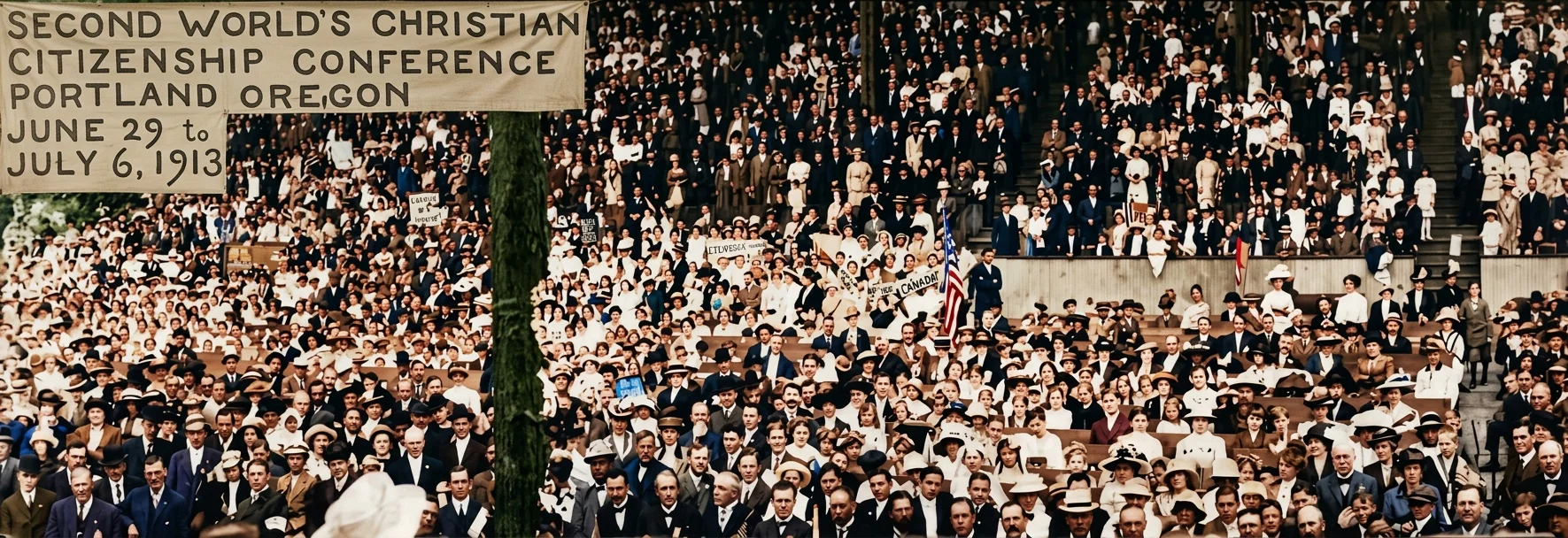
THE World's Christian Citizenship Conference, held under the guiding hand of the National Reform Association, in Portland, Oregon, June 29 to July 6, had representatives from fifteen nations; at least, it was frequently so announced from the platform during the progress of the conference. There were indeed speakers from quite a number of nations. We did not count them, but doubtless the number fifteen is correct. Not more than two or three of the large list of speakers advertised failed to appear.
But, as nearly as we could find out by careful inquiry, the “delegates” to the conference from the various nations were very scattering. Indeed, as the undersigned conferred with business men in Portland, they gave him the impression that it was their opinion that there were not very many people in attendance at the conference from outside of the congregation afforded by the city of Portland.
The meetings during the daytime were not very largely attended, except on the Fourth of July and on Sundays, when the attractions brought large crowds of people.
It would seem that we are only stating an honest fact, when we say that the National Reform Association furnished the speakers, both from their own number and those from without, who would talk in harmony with their views, and that they had to depend upon the city of Portland for the greater part of their congregation. The evening meetings, particularly when they had some noted speakers like Ex-Vice-President Fairbanks, gave them large crowds. Quite careful estimates showed from eight to ten thousand persons present on some of these occasions, and on the last Sunday night there were in the neighborhood of 15,000.
Two days after the conference closed, the “Oregonian,” one of the leading dailies of Portland, had the following suggestive headlines:
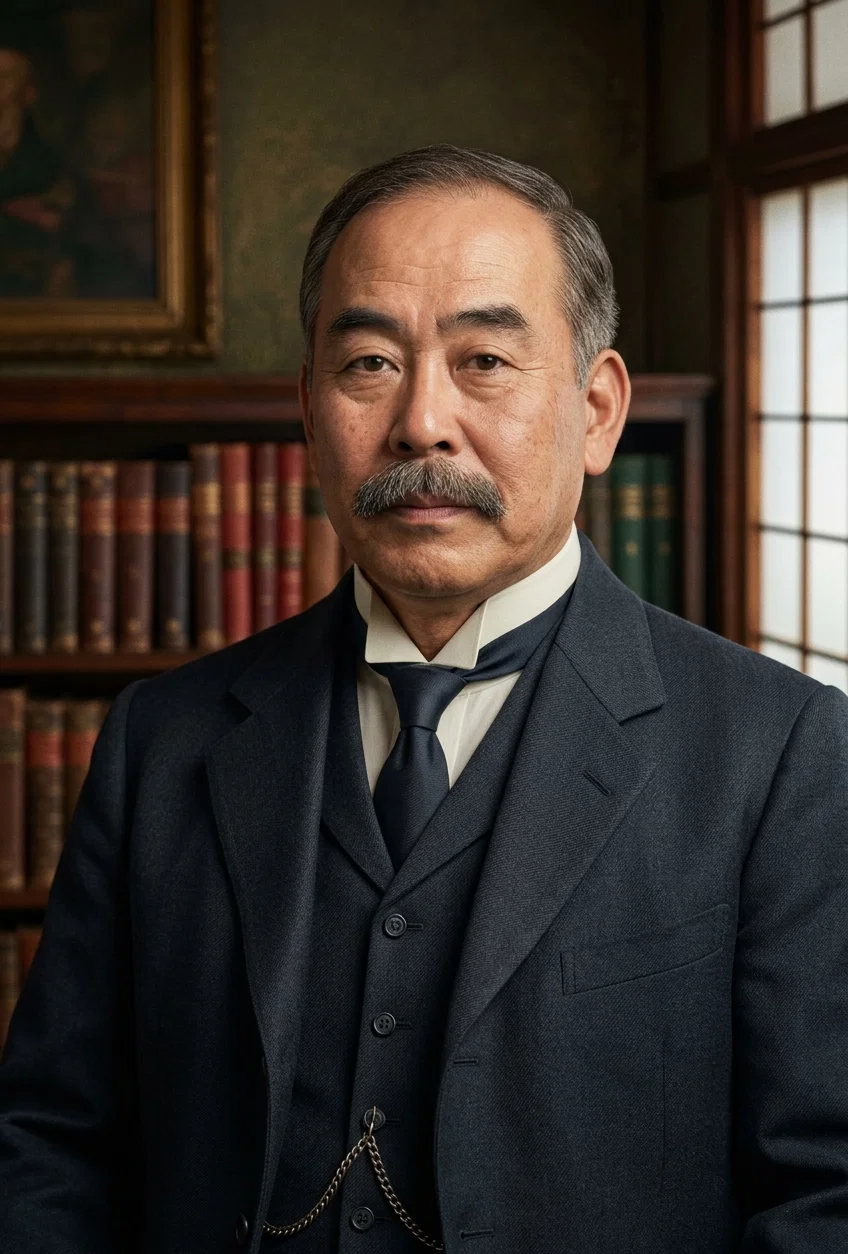
Joseph S. Motoda, Ph.D., principal St. Paul's College, Tokyo, Japan
“Instead of 20,000 Christian delegates, as promised, 670 come to Portland. $21,500 cost to citizens. Hotels, railroads, and housewives go to trouble and expense to care for crowds which fail to attend sessions.”
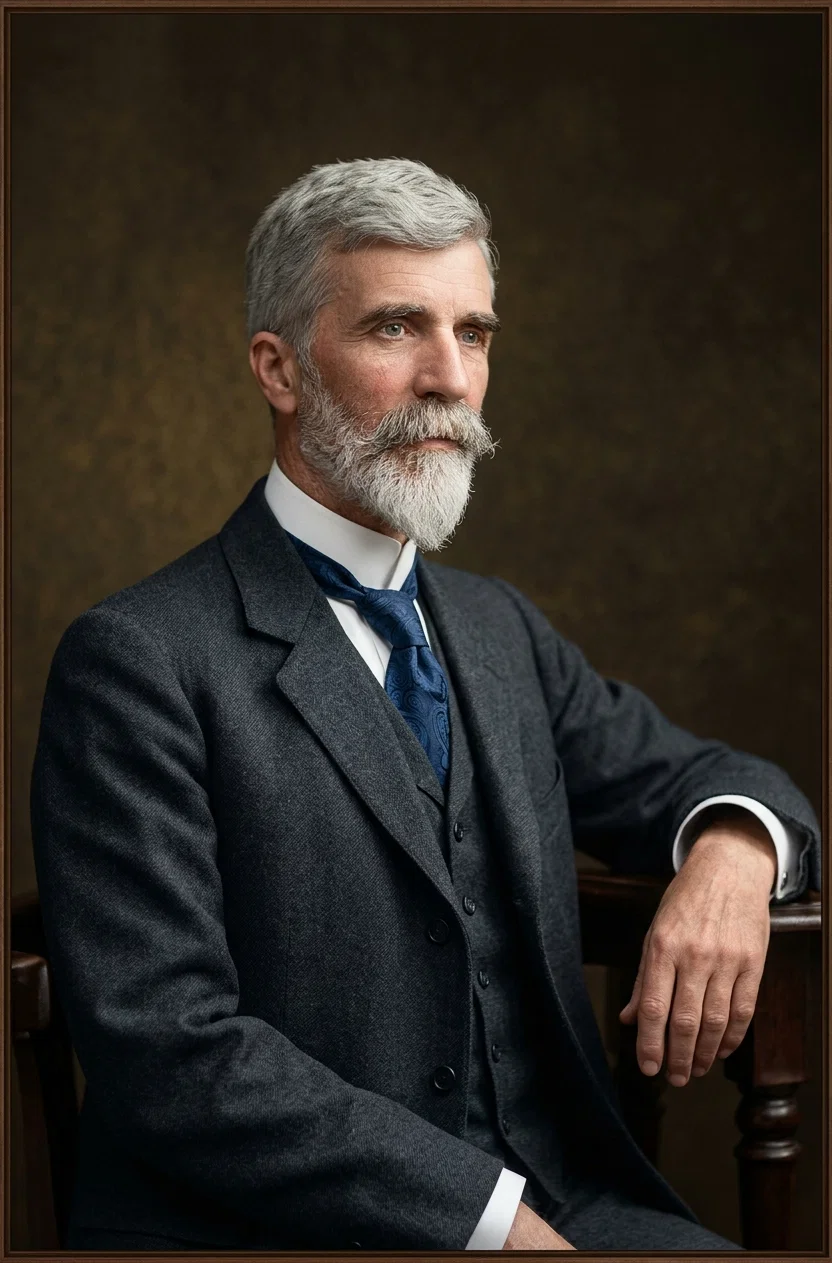
Charles Merle d’Aubigné, son of the famous church historian
The report which followed the foregoing headings stated that as a matter of fact 506 of these delegates came from the Pacific Coast, and were brought there by the efforts of the local committee of Portland citizens, leaving only 164 to come from the great world at large. Other papers stated that not a single delegate, aside from the speakers, came from outside the United States. Housewives had registered to furnish rooms for those who could not be accommodated by the combined resources of the regular hotels. The hotels had prepared to be taxed to their utmost, and the railroads had anticipated an immense harvest.
It is easy to imagine their disappointment when the great concourse of 20,000 souls that had been promised showed a few hundreds in the actual inventory on the hotel registers, aside from those attending from the immediate vicinity of the convention city.
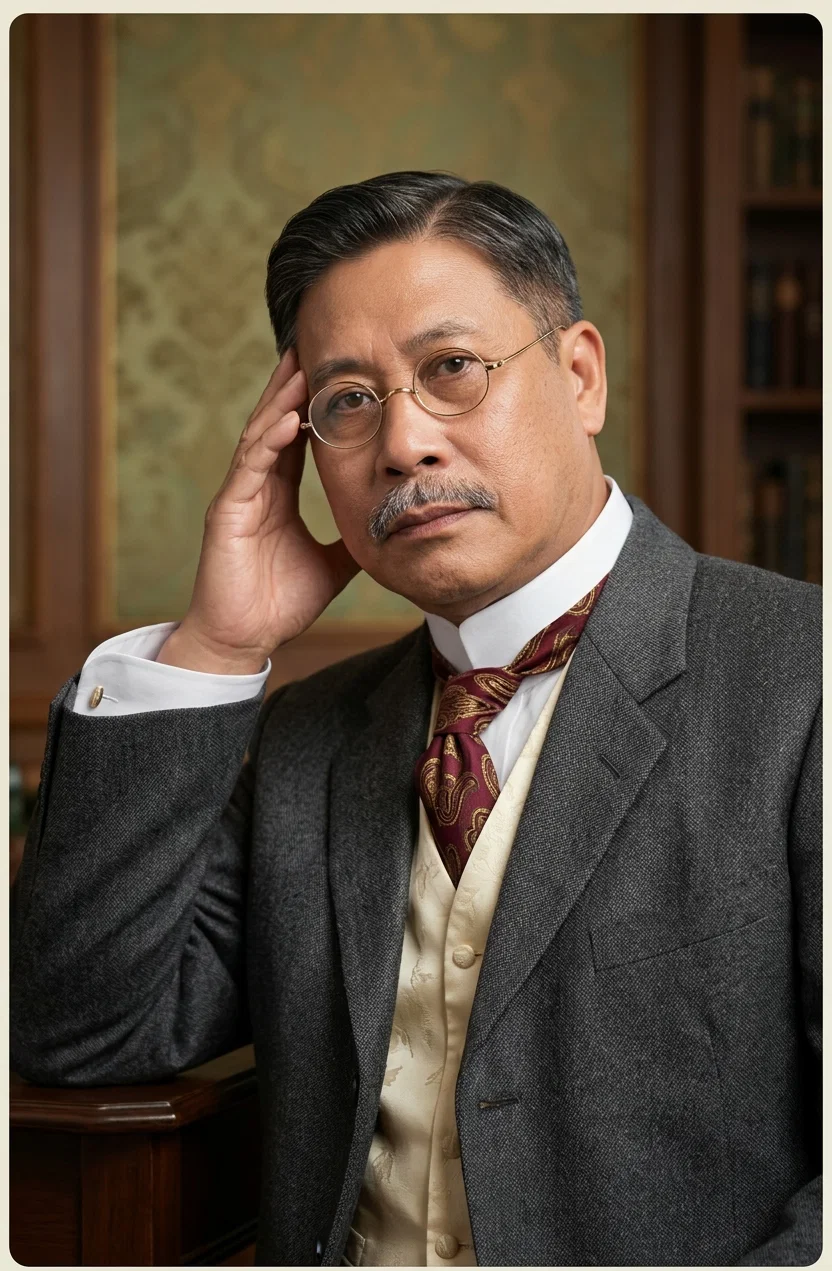
Ng Poon Chew, Canton, was converted from heathenism when about 15 years of age, and is now one of the leading Christian educators of China.
The Portland “Journal” and the Portland “Telegram” also recognized the disappointment from the standpoint of numbers in attendance, but they joined in saying that the speakers of the conference were of the highest order, and furthermore that it was very significant in what it taught. The significance of this teaching, according to these editorial writers, lies in the fact that it is not merely the National Reform Association that is putting forth such doctrine, but that the sentiment of the age is growing rapidly in the direction of placing Christ and His teaching in the lead in practical every-day life, as well as in the civil affairs of the state. The belief is growing with amazing rapidity that all our troubles in this life will be over when the world recognizes the “kingship of Christ.” And this leads us to consider
The Central Theme of the Conference
From the opening talk in the large Multnomah Stadium, where the afternoon and evening meetings were held each day, the central theme of the World's Citizenship Conference was the kingdom of Christ on this earth. Dr. Henry Collin Minton, president of the National Reform Association, and chairman throughout the conference, emphasized that “Christ is a world king.” He said that our civilization is not Mohammedan, or Buddhist, or Confucian, but it is Christian. The doctor12furthermore expressed the conviction that we should have a “world's Christian Hague” that would represent the broad and varied phases of Christian citizenship. Dr. Samuel Zane Batten, one of the leading speakers, affirmed that we are making a re-discovery in the kingdom of God. He stated that providence and history are calling upon us to Christianize the world, and also that the condition of the modern social world is a contradiction of the kingdom of our Christ. These statements from two of the most prominent speakers of the National Reform organization, represented the leading sentiment and central theme of the conference, so far as its general purpose is concerned. Nearly every other speaker had something to say in regard to Christian citizenship and in regard to crowning Christ as the king of this world. To these statements the audience would invariably break into loud and enthusiastic cheering.
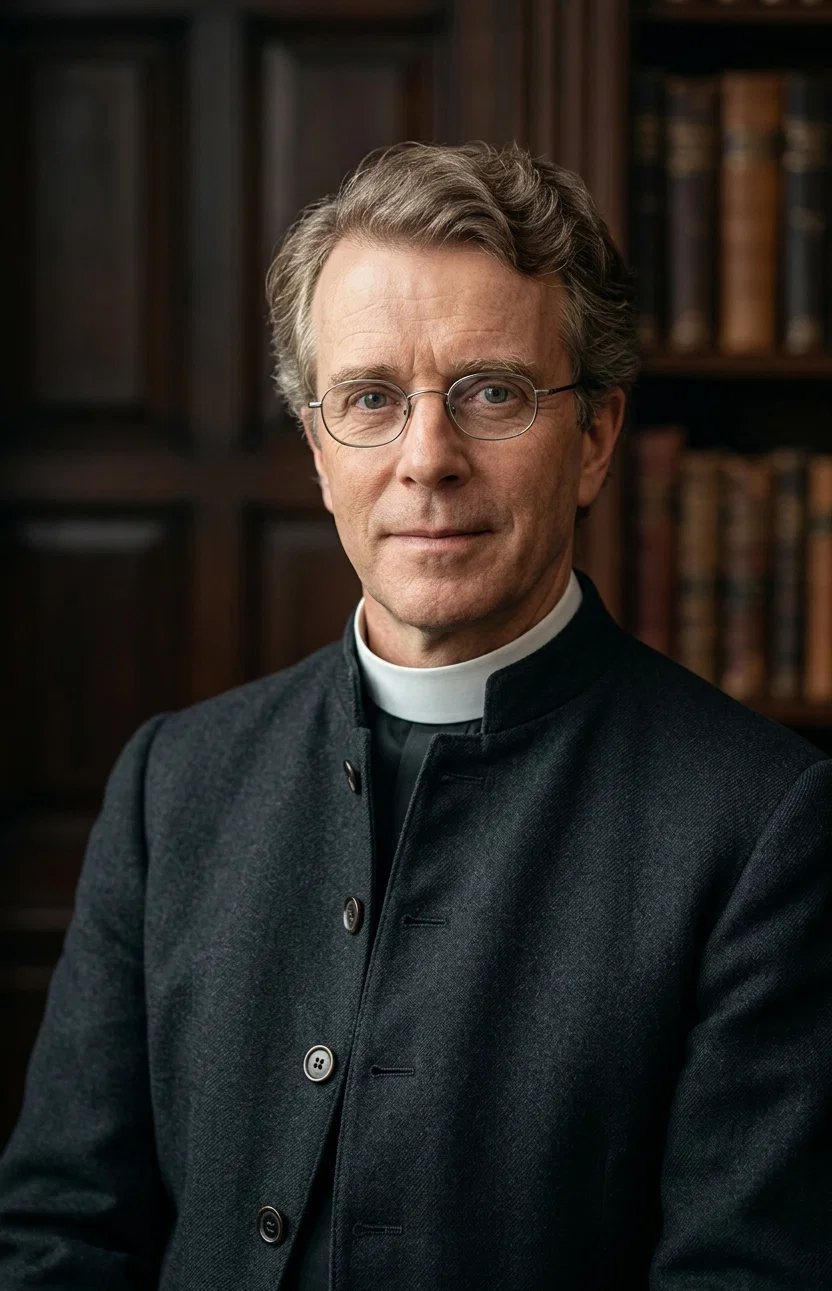
Robert J. Patterson, Belfast, Ireland, author of the “Catch-My-Pal” temperance movement
The Sectional Conferences
The forenoons were devoted to sectional conferences on such topics as intemperance, social vices, Sabbath desecration, prison reforms, religious instruction in the schools, immigration, and so on; and in all these sectional conferences the introducing of Christ into the affairs of men was made the central theme. For example, R. M. Downie, of Beaver Falls, Pennsylvania, who presided at a sectional conference during the discussion of the subject of Capital and Labor, opened the meeting with this statement:
“The principal theme of this great conference that is meeting in this city is the kingdom of Christ. That is the center of our program; the central statement of this conference is to make that kingdom eminent and dominant in the affairs of men. In other words, to realize that prayer which Christ taught His disciples to pray, ‘Thy kingdom come, Thy will be done on earth as it is in heaven.’ That is the principal purpose of this great conference, and every item of this magnificent program that has been provided for us relates in some way more nearly or more remotely to that one theme, that one purpose.”
The Whole World a Neighborhood
Many of the speakers dwelt upon the fact that through modern means of transportation and communication the whole world has been brought into one great neighborhood, and, therefore, we ought to have “world organizations” that would recognize “the fatherhood of God,” and “the brotherhood of man.” The only exception they seemed to make to this fatherhood and brotherhood rule is the Seventh-day Adventists. They made mention of them in some of their sectional conferences, particularly the one on the Sabbath question, as the principal opponents to their legal “Sabbath laws.” They also had quite a supply of literature on the ground, in which they endeavored to expose the doctrines of the Seventh-day Adventist people. They were quite unanimous in saying that the Seventh-day Adventists are a very good people, and the principal reason why they could not be brought into the “fatherhood” and “brotherhood” was because they had another view of the Sabbath question. Things of this character will possibly cause really thoughtful people to meditate upon the advisability of turning the whole machinery of government, throughout the world, into the hands of ecclesiastics.
Plans Proposed
SECOND WORLD'S CHRISTIAN CITIZENSHIP CONFERENCE PORTLAND OREGON JUNE 22 to JULY 6, 1913
The means by which they propose to carry out their reforms are through such plans as the following: they propose first to introduce the names of God and Christ into the Constitution of our United States government so as to express the recognition of Christ as this world's king. Then their program includes the introduction of the Bible into all the public schools; the enactment of universal Sabbath laws which will insure one day's rest in seven; the institution of more stringent divorce laws throughout the United States; and laws which will abolish the liquor traffic, and uproot many of the terrible social evils of the day.
In a great deal of this program all good people ought to be able to heartily unite. For instance, we ought to work for the cause of temperance by destroying the liquor traffic. Whether or not we can hope to be successful, we ought to work to that end with might and main. Our laws on the subject of divorce and other social evils are in many instances too lax, and quite generally too poorly enforced, and so there is opportunity for united effort along many of these important lines. But when it comes to enforcing rest upon a man, whether he may desire to take it or not, it is certainly a very debatable question; and with reference to the matter of electing Christ as this world's king, it would be well for us to carefully study His word to see whether or not He has given His consent to such a proposition. We believe that the Bible is very clear upon this subject, and that it abundantly teaches that Christ will not accept the kingship of this wicked world. He is developing and perfecting subjects in this world that He proposes to place in His eternal kingdom, but that kingdom will not be established until after His second coming in person; and the prophecies abundantly show that this coming is very near. While commending many things that were taught in the “conference,” the Portland “Oregonian” sounded a note of warning upon the subject of interjecting too much of the supernatural into politics. The following are the terse and practical words of that journal:
“Of course there is more or less peril in too much insistence upon the ‘supernatural’ view of affairs. All good things will run to extremes if they are not carefully guarded, and they are only too apt to vex their best friends by turning to evil. Take, for example, the doctrine so vigorously preached at the conference that ‘the state is of divine origin.’ One speaker went so far as to say that since the state derived its authority ‘from God,’ we ought to recognize the Almighty explicitly in all public documents, acts, and especially in legislation. Were his theory to be carried out in practice, we should establish a theocracy in the United States. Leaving aside the difficulties which would surely arise among the sects if any such plan were seriously undertaken, the reflective citizen can not forget that the Declaration of Independence teaches a very different doctrine. According to that document governments ‘derive their just powers from the consent of the governed,’ not from any inspired source. The theory of the divine origin of government and the divine authority of rulers has done so much mischief in the world that it is depressing to hear modern speakers recur to it with apparent favor. Is it not possible to apply the precepts of the Saviour to practical life without reverting to dangerous superstitions long since discarded?”
Those who have followed the National Reform Association through the fifty years of its history are well aware of the fact that one of their cherished dreams has been to create a sentiment that would demand the placing of the name of God in the Constitution of the United States. They claim that the great document as it now stands is a godless affair. It was therefore quite amusing that Ex-Vice-President Fairbanks, one of the most advertised speakers of the “conference,” should give utterance, possibly unwittingly, to the following:
“We often hear it said that God is not in our Constitution. Those who think that God is not in the Constitution of our government view it with a very limited vision. God is in it from beginning to end. The document teaches that the people are entitled to govern themselves; and this we believe to be in harmony with the principles of Christianity.”
These utterances of Mr. Fairbanks may not be good National Reform doctrine. But they are nevertheless the utterance of a well-known American who understands the principles upon which the American government is founded. And these statements are not only good American doctrine, but, as he said, they are also in harmony with the teaching of Christ.
Recognizing the Social Disease
Speaker after speaker in the conference spoke of the various topics which have come13to be popularly called “social diseases,” and “social problems.” A good outline of the situation in the world was given by Secretary Zane Batten. Some of his most striking utterances were:
“The dollar standard dominates in our civilization to-day. In our passion for money, we are losing sight of everything else. We are building great cities, and we are filling these cities with tortured and tormented human beings. The dollar is the sign manual of this age. For the sake of money men will build breweries and distilleries, and manufacture damnation liquors. For money the state licenses these institutions. For money men lease their properties for immoral purposes. Womanhood is cursed, and children robbed of their childhood. Any injustice is excusable provided it is done in the name of big business. To-day one per cent of the families of America own ninety-nine per cent of the wealth; forty-three per cent of the families in England own more than one half of the land. Thirty millions of people in that land are aliens in the land of their birth. A thousand men practically control the means of distribution in our land. In our world there is a great mass of people that come into the world without a chance, and they live without any real heritage in society. God does not design that one man by financing shall manipulate so that thousands of women shall be toiled off to minister to the unchecked passions of evil men; that children shall be damned into the world and then starved out of it; that in our modern civilization women shall be under continual temptation to barter away womanhood because of inadequate wage. A woman can sell her womanhood to-day and make ten times what a common working girl can earn.”
Dr. T. H. Acheson, Ph.D., on the subject of “Our Social Problem; Is It Economic or Moral?” declared that “notwithstanding our Christian sentiment, our Christian laws and institutions, there is much in the present hour that forebodes disaster.” He referred to the “bold, brazen, gilt-edge saloon, with clanking glass and sounding music.” “And from this saloon there staggers out the husband, the father, the provider, to go home and strike terror to the wife and children. In one year two billions of gallons of strong drink are consumed in this country; twenty-three gallons per capita.” With reference to vice, Dr. Acheson continued: “Girls are held to-day in slavery worse than Egyptian or African bondage. The white slave traffic has reared its hideous head in our midst, and girls are sold as certainly to-day as tho the auction block had returned. Hear the chains clank.” “Divorce,” he further stated, “rends asunder every year thousands of American homes.” “The Lord's day is trampled underfoot, and it is essential for the nation's prosperity.” “In many of our states the Bible has been ruled out of the public schools.” “To-day many people are pleasure mad, and many money mad.” “The land is full of bloody crimes, and the city is full of violence.” “These,” declared the speaker, “are preeminently moral questions.”
Many of the speakers, both in the general meetings in the stadium, and in the smaller sectional conferences held in prominent churches, continued to emphasize the fact that the world is plunging headlong into iniquities, vices, and crimes of every conceivable and almost unspeakable sort. In view of this situation in the world they took occasion to emphasize again and again, as already suggested, the necessity of the “kingship of Christ,” and the development of Christian citizens who would manage the affairs of the world and put down this vice and crime.
Some of the speeches in which were set forth the evils of the time, and particularly those dwelling upon the concentration of wealth, would lead one to think that he was listening to Socialist orators. We do not say this in any way to cast reflections upon anybody, for the very best people of every country, Socialist and churchman alike, are recognizing that this old world is reeking with sin and vice and crime, and that if it is saved from complete destruction, it will be necessary to do something about it very quickly.
Some Reflections
As we sat in the conference from day to day, or mingled among the men who were making the speeches and directing its affairs, we were impressed with the fact that these men must be among some of the very best in the world. They see the evil that is existing on every hand. Their souls are stirred as they see young men and young women being carried down to ruin through the drink business, and through the social evil and its white slave traffic; they deplore the injustice in courts, the bribery, the grafting, and all the rest of the list. They are casting about for some way by which this wickedness can be overthrown.
Not only do we have the National Reform Association, as expressed in its World's Citizenship Conference, that is working to this end, but there are many other like organizations, such as the Federal Council of Churches, The Laymen's Missionary Movement, the Men and Religion Forward Movement, and others, that are all seeking through “Christian combination” to exert influences upon politicians that will better these conditions.
But in working along these lines, can these good men ever hope to succeed? Have they given careful consideration to the fact that Christ inspired an apostle to say “that in the last days grievous times shall come. For men shall be lovers of self, lovers of money, boastful, haughty, railers, disobedient to parents, unthankful, unholy, without natural affection, implacable, slanderers, without self-control, fierce, no lovers of good, traitors, headstrong, puffed up, lovers of pleasure rather than lovers of God; holding a form of godliness, but having denied the power thereof: from these also turn away”? 2 Tim. 3:1-5. In the 13th verse of this same chapter, we read: “But evil men and seducers shall wax worse and worse, deceiving, and being deceived.” And the 12th chapter of Daniel, a prophecy which, according to the statement of the prophet himself, was not to be understood until “the time of the end,” says that “the wicked shall do wickedly; and none of the wicked shall understand.” And then again in that very clear parable presented by the Master in the 13th chapter of Matthew, He tells us of the husbandman that sowed good seed in his field. He tells of the enemy who went out and sowed tares. And when the servants of the householder saw the tares in the field, they asked if they should not go out and pluck them up, but the master said, “Let both grow together until the harvest.” The disciples came to Christ privately to ask the interpretation of the parable of the tares of the field, and He explained to them that “the field is the world; the good seed are the children of the kingdom; but the tares are the children of the wicked one; the enemy that sowed them is the devil; the harvest is the end of the world; and the reapers are the angels. As therefore the tares are gathered and burned in the fire; so shall it be in the end of this world. The Son of Man shall send forth His angels, and they shall gather out of His kingdom all things that offend, and them which do iniquity; and shall cast them into a furnace of fire: there shall be wailing and gnashing of teeth. Then shall the righteous shine forth as the sun in the kingdom of their Father. Who hath ears to hear, let him hear.” Matt. 13:38-43.
Now this parable plainly shows that both the wicked and the righteous are to be together in this world until its end, and the other scriptures already quoted show that the evil men and seducers shall wax worse and worse, both deceiving and being deceived. And it is not until the end of the world that the Son of Man shall send forth His angels, and then shall be gathered out of His kingdom all things that offend. These scriptures are perfectly plain upon this subject.
Now, in view of such plain statements of Scripture in regard to the conditions that will obtain in this world, particularly so in the time spoken of in the Scriptures as “the last days,” why is it that men expect to convert this sinful old world, and lead it all into the great fold of the “fatherhood of God” and the “brotherhood of man”? A few thousand men may get together and be of one mind. As14they talk, and as the vociferous cheers are heard, they become intoxicated by their own enthusiasm. Hence, they fail to see the facts as they actually exist in the world. For the time being they are shut up to themselves, and do not see the great wicked world as a whole. They hear only their own utterances and their own cheering of themselves, but when they go out into the old wicked world and see things as they actually exist, they should be awakened from their delirium to recognize that God speaks the truth when He says that “evil men and seducers shall wax worse and worse,” and that the wicked are doing wickedly and none of the wicked understand. The wicked do not realize the destruction that is hanging over them in this world. While individuals here and there will be aroused to sense the situation, the great mass will inevitably go down in destruction.
There is nothing in the Bible that holds out the hope that we may be able to convert this whole wicked world. The only promise is that we may reach individuals with the message of salvation, and these individuals that are saved out of every generation will make up the kingdom of Christ in the great resurrection day.
Stripped of all the glamour and glitter and the intoxicating influences of the enthusiasm of great conventions, we should get down to the facts in regard to things as they actually exist in this world, and cease our dreaming. God has told us through His word how things would be. These conditions, as God describes them, are not the way He would have them, but, notwithstanding, He tells of them as they actually are.
One of the greatest dangers of this day is that we shall get our minds filled with theories, and become enraptured with our own ideals, to the extent that our mental condition will become so befogged that we fail to recognize actual fact. In this confused state of mind men may be deluded into honestly thinking that the world, in the wickedest time of its existence, has really turned to Christ, and hence it will attempt to promulgate its “Christian decrees.” A. O. TAIT.