Their Populations, Climate, and Soil — Mountain Chains and Volcanoes — Marvels of Earlier Civilization and Greatness — Ruins That Rival Egypt and India
Progress of Our Work in Those Fields
By ARTHUR G. DANIELS
THE work in the East Indian section of our Malaysian mission field is carried on in three separate divisions,—Sumatra, Java, and Borneo.
The first of these islands to be entered was Sumatra. In the year 1900, Pastor R. W. Munson and family located in the city of Padang, on the west coast of Sumatra, and began active missionary work. A mission school was opened, Bible studies were conducted for inquirers, and literature was translated into Malay for the people speaking that language.
MIXED POPULATION
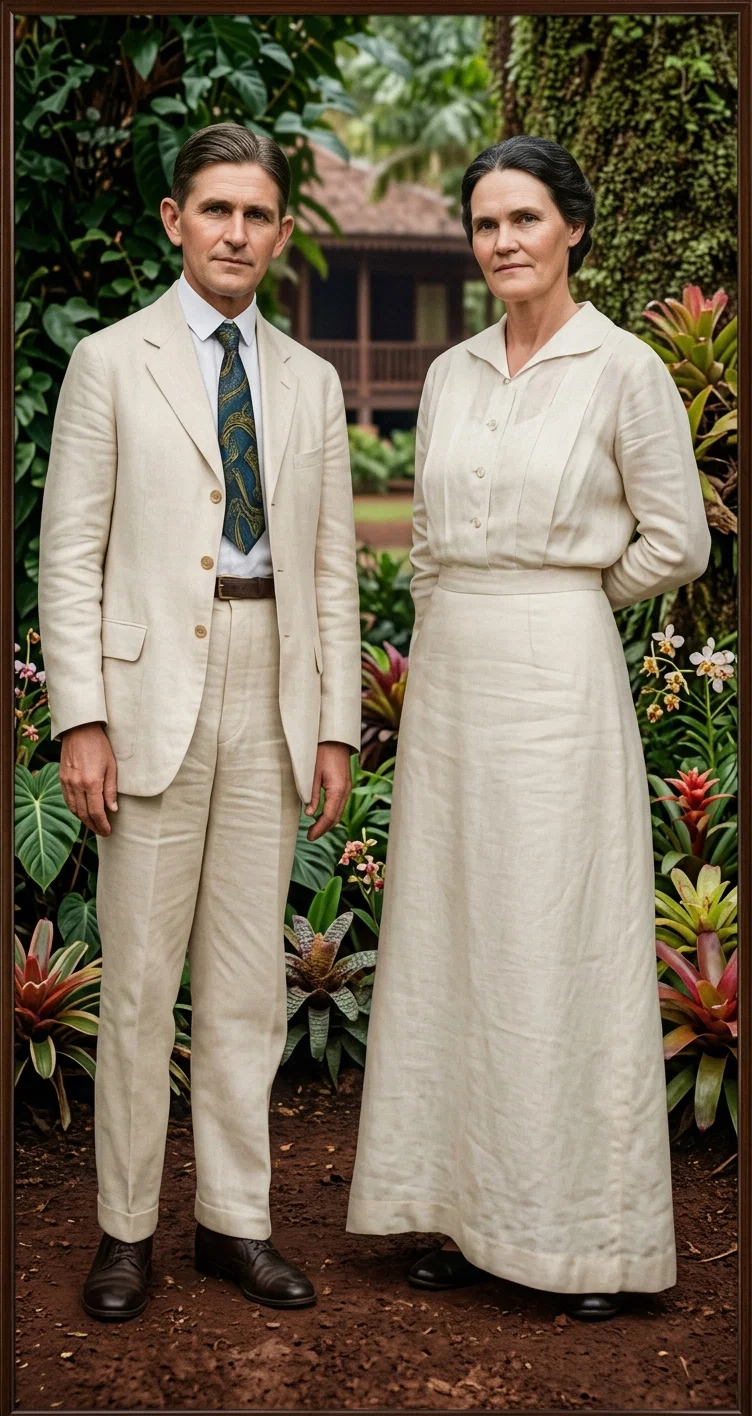
Pastor Yates, superintendent of our Sumatra Mission, and Mrs. Yates
The population of Sumatra is a mixture of Malay and Chinese. Mohammedanism has a strong hold on its people, and the Dutch government exercises a restraining control over missionary endeavors throughout the East Indies. This combination of conditions makes Sumatra a difficult field for gospel work. But though the results seem small, yet victories have been won as the workers have pressed on with their efforts.
Among the few who took their stand for the message of truth was a young man named Timothy. As he felt a great desire to become an evangelist, and gave evidence of possessing the ability to do that kind of work, he was encouraged by Pastor Munson to make suitable preparation.
TIMOTHY GOES TO COLLEGE
In 1904, young Timothy entered a theological school in Amoy, China. His conscientious observance of the seventh day as the Sabbath of the Lord according to the fourth commandment, led one of the leading teachers in the school to investigate the Sabbath question. As the result of his study, this teacher, Pastor N. P. Keh, began the observance of the seventh day. After further study, he embraced all the truths of the Scriptures which we as a people hold.
As Pastor Keh was a preacher of experience and ability, he soon began to proclaim publicly the message he had come to believe and love. His labors in China have been greatly blessed by the Master. Many have been led to the light of God's truth. About two years ago, he was asked by our committee in China to open our work in Fuchau, the capital of Fukien. He now has a church of sixty or seventy members, and a company of twenty or thirty receiving instruction for baptism. He has also opened a school, which has an attendance of one hundred. This is an outgrowth of the work begun by Pastor Munson in Sumatra.
HURRIED TO HIS PEOPLE WITH THE NEWS
Finding it necessary to spend some time in a cooler climate, Brother Munson and family removed to Australia, where they continued the work of translating for the Malay language.
Pastor and Mrs. G. A. Wantzlick were sent from Australia to take charge of the work in Sumatra. In 1907, a young man named Immanuel, from the Battak country in the interior of the island, embraced the message. In the joy and enthusiasm of his new-found light, Immanuel hurried to his people, to tell them the good news; and in a short time, he reported that twenty or more had taken a stand with him. Thus the cause made headway at different points in the field.
Steadily failing health made it necessary for Pastor Wantzlick to return to Australia. As it took considerable time to secure a permanent superintendent for the field, the work suffered. At the present time, Pastor and Mrs. Yates are at Padang laboring earnestly to build the work up in the different parts of the island.
ITS EXTENT, ITS SOIL, AND WILD ANIMALS
Sumatra lies along the west side of the Straits of Malakka. It is 1,115 miles long, and 275 miles across its greatest width. Its area in square miles is nearly equal to that of Spain, but its population is only about 4,000,000.
A lofty mountain range skirts the western coast, while on the east of this range there are large tracts of alluvial soil. Indrapura, the highest mountain of the island, is 11,800 feet. It is an active volcano, and there are seven others on the island.706
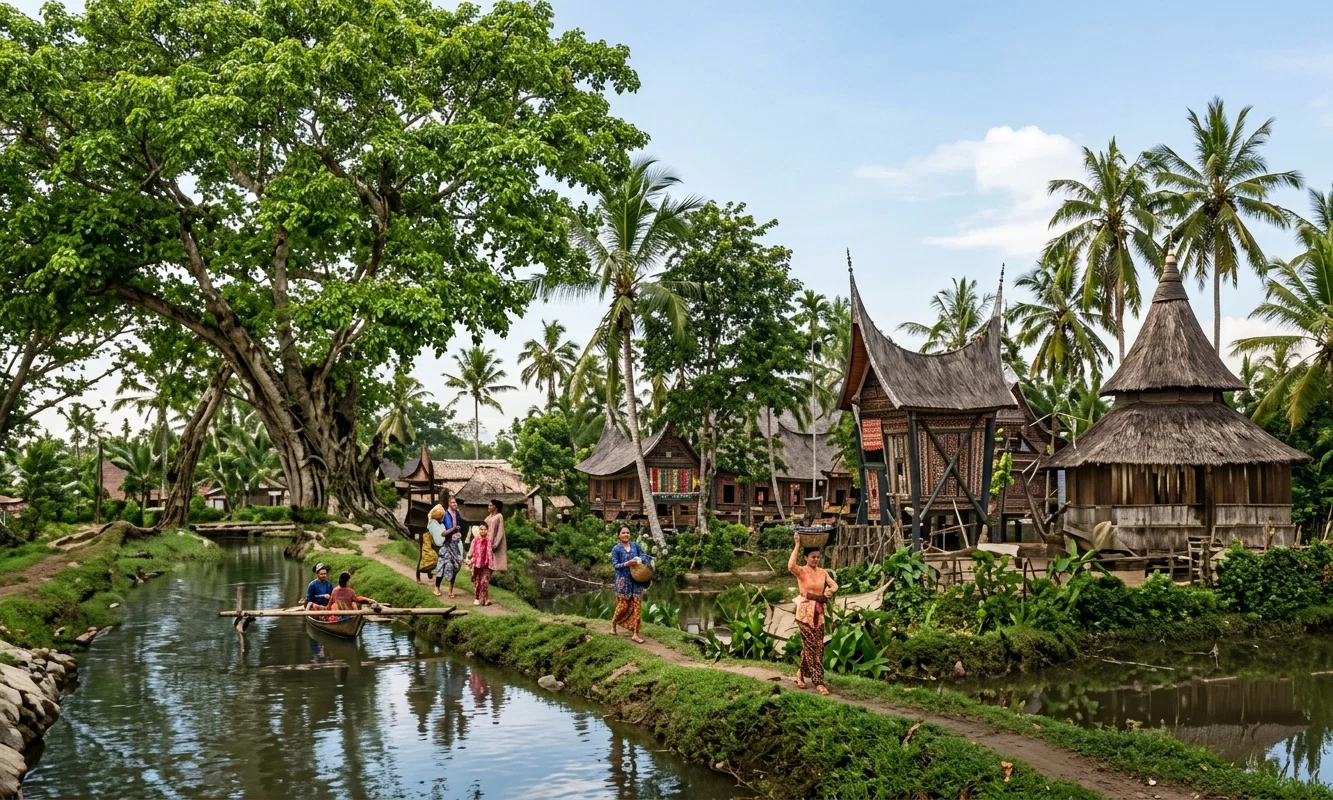
MALAY VILLAGE IN SUMATRA
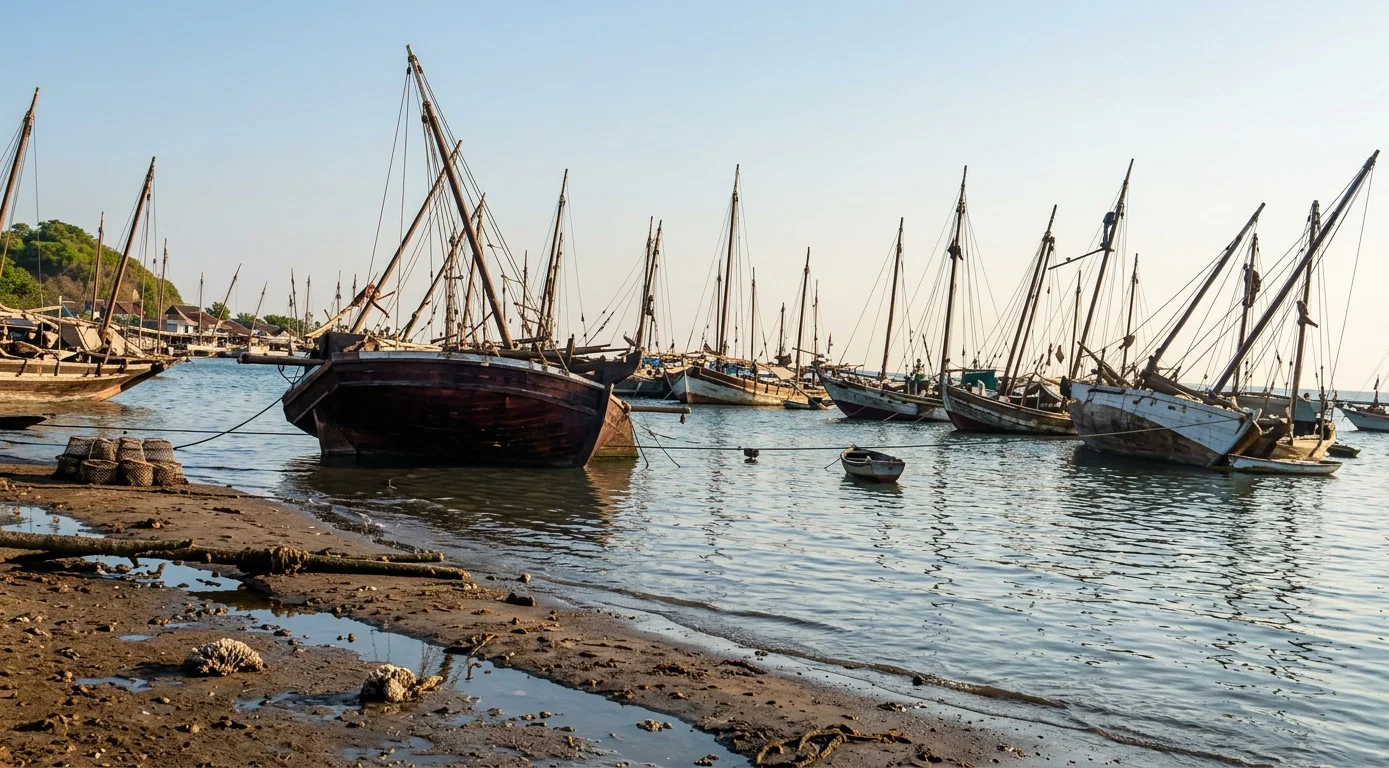
PEARLING BOATS, JAVA
The rainfall is abundant, and the soil is productive. The principal agricultural products are rice, sugar, coffee, coconuts, and tobacco. In one section there are rich petroleum wells. In this island are found the orang-utan, the tiger, the bear, the rhinoceros, and even the elephant. Crocodiles swarm in the rivers. There is a great variety of insect life. Naturalists report having found 250 species of the spider.
RULED BY THE DUTCH
The government of the island is administered by the Dutch, the capital being located at the city of Medan. The inhabitants in the southern part of the island accepted Dutch rule without much opposition; but the Achinese, in the northern part, warred against the Dutch for thirty years, causing great loss of life and expense to Holland. The Achinese are an intelligent, industrious people.
THE ISLAND OF JAVA
Missionary work under the auspices of the Seventh-day Adventist Foreign Mission Board was begun in Java in 1906. In that year, the Australasian section of the Mission Board sent three workers to Surabaya, Java. As is usually the case on entering new mission fields, these workers experienced many perplexities and hardships while learning a new country and climate, and an altogether new environment. The climate was especially trying at Surabaya; and within a year after entering upon their work, they had all suffered serious illness, and Pastor and Mrs. Teasdale had lost by death a bright, promising son.
The island of Java lies close to the equator, extending along its southern side a distance of 666 miles. Its width varies from 15 to 135 miles, giving an area of 49,197 square miles — about the size of the state of New York. On this island are living 30,000,000 people, 459 to the square mile. This exceeds the population of all the rest of the Indian Ocean combined. The island belongs to Holland, and is the richest and most important in Malaysia.
MOUNTAIN CHAIN CLEAR THROUGH IT
Java has a mountain chain extending through the entire length of the island. In this chain there are forty-five volcanoes, twenty of which are active at the present time. The lowlands are very fertile, producing rice, sugar, bananas, tea, coffee, tobacco, and spices in great abundance. The principal mineral products are tin and petroleum.
REFINEMENT OF MANNERS
The native inhabitants, called Javanese, belong to the Malay race. The Javanese are an attractive, winsome people to most foreigners who visit the island. One who has recently spent some time among them describes them as the “finer flowers of the Malay race — a people possessed of a civilization, arts, and literature in that golden period before the Mohammedan and European conquests. They have gentle voices, gentle manners, fine and expressive features. . . . They are a little people; and one feels the same indulgent, protective sense as toward the Japanese. Their language is soft and musical—‘the Italian of the tropics’; their ideas are poetic; and their love of flowers and perfumes, of music and the dance, of heroic plays and of every emotional form of art, proves them as innately aesthetic as their distant cousins, the Japanese, in whom there is so large an admixture of Malay stock. Their reverence for rank and age, and their elaborate etiquette and punctilious courtesy to one another, are as marked even in the common people, as among the Japanese.”
MARVEL OF CIVILIZATION AND GREATNESS
During the last century, discoveries have been made in Java which show that between the seventh and tenth centuries, this island enjoyed a degree of civilization and greatness that is now a marvel to all who visit the country.
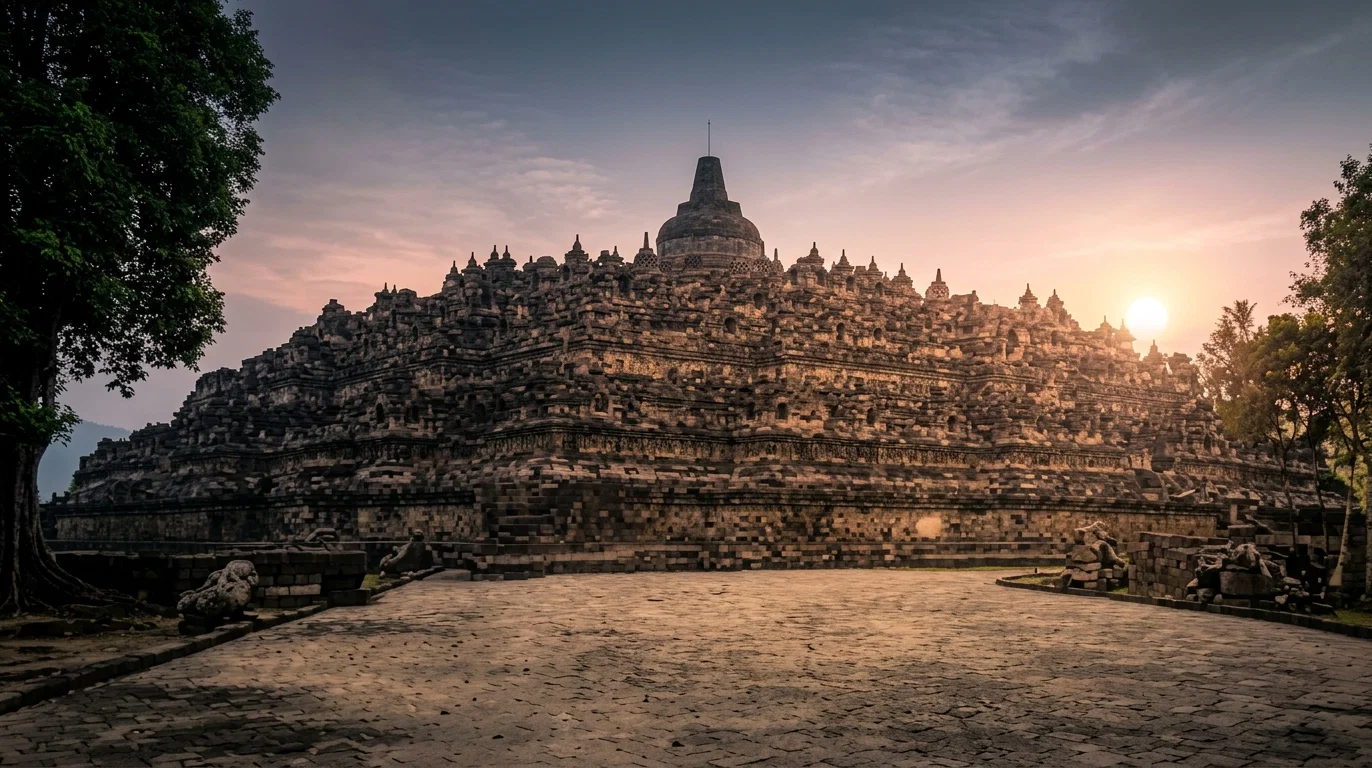
After an extended examination of the ruins of some of the great buildings of Java, Alfred Russell Wallace wrote, “The number and beauty of the architectural remains of Java . . . far surpass those of Central America, and perhaps even those of India.” Of one of the temples, called Boro Budur, he said, “The amount of human labor and skill expended on the great pyramid of Egypt sinks into insignificance when compared with that required to complete this sculptured hill temple in the interior of Java.”
BORO BUDUR, JAVA
RUINS THAT RIVAL EGYPT OR INDIA
Another writer who has recently returned from Java says: “The fact is not generally appreciated that there are ruins of Buddhist and Brahmanic temples in middle Java surpassing in extent and magnificence anything to be seen in Egypt or India. There remains nearly intact the temple of Boro Budur, covering almost the same area as the great pyramid of Gizeh. It is ornamented with hundreds of life-size statues and miles of bas-reliefs, presenting the highest examples of Greco-Buddhist art—a sculptured record of all the arts and industries, the culture and civilization, of the golden age of Java, of the life of the seventh, eighth, and ninth centuries in all the farther East—a record that is not written in hieroglyphs, but in plainest pictures carved by sculptor’s chisel. That solid pyramidal temple, rising in magnificent sculptured terraces, that was built without mortar or cement, without column or pillar or arch, is one of the surviving wonders of the world. On the spot, it seems a veritable miracle.”
WEALTH OF ORNAMENT
It is claimed that this terraced pyramid is covered with a wealth of ornament such as “no other one structure in the world presents.” It is five hundred feet square at the base, and the dome is one hundred feet high. No cement was used to hold the stones of this great structure together. They were closely fitted together by the expert stone-cutter.
The bas-reliefs of the terraces present the everyday life of the seventh and eighth centuries. “Temples, palaces, thrones and tombs, ships and houses, all of man's constructions, are portrayed. The life in courts and palaces, in fields and villages, is all seen there. Royal folk in wonderful jewels sit enthroned, with minions offering gifts and burning incense before them, warriors kneeling, and maidens dancing. The peasant plows the rice fields with the same wooden stick and ungainly buffalo, and carries the rice sheaves from the harvest field with the same shoulder poles, used in all the farther East to-day. Women fill their water vessels at the tanks, and bear them away on their heads, as in India now; and scores of bas-reliefs show the unchanging customs of the East that offer sculptors the same models in this century. Half the wonders of that great three-mile-long gallery of sculptures cannot be recalled.”
BUDDHA WAS THEIR GOD
The five hundred images of Buddha occupying places carefully planned for them, show that the builders were Buddhists. There are proofs of various kinds to show that in the tenth century, Buddhism began to decline in Java; and that in the fifteenth century, Mohammedanism took its place. Mohammedanism is still the nominal religion of the Javanese.
In the hands of the Dutch, the cultivation of the soil has been developed to the highest state of efficiency; the whole island being “cultivated from edge to edge like a tulip garden. . . . All the valleys, plains, and3hillsides are planted in formal rows, hedged, terraced, banked, drained, and carefully weeded as a flower bed.”
(Continued on page 13)
“FINEST TROPICAL ISLAND OF THE WORLD”
It is this thorough cultivation of rich soil, which receives a good, well-regulated supply of water, that gives Java the distinction of being the “finest tropical island in the world.” It is claimed that Java produces about one tenth of the world's supply of sugar, the value of the output amounting to about $75,000,000 a year.
Our mission workers in Java find their work both interesting and encouraging. They have established churches in the cities of Batavia and Surabaya. Batavia is situated at the western end of the island, while Surabaya is located at the extreme eastern end. Believers are scattered through the island.
We print a Javanese paper, which is well received in the island. Our converts are faithful and liberal in supporting the cause, and earnest in their activities to lead others to the light. Thus jewels are gathered for the kingdom of the Prince of peace.