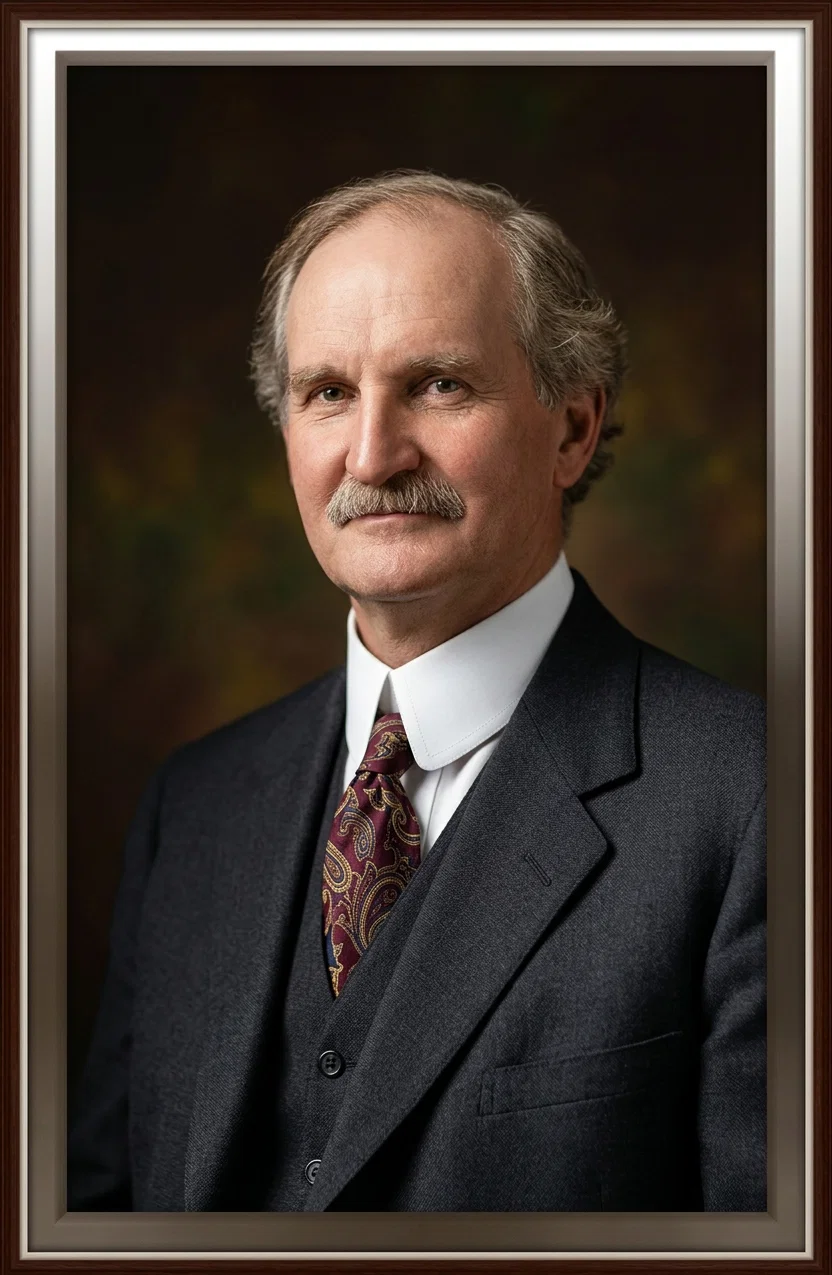
John B. Sleman, Washington, D. C.
Founder of the Movement
ONE of the most significant and noted gatherings of modern times in the interest of missions, convened May 3 at the Auditorium, the largest theater in Chicago.
The Men’s National Missionary Congress was the culmination of a series of seventy-five preliminary conventions held in all the large cities of America. One of the most significant things about this missionary movement is that it is a purely men’s organized effort to solve the most important problem of the ages,—the evangelization of the whole world.
To see four thousand men gathered from every part of America,—bankers, lawyers, doctors, railway officials, merchants, politicians, and preachers,—all in the interests of missions, in an age of great spiritual decadence, is really marvelous.
Noted Men
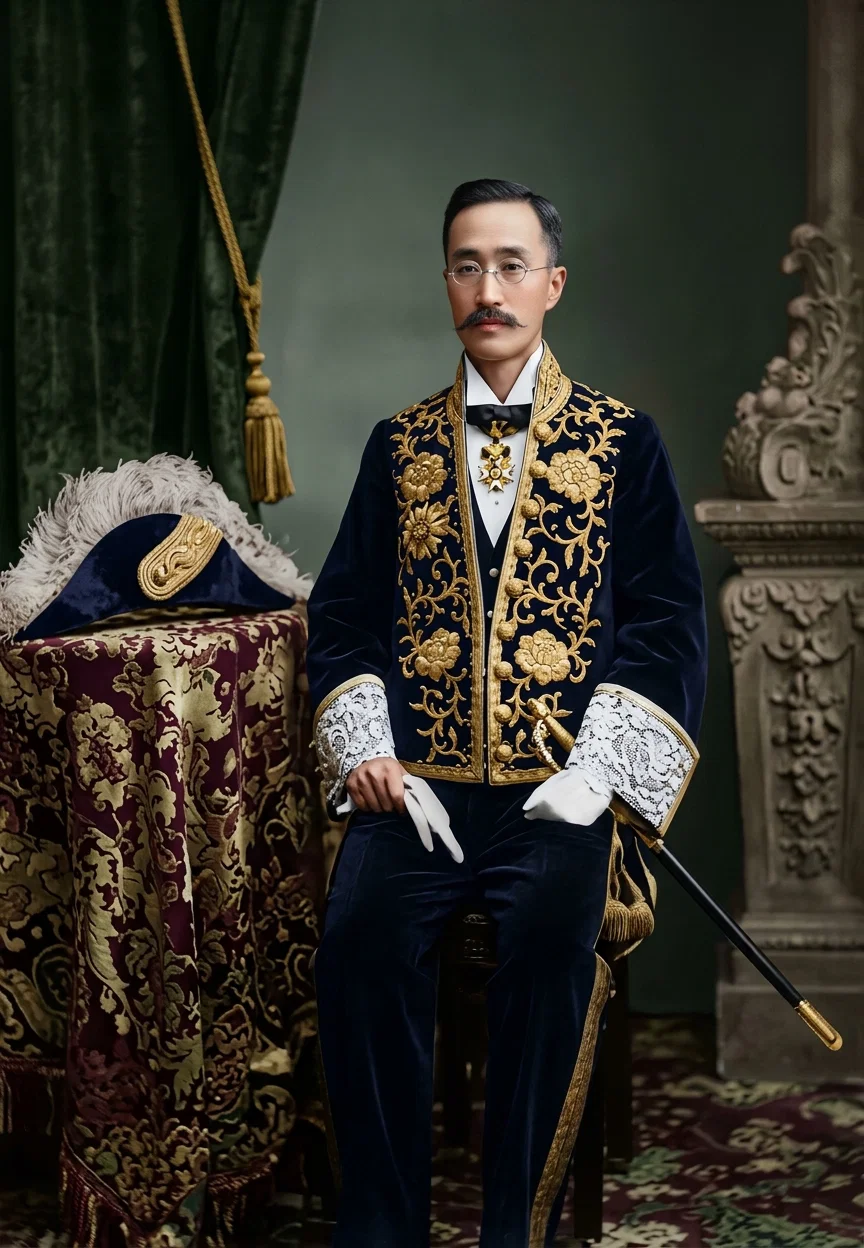
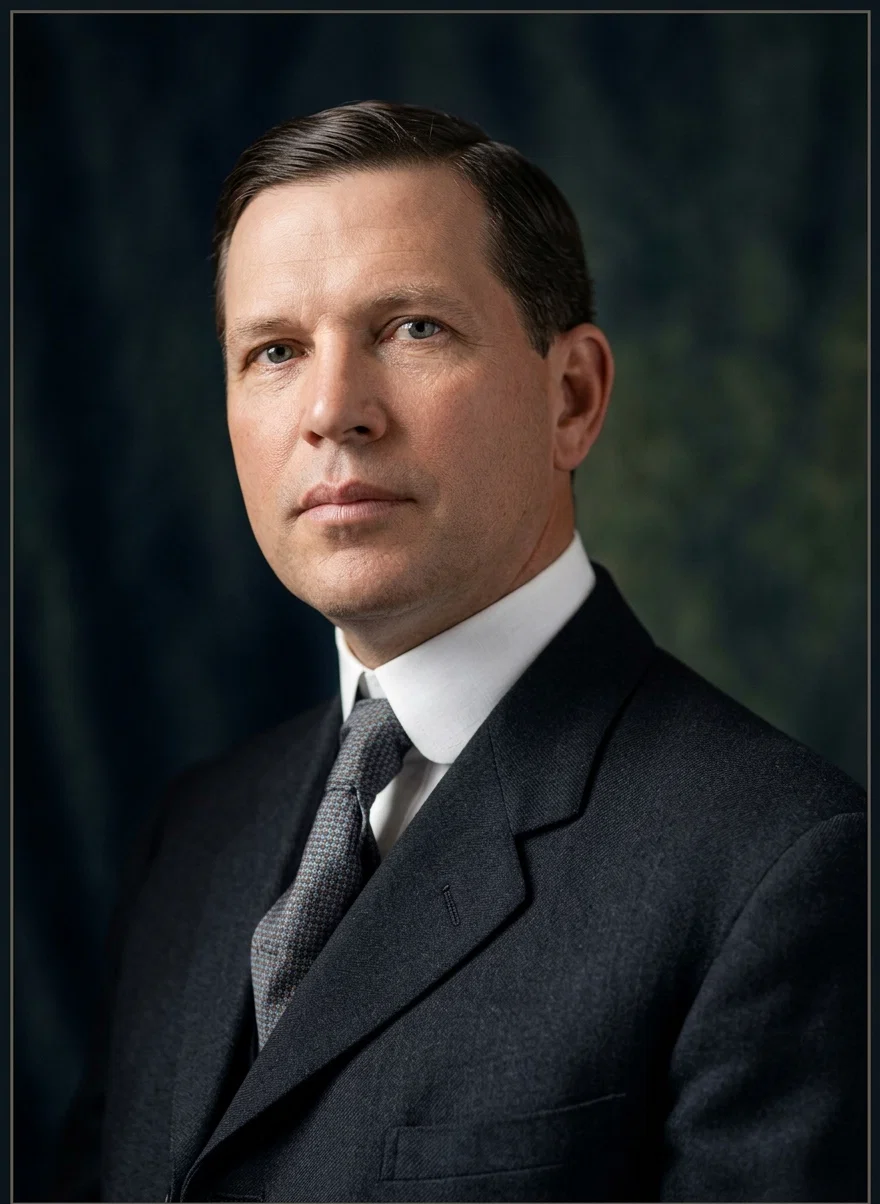
Among the delegates were present some noted men, such as Vice-President Fairbanks, Lord Wm. Cecil, brother of the Earl of Salisbury, Ex-Governor Folk of Missouri, Ex-Governor Hanly of Indiana, Prince T. H. Yun of Korea, and a score of bishops and prominent clergymen, among whom I might mention Bishop Thoburn, the noted missionary bishop of India.
Its Composition
All the leading denominations of America were represented in the congress. In fact, the last afternoon session, each denomination represented held a separate conference, in which the following churches participated: Baptists, Disciples, Congregationalists, Episcopalians, Friends, Lutherans (Synod and General Council), German Evangelical, Methodists (North and South), Presbyterians, Reformed Church, United Brethren, and Evangelical.
The sectional conferences that occupied another afternoon session, show the varied elements that are allied in the movement. There were the physicians’ and surgeons’ conference, ministers’ conference, church officers’ conference, lawyers’ conference, business men’s conference, editors’ conference, brotherhood conference, and conference of the Bible and Sunday-school teachers. In the ministers’ meeting alone there must have been nearly two thousand persons present. And at the same hour the congress provided a special session at the Auditorium for women.
However, all the activity and enthusiasm manifested, and the large and varied elements that have been enlisted in the movement, are all needed if the program placed before the congress is to be fully carried out. The immense mottoes stretched across the stage and galleries and other prominent places, set forth the program quite clearly.
“THE EVANGELIZATION OF THE WORLD IN THIS GENERATION: WE CAN DO IT AND WE WILL.”
“THIS IS THE ONLY GENERATION WE CAN REACH.”
“UNTO HIM SHALL THE GATHERING OF THE NATIONS BE.”
Then in a conspicuous place was the following: “Characteristic features of the standard missionary church: 1. Missionary pastor; 2. Missionary committee; 3. Missionary Sunday-school; 4. Program of prayer for missions; 5. Systematic missionary education; 6. An every member canvass for missions; 7. The weekly offerings for missions.”
The Purpose of the Movement
The purpose of the congress can well be stated in the words of J. A. McDonald, editor of the Toronto “Globe,” and one of the principal speakers:
“America; the world; and these two linked together by an awakened sense of responsibility. That is the organizing idea of this national congress of American laymen. The laymen’s missionary movement will have justified itself if through this national congress there is brought home to the conscience and heart of this nation a vivid and compelling sense of America’s responsibility of the uplift of the world. To raise this question so conspicuously before the whole world, is to create a new time of crisis in this nation. The challenge of this national congress, is a testing of the American republic. Lincoln’s campaign was for liberty and union within this republic. We are to-day in the thick and stress of another and larger crisis. The campaign of which this national congress is significant, has as its objective not the integrity of the United States, but the redemption of the world. The meaning of this movement is that America recognizes its world relationship. Its message is a declaration of America’s world responsibility.”
Dr. Mullins, president of the Baptist Theological Seminary, Louisville, Kentucky, made some helpful remarks:
“The great need of to-day is that men who are successful in business should give their talents and gifts to the Christian work. Too long have the business men left the running of the affairs of the church to the clergy and the women. This missionary campaign, by rousing the laymen of America, will save us from materialism. Our greatest need in America is that the forces which make for character, shall be superior to the forces that are directed to the making of money. There is no greater influence in this direction than missionary effort. This movement means the coming of power to our home churches. World-wide evangelization is the task, and the power is the gift of the Holy Ghost.”
Dr. Lilly of Richmond, in speaking on the theme, “What the Laymen Can Do for Missions,” said:
A New Order of Princes
“The time has come for a new order of princes and principalities. The prince will be the successful business man of America. His principality will be a great district of the heathen world. It will have a million or more people in it, but they are untaught and needy like a multitude of little children. He will send his missionaries to them and teach them how to heal diseases, how to protect life, and how to keep off the famine and the plague. He will found for them a system of education, and lead them to the waters of intellectual life. He will teach them about God—about God their Father, who loves them; and they shall find eternal life. The largest potential factor in the work is the men of the church. They are as yet a largely undeveloped resource. To enlist them in the missionary enterprise, is to make a success in the whole world, and also to make men a success in the church. So long as the church spends ninety-five per cent of our gifts on the work in America, and only five in the heathen world, the work of missions can not be successfully prosecuted. The men of the church must offer themselves in greater numbers as missionaries11. If the heathen world is to be won for Christ, it must be done by men.”
Christ the Only Hope
Prince T. H. Yun, formerly vice-minister of foreign affairs of Korea, is at present president of the Southern Methodist College at Sang-do, Korea. He was persecuted for embracing the Christian religion, and on several occasions had to flee, but at present is much respected, and his counsel is sought by the government. His theme was “The Far East,” and he said in part:
“I came from a race whose watchword has been for the last twenty centuries, Backward Ho. The watchword of your race has been, Westward Ho. The East thinks that the past was the best; that the present is bad enough; and that the future is to be worse. Your sentiment is well expressed in the words of a Methodist bishop: ‘Good days are gone; greater days are here; but the greatest days are to come.’
“The East is the land of rest, of contemplation, of simple life. The West is the land of action, of progress, of the spirit of life. Can these ever be harmonized? Just as the growth of Western civilization, without Christ, will crush us in the East with materialism and brutality, so the Oriental philosophy of contemplation without Christ will crush you. Who is able to save the East from a soulless civilization, and the West from a fruitless philosophy? ‘There is none other name given among men, whereby we must be saved.’ You give the East Christian civilization, and we give back Christianized rest and Christianized contemplation. Jesus Christ has made all one, that He might reconcile the East and the West to God in one body by Christ.”
Money for the Gospel
Mr. Marling, a prominent business man of New York, who was chairman of the meeting, spoke on the subject of “Money and the Kingdom,” and said:
“By itself money is worthless. When it is linked with personality it is omnipotent. It molds the personality unless he is big enough to mold it. Reverently be it said, this kingdom which we are talking about coming in this generation, never can come until we consecrate this gold and silver of ours unto the Lord Jesus Christ. I am thankful that the laymen’s missionary movement has come. I am thankful that these noble missionaries have taught me a new incentive for life, and dignified my outlook on life, so that my money-making is not a matter of drudge. Why do I not retire? I am not ready to retire. I want to live a few more years, and be in business for the Master’s sake. Is not that enough of an ambition for any man? I do not care about any more wealth, but I do care for the use of wealth. I wish to look into the face of Jesus and say, ‘My Master, I am in business for Thee and Thee only.’”
The man who was largely responsible for the inception of the laymen’s missionary movement, is John B. Sleman, who sixteen years ago conceived the idea of utilizing the mighty forces that lay latent in the business men of America for the benefit of missions. He was sick at the time of the congress, but a message of sympathy was sent him by a rising vote of the delegates.
Does It Pay?
The real power of the movement is J. Campbell White, general secretary, who has worked untiringly for the success of the congress. His speech contained among other things the following:
“Every man is facing inevitable and eternal bankruptcy except as he invests his life and his treasures in something that can abide forever. On the Congo they value a man at the number of cattle he will bring; on the Hudson and on the Thames they value men too often by their bank-accounts or social standing; but by the River of Life every man is valued by what he is, as revealed by what he has done.”
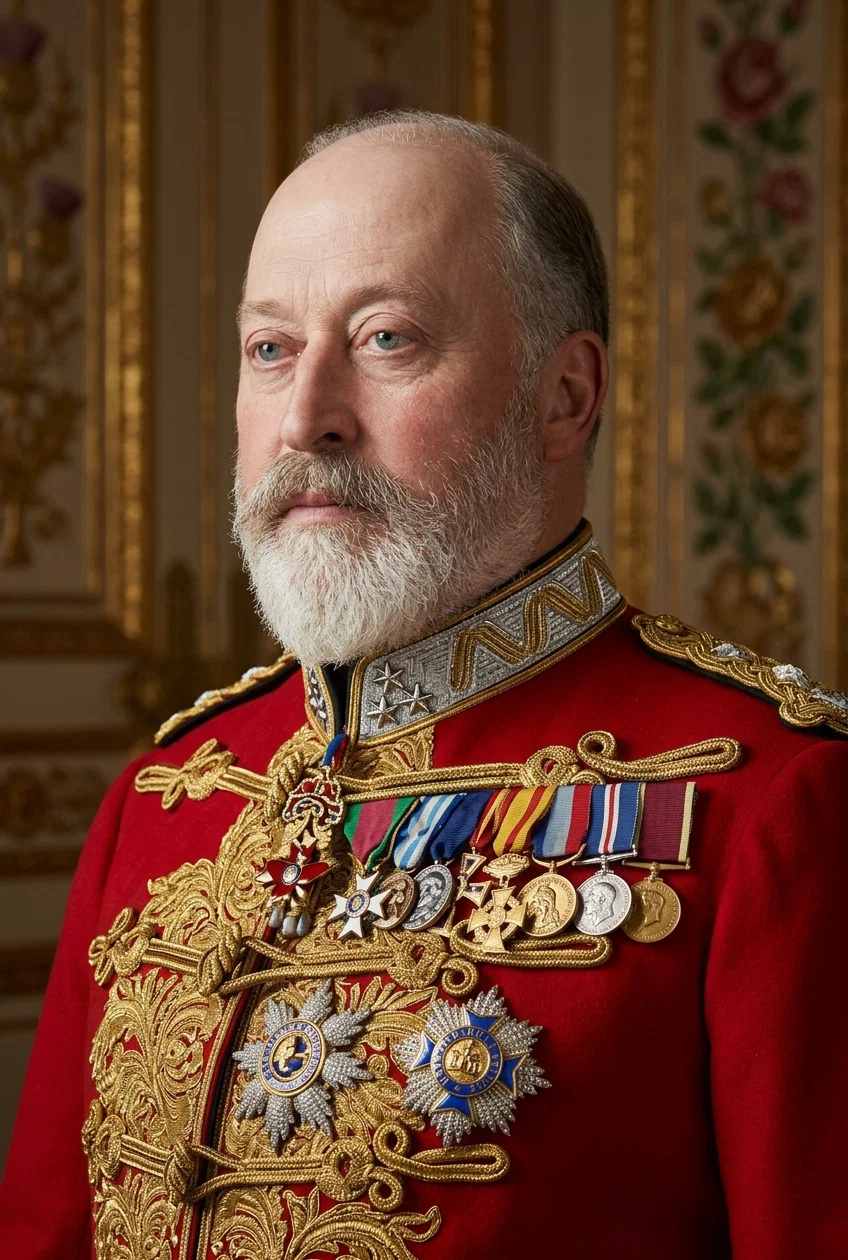
H.R.H. KING EDWARD VII
“The Christian church in America only spends as much each year on missions as it costs to build and equip one modern battle-ship. Of all definitely religious problems in the world, the chief is this, that more than half the human race is yet ignorant of Jesus Christ, and the message of hope and peace that He brought to mankind. The triumphs of His Gospel have been so universal and so stupendous, wherever it has been applied, that no missionary ever raises a question whether the Bible is the Word of God, and Jesus is the Son of God, and the Gospel is the power of God unto salvation to every one that believeth.”
“It took one hundred years of modern missionary effort to win the first million converts. We passed the million mark in 1896. It only took twelve years to win the second million. For the past two years we have been winning them at the rate of a million in six years. There are now, on the average, every week, as many new converts as would fill this auditorium (about 6,000).”
The proportion of unconverted falling to the United States as its share was estimated at 560,000,000. It will take an annual offering of about $45,000,000 to do the work in this generation. The United States gives nearly $11,000,000 annually at present, and together with England gives a little over $20,000,000, while all the rest of the world gives only a little over $3,000,000 to missions.
It is estimated that there should be one white missionary, together with his native assistants, to every 25,000 people in order to make the work succeed. At present there is a missionary to every 275,000 persons in heathen lands.
A Bad Element
Of course the movement is strongly permeated with the church federation idea, and will be for foreign lands the same problem that the church federation is for America. I shall not dwell at length on this phase of the question, but one quotation made by one of the speakers is quite significant. Dr. Duff of India said in New York, “I would as lief jump into the Ganges as to go over and pilfer the Christians of another denomination.”
The closing meeting of the congress was addressed by Bishop McDowell, who said as his closing words, “Here, now, at the close, let us clasp hands with Jesus Christ, and covenant with Him that we will live with Him until we know that He is essential to the world, that we will live with Him until we share His purpose for the world, that we will pray for the world until it rests on our hearts as it rests on His, that we will live with Him until we are like Him in all holy fellowship and in all rich reward, that we will do this until the last man knows the Name, and until we stand on the height that is yet unreached and cast our crowns before Him.”