The Great White Plague

6%

Pacific Press Publishing Association · Mountain View, California · May 17, 1910

FromSigns of the Times, Vol. 37, No. 19.

Read the full edition

The Great White Plague

Danger from Flesh-Eating
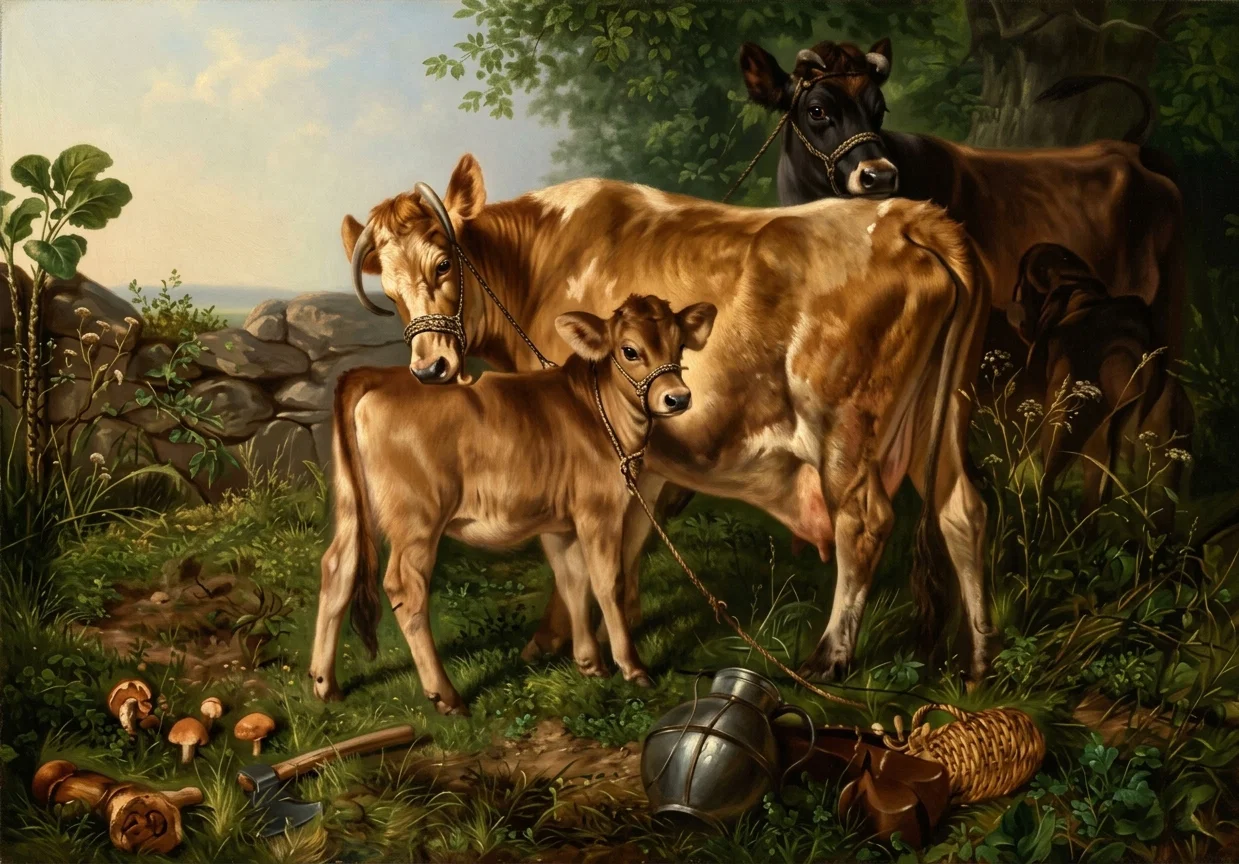
It is not always the best looking cattle that are free from disease. Sometimes the lacteal or milk glands are greatly diseased, when the cow is fairly well. A thin, scrawny cow ought always to excite suspicion. It is well to sterilize all milk.
The men who are working for the suppression of tuberculosis are doing noble work for humanity in national, state, and local associations. But the individual can do more for himself. The real end of the thing after all lies in the immediate locality, in the family some of whose members are affected, and in the individual himself. There ought to be that love for one's fellow which would lead every one to take proper precautions.
Some time ago it was stated that one seventh of all the deaths in the United States came from tuberculosis in one form or another. We have seen recent statements which would indicate that there was a gain for the better in this respect; but according to the statistics of a life-insurance company which lie before us as we write, there is no ground for encouragement. For instance, in the ordinary statement of that company, deaths during 1909 on which policies were paid, number 2,813. Of these, 526 were from tuberculosis,—almost one fifth of the whole number. 140 of these were between the ages of 20 and 29; 189 between the ages of 30 and 39; 120 between the ages of 40 and 49. Only seven were under 20, and only one was over 70. It can be seen that it took the very strength of manhood, for these statistics are wholly among males.
A disease akin to that in the terror it arouses, and, some contend, even in its nature, is cancer; 167 were from cancer; 399 from diseases which came about through wrong habits of eating and drinking.
Among the females in the same table there are 629 deaths recorded; and 142 of these deaths were from tuberculosis—almost one fourth; the next highest, 64 from cancer. Surely such statistics as these, which are presumably above average, ought to arouse not only investigation but real interest. Neither ought they to frighten people. But they ought to lead to a proper course of living.
Among the causes of tuberculosis is first of all carelessness on the part of those who are affected, in the matter of the sputum. This is ejected anywhere and everywhere. It soon dries, becomes impalpable dust in the atmosphere, is inhaled, and in the throats and lungs of those who have colds or weakness the disease germs are many times fastened forever. Any one who has affected lungs, ought to be more than careful regarding the sputum. Old cloths or rags can be used for the sputa and burned. If one is confined to room or bed, proper vessels can be used which contain disinfectants.
Another cause, without question, comes from diseased meat and milk. For instance, there lies before us Clay, Robinson & Co.'s live stock report, published in Chicago. The first article on the editorial page contains a report from the North British Agriculturalist of Edinburgh, Scotland. That report shows that of the 57,751 head of home fed cattle slaughtered in Glasgow last year, no fewer than 9,614 head, or slightly over 16 per cent, were affected with tuberculosis. That is nearly one sixth.
A very intelligent correspondent that we have in Colorado, one who is dealing in cattle and stock all the time, writes us regarding this matter. In a conversation with a wholesale butcher, the butcher told him that he never bought dairy cows if he could avoid it, as they were invariably more or less diseased in the viscera. And our correspondent says, “This has also been my experience in slaughtering for this locality.” He continues: “The above butcher told me he was afraid of milk; and I must say I am also. Unsterilized milk, cream, and butter must, it seems to me, contain the very essence of any disease that the dairy herd may have.”
He relates another instance as follows: “A neighbor of mine the other day at the Denver stock shed bought twelve yearling bulls to be shipped to this place and turned out on the range; but on being tested, six showed tuberculosis—one half. Another thing has occurred to me from time to time,—that as a rule diseased cattle do not get fat; and as the highest prices are paid for the fairest and fattest animals, it has a strong tendency to leave the diseased animals on the range and farm for breeding purposes.”
To show the contagion of the disease, he tells of a shipment of yearlings to Kansas City. Shipped with these yearlings was a lean, poor cow, or one that our correspondent designates as a “hungry favored cow” shipped as a “canner;” that is, one from which canned meat is made. But as the shipment was delayed “for sixty days, she got so bad, slobbering over the hay,” that she was taken a mile away and shot. By the time the yearlings, however, got to market, 15 per cent had swelling of the glands of the neck. They were bought, notwithstanding, by Swift & Co., with no reduction in price, fed for a while, and slaughtered.
We are further told: “It is a well-known fact that Government inspectors only condemn the animals that are too far gone. In other cases the affected parts are cut out.” While our correspondent is dealing in these things all the time, he concludes, “No one need feel aggrieved if the price of meats go beyond his reach, as long as there is anything else left to eat.”
But abstaining from milk or meat is not alone sufficient. There ought to be an abundance of fresh air, and deep breathing. It is a sad, sad fact that so many thousands and millions deprive themselves of the real life which God has given in the sweet, fresh air of heaven, either by closed rooms or by compressed lungs. The evil is about the same in either case. The wickedness of corset-wearing is measured in increased deaths from tuberculosis. But this is no worse than the closing of rooms and the inhaling of foul air over and over again until the whole system is poisoned. Why not take the one thing which can not be monopolized, and use it to the fullest? It does not cost anything. All that it asks is admittance into our dwellings and into our lungs. If it is in a cold climate, it does not cost very much to make arrangements so that the fresh air can be warmed. Churches and schoolhouses can be easily arranged so that the fresh air shall come in above the heads of the children or the assemblies and save from the drafts which so many fear.
Out-of-door sleeping is a splendid thing. We hope to see the time come when there will be thousands where there are now units sleeping practically out-of-doors, on screened porches, so as to get the fulness and blessing of fresh air.
Then in connection with living in the fresh air, deep breathing is advantageous several times a day—long, deep inhalations. Let the food be simple, nourishing, blood-feeding, bone- and muscle-building, instead of feeding for the appetite. There is one excellent old motto, “Eat ye that which is good; custom will render it most delightful.”
It will be utterly impossible for mankind to hide itself from tuberculosis germs which abound almost everywhere, in the foul atmosphere of cities and crowded buildings. But man can do one thing, however; and that is, fortify his system against it, so that his own healthful, oxygenized life-giving blood will prove a germicide and a protecting wallagainst vicious bacteria. There is such an abundance of good things to eat in fruits and grains, and the best and strongest drink in the world is clear, pure water. All these, with clear hope and consecration in Jesus Christ, will bring a strong and happy life.