THE metropolis of Japan is not only the largest city of the country and the seat of government, but it is also the center of learning, and of all that represents the “New Japan.” Hence if one wishes to understand the Japan of to-day, no other place affords so many opportunities for arriving at such an understanding. A glance at the history of Tokyo will throw light upon the city’s present position as the center of the nation’s life.
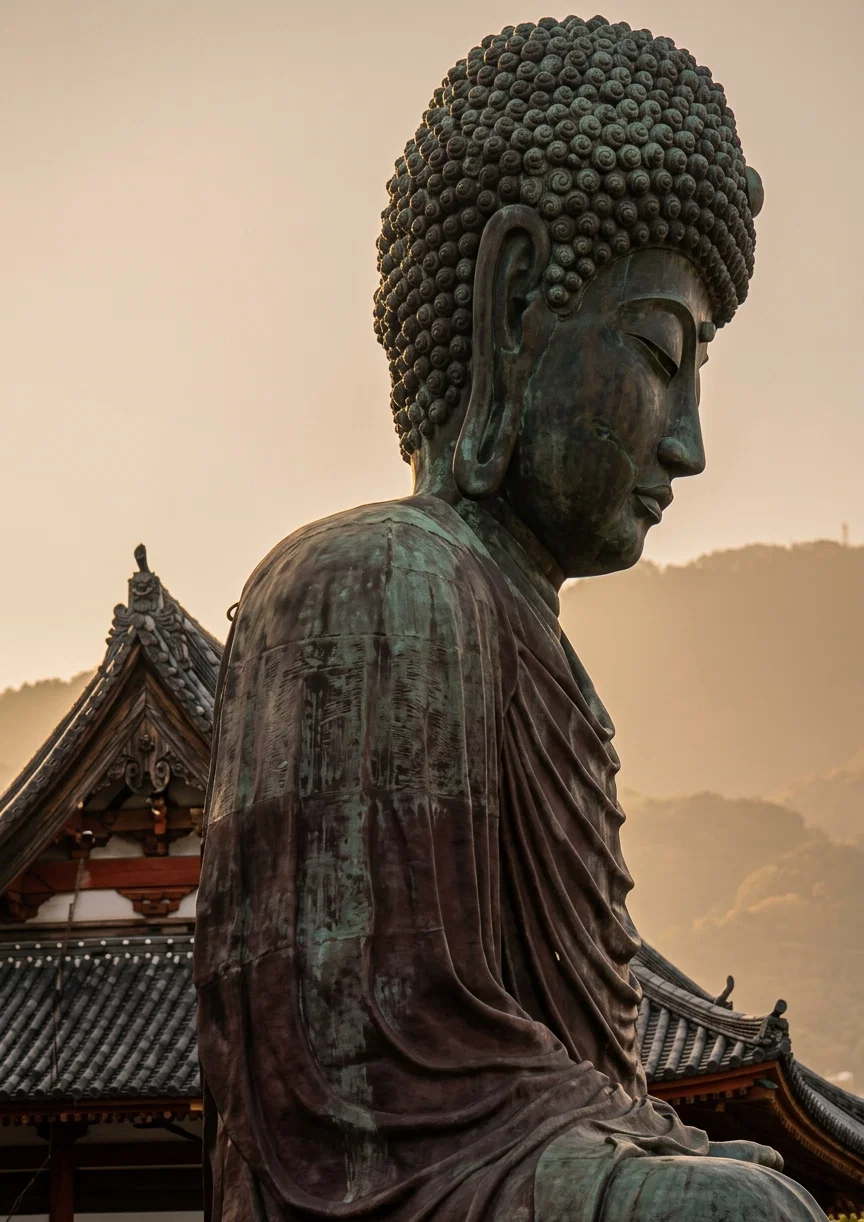
Side view of great image of Buddha in Kobe
(Photo by F. E. Stafford)
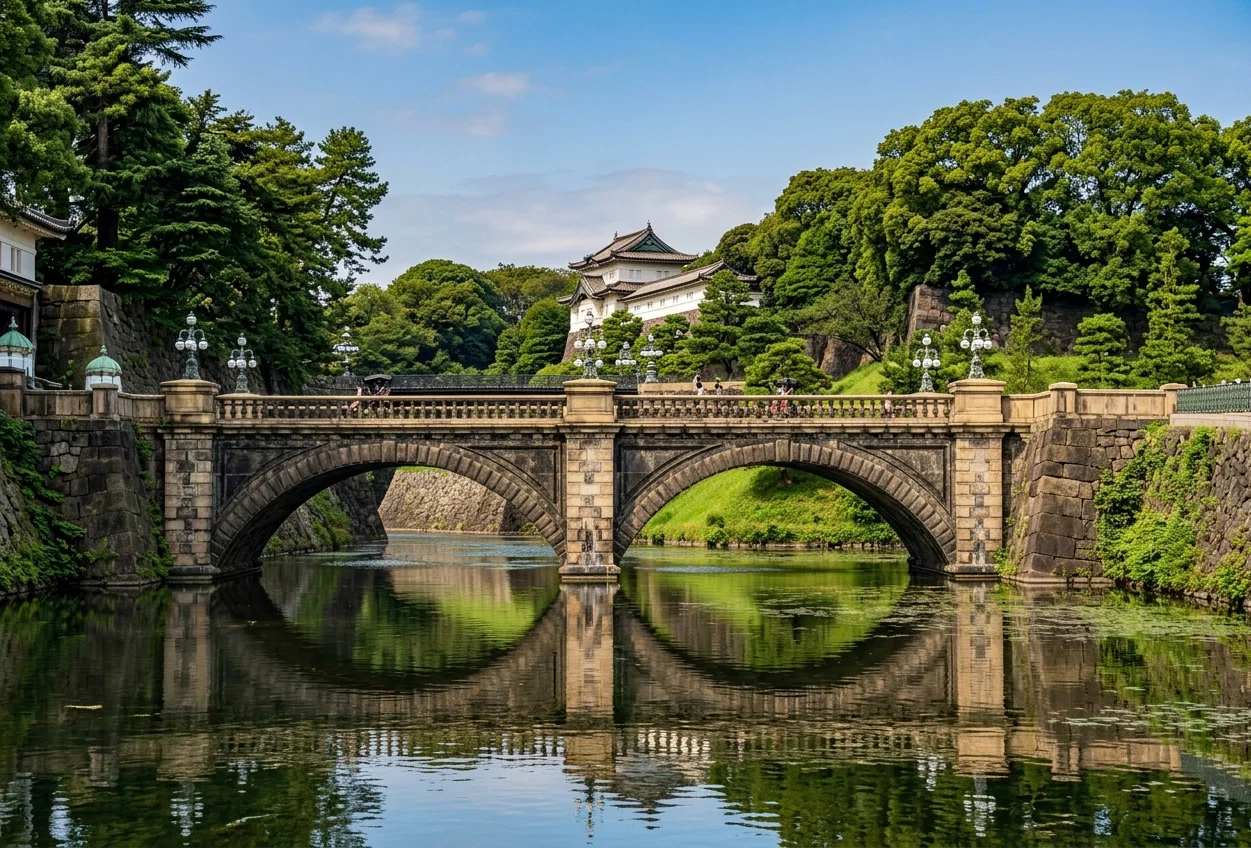
Entrance to Imperial Palace, Tokyo
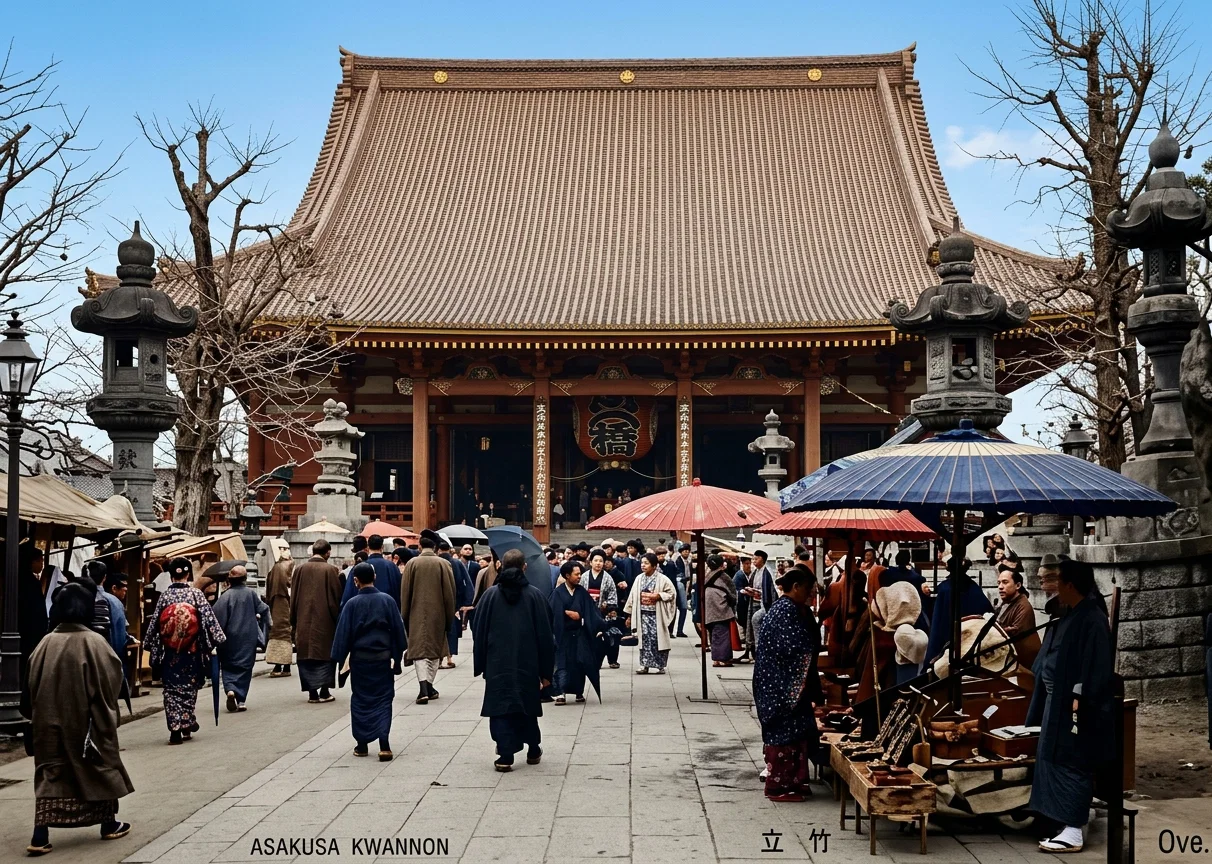
Buddhist Temple, Asakusa Park, Tokyo
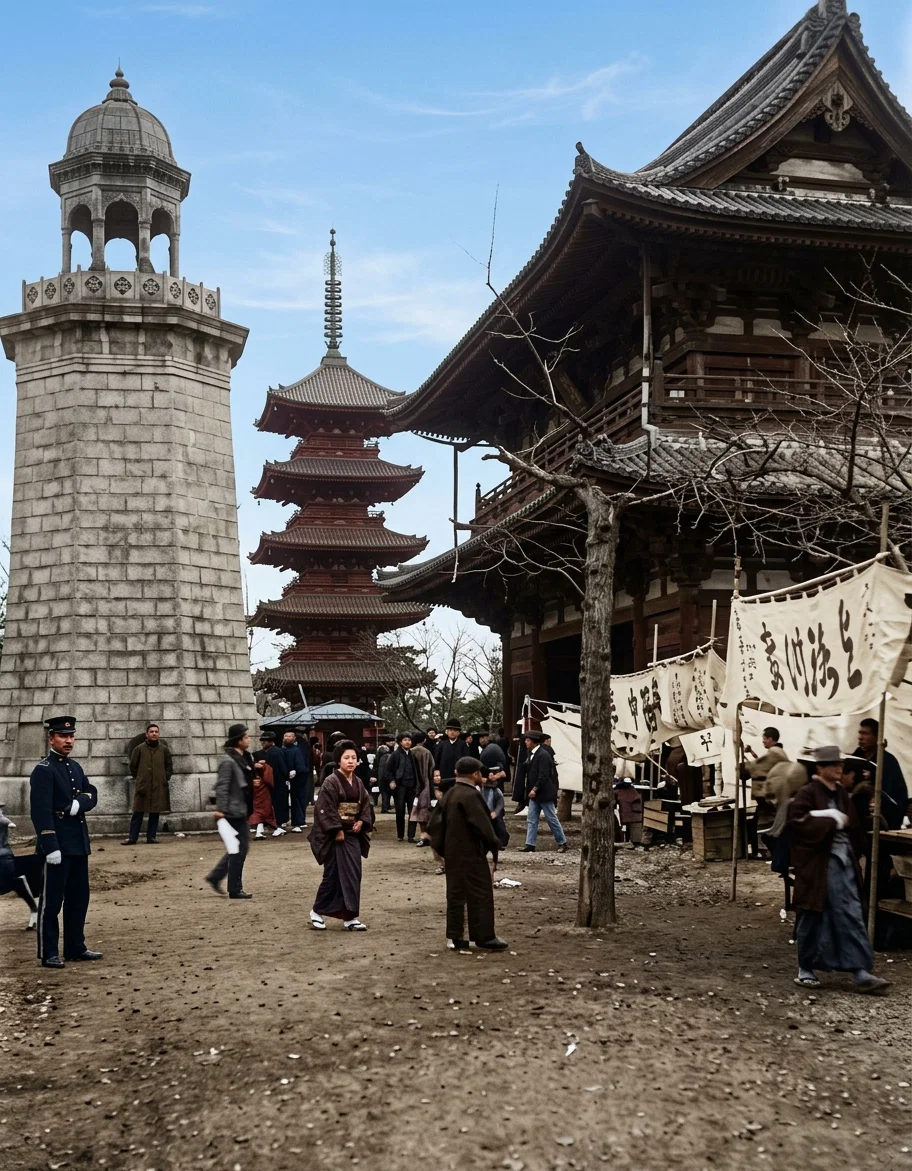
A Pagoda in Asakusa Park (Photo by F. E. Stafford)
Tokyo was known as Yedo until about a generation ago. And for fifteen generations, covering a period of nearly three hundred years, it was the seat of the military government of the Tokugawa Shogunate. For many hundred years the emperors of Japan lived in the seclusion of their palaces, while a military despotism ruled the country. The last of these military dynasties was founded by Tokugawa Ieyasu about the beginning of the seventeenth century, and continued till the beginning of the present emperor’s reign, in 1867, when the military government was overthrown, and the emperor restored to his place as the rightful ruler of the country. Soon after this the emperor removed his court from Kyoto, the old capital, to Yedo, which from that time began to be called Tokyo—East Capital—by way of distinction.
When Tokugawa Ieyasu chose Yedo on Shinagawa Bay as the seat of his government, it was but a small hill fortress surrounded by villages. He and his immediate successors greatly enlarged and strengthened the fortress, as may be seen at the present. The central fortress was located on the highest ground, and around this a very extensive system of canals or moats was constructed, in the form of an irregular spiral. The inner banks of these moats were walled up with stone to a considerable height, forming a stronghold well-nigh impregnable in those feudal times. Most of the old gateways still remain, tho some have given place to broad entrances better suited to present conditions. The outer moats have been filled in and the adjacent walls torn down, and the enclosed ground now forms an important part of the city. The accompanying view is a good representation of the handsome modern bridge spanning the inner moat, as one proceeds to the imperial palace. But only the privileged few are allowed to enter; and a cluster of black tiled roofs is all that the common observer can see of the palace buildings.
The Tokugawa Shogunate was a feudal form of government; for a feudal system almost identical with that which once prevailed in Europe, had grown up. As one means of keeping the feudal barons (daimyo) in subjection to the shogun, they were required to spend a part of each year at Yedo, with their retainers. To accommodate the samurai (warriors) during their sojourn at the shogun’s capital, long, narrow buildings with plastered walls and tiled roofs were built in certain parts of the city; and some of these remain to the present time.
The ordinary Japanese house is a rather frail structure, and so does not last many years. Hence there are no common buildings of any great antiquity in the city. But many of the Shinto and Buddhist temples are built substantially of immense timbers; and some of these have stood since the early history of the city. One of the oldest and most famous of these is the Buddhist temple in Asakusa Park. It is the main temple and headquarters of one of the Buddhist sects in Japan, and is visited by throngs of people on almost any pleasant day.
The population of Tokyo has been rapidly increasing during recent years, till it now numbers about one and one half millions. Yet it is said that during the palmy days of the old régime the city was fully as populous as at present. But it goes without saying that the Tokyo of to-day is a very different city from the Yedo of two hundred years ago. Some of the remarkable changes that Tokyo has undergone within a few years, will be mentioned in a later article.