What Is Protestantism?

9%

Pacific Press Publishing Association · Mountain View, California · May 20, 1913

FromSigns of the Times, Vol. 40, No. 20.

Read the full edition

What Is Protestantism?

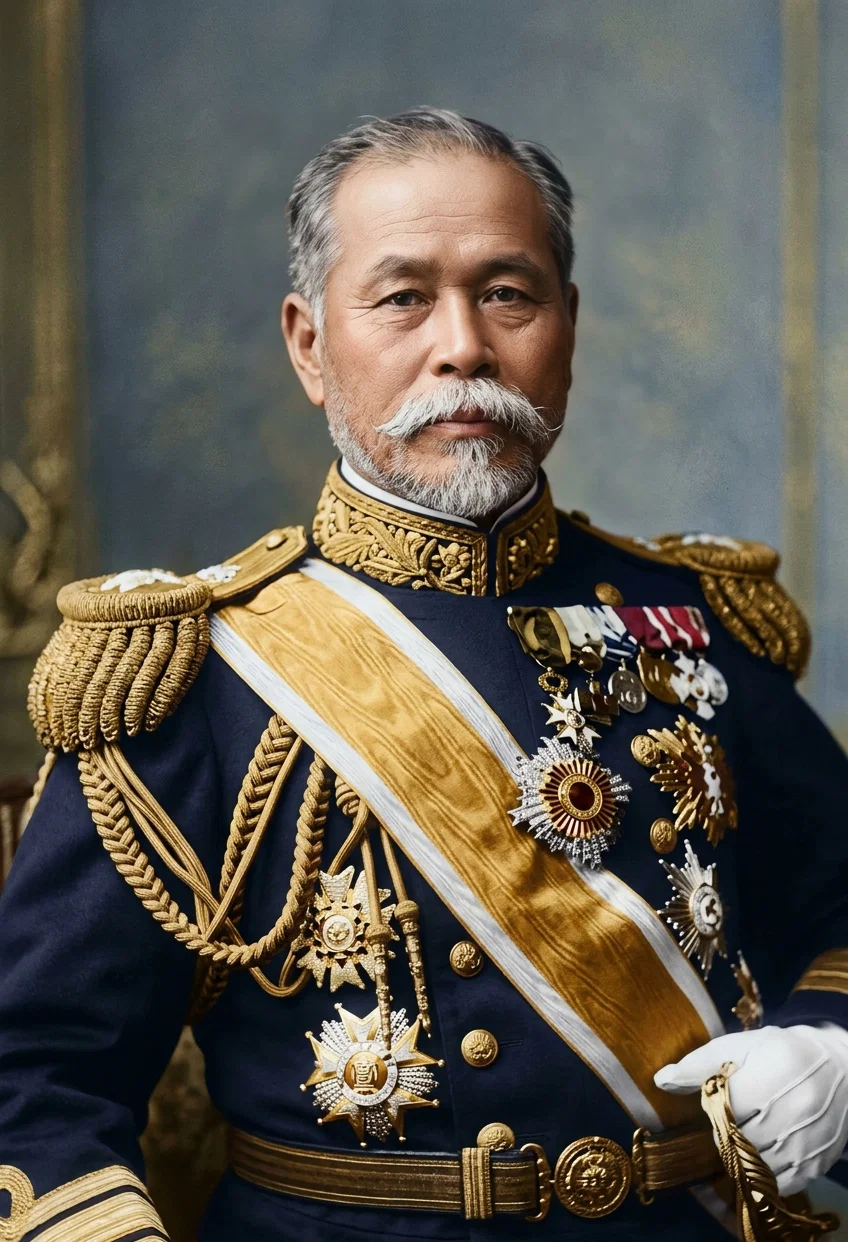
The prime minister of Japan, Admiral Yamamoto
Photograph by Underwood & Underwood, N. Y.
ONE of the new books, and one listed as “the book of the month” by the “Biblical World,” is “What Is Protestantism?” There never ought to be need of such a question. If Protestantism had held to its own, had held to the principles which gave it birth,—namely, a protest against all that is contrary to the gospel of the Lord Jesus Christ, and the positive doctrines of that gospel, the justification by faith in Christ, and the all-sufficiency of His word,—there would be no need of asking the question. Protestantism would be the same virile religion that it was in the days of Martin Luther, only cleaner, stronger, truer, better. Dr. Gerald B. Smith, professor of Christian theology in the University of Chicago, in his review of the book in the “Biblical World” for March, 1913, says, “To-day, under the scrutiny of historians, even, that seemingly simple division between Catholicism and Protestantism which forms the staple of popular polemic, is discovered to be less absolute than was once supposed.” He quotes from the author of the book, Ernst Troeltsch:
“The genuine early Protestantism of Lutheranism and Calvinism is as an organic whole, in spite of its anti-Catholic doctrine of salvation, entirely a church civilization like that of the Middle Ages.”
But it seems to us that the church civilization of which the author speaks is that which lingered from the old régime. Virile Protestantism had not yet formed its civilization. The best sample of what it would form was found in America. It could not be, in the nature of the case, formed in the Old World. There was too much of the old leaven in both individual and government.
Another statement which is made, as enumerated by Professor Smith, is that—
“Our modern doctrines of freedom of conscience, and the consequent recognition of the fact that a church must be organized by the free consent of the members, is due to the radical Baptists and Spiritualists, whom original Protestantism repudiated.”
But original Protestantism previous to Calvinism did not in principle repudiate this. It lifted the word of God above all creed, and if it had followed the principle, it would have grown out of creeds entirely. The sad thing of Protestantism was when it harked back to the creed principle. Just as soon as Protestantism departed from its primal principles of the word of God and the Word alone, as the rule of faith, the Bible above the creed, Christ above the church, it began to go backward. That is why God demands a revolution and a reformation at the present time. The author of this book thinks that—
“The issue between Catholicism and Protestantism is likely in the near future to assume a new form and a new intensity. Catholicism has unmistakably asserted its intention to hold to the medieval ideal of a church-controlled civilization. It intends, so far as possible, to direct the education, the politics, and the social organization of men. It has a powerful ecclesiastical organization with which to work for its ends. Modern Protestantism, on the other hand, has come to terms of modern culture. . . . But the religious ideals of early Protestantism were nearly all related to the medieval conception of a church-controlled civilization. Its theology, therefore, is lacking in those fundamentals which are essential to a religious interpretation of the modern world. Protestantism thus faces a real crisis. Shall it strive to perpetuate a theology which must be constantly at war with modern science, modern social ideals, modern ethical issues, and modern religious aspirations? If so, it will inevitably see the modern world drifting away from its ideals, while those who really wish a church-controlled civilization will find Catholicism far more efficient than Protestantism in promoting this end.” (Bold face ours.)
And right there the whole question lies. Protestantism has not enough of the real vigor and life of the Word to stand against that element in the world which demands a church-controlled civilization. Many of the strong men in the Protestant church are working for that to-day. That is one of the objects of the Federation of Churches in America. Nor could Protestantism ever hope to hold the world against that, with the Babylon of theology which she holds at the present time. It lacks conviction. It lacks virility. It lacks power to grip the hearts of men, and lift them above all the tradition of the past that is not based on the Word, and all the fear of great masses, and the power of an organized ecclesiasticism. What, then, may we look for but just what is suggested by Professor Smith,—that those who really wish a church-controlled civilization will find Catholicism far more efficient than Protestantism? Mere modern culture will never change the morals of the world. Protestantism HAS reached a crisis. Its hope, however, does not lie in endeavoring to mold its principles after the modern culture, or the deductions of modern science. Its hope now lies, as its hope did in the beginning, in cleaving to God’s word and the life of that Word above all things else. That must be dominant. For that Protestantism the “Signs of the Times” stands. If true Protestantism is not maintained, its power and influence over the world will be swept away by the strength and better organization of Roman Catholicism.