One of the most effective and potent methods of instruction in these modern times is by the aid of object-lessons and illustrations. Every up-to-date newspaper uses copious illustrations and cartoons in making clear the news which the editor desires to impress upon the minds of his readers.
The seventh chapter of Daniel contains another remarkable outline of the world's history. It will be observed that the symbols contained in the second chapter of Daniel and the symbols of this chapter cover the same period of the world's history. It may be queried by the reader, Why, then, this repetition? In reply to this question, we would say that it is because the great Author of prophecy designed to bring out additional characteristics not related in the second chapter of Daniel.
The Prophetic Outline
The brief and interesting outline of the symbols in this chapter is as follows: “In the first year of Belshazzar king of Babylon Daniel had a dream and visions of his head upon his bed: then he wrote the dream, and told the sum of the matters. Daniel spake and said, I saw in my vision by night, and, behold, the four winds of the heaven strove upon the great sea. And four great beasts came up from the sea, diverse one from another. The first was like a lion, and had eagle's wings: I beheld till the wings thereof were plucked, and it was lifted up from the earth, and made stand upon the feet as a man, and a man's heart was given to it. And behold another beast, a second, like to a bear, and it raised up itself on one side, and it had three ribs in the mouth of it between the teeth of it: and they said thus unto it, Arise, devour much flesh. After this I beheld, and lo another, like a leopard, which had upon the back of it four wings of a fowl; the beast had also four heads; and dominion was given to it. After this I saw in the night visions, and beheld a fourth beast, dreadful and terrible, and strong exceedingly; and it had great iron teeth: it devoured and brake in pieces, and stamped the residue with the feet of it; and it was diverse from all the beasts that were before it; and it had ten horns.”
“A second, like to a bear, . . . and it had three ribs in the mouth of it”
Not Left to Speculation
In our understanding of these sacred symbols, we are not obliged to resort to any human source for knowledge concerning them, for we have a divine and most sublime commentary which makes them so plain and clear that he who studies it may understand.
The first symbol brought to view in this prophecy is that of the striving of the great winds. This symbol is clearly defined in Jer. 25: 32, 33 to be that of political strife and commotion.
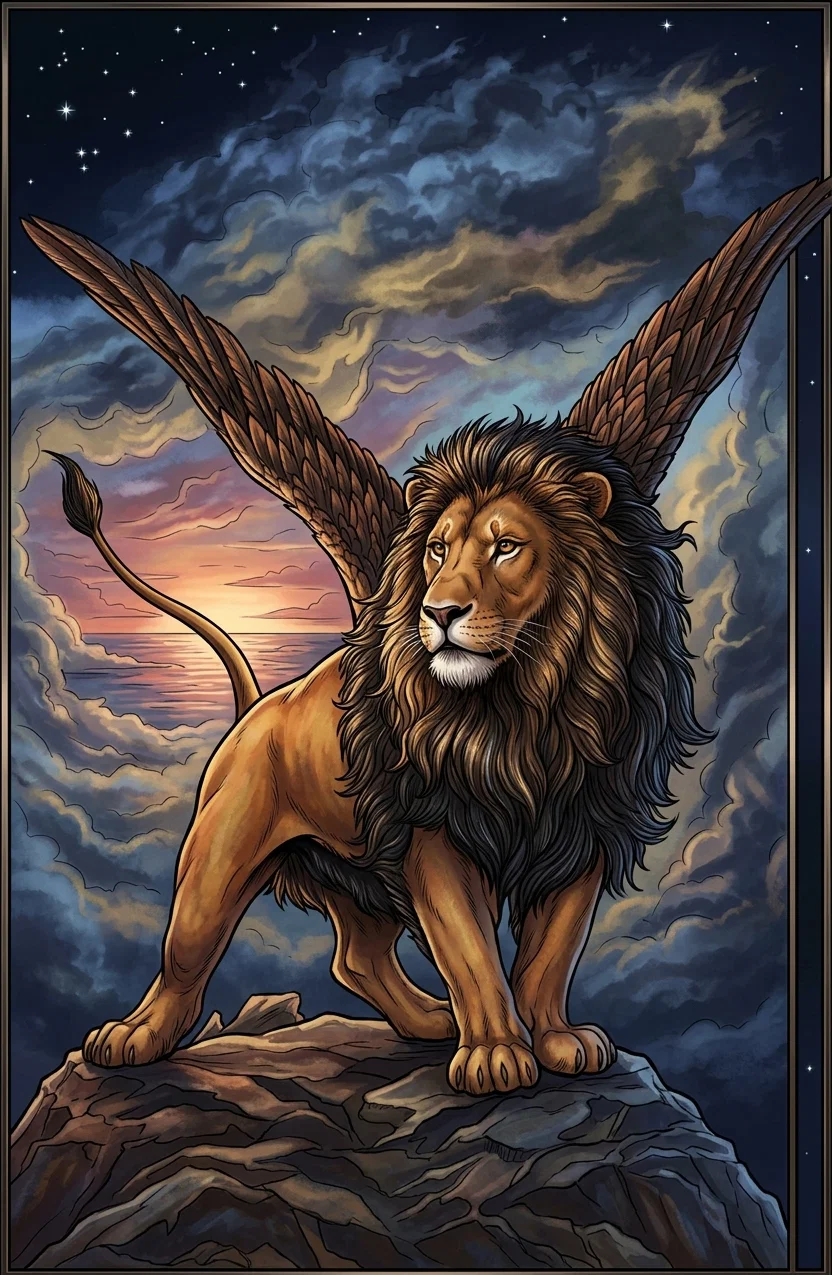
“The first was like a lion, and had eagle's wings”
And the sea or water is defined in Rev. 17: 15, by the revelator John, to be peoples, multitudes, nations, tongues. And the four beasts symbolize kingdoms, as is plainly shown from the 17th verse of Daniel 7, which says, “These great beasts, which are four, are four kings, which shall arise out of the earth.” The term “kings” presupposes kingdoms; so, in other language, the prophet teaches that four kingdoms shall arise.
The twenty-third verse says, “Thus he said, The fourth beast shall be the fourth kingdom upon earth, which shall be diverse from all kingdoms, and shall devour the whole earth, and shall tread it down, and break it in pieces.” From this scripture it is plainly to be seen that if the great nondescript beast signifies the fourth empire, the lion, which is the first beast, must of necessity symbolize the first universal kingdom of the world's history, which, all will agree, was the Babylonian kingdom.
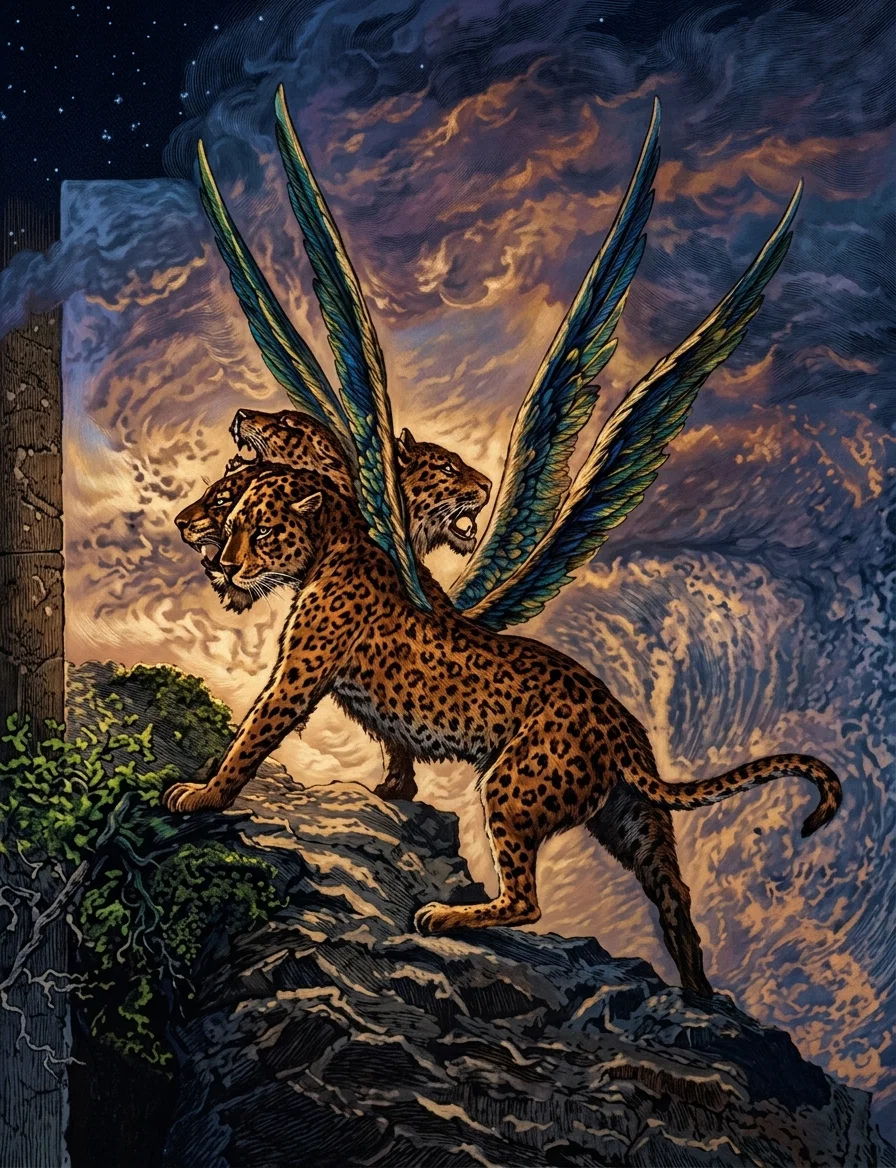
“Lo another, like a leopard, which had upon the back of it four wings of a fowl”
The idea of kingdoms' being symbolized by beasts should not be thought at all strange even by those who have never studied these divine symbols. Were the reader to pause and reflect regarding the symbols which represent some of the great nations of the present time, he would observe that these nations also are represented by beasts. Mention of the lion suggests at once to the reader the British Empire. When we speak of the bear, our minds involuntarily turn to Russia. And further, the very suggestion of the eagle makes us think of our own government. So it will be seen how fitting it is for the great God of heaven to outline the world's history by the aid of symbols.
Symbols of the Babylonian Kingdom
It will be further observed that the lion corresponds to the head of gold on the image of Daniel 2. Both of these symbols indicate the superiority, dignity, honor, wealth, and glory over the other kingdoms. By the head of gold on the great image, and by the lion, the king of beasts, is fitly represented the Babylonian kingdom, which arose 625 B.C. The wings of the lion very aptly represent the rapidity with which her conquests were gained; and the timidity of a man's heart compared with that of a lion is shown by contrasting the character of the courageous and bold monarch Nebuchadnezzar with that displayed in the life of the last king, the weak and pusillanimous Belshazzar.
Medo-Persia
The bear is a fit symbol of the Medo-Persian kingdom, which came on the stage of action in 538 B.C. The characteristics of the bear, as seen in its stealthy manners, harmonize with the description of the Medo-Persian kingdom during its unjust reign. The raising itself up on one side, the higher coming up last, is a true representation of this kingdom, for history shows that the Persian division of that kingdom came up last. The “three ribs in the mouth of it” evidently signify the three provinces of Babylonia, Lydia, and Egypt.
Greece
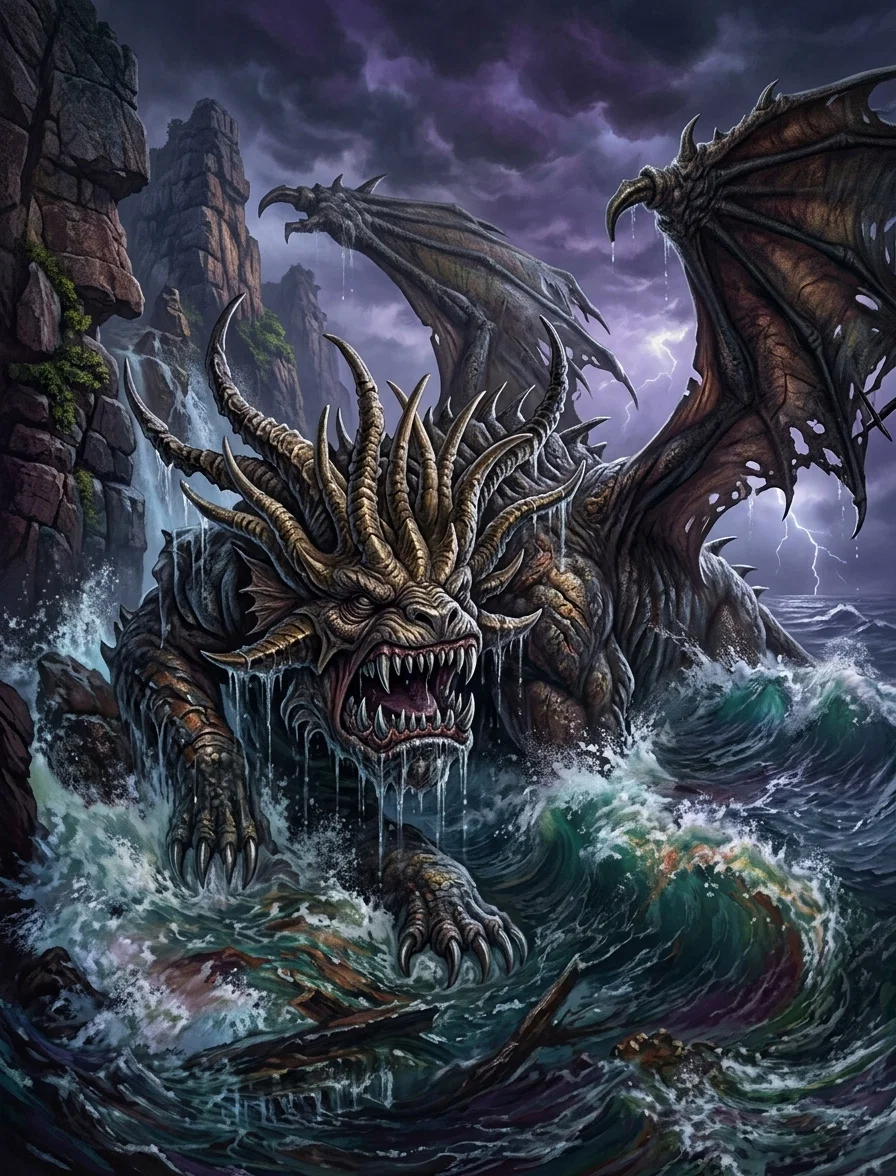
“Behold a fourth beast, dreadful and terrible, and strong exceedingly; and it had great iron teeth”
The third symbol, or the leopard, with5four heads and four wings, in a most pronounced and remarkable manner signifies the third universal empire, or the Grecian kingdom. It should be remembered, by the reader, that Grecia stands unparalleled among the kingdoms of earth in her rapid conquests.
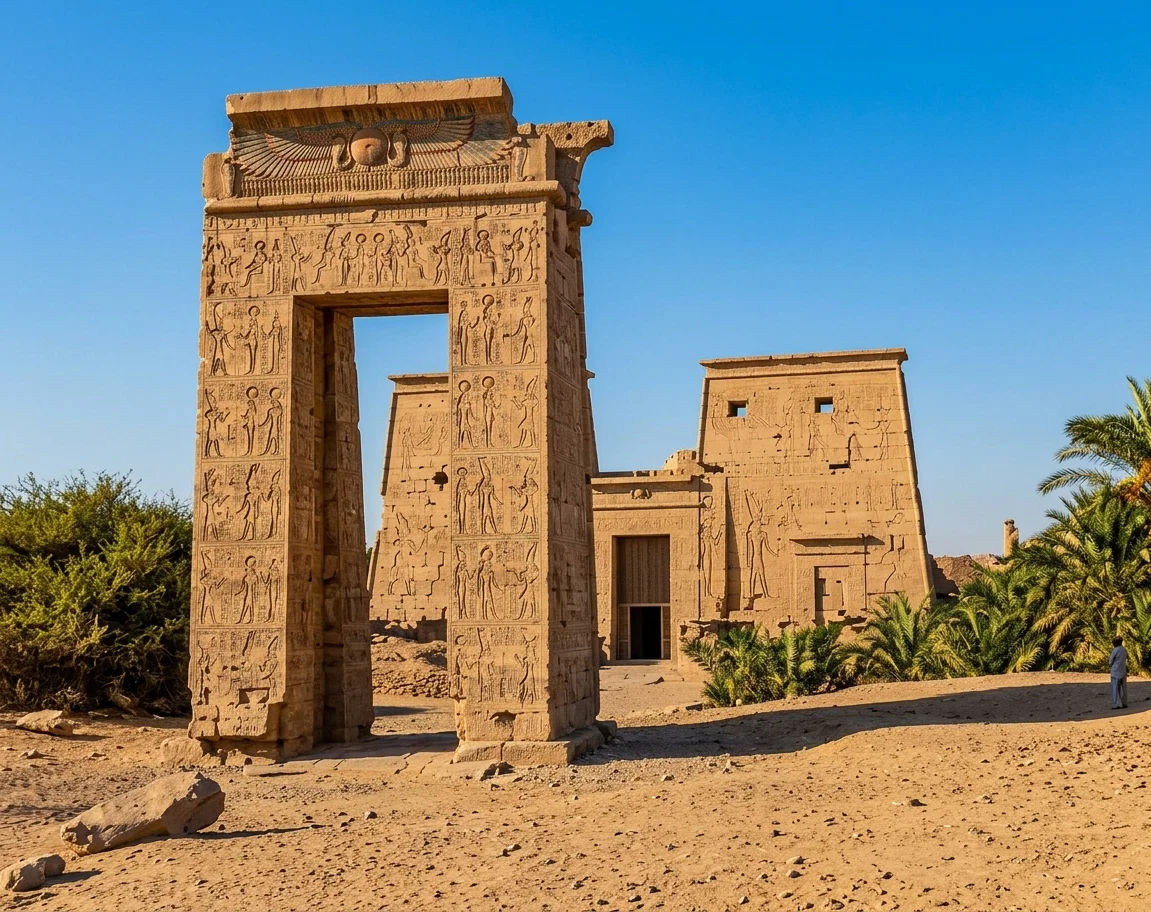
Temple of Rameses — the entrance of Ptolemy
Authentic history shows that under the reign of Alexander the Great, during the short period of eight years, he marched his armies over fifty-one hundred miles, and conquered everything with which he came in contact. What could more forcibly illustrate the great celerity of movement indicated by the fleet-footed leopard beast and its four wings than the wonderful swiftness in battle which was shown in the history of this kingdom!
As to the significance of the four heads, we have only to consider further the history of that remarkable kingdom in order to understand clearly the meaning of this part of the symbol. It must be borne in mind that since a beast is a representative of kingdom, the head of the beast would of course signify the head of the kingdom. It is a well-understood fact in history, that within the space of twenty-two years subsequent to Alexander's death, his kingdom was divided into just four parts, among four leading generals. Cassander had the west, embracing Macedon and Greece; Lysimachus had the north, consisting of Thrace and a part of Asia Minor; to Ptolemy was given the south, which included Egypt, Lydia, Arabia, Palestine, and Coele-Syria; and Seleucus possessed the east, which embraced the remaining portion of Alexander's kingdom and Syria.
Rome
The fourth beast was unlike any beast in nature. It became necessary for the Holy Spirit to symbolize Rome by a most unnatural beast. What a fitting symbol to represent the Roman Empire, the fourth and last universal kingdom which the world will ever see! Its iron teeth and the breaking and stamping to pieces of the residue of other kingdoms is true to the letter of the oppressive character of Rome in the subduing of other nations.
The Ten Divisions of Rome
The prophet continues his symbolic outline of the history of the great iron monarchy of Rome by the ten horns, which unmistakably signify the divided state of the empire.
The division of the Roman Empire took place between the years 351 and 476 A.D., as follows: the Alemanni, the Ostrogoths, the Visigoths, the Franks, the Vandals, the Suevi, the Burgundians, the Heruli, the Anglo-Saxons, and the Lombards.
The next remarkable change in the kingdom of Rome is symbolized by the appearance of another “little horn,” before which were plucked up three of the existing horns; namely, the Heruli, the Vandals, and the Ostrogoths. In a subsequent article we shall show of what power the “little horn” is the symbol.
The ninth and tenth verses of Daniel 7 are a most graphic description of the final judgment, when every case will pass in grand review before the great Judge of all the earth. Thus we are again brought face to face with eternity, as we were in our study of the second chapter of Daniel by the symbol of the great stone which was cut out of the mountain without hands, and smote the image upon its feet, when the kingdoms of the earth were dashed to pieces, and became as the chaff on the summer's thrashing-floor.
The great lesson designed to be taught by the Holy Spirit through the prophet Daniel is the importance of preparing to meet God in peace, and thus being ready to stand in that great day when every one is to be judged according to the deeds done in the body.