The Indians of Ecuador

5%

Pacific Press Publishing Association · Mountain View, California · Sep 29, 1909

FromSigns of the Times, Vol. 36, No. 38.

Read the full edition

The Indians of Ecuador

WHEN we speak of the Indians of Ecuador, we may also be said to be speaking of the native inhabitants of other South American countries as well. There is much similarity between the Indians of Ecuador, Peru, Bolivia, and Chile. In fact, before the Spanish conquerors came, they were all linked together under the domination of the Inca monarchs, of whom Huayna-Capac was the principal one. At his death, he divided his empire between Atahualpa, who ruled in Quito, and Huascar, who had his capital in Cuzco, Peru. Later Atahualpa conquered his brother and ruled supreme until the arrival of Pizarro, who in turn took him prisoner, and after exacting millions as ransom money, finally strangled him in Cajamarca. The story of Spanish rule is one of cruelty and barbarity.
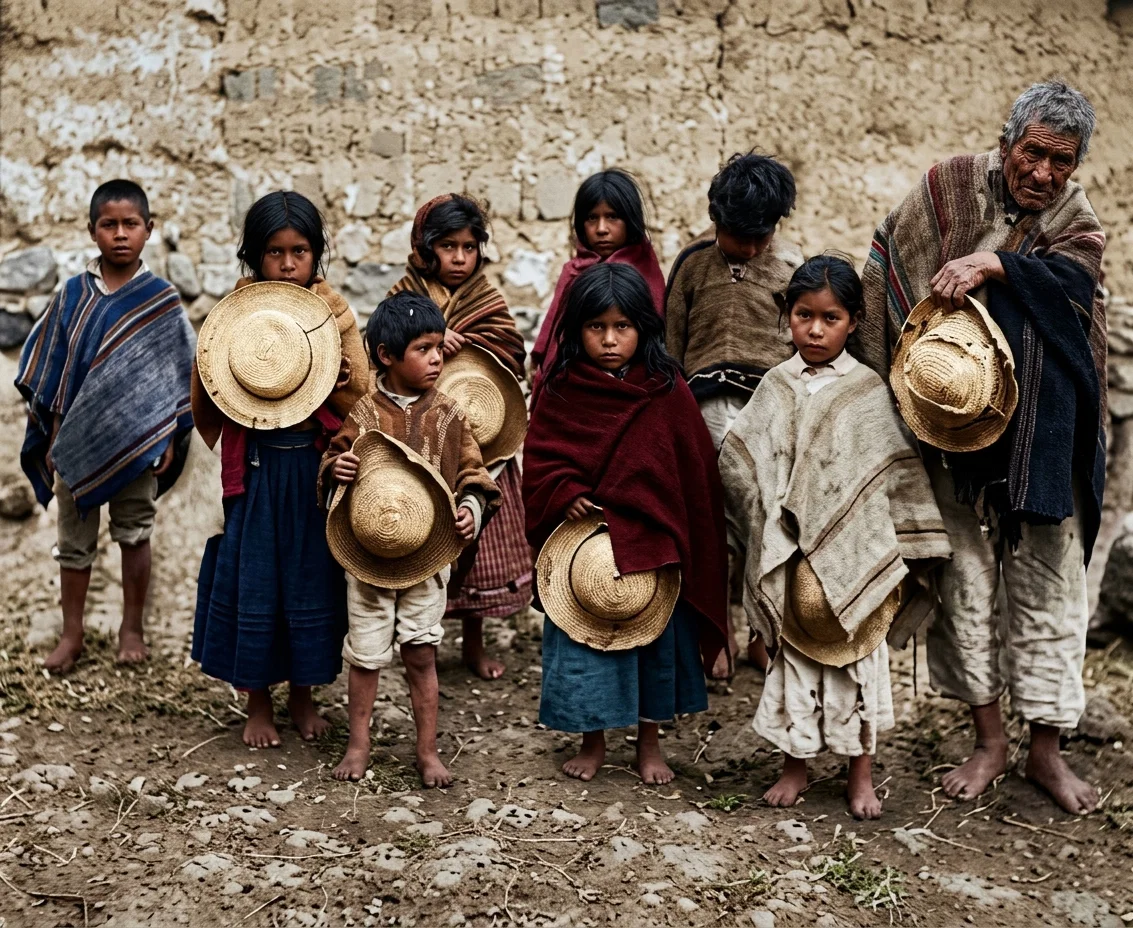
Indians of Ecuador
Indians of Ecuador
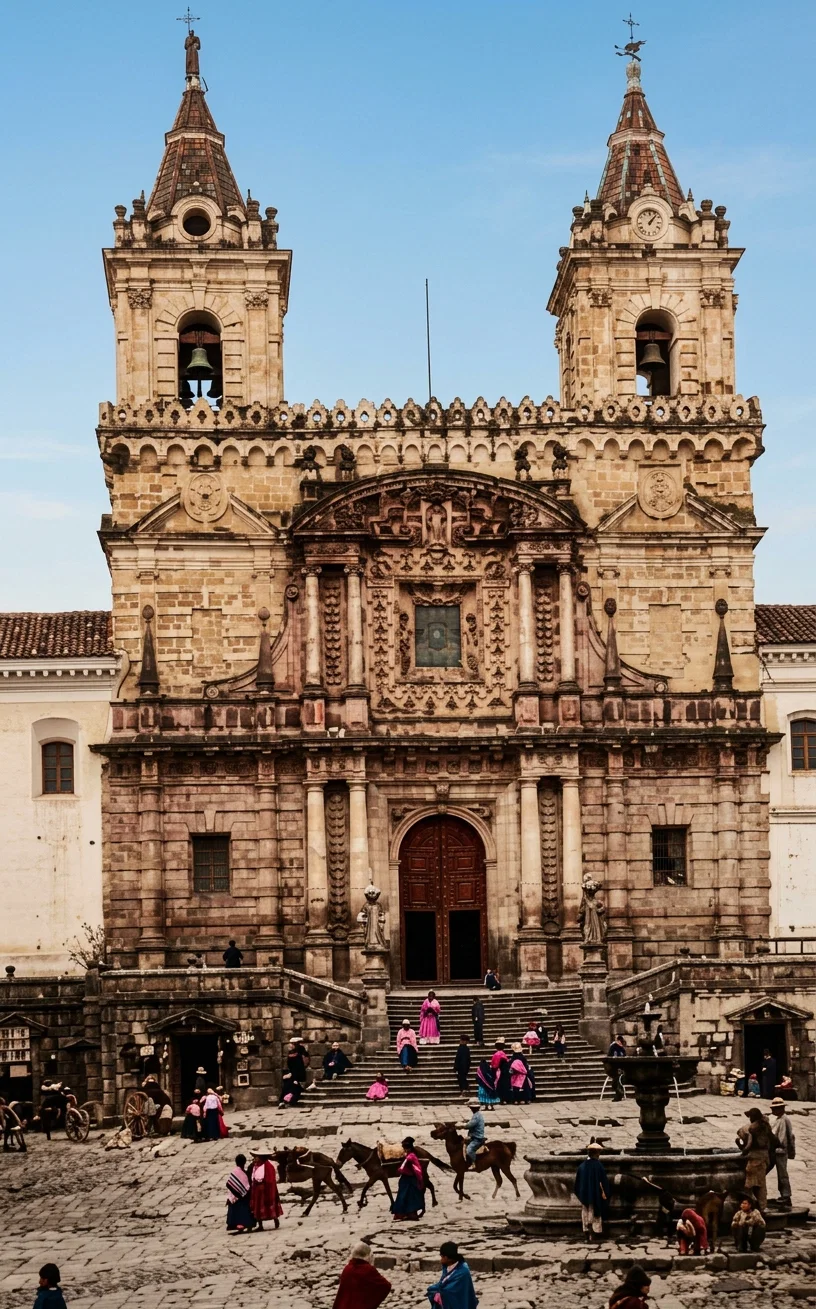
San Francisco Church, dating from the early Colonial period.
The pure Indian of Ecuador forms at least one half of the population. On the coast he is not so common as in the mountainous region. In Esmeraldas, the most northern province, there is one tribe left in all of its purity. They know little Spanish. The women are forbidden to learn the language of the white men. Before the advent of the Spaniard, the coast region was undoubtedly more extensively populated, but owing to internecine wars, and conflicts with the white man, the pure Indian of the coast has almost disappeared.
The Indians of the mountains form a compact population. They are descendants of the Shiris who ruled in Ecuador before the Incas. Altho there is some difference between these Indians in the different provinces, still they speak a common language. This unity of speech has been effected in large part by the owners of estates and Catholic missionaries, who, instead of learning many Indian dialects, urged or compelled the natives to learn the most widely spoken language, which has always been the Quichua. This arrangement will aid our missionaries also. If they know the Quichua they can work among any of the Indian tribes of the Sierra and also among some in East Ecuador. This tongue is common also to the Indians of Colombia, Peru, and Bolivia, as well as parts of Chile.
The Indian of the mountains is of a phlegmatic temperament. Unless under the influence of liquor he is melancholy, taciturn, cautious. His worst vice is drunkenness. The men are strong and vigorous when it comes to bearing heavy burdens, or walking long distances. They are weak in other classes of labor. They have been patient under the abuses of the Spaniard. Very few massacres have ever occurred in the Sierras.
The Indian lives in a rude hut, constructed of straw, or of earth and straw. This consists of no more than one or two rooms. It lacks every comfort. A sheepskin serves as a bed for the inmates, as well as for four or more dogs.
Nominally there is no slavery in this country. However, under the system of “Conciertos” the Indian is as much in servitude as he has ever been, perhaps. With justice, Wolf says, “The Indian, altho nominally free, groans under as true a yoke of serfdom as in colonial days.”
The Indians of the Amazon Valley, or the eastern part of Ecuador, differ somewhat from those of the Sierra. Having been free for centuries in their forests, they are restless when placed under restraint. In the seventeenth and eighteenth centuries the Jesuit missionaries founded missions in the region east of the Andes. In 1767 these Jesuits were expelled, and the Indians, who had been gathered together into mission centers, were left free to enter again into their savage life. Missions of the Catholic Church are only found to-day in the region of Napo and Canelos. At the present time the government is stirred over the fact that some unscrupulous men are selling Indian families to Peruvians further down the river for the sum of $100, $200, $400, or $500. The church, too, is doing its best to put a stop to the inhuman practise. These Indians are taken to populous centers. It may be that there they will have a better privilege of hearing of the only Gospel which can brighten their lives and bring them perfect freedom.
Of all the heathen tribes of the eastern region of Ecuador, the Jivaros are the most civilized and numerous. At the same time they are bloodthirsty and warlike, and cherish an undying hatred for the white man, and with some reason. The Spaniards were attracted by the gold which is found in all rivers which flow into the Amazon from the Andes of Ecuador. In the sixteenth century populous cities were founded in the Amazon Valley at the foot of the Cordilleras, some of which counted 20,000 or 30,000 inhabitants. The eastern part of Ecuador was far more advanced than the mountainous region. At present all is very much reversed. In 1599 the Jivaros, exasperated by the harshness of Spanish rule, mutinied. The governor was compelled to drink molten gold. All men were killed. The white women were taken captive. Many Jivaros of to-day are quite white, being due to the fact that they are descendants of Spanish women carried away at the time of the massacre.
These Indians live in polygamy. Their houses are roomy and well fortified against the attacks of an enemy. They cultivate cotton and a few other articles, and have dealings with the whites. Some missionaries from the “Gospel Union,” of Kansas City, are situated among the Jivaro Indians at Macas. They are learning the language preparatory to working among them and teaching them the Bible. There are women among these, but, altho they have to undergo hardships in the march to the station, live with none of the comforts of civilization, not even beasts of burden, still, as one of them has said in a letter, “We endure all things for the Gospel’s sake.” I long for the moment when we who have the true message will be able to bear our testimony among not only the Jivaros, but all other kindreds and nations of the great Amazon Valley, one of the darkest, most neglected parts of the world of to-day.
The Zaparos are more friendly to the whites than are the Jivaros. They are hospitable, easy-going, jovial in character, but are lazy and take small pains to work the soil and cultivate it. Their language is peculiar, insomuch as it contains a number of words which pass three syllables. The word for “seven” is “haimucamaraqui-caramau-taca-nacuaqui,” which means three pairs and one. Happily “seven” is the highest number. All higher numerals are expressed by “cuma,” which means “much.”
At present the Indians are fewer in number than before the Spanish conquest. Some of the reasons are: The Portuguese in the seventeenth and eighteenth centuries made several excursions into their territory and took about 50,000 captive. Smallpox, which appeared among the Indians shortly after the entrance of the Spaniards among them in the seventeenth century, has according to one Ecuadorian author, carried off 400,000 victims. Ten rebellions waged against the conquering Spaniards, the principal ones in 1599, 1660, and 1695, have caused the death of a number. Spanish ambition, greed, thirst for gold, have been the cause of the death of millions of American Indians.
This, in brief, is an account of the Indians of Ecuador, especially of those of the eastern region. The Amazonic territory included in Ecuador, is equal to 12,000 square leagues. The principal products of the region are rubber, quinin, vanilla, gutta-percha, used for cables, cinnamon, of as good quality as that of Ceylon, sarsaparilla, wax, chocolate (cacao), and gold.
Where the soil is worked, tobacco, sugar-cane, coffee, grapes, tropical fruits, cotton, indigo, cochineal, may be produced.
At the present time missionary endeavor is being urged by the church here. Among the Catholics the Jesuits have always been the most active in bringing the Indians under the Catholic catechism and church regulations. Recent, indeed, has been the entrance of Protestants among the Indians of East Ecuador. Adventists have never given their message in this region yet, but as our papers go to the missionaries stationed in Macas we may be justly said to have gained a start. One of the attendants of our Sabbath-school class here has also been offered a position in Canelos. As he has always had an interest in our message, and keeps the Sabbath as a rest, we hope that, if he does go, he will continue to follow the convictions of his heart and bring some souls to the light. Thus goes God’s message to this part of the earth.
DELWIN REES BUCKNER.
Ambato, Ecuador.