Our London Letter

4%

Pacific Press Publishing Association · Mountain View, California · Dec 1, 1909

FromSigns of the Times, Vol. 36, No. 47.

Read the full edition

Our London Letter

[Mr. Bartlett, our correspondent, is an Englishman born and bred, and writes with a sympathetic as well as intelligent pen of matters British. He is the editor of a religious weekly, The Present Truth.—Editor S. of T.]
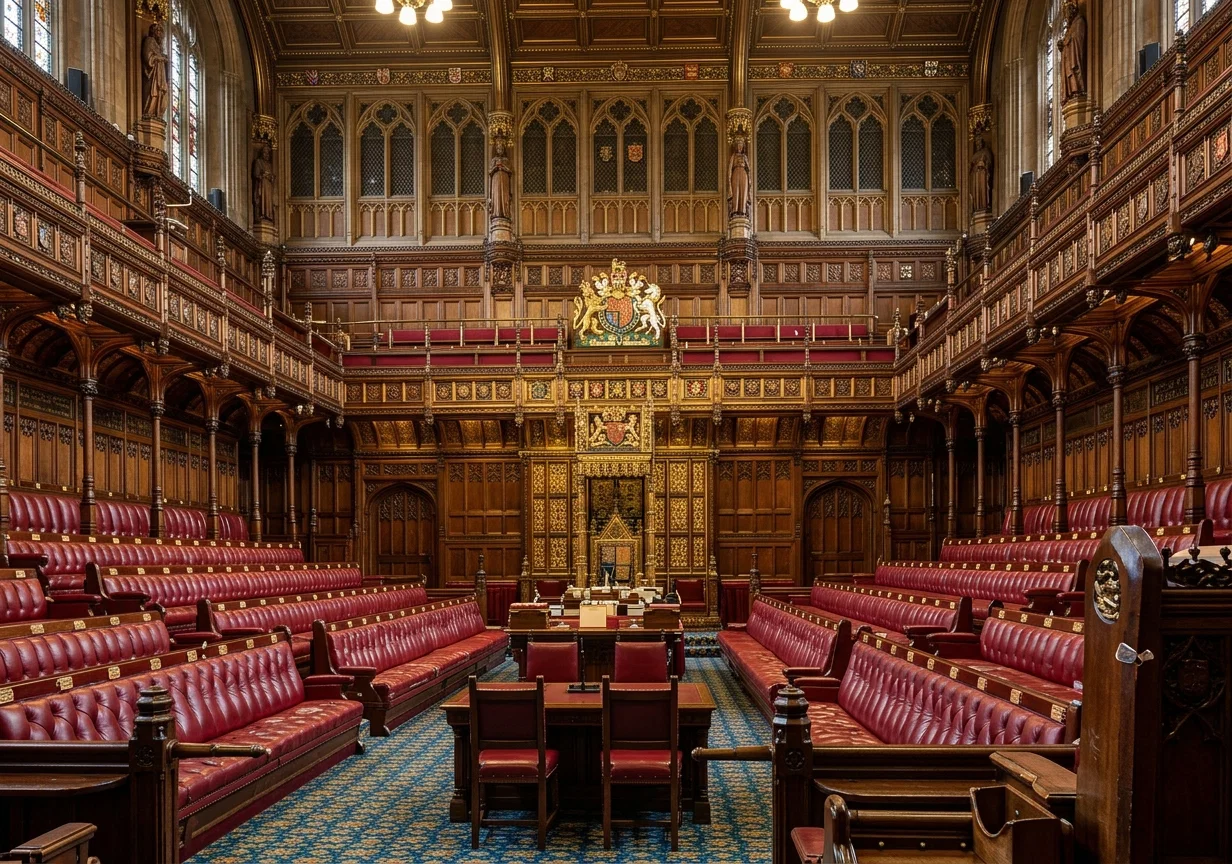
THE HOUSE OF LORDS
THE HOUSE OF LORDS
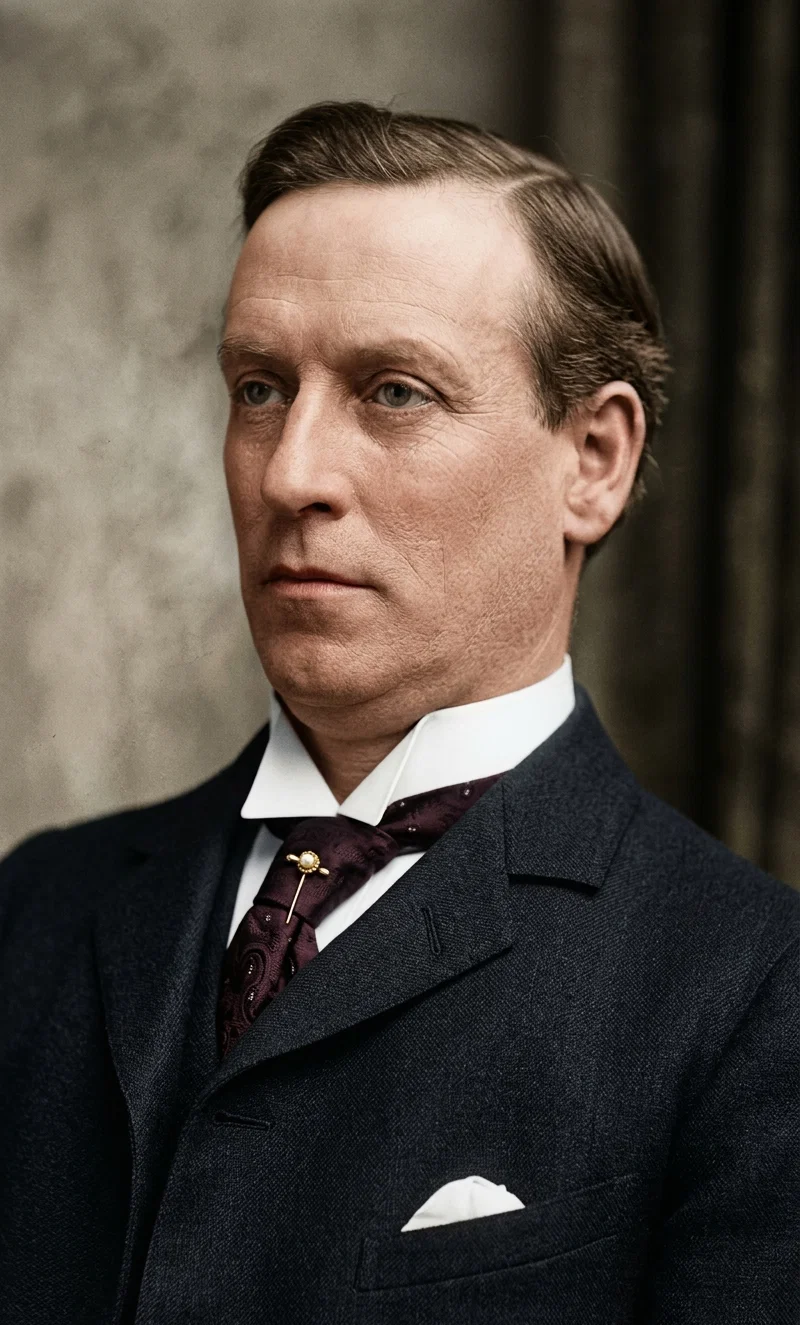
England's Premier, Rt. Hon. H. H. Asquith
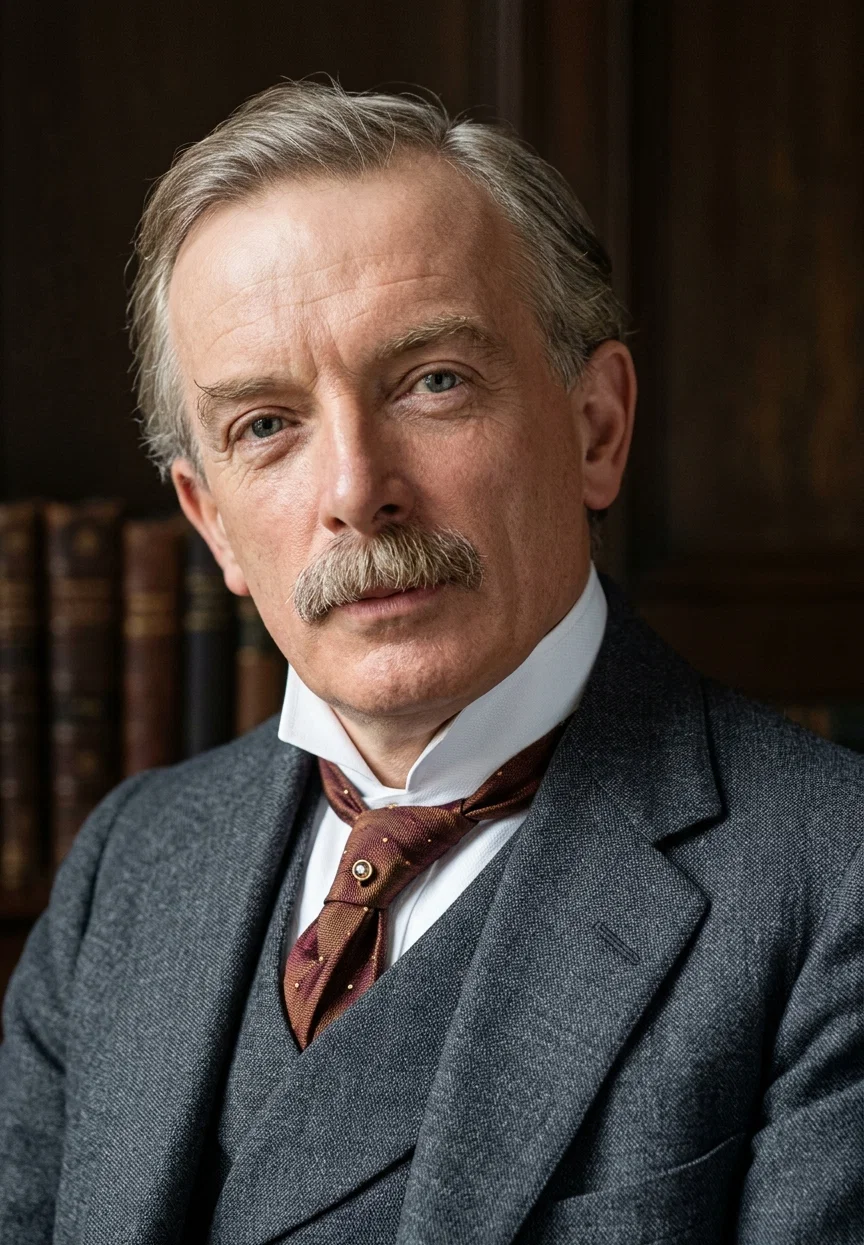
Chancellor of the Exchequer Lloyd-George
To all present appearances we are facing a grave constitutional crisis in England. If the House of Lords rejects the Budget of the Chancellor of the Exchequer, on which so much labor and time have been expended, the flood-gates of revolution will be opened, and no man can tell what the outcome will be. The existence of the House of Lords will be at stake, the throne itself may be challenged, and vast and radical changes from the present order of things will certainly come about before our governmental institutions resume a settled form. Unwonted bitterness is being imported into the political struggle. Mr. Balfour, the leader of the Opposition, a man who is credited with great personal charm, and Mr. Ure, occupying a responsible government position, have publicly denounced each other as a disgrace to their profession and to the country of their birth. It has been many years since such language was heard from responsible leaders of the great parties, but it is the general expectation that the struggle before us will be marked by extraordinary intensity of feeling. There is a strong conviction that a great battle is about to be fought between the forces of property and the masses of the people. There is no doubt that this is true. For generations past it has been tacitly accepted that the ownership of property carried with it the right to govern; but during the past few years there has rapidly grown up among the masses a feeling that their numbers give them the superior strength, and that, if they will, they may become masters of the political situation. Both the great parties have contributed to this educational process by their lavish promises of the benefits that will follow their own instalment in office. At the present time the chief argument put forward by the Liberals in their claim for public support is that the poor owe their old age pensions to Liberalism; while one of the chief arguments of their opponents is that their own return will mean cheaper beer for the people.

Parentalism in Legislation

As the supreme necessity of winning public favor has become more and more the guiding principle of modern statesmen, while this has meant more legislation in the interests of the poorer classes, it has also meant at the same time a departure from the old and once venerated principles of individualism and personal responsibility that necessarily underlie solid character. The bestowal of old age pensions upon all is pleasing, of course, to the recipients, but it must have a weakening effect upon the stimulus to personal exertion. It is right that the children attending the schools should not be allowed to go hungry, but the provision by the state of meals for these children is bound to remove some, at least, of the incentive to parental industry. The modern tendency is more and more in the direction of requiring the state to assume burdens that properly belong to the individual, and this tendency must inevitably weaken individual character. But those who dwell on this unfortunate phase of state aid are listened to with impatience. They are told that the philosophy they preach is out of date, irrefutable on paper but proved impracticable in human experience. While this may be true, the defect is not in the principles, but in the weakened character that finds them too exacting. Instead of seeking rather to build up character, politicians to-day are discarding the principles. Thus expediency is preferred to principle, and truth is set aside if it involves a struggle.

Old Bonds Dissolved

The appetite for state aid is one that grows on what it feeds upon. To the extent that men are relieved from the necessity of personal exertion, their resulting weakness will demand a continuance and increase of governmental assistance. Advancement along this line is likely to be increasingly rapid; and of course, in proportion as individual responsibility is shelved, personal freedom will disappear. In their eagerness to conciliate the spirit of the times, recent governments in this country have unchained forces that will not be easily contented. We have entered into a new era, in which the old bonds of society are largely dissolved, and in which the masses have conceived an idea that the property of the owners who have ruled them in the past is now subject to their will.

Sea and Air

The work of building up the naval armament still goes steadily forward. Giant cruisers and battle-ships are being launched in rapid succession; but public interest, apart from the political struggle, is fixed for the time being upon the wonderful feats which men are achieving in the air. It is now a common thing to read of flights of nearly a hundred miles, and of ascents to a height of seven or eight hundred feet. It is seen very clearly that these air-ships are no toys. They are able to fight their way through gales of wind blowing forty miles an hour, and to perform all kinds of evolutions under trying conditions. There is not the slightest doubt that in time of war the aeroplanes would be capable of doing a vast amount of mischief. It may be taken as a settled thing that the next great international conflict will certainly see these wonderful inventions employed as mighty agencies of destruction.

New Religion Demanded

In this new potentiality we have but one illustration of the tremendous forces that are to-day entering into the conditions and problems of civilization. Professor Frederic Harrison has just written:
“We are living to-day in one of the most tremendous eras of transition that our planet has seen. Steam, electricity, photography, instruments, steel, air-ships, science, learning, inventions, the filling up of the world and the consolidation of humanity, have transformed our material existence with incredibly rapid changes.
“The intellectual horizon has broadened as rapidlytoo, and with it our whole moral outlook; and with both together, the profound religious structure, on which the old civilization reposed, has been shaken to the roots. This unparalleled revulsion in our material, intellectual, and moral life has brought new and abnormal difficulties and evils.
“Mankind will never shake itself free of them until it has gained a new religion, which is to be a compound of science, ethic, art, and love. Such a system, at once practical, moral, and religious, is in sight.”
As will be clearly seen from these words, the question whether civilization will prevail over the extraordinary evils of our time, or whether it is to be swallowed up by those evils, will, in Professor Harrison’s opinion, depend upon the value of the new religion which modern civilization has produced. If this shall fail, woe, then, to civilization.

The Lack in the New Religion

The new religion has borrowed from the old almost everything but the superhuman; it lacks nothing but God. It looks upon Jesus as the finest man who ever lived, but it will not allow Him to be divine. Thus it rejects the one saving element of religion. At almost every denominational conference which is held, the “new theology,” in a more or less diluted form, is brought to the front. A few ministers protest that this does not represent them, but the protest receives scant attention. Jesus is extolled, but only by way of tribute to the infinite possibilities and powers that reside in humanity.

Even Judaism Is Agitated

by a “new theology” of its own. Certain leaders of the Jewish community in London are proposing to build a synagog for those who desire to throw over the old traditions and create a modern, progressive form of Judaism. Among other anticipated reforms is the abolition of the custom requiring the separation of the sexes during services, also the abolition of the laws relating to clean and unclean. The outstanding feature of the agitation, however, is the proposal to hold Sunday services for those Jews who are occupied in business on the Sabbath, and can not get away to attend the synagog on that day. The promoters of this idea say emphatically that they do not want to destroy the historical Sabbath, only to make some provision for the enormous number of Jews who can not attend the Saturday services. The chief rabbi, however, views this scheme with strong disapproval. He says, “It is a menace to Judaism, calculated to undermine the Sabbath, the most sacred institution of our race.”
Another of the chief scholars and ministers in the Jewish community declares that the proposed remedy is a thousand times worse than the disease. He says:
“Mr. Montefiore claims that his presentation of Judaism will save those drifters who under modern conditions can not follow the traditions of the religion. Logically I think it will increase drifters, by making religion a convenience for them instead of a self-sacrifice. The Jewish Religious Union’s idea of Judaism is a Judaism without authority—without even the authority of the Bible.”

Sunday Observance Relaxing

While the Jews are thus in enormous numbers weakening in their observance of the Sabbath, Sunday observance is also rapidly disappearing. The five-cent theaters of American cities have lately made their appearance in this country, and are open a large part of the Sunday, drawing crowds of people. There are also said to be some twenty thousand shops open in London every Sunday. The people have not sufficient religious conviction to observe the day which they regard as a more or less sacred institution, and because of this many are calling for state aid to reinforce the public conscience. The Imperial Sunday Alliance has just held a conference at the Mansion House, the residence of the lord mayor of London, at which a resolution was passed calling for the introduction of a weekly rest-day bill into Parliament as a non-party measure. The Alliance is strongly supported by nearly all branches of the church, and its object is to secure legislation that will compel Sunday closing of shops and stricter observance of Sunday generally.
Farman's Aeroplane
Farman's Aeroplane
Thus we have in active operation in this country most of the forces which Bible students in America recognize as signs of the times. These conditions are not local or accidental; they reveal the working out in different lands of one great controversy between truth and error. W. T. BARTLETT.