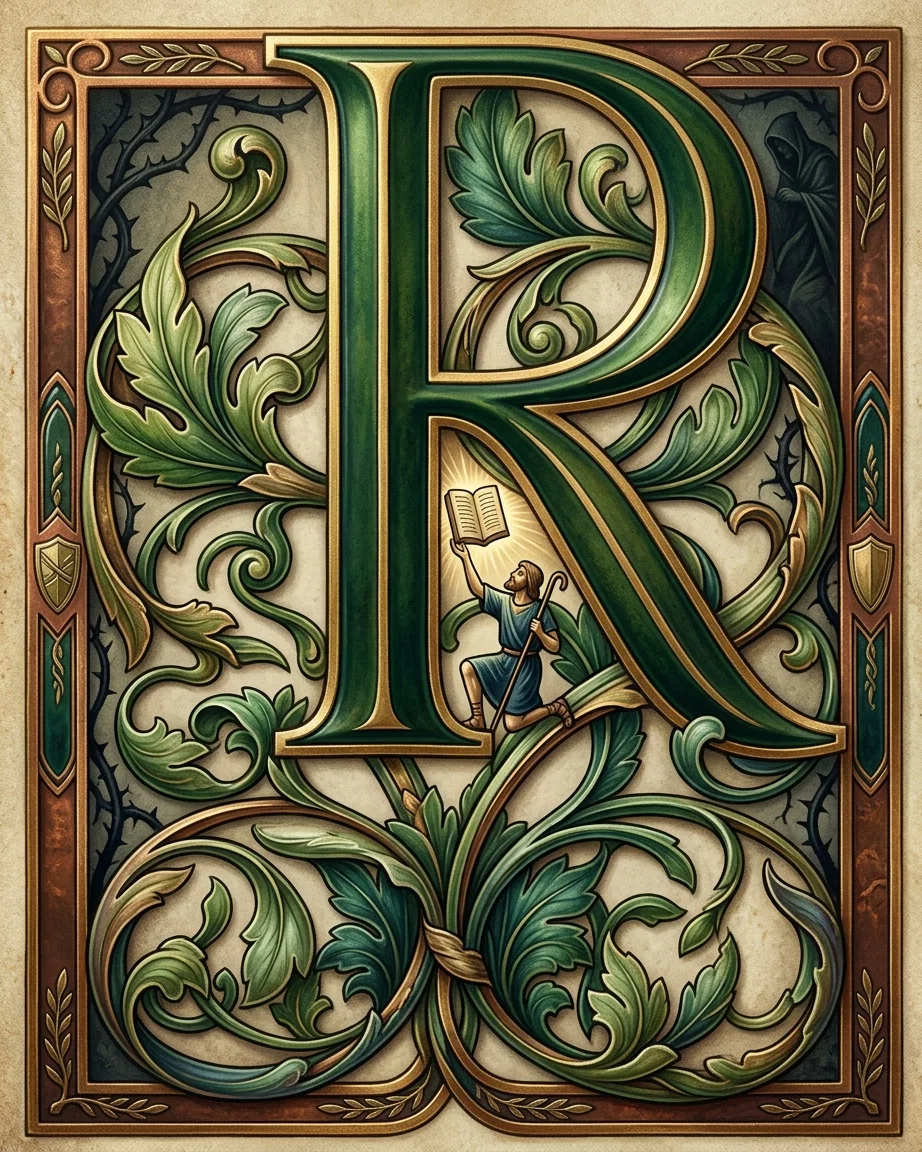
READER, turn to Ps. 17:4, and read the complete statement of the Shepherd-King of Israel. “By the Word of Thy lips I have kept me from the paths of the DESTROYER.”
Efficient and potent beyond all ability to be reasoned, to be estimated, must have been this Word (law) to which David refers with assertion so unlimited, so positive!
Think of the gainful, priceless service it rendered him — the keeping him from the paths of the destroyer, and hence from eternal death!
When a creature or a thing is destroyed, it ceases to exist. A noble tree of the forest, burned to ashes, is as tho it had not been. Its power to bloom, to bear fruit, to adorn, the landscape, is ended.
When a ruthless hunter brings to earth a beautiful bird, with no higher intent than to display his unpraiseworthy skill, or to gratify his blood-red propensity for the chase, he becomes a cruel destroyer, a heartless taker of life. He takes away that which he did not give, that which he can not restore.
The Destroyer Preeminent
But it is not to these small, second-class destroyers that the great psalmist refers, and from whom he rejoices to have escaped.7
Rather he sings of release from the destroyer preeminent of the universe, from that life-taker who aims only at high-class game, game whose death affects all the earth, and heaven, and worlds reigned over by many princely sons of God; whose death is eternal.
With distinguished skill this arch-destroyer has laid out, opened, countless attractive and fascinating paths, among the charms and beauties of which himself and his myriad fellow hunters lurk for victims unwary, unafraid, easily entrapped.
So invitingly, so temptingly do these paths lead on and on, so concealed, oftentimes, are their dangers, so intricately laid are the meshes for the hasting feet, that few, comparatively, of the heedless, incautious beings who throng them, ever effect their escape therefrom.
Sadly enough, many do not know, hosts of them do not reflect that nearby, in sight, up on the mountainside, extends, stretches away, a narrow, rugged, steep, but mightily defended way in which all feet are safe if they but keep within its distinct, truth-guarded lines.
The Two Ways
Of these two opposed roadways for eternity-bound travelers, Christ once spoke in terms startling, full of warning. Reader, hear Him, heed Him!
“Enter ye in at the STRAIT gate; for WIDE is the gate, and broad is the way, that leadeth to destruction, and MANY there be which go in thereat.
“BECAUSE strait is the gate, and narrow is the way, which leadeth unto LIFE, and FEW there be that find it.”
But by what powerful agency did the king of Israel keep himself, through most of his life, from those “paths of the destroyer”?
David, certainly, was a man whom the destroyer made extraordinary effort to entrap and to ruin in some of his alluring but fatal paths.
And truly there were periods in the great king’s life, when, with amazing heedlessness, with astounding lack of righteous principle, with marvelous yielding to an evil nature, he strode into those dreadful paths with a speed, an unconcern, most startling, and to this day surprising.
To this day also, it is cause for mourning, for deepest regret, that one chosen to position so lofty, appointed to service so beneficent, set for purpose so far-reaching, made a type of the Christ, should ever have dimmed the luster of his reputation with glaring sin, with rushing infringement of the commandments.
The Plenitude of the Word
But how, finally, could the famous ruler claim that he had held himself from the paths of the great destroyer?
Ah, the instrumentality is as helpful to you and to me to-day, is as full of power to rescue, is as immune to failure, as when he resolutely made choice of the narrow way and the strait (close) gate. Listen!
“By the WORD OF THY LIPS I have kept me from the paths of the destroyer.” Ps. 17:4.
Here, undoubtedly, as in a hundred other places in his inspiring psalms, David refers to the Ten Commandments, since these preeminently are THE Word from the Creator’s lips.
Notice that it was the using of the means provided for him that finally saved David from paths made enticing, made destructive, by man’s mighty enemy.
What a testimony to the protecting, preserving, character-building power of the words of the Decalogue is this frank, grateful admission of Israel’s king! What encouragement it should beget, what strength impart to hearts and minds faint, faltering, fearful!
Christ, who gave the law on Sinai, declared to the Jews on one occasion, “The words that I speak unto you, they are spirit, and they are life.”
The Living Word
Heb. 4:12 tells us: “The word of God is living, and powerful; . . . a discerner of the thoughts and intents of the heart.” And Peter asserts that the new birth is accomplished by the Word of God, which liveth and abideth forever.
It was not David’s own wisdom, foresight, ability to resist keen temptation, which held him to paths of safety through most of his conspicuous career.
When moral defeat threatened, when giant error stood at his doorway, when eclipse of earthly hopes and prospects shadowed his sky, it was faith in the living Word of God, confidence in the love, mercy, willingness to forgive, of Him who, the very hour His promise to Abraham was due, led Israel out of Egypt.
No one with keen mind, with devout spirit, can think, think down into the broad, deep intent of the ten precepts of the Decalogue, without realizing that a strange, impelling principle of life surges through every statement, sets ablaze every sentence, animates every word, fills every letter.
In short, it is a living Decalogue, holding no possibility of death, as lasting in structure as earth’s history. Life from God pulsates in every prohibition, every command. Who, then, can “think” to change it?
Little wonder therefore that great King David found therein force to keep him from the path of the destroyer.
The same identical life is therein to-day, and will act for you and me, will impart the same blessing, lead to the same rejoicing.