Life and Death

6%

Pacific Press Publishing Association · Mountain View, California · Nov 3, 1909

FromSigns of the Times, Vol. 36, No. 43.

Read the full edition

Life and Death

By John Orr Corliss
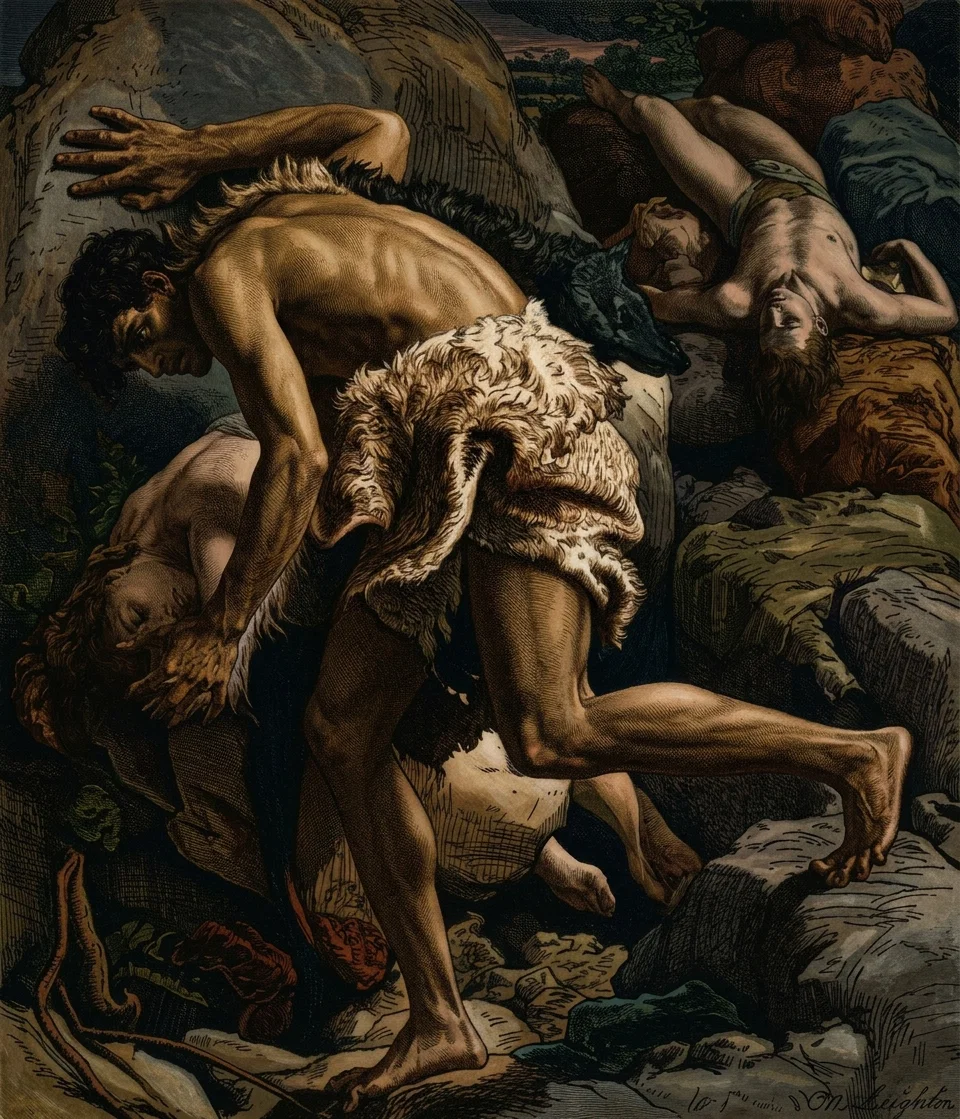
CAIN AND ABEL. Lord Leighton
The greatest of all problems with which the human race has struggled for a satisfactory solution, is that of the hereafter. In sheer hopelessness some have given up the contest, with the assertion that man has no future beyond the present life. Others have adopted weird notions regarding the object of man's creation, that have landed them on the platform of Eastern occultism. These results are to be deplored, more so because there is a Fountain of knowledge at which all may be “watered, satisfied” in all things relating to man's creation and future prospects.
This Fountain being the only infallible source of true knowledge, may we not for the time being let all tradition rest in the shadow of forgetfulness, and so be able to give ourselves wholly to an unbiased study of the subject from an original source? In the first place, it is safe to affirm that man, being the highest order of earthly intelligence, must have been designed for some preeminent position, which could not be properly met in a mere temporal existence.

In the Image of God

So when man was to be created, Jehovah (the Self-existent, and who is infinite in all His attributes) said, “Let Us make man in Our image, after Our likeness.” Gen. 1:26. After the model of clay was duly formed, Jehovah God “breathed into his nostrils the breath of life; and man became a living soul.” Gen. 2:7. As this breathing of life from God into the inanimate “earthy” form was essential to its prospective design, so its withdrawal must prove fatal to that purpose.
We can not for a moment suppose that God bestowed in that first “breathing” a gift which was beyond His power to withdraw, especially in view of His foreknowledge of man's temptation to become disloyal to the divine plan. Man himself was made to understand the condition upon which he might retain this breathing of life in his being. Upon being placed in Eden, he was permitted to eat from every tree in the garden, except one. Concerning that tree Jehovah said, “In the day thou eatest thereof thou shalt surely die.” Gen. 2:17.

The Result of Disobedience

Nothing could be plainer than this instruction. To disobey God meant to Adam utter dissolution. That is to say, should man antagonize his Creator and Benefactor, and thus withdraw himself from the divine presence, God would withdraw from the man His divine inbreathing, which otherwise would have retained him in the image and likeness of Jehovah. This would permit the part which had been divinely animated to return to its native element. This condition is clearly stated thus by the wise man: “Then shall the dust return to the earth as it was: and the spirit shall return unto God who gave it.” Eccl. 12:7.
This was indeed just what did transpire in the case of the first pair. Being found guilty of opposing God's will, the Lord pronounced this sentence upon them: “In the sweat of thy face shalt thou eat bread, till thou return unto dust shalt thou return.” Gen. 3:19. Inasmuch as the inbreathing of God's Spirit was that which changed the lifeless clay to a living soul, or being, it goes without saying that the withdrawal of that living essence of the Divine put the man back to his original condition—a lifeless form of earthy matter.
To live, then, is to be animated with the life of Jehovah. As He loaned to the first pair His own life, that they might do and be like Him, so every human being has probation for the same purpose. Should any use that life to further selfish and wicked designs, Heaven's decree is, “The soul that sinneth, it shall die.” Eze. 18:4. This statement is renewed by the great apostle as follows: “The wages of sin is death; but the gift of God is eternal life through Jesus Christ our Lord.” Rom. 6:23.

What Is Death?

Death is, in plain words, the simple cessation of life. This was brought to all men by the death of our first parents (Rom. 5:12), and so means to all men the same that it did to those who introduced death by sin. The penalty for disloyalty to Heaven having been visited upon Adam and Eve, there would have been no remedy, but for the gift of Jesus Christ. Thus we read, “For God so loved the world, that He gave His only-begotten Son, that whosoever believeth in Him should not perish, but have everlasting life.” John 3:16. The gift of Christ, then, was to prevent men from PERISHING, which comes by sin. So, to receive death as “wages” for sin, is to perish.
But redemption from this penalty is promised only to those who believe in Christ. This leaves all of the incorrigibly wicked to remain under the sentence of death.
Thus man returns to the state from whence he was taken in the beginning, without any injustice being done him. He might have retained the life of God with which he had been imbued, and which had been loaned for strength to glorify its Author. But he chose to use that life for his own gratification, without regard to the wishes of its real Owner, and by so doing virtually said: I care nothing for this life but to gratify my senses temporarily. As I can not be permitted to do this forever, without accepting Christ, I am now done with it, so return it to its Author. In depriving such of life altogether, and letting them utterly perish, God does for them just what, by their actions, they have really declared that they desired done. In this He is just, as in all His dealings with the race, and even those who are thus dealt with will be obliged to acknowledge at last that “Jesus Christ is Lord, to the glory of God the Father.” Phil. 2:11.