Steward and Debtor

11%

Pacific Press Publishing Association · Mountain View, California · Oct 20, 1909

FromSigns of the Times, Vol. 36, No. 41.

Read the full edition
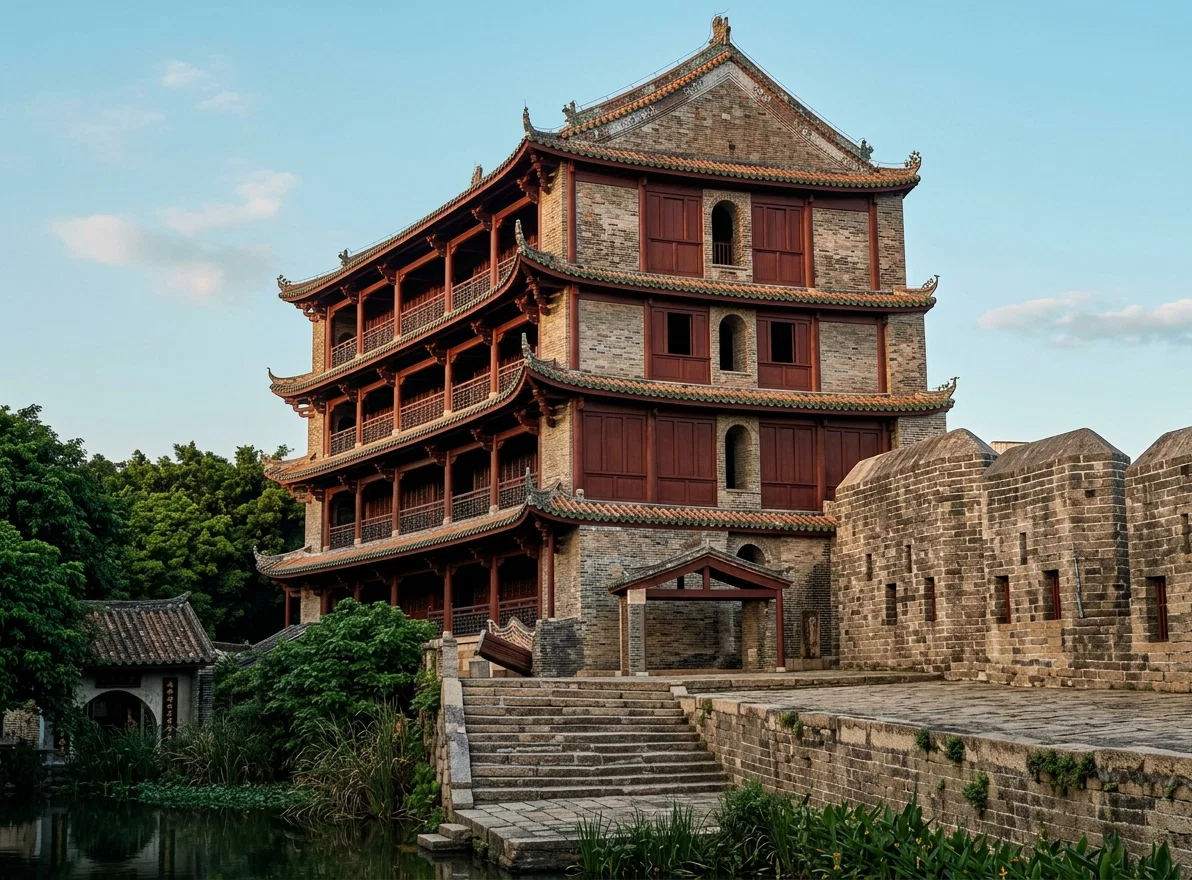
A Five-Story Watch-Tower on the Wall of Canton, China

Steward and Debtor

EVERY person who receives the “eternal Gospel,” becomes a steward and a debtor. The living recognition of this fact has in the past resulted in a great blessing to the church and to the world, and if adhered to in this age, will yield the same beneficent results.
People who have been born in Christian lands, been reared in Christian homes, heard and believed the Gospel from infancy, often do not comprehend nor appreciate the great blessing that has been transmitted to them by their forefathers. The Gospel which is so full of hope and consolation to rich and poor alike, has come to be looked upon as a common and natural thing, its value scarcely considered; until our stewardship of “the way of life” is lost sight of, and the debt we owe to those less favored than ourselves, is of little concern.
The attitude that Christians should sustain to the Gospel, is strikingly set forth by the apostle Paul, both in word and in act. Writing to the church at Corinth, he confesses himself to be a “steward of the mysteries of God.” And with zeal and earnestness he “delivered unto” them that which he, as a steward, “had received” in trust of the Lord Jesus. Again, “I am debtor both to the Greeks, and to the barbarians, both to the wise, and to the unwise.” Thus on the one hand, he is impressed with the sense of the responsibility toward the Gospel itself, as a message of truth to be propagated among men; and on the other hand, with a sense of the responsibility to all nations to whom the Gospel must be preached. This twofold responsibility found expression in the manner and method by which he carried the Gospel to all peoples. His preaching tours were not at random; but in this all-important work which he was forwarding, there was a deep-laid purpose of reaching places of influence. At such centers as Antioch and Ephesus, he spent much time. And when at Troas, he heard and obeyed the call to plant the message of the cross in the continent of Europe. Macedonia was the road to Athens and Corinth, centers of learning. But this was not enough, to have preached the Gospel fully “from Jerusalem, and round about unto Illyricum;” the Gospel of Jesus must also be preached at the world’s center of power—Rome. The great apostle knew that all roads led to Rome, and to this center of power and civilization came delegations from “every nation under heaven.” It was therefore of far-reaching importance that the Christian church be established in this influential place, to which all eyes were turned.
Over eighteen hundred years have passed since Paul preached at strategic points; but the urgency of disseminating the “everlasting Gospel” from national centers has not passed. To-day there is a mute call from a third of earth’s population. Peking, Canton, Shanghai, and Hankow are centers of influence in the Chinese Empire, where the Gospel should be firmly established, and that right soon. China in the past has been little known and scarcely heard of; but to-day she is demanding the world’s attention, politically and religiously.
She is indeed the “Middle Kingdom,” and has become the center of attraction. It is now scarcely necessary for the missionary to spend his time and energy in combating the idols of the land, as the government itself is taking this question in hand, cleaning the temples of their idols and turning their spacious halls into schools. But there is a work that rests heavily upon every steward and debtor, and that is the work of supplying the teacher and the teaching.
There is an urgent demand for competent teachers, both foreign and native, male and female. And for us to live up to our privilegethere must necessarily be many like Isaiah—“Here am I; send me.” And on the other hand it will require many like minded with Zacchaeus to come forward and say, “Behold, Lord, the half of my goods I give” for the establishing of the “everlasting Gospel” in strategic places of China.
B. L. ANDERSON.