Soul and Spirit

11%

Pacific Press Publishing Association · Mountain View, California · Nov 10, 1909

FromSigns of the Times, Vol. 36, No. 44.

Read the full edition

Soul and Spirit

By the Editor
We very frequently hear the terms “immortal soul,” “immortal spirit,” “deathless soul,” “never-dying soul,” “deathless spirit,” etc., etc., applied to the soul or spirit of man. One would gather from their use in Christian teaching that such expressions were common in the Bible. Yet while “soul” and “spirit” occur in the aggregate 1,700 times in the original in the Old and New Testaments, they are never once said to be immortal, or never-dying. In the Word of God, deathlessness is neither predicated nor assumed of either soul or spirit. The English word “soul” in the Old Testament comes, in every instance except two, from the Hebrew word nephesh, which means “a breathing creature, or abstractly, vitality.” It comes from a primitive root meaning “to breathe.” It occurs 745 times, and is translated “soul” about 470 times. It is also rendered into English by the words life, and lives, person, mind, heart, dead body, or body, creature, will, appetite, lust, thing. It is translated in 43 different ways; sometimes by the various pronouns, by breath, beast, fish, ghost, pleasure, desire, etc., etc. It is never rendered “spirit.”
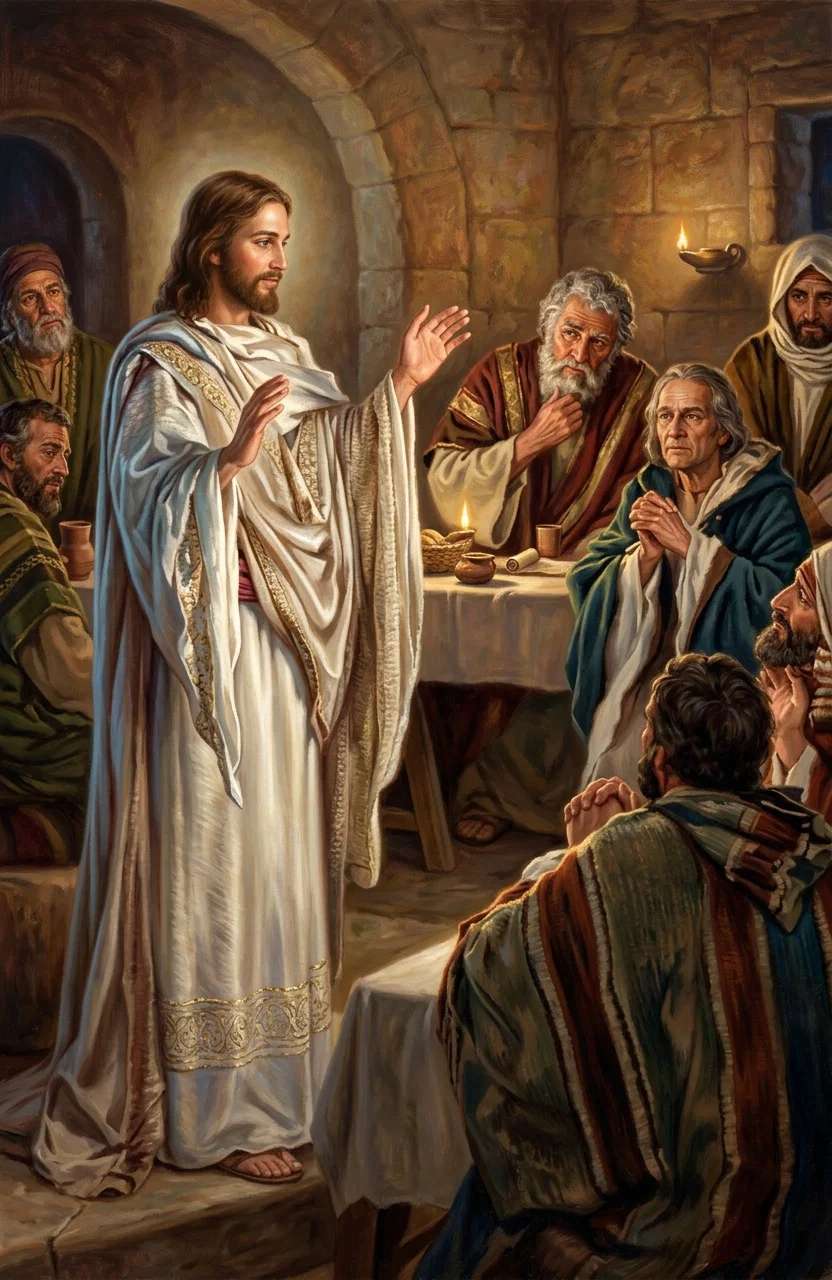
THE RISEN ONE, BY WHOSE LIFE WE ARE JUSTIFIED
“Soul” in the New Testament comes from the Greek word psuche, and from that only. The Greek word occurs 105 times and is rendered soul, life, mind, heart, us, and you. It simply means the animal life, common to all creatures.
“Spirit” in the Old Testament comes from two Hebrew words, n’shamah and ruwach. The former of these is rendered breath, blast, spirit—twice only, soul, inspiration. The latter occurs 442 times, and is rendered by the following English words: spirit, wind, vain, breath, smell, mind, blast, tempest, anger, courage, air.
“Spirit” occurs in the New Testament 291 times, coming from two different words, phantasma and pneuma. Phantasma means phantom, and occurs twice only (Matt. 14:26, and Mark 6:49), reflecting a superstitious belief.
Pneuma is rendered spirit, ghost, wind. It is used of God, of the Holy Spirit, of angels, of men. The word is not of itself sufficient to imply character or duration. When applied to the Holy Spirit, it is oftentimes modified by the adjective “holy,” or the context indicating what is referred to.
The use of “spirit” in the New Testament, as regards man, seems to apply to those who have the life of the Lord Jesus Christ, while the soul-life is common to all. The natural man is the soulical man. The spiritual man is the one who has received and does receive spiritual life from God. Now, if it were true that the spirit or soul constituted the real man, and that these or one of the two was immortal, why would we not find some indication of this expressed or implied in the Word of God?