The Philippine Islands

8%

Pacific Press Publishing Association · Mountain View, California · Jul 28, 1909

FromSigns of the Times, Vol. 36, No. 29.

Read the full edition

The Philippine Islands

[Part of a report from Pastor J. E. Fulton, of the Australian Union Conference, at the recent world's conference at Washington, D. C.]
These islands are a very old settlement, being discovered only twenty-nine years after Columbus discovered America, by the great navigator Magellan, who landed on the island of Cebu in 1521. Of the inhabitants, some are pagans, some are Mohammedans, and the greater number are professed Christians. Since America has taken over these islands, Protestant missions are operated by different denominations. There seems to be quite a movement on the part of the natives to read the Bible, which has been withheld from them so long. The population of these islands is stated to be about 8,000,000. What a field for missionary effort! It would seem that now is our time to work there. Brother and Sister Finster and Brother and Sister Caldwell are our only missionaries in that group, but what are they among so many?
In the Philippines one finds himself in a country of strange contrasts. He sees the old forts and city walls, and ancient cathedrals, some of which were built not long after the time of Martin Luther. Alongside these he now sees modern buildings of every kind; and emerging from, or entering through, the gray and moss-covered walls, in old Manila, the electric cars are seen raging along in American style.
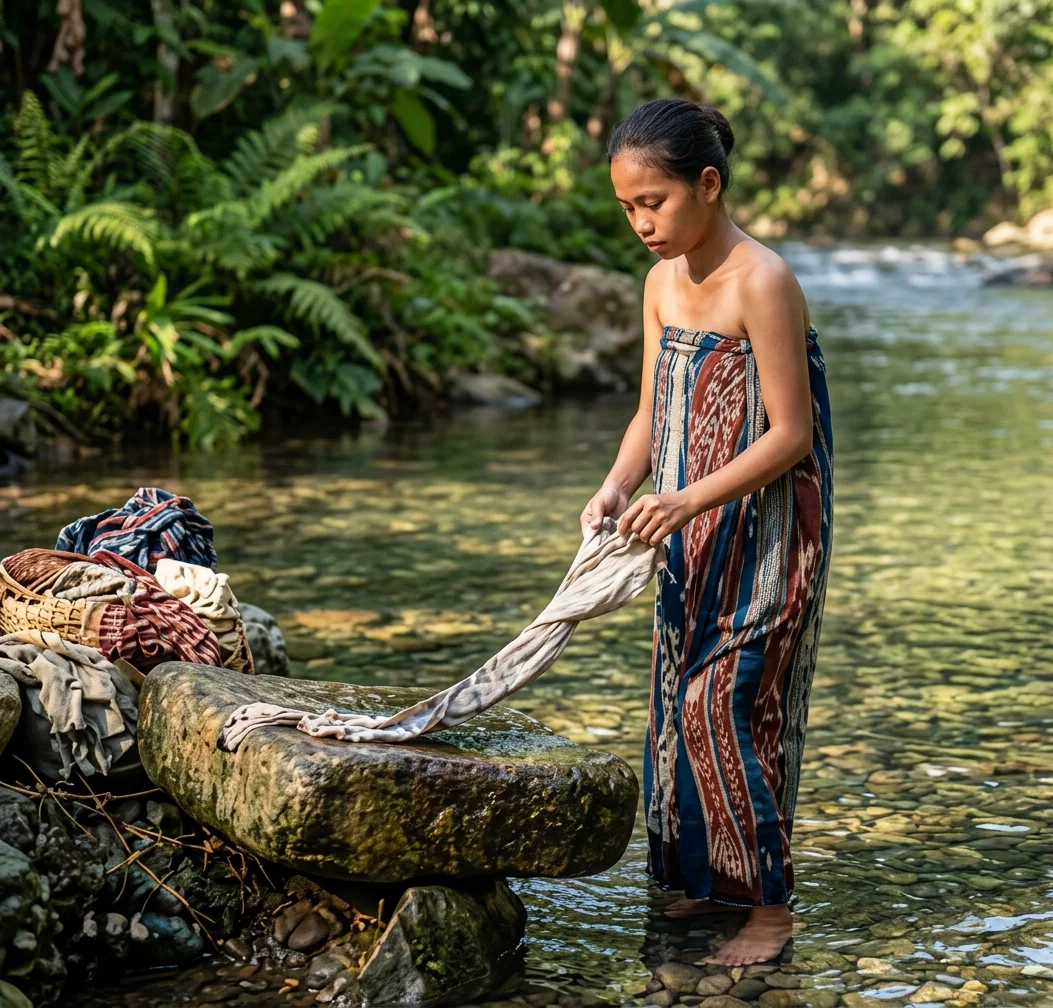
Native Laundry
Native Laundry
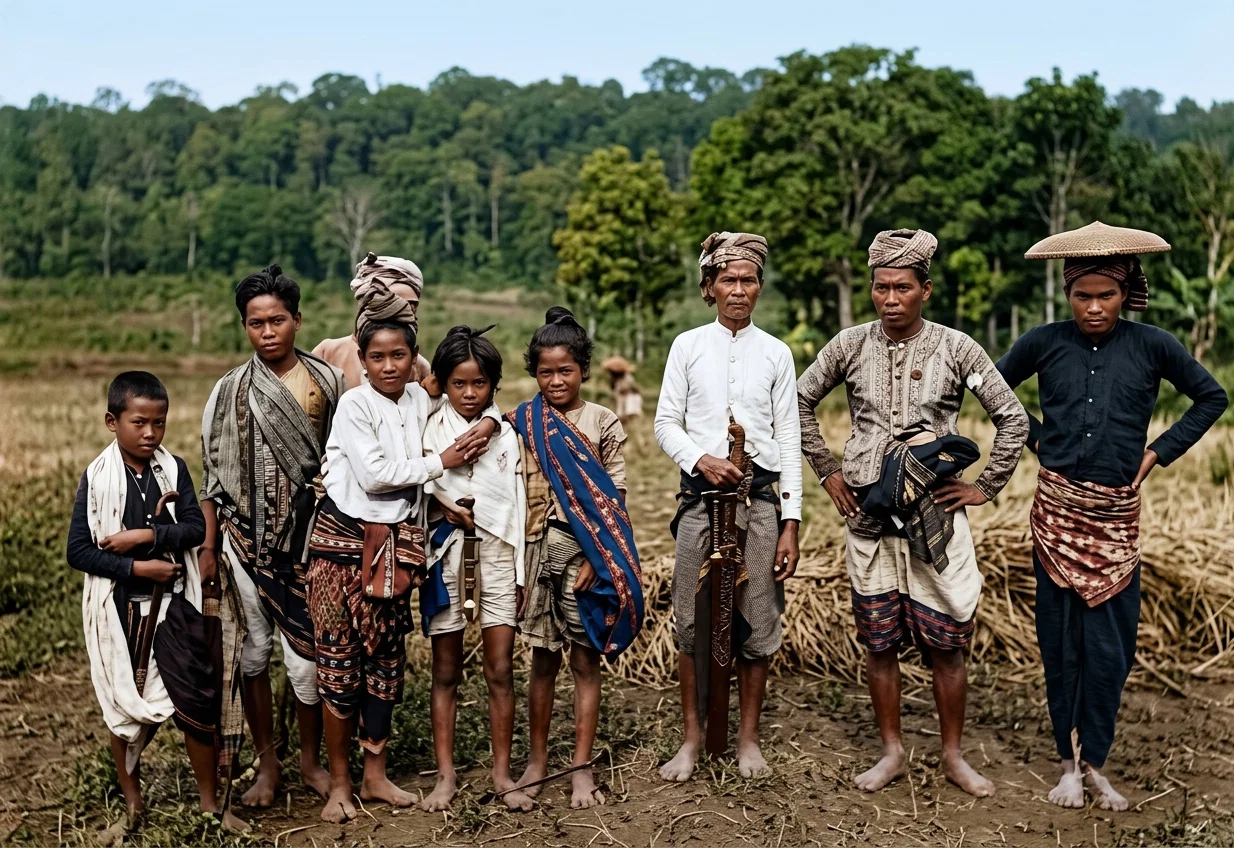
Filipino Moros
Filipino Moros
We have done something here in circulating literature. The Lord has opened the way to secure a good translator, to put some of our literature into the Tagalog language, one of the most important dialects in the group. At our late council meeting in Manila we decided to get a few leaflets translated and printed in this dialect. Three hours after a meeting where we decided on two small tracts to be translated, we were in the house of the translator, a man who has been employed by the American Bible Society. He immediately took the work, and in three days had completed the task, and the manuscript was placed in the hands of the printer, copies of the tracts soon to be in the hands of the people, and, we trust, the truths taught soon to be in their hearts. In a recent letter from Brother Finster, we are told that the translator has been working on a Sabbath tract, and that he became so much exercised over the question himself that he has decided to obey.
Many of you have been interested in hearing about the great split in the Catholic Church in the Philippines. You have been interested because you have heard that the new movement, called the Independent Catholic Church of the Philippines, has been circulating God's written word. While in Manila I called upon Archbishop Aglipay, who claims to stand at the head of at least 3,000,000 people. He received me cordially, and asked me many questions about our faith. He expressed himself as happy to learn of a people who really have the interest of the native people at heart, which he thought was an unusual thing. When he heard of our General Conference, and knew that I was a delegate, he asked me to bear a request for him to this Conference. “Tell your delegates assembled at General Conference,” he said, “to pray for my people.” Let us pray.

Philippine Needs

The needs are great. We ought immediately to have two more ministerial workers, one in the north and one in the south, and two canvassers for the same districts. Many more laborers could be used; but considering the general needs of God's cause in many lands we make only this moderate request.
A mission station, where a school can be carried on, will soon be needed. This will need to be carefully selected, and should, we think, be located where the workers could have the most favorable surroundings for health, which must be carefully guarded in this climate.

Sumatra

There are about 3,000,000 people in this great island. Padang is the chief city, and the place where our mission is located, under Brother Wantzlick. There are about 30,000 people there, 18,000 being Malays, 10,000 Chinese, and the remainder Europeans. Mohammedanism has a strong hold upon the Malays. Padang is a good center for our Malay work, and we have unrestricted privileges to work for any class. The Battaks live in the interior, about seven days' travel from Padang. We have a few there who are keeping the Sabbath. There is an interest among the Battaks, but on account of the promise of the government to the German mission occupying this territory, no other people are allowed to enter here. Still no one man, or company of men, can set bounds which will not be broken over by the message. Four of these Battaks have attended our school at Singapore. Two of them have since returned, and one of them is teaching the truth to his people, and writes of an interest on the part of many, and also of opposition on the part of the German missionaries. But, being a native son, he is left to carry on the work. Brother G. F. Jones, of the Singapore Mission and school, writes that there are a number of these Battaks who wish to attend school. It seems that a school should be started at some point in Sumatra, near enough to receive these eager people. Where are the workers for this great island with its millions? There are precious souls there ready to receive the light. Who will go?