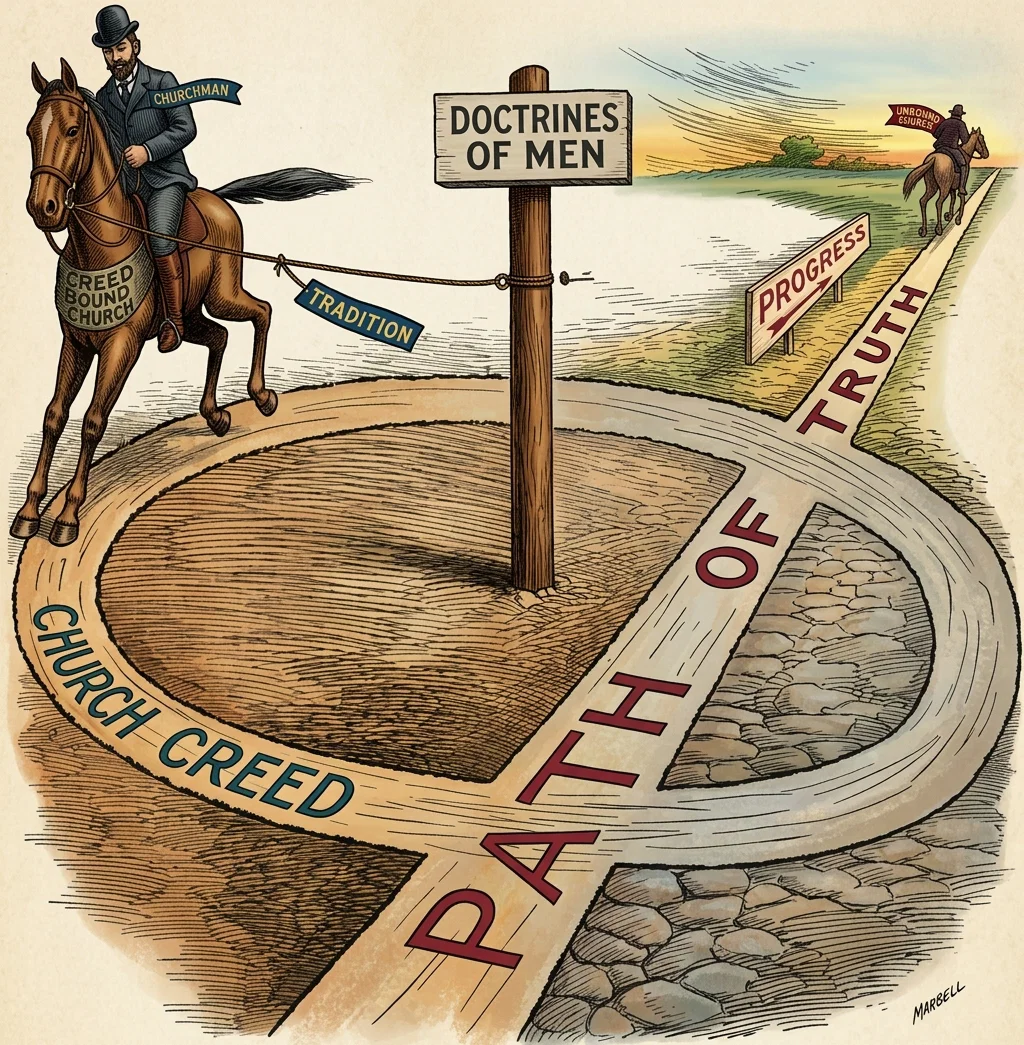
The path of progress religiously is in following living, expanding truth. The path of stagnation and dead formalism is the path of human creeds. (See article on the Reformation Churches, page 9.)
The trial of four Seventh-day Adventists on the charge of picking strawberries on Sunday, the 2d day of May, took place in the court-house at Greenville, S. C., Tuesday, August 8, in the presence of two hundred people. It appears that some three years ago Mr. Sullivan Wareham, with his wife and four children, journeyed from the state of Montana to South Carolina, where they located on a few acres of land in a quiet and secluded place on the outskirts of the beautiful city of Greenville, which has an estimated population of 35,000 people. In a humble, quiet manner, and by frugal thrift and industry, they have succeeded in supporting themselves by what they have been able to produce from their little piece of land.
During these years they have won the confidence of all their neighbors, with the exception of one person. This man has seemed to be possessed with a spirit of religious bigotry and prejudice since the Warehams became his neighbors, because of their strict observance of the seventh-day Sabbath.
As a result of this prejudice, he has continually hounded the tracks of his innocent seventh-day observing neighbors by talking unkindly about them, spying about to catch them at work on Sunday, and repeatedly threatening them with arrest.
This venom of religious spite and enmity reached its climax recently when he had a warrant issued against Mr. Wareham and wife and their fourteen-year-old son, besides six other Seventh-day Adventists, consisting of three women, two men, and a fourteen-year-old girl, for the crime (?) of picking strawberries on Sunday, May 2, 1909. Two of the men against whom the warrant was issued were Seventh-day Adventist ministers who happened to be visiting at the home of the defendant upon this occasion. The warrant, however, was served upon only six of the nine persons against whom it was issued, owing to the fact that the other three had left the community before the warrant was served. The day of the trial was set for Tuesday, August 8, at 9:30 A. M. By the time the hour of the trial had been reached, the people were assembling, despite the inclemency of the weather which was prevailing on that morning.
A jury consisting of six Greenville business men was impaneled, and the trial was in charge of Magistrate Samuel Stradley, whose rulings were fair and impartial. There were no attorneys employed by either side. Elder T. H. Jeys and the writer, however, assisted the defendant in trying the case. Three witnesses for the prosecution, including the complainant, his son, and a neighbor, testified that they saw the defendants picking strawberries on the day named in the warrant. It was shown, however, that one of the parties whom they swore they saw picking berries at that time was one hundred and fifty miles away. Thus an alibi was easily established in this case. According to the law of South Carolina, children under fifteen years of age are exempted from the penalties of the law in performing Sunday labor. Two of the children against whom warrants were served were excused by the court.
In summing up the case, Elder Jeys showed the jury the weakness of the testimony of the witnesses who testified that they saw the defendant picking berries. It was proven that one of the witnesses who saw the berries picked was a quarter of a mile away, on the opposite side of the hill, and another witness was four or five hundred yards away. The magistrate took occasion to instruct those who were to make the pleas, not to discuss any religious or theological question in order to prove which day of the week was the Sabbath, and added that the law of the land had defined that Sunday was the day to be observed. It was very evident that this instruction was given for the benefit of Seventh-day Adventists. It had been decided that the writer was to make the plea in behalf of the defendants, but the reader can easily imagine the embarrassment under which we were placed under such instruction from the court, for the case before the court was one of a religious nature, and that only.
We assured the court that we had no disposition to disregard the instruction it had given, but in discussing the question it would observe that the warrant itself had specified that the charge against the defendants was that of Sabbath-breaking, and therefore it was a religious question; for the only authority for Sabbath observance is found in the Bible, which is wholly religious. We showed further that the application of Sunday laws upon those who observe the seventh day of the week is out of harmony with the fourteenth amendment of the United States Constitution, which says:
“No state shall make or enforce any law which shall abridge the privileges or immunities of the citizens of the United States.”
Sunday laws are also opposed to the Bill of Rights in the South Carolina Constitution, which says:
“Sec. 9. No person shall be deprived of the right to worship God according to the dictates of his own conscience; provided, that the liberty of conscience hereby declared shall not justify practices inconsistent with the peace and moral safety of society.”
It was further shown that the enforcement of Sunday laws required the observers of the seventh day to rest upon the first day of the week, in addition to their conscientious observance of the seventh day, according to God’s command, and therefore they would only have five days to devote to labor, while those who observe Sunday would have six days. Hence, it will be seen that the equal rights of those who observe the seventh day of the week are abridged.
The fact was also emphasized that Sunday legislation was placing a spurious, man-made sabbath in the place of God’s sanctified day of rest. We also brought to the attention of the court and jury the fact that the state can only rightfully have to do with civil things, and not with those which are religious. It was shown that the picking of strawberries was not an uncivil act, but a proper and legitimate one, therefore the state can not rightfully prohibit such work on any day of the week if it keeps within its proper sphere. We acquainted the jury with the fact, which was established by the witnesses, that the defendants were good neigh- bors and upright citizens. The following statements in reference to Seventh-day Adventists were read to the jury, which show that they are a moral, upright, and law-abiding class of citizens:
“No other sect can show a better citizenship. They are industrious, frugal, and peaceable. If all other men were no more prone to evil than they, the grand jury would have little to do, and courts, civil as well as criminal, would take a vacation on at least six days of the week and have little to do the seventh.”
“It is a fact that nobody who knows them will attempt to controvert that the members of the religious sect that is designated as Seventh-day Adventists, make up a good citizenship. Their cardinal idea is to harm no man, and as a class, they are honest, sober, diligent, and frugal. . . . The persecution of the Adventist people . . . is a reminder of barbaric ages when fanaticism ruled in councils of state, and set up the gibbet and the stake at every crossroad to vindicate the Gospel of Jesus Christ through tyranny, pain, malice, and murder.”—Editorials11from “Washington Post,” Feb. 11, 1908, and May 27, 1909.
A prominent United States Senator, in speaking of the Adventists, says:
“It has been my privilege to live among Seventh-day Adventists, and I can truthfully say they are a very honorable, intelligent, upright class of people. They are patriotic and loyal citizens of the government.”
In the plea we placed great emphasis on the dangers of Sunday laws, because they can be used as weapons by persons who are actuated by a religious prejudice to vent their spite upon God-fearing and devoted Christian people, who may, perchance conscientiously, observe another day of the week as the Sabbath, other than the day they observe. It was shown how the defendants had been pursued for years by the complainant in a most unchristian, uncivil, and vicious manner, simply because they observed another day of the week in harmony with the Scriptures. Attention was called to the fact that these godly women and children had been compelled to come to the court that morning through the mud and rain as common criminals because a neighbor, filled with religious prejudice, could take advantage of the Sunday law to manifest his hatred and contempt for those who do not agree with him religiously concerning the day which should be observed as the Sabbath.
After the plea was finished, the magistrate read a short charge to the jury, and they retired. The jury, after being out for half an hour, returned a verdict of “NOT GUILTY.” This verdict was received with almost universal satisfaction and approval by those present. We feel certain that the prosecuting witness in this case is not a representative citizen of Greenville County, S. C. This case, however, should be a warning to all who are seeking to secure Sunday laws, of the wicked nature of such laws, which should not be permitted to stain the statute-books of any state in the Union. K. C. Russell.