Mission Notes from British East Africa
4%

Pacific Press Publishing Association · Mountain View, California · Aug 4, 1909

FromSigns of the Times, Vol. 36, No. 30.

Read the full edition

Mission Notes from British East Africa
By Mr. and Mrs. J. D. Baker
[The following paragraphs are taken from private letters from Mr. and Mrs. J. D. Baker to Mr. Baker’s father, who is a worker in our pressrooms.]
Kendu Landing
Kendu Landing
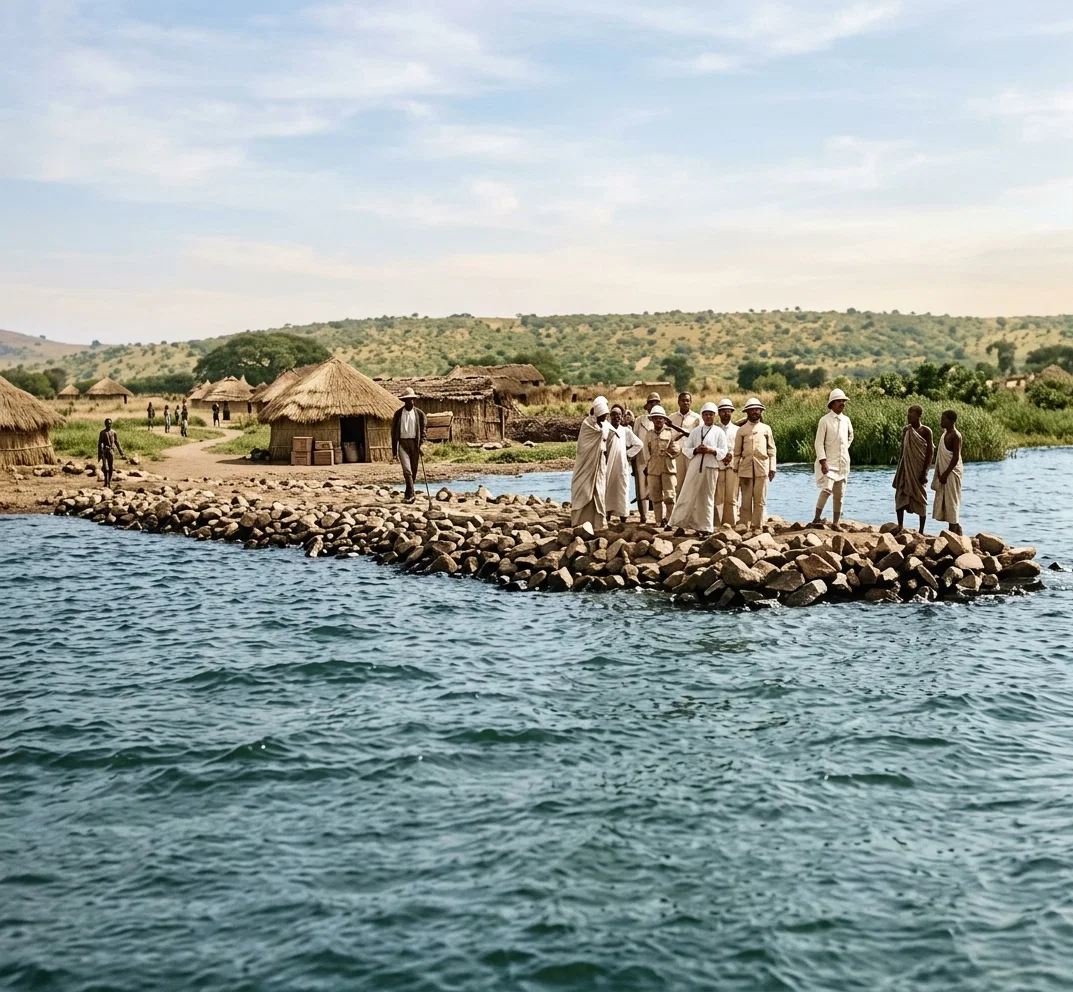
The government is beginning to deliver our mail within two miles of the house. The place where the boat calls has been named Kendu, but you must not think that is the name of a town. A few stones have been put into the lake so the boats can come up to the shore, and a small grass house has been put up in which to store loads waiting for the boat. This is the extent of Kendu. Still it is better than to send a boy forty miles on foot every week or so.
Kisumu is still quarantined on account of the plague. When this restriction will be raised I don’t know. They did raise it once, but the plague broke out almost immediately again, so that now the lines are drawn more strict than ever. We have a shipment in town. Whether our agent will be successful in bringing it out we do not know.
The school is getting almost too big for Annie. To-day she had thirty-eight present. Considering that she keeps them two hours, and that they are divided into about seven parts, it keeps her busy. We have no grades as yet, but each goes ahead as fast as he is able. Two of our own boys are nearly ready to commence reading.
The boys are a great help to us. I don’t know how we could get along without them. The little girls gathered the tomatoes. They did very well, altho they picked a lot half ripe. Several times a day they come to me and say, “Mama, adwaro nyanya (I want a tomato)?” And I tell them, Yes. So when I see them again, they have their hands full, three or four. They are such nice little things one can not help but love them. You forget, or rather do not think, of their being black, and feel toward them as tho they were white children. One feels sorry to think of the curse pronounced upon their race, and to think that unless they meet with some one who will help them, they will never be more than children.
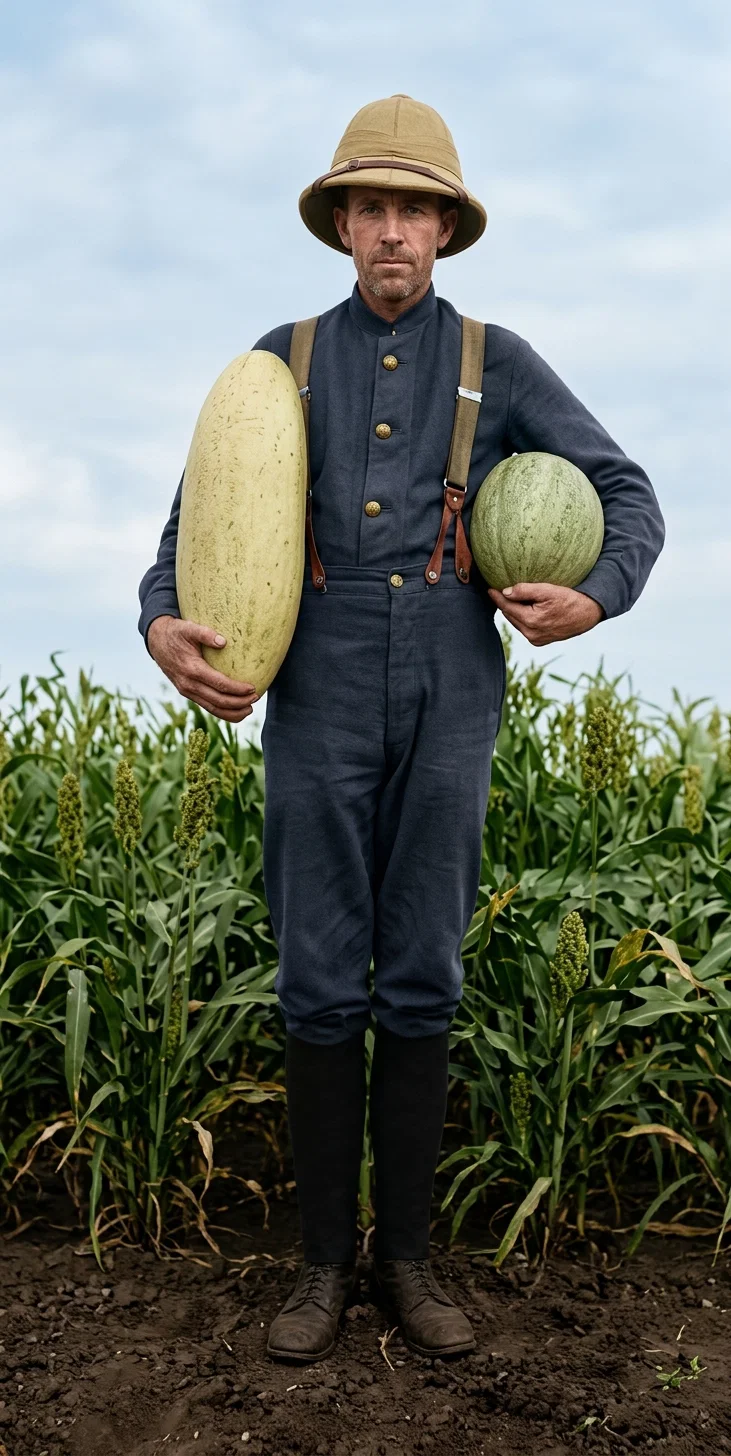
J. D. Baker, with melons grown at the mission-farm
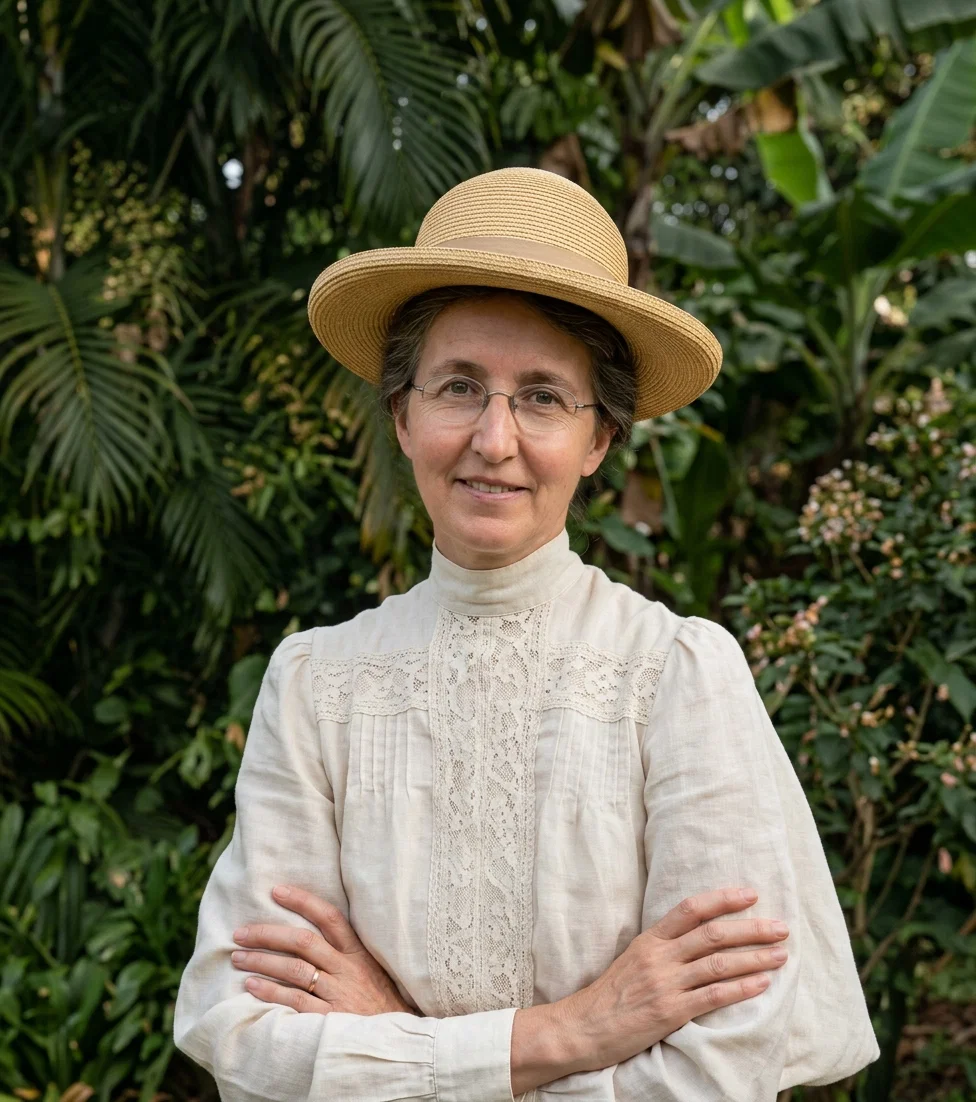
Mrs. J. D. Baker
Mrs. J. D. Baker
A government officer was here yesterday. He has been away surveying a place to which to remove natives who have the sleeping sickness. It is among this tribe down near the German border. He says it is coming this way. Some only fourteen miles west of us on the bay have it. He said it was awful how it is taking away the people. In many villages there are perhaps only two or three who do not have it. It seems to make a clean sweep as it goes. Within the last three years there have been between 300,000 and 400,000 deaths from it. Awful, isn’t it?
We told you of the plague in Kisumu. The natives here believe that the doctor (government) is killing them. This is the story we were told to-day:
A native was taken ill in Kisumu, and the doctor gave him some medicine. The next morning the doctor asked the native if he was better. When he told him he was not, the doctor gave him more medicine and again asked him how he felt. The native went into convulsions and was nearly dead.
Before he died, the doctor cut his throat and cut open his abdomen, removed his intestines, and cut away the gall, which he put into a bottle. Of course the native died. The doctor gave the gall to the natives for medicine, and as soon as they took it, they died. As they die, the doctor takes the gall and gives it to others, causing many to die.
About five months ago a native was killed by the train and the doctor opened him. The natives all believe that it was done because the doctor wanted parts of his organs for medicine. They believe, too, that natives are killed and that the white people of Kisumu eat part of their bodies,—their hearts or livers. Of course, all do not believe it, but many, especially on the other side of the lake, do believe it is true. The people here are just beginning to think there must be some truth in the stories, seeing so many are dying.
If there is anything that makes a native wild, it is hippo flesh. They seem to get crazy after it, cut and slash each other, and will do anything to get it. One was killed near here, and they were like a lot of mad people.
You would be surprised to see how “clicky” the Englishmen are here. One would think that being so far away from home and with only a few associates, they would like to have the companionship of each other. But if the pay of one amounts to more than that of another, he is unable to associate with the other. They are always wrangling. One was arrested a short time ago on account of jealousy. The boy (servant) of the fellow arrested trespassed on the grounds of another, doing no damage whatever, but the man was taken up. Nothing was done as the jurymen considered the case not worth listening to.
The natives are so ignorant. They give four chickens for a fifty-cent hoe, but can not seem to understand that if they sell each chicken for fifteen cents they would get sixty cents, and could buy a hoe and have ten cents left.
They are very amusing. As soon as I go into the villages, they act as tho they are so glad to see me. They say over and over again, “Mama maher, mama manwora,” etc., which means I am nice and good and generous, kind, and so on. They soon askme to give them something, or tell me I have not given them anything, and that I am very bad and selfish—so stingy that I won’t give them my clothes or even give them some of my food! They mean as much by their praises as they do by their fault-finding. Some call us their children, while others call us their parents. One chief who lives four miles from us is an awful one to beg. He frequently comes to see us, and never fails to ask for something. He begged a long time for Delmer’s dark suit, hat, shoes, and chair. He said that every one said that he was Bwana Baker’s friend, but Bwana could not be a friend of his or he would give him his clothes. Delmer usually puts him off by sending him to me. The other day he came up and wanted six rupees for his taxes. He said that if we would give him the money sometime he would find a cow and give it to us. He has scores of cattle, but is so stingy with them that he will not even sell one.
Around here the natives have so many sores. It has been hard sometimes to get boys who were free from them. These sores can be easily given to others, and break out usually on the hands, altho they come out on any part of the body or the head or legs. It seems hard to get rid of them. I think it is some form of syphilis. Children frequently inherit it.
We were amused when you said in your last letter that our house would not be much protection against wild beasts or wild men. You should believe as the natives believe—that nothing can harm us or kill us except a gun. They say that is the only way we can die; when we want to leave this earth, we must shoot ourselves. However, our worst enemies are about as large as a grain of mustard seed. They are the troublesome little jiggers. They are so small and there are so many that we have little peace from them for two or three weeks. They get into our feet. The festering sores make us wish that the jiggers were as large as the wild animals or men; then we would have a better chance of getting rid of them.
One of the boys was wearing one of my combs around this morning, and some of the natives were caught drinking out of our water-pail, putting it up to their mouths. They were promised something if they do it again!
I got a picture to-day from Ella. It was of her baby. The little fellow was laughing and it frightened the natives when they saw it. They run from a rag doll as we would from a snake. Some said it was the devil, while others said it was a god. There was a jumping-jack at Gendra, and Mrs. C. used to squeal when she pulled the string, and it threw up its hands and kicked. The natives thought, of course, it was alive, and crowds went to see it. They were very frightened at first, but got so they were brave enough to go near it.