The Levant Mission

8%

Pacific Press Publishing Association · Mountain View, California · Aug 25, 1909

FromSigns of the Times, Vol. 36, No. 33.

Read the full edition

The Levant Mission

Reported at the Recent S. D. A. World Conference, by W. C. Ising
RECENT events in the Ottoman Empire have again forced the attention of all nations to this part of the world.

Some Causes of Changes

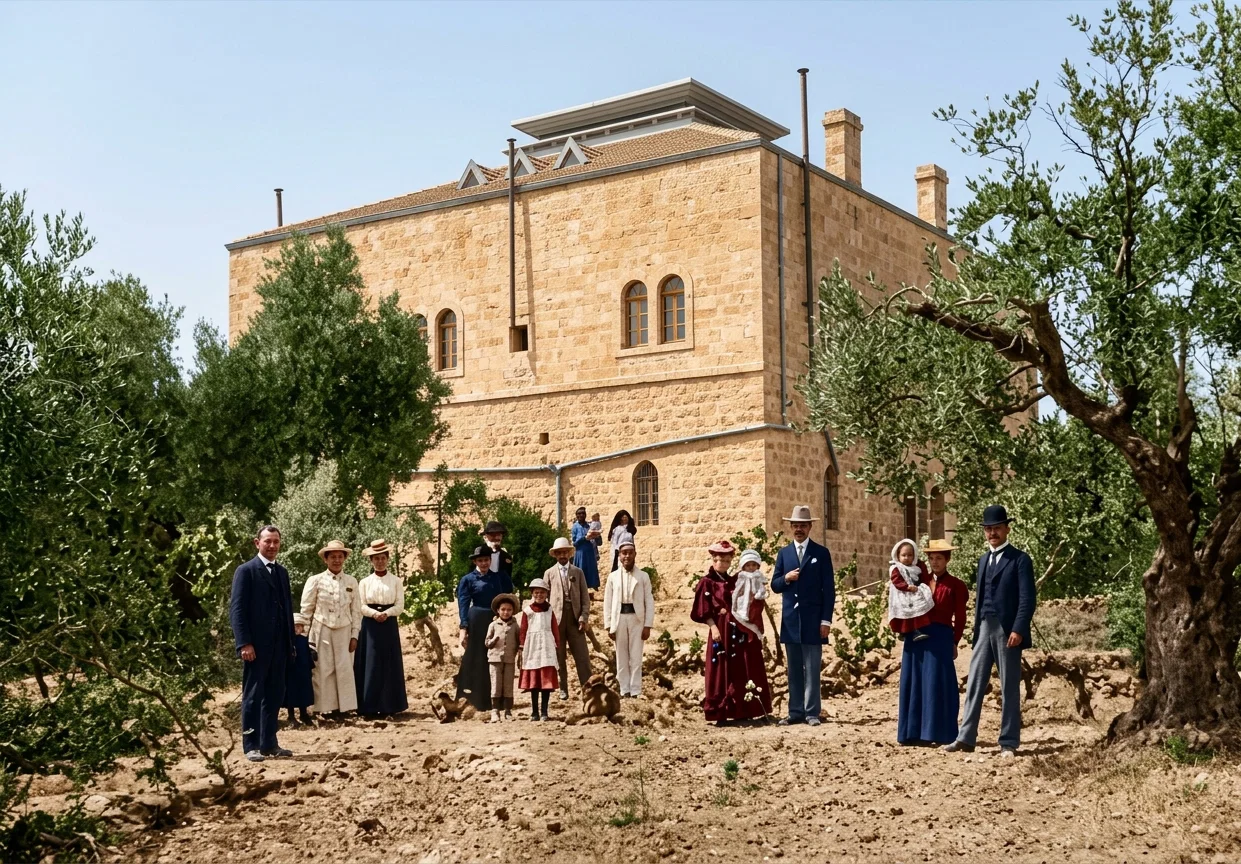
Seventh-Day Adventist Sanitarium, near Jaffa Gate
As the Syrian Mission comprises a very large portion of the Ottoman Empire and is seriously affected by the general conditions of the country, it will not be out of place to mention the fact that the Protestant missionary enterprise is considered one of the chief influences contributing to the awakening of the present strong constitutional movement. This is particularly due to the strong educational influence exerted by them during the past century. Said a prominent Turk recently: “It was you Americans who, coming here to Turkey, found us in darkness, and showed us the way to the light.” The power of Protestant influence can better be appreciated when we consider that the latest statistics set forth the fact that not fewer than 700 American, English, and other European missionaries, with a staff of over 2,000 native workers, are spread over all parts of the Turkish Empire, while some 20,000 communicants and 80,000 adherents are reported as supporting Protestant principles. This is the result of the influence of over a dozen first-class colleges, in connection with a large number of high schools, theological seminaries, and over 500 common schools, with a total enrolment of over 35,000 students, not to speak of the many other educational institutions of Roman Catholics, Greeks, Turks, Armenians, and others which have sprung up partly as a result and consequence of Protestant effort. Syria is an important educational center. In Beirut we have one of the largest Protestant colleges, with an enrolment of about 900 students; while at Cairo the Mohammedan university is the largest in the world, having an enrolment of 10,000 students. I am sorry to say that Seventh-day Adventist influence, however, has been little felt up to the present time.

Races, Languages, Religions, Commerce

With few exceptions the population of this field is considered of Semitic descent, Mohammedans and Christians. Turkomans and especially Kurds have settled in the northern part of Syria, while east of the Jordan we find some settlements of Circassians among the Bedouin Arabs. German immigrants have founded some prosperous colonies in Palestine. The Jews number about 200,000 in Syria, 100,000 of whom are believed to have immigrated into Palestine during the last few years. These Jews are engaged in commerce, and in colonizing in various parts of the country. In fact, a number of colonies have sprung up during the Zionist movement. In Egypt there are some 600,000 Copts, who are believed to be the descendants of the ruling class of ancient Egypt; while the Fellahs, who compose about two thirds of the entire population, are the descendants of the ancient farmers, and are also to-day, as in olden ages, cultivating the land.
As to the languages, Arabic is the leading tongue in all parts of Syria and Egypt. It will be of interest to refer to the fact that during the eighth to the twelfth centuries, science was introduced into Europe by the Arabs, and that they have contributed considerably to Western education, particularly in cultivating and developing the sciences. This is one of the reasons the Arabic language has such a large vocabulary. Owing to its considerable variety of expression, its exceptional irregularity of forms, and many other grammatical difficulties, the Arabic is considered the hardest of the Semitic, and even one of the most difficult of all languages. Its importance will be realized from the fact that the Koran, the religious standard of some 230,000,000 Mohammedans, is written in this language, and is more or less understood by them. Besides the Arabic, English and French are generally spoken, the former dominating in Egypt, owing to the English occupation, and the latter in Syria, on account of commercial influence and the Catholic propaganda. The English is also spoken to a considerable extent as a result of Protestant education.
Concerning religions, Mohammedanism has maintained its position since that star having the key to the bottomless pit, by means of which it was to bring forth a terrible smoke that would darken sun and air, had origin in the Arabian desert. The greater majority of the population in this mission field are faithful adherents of Islam. In fact, the cities of Mecca and Medina, so sacred to the Mohammedan world, are located here; and thousands of Moslems of other nationalities resort to these places every year. Besides there are a number of other religions that nominally are very similar to Mohammedanism, and which have a more or less secret character.
The Druses number about 200,000; the Nusarijes, numbering 130,000, are specially notable. The Druses are known in history from their slaughter of the Christians on Mount Lebanon and in Damascus and other places on several occasions; while another sect, the Ismaelites, numbering some 10,000, have become notorious by their assassinations during the Crusades. Of so-called Christians the Maronites, who adhere to Rome, are the most numerous, with 320,000 souls; next to them are the adherents of the Greek Orthodox Church, numbering 300,000; the United Greeks, or Melchites, having 145,000; the Syrian Jacobites, with 59,000; the United Syrians, with 45,000; the United Armenians and Chaldeans, inhabiting the district of Aleppo, and numbering about 20,000 each. Besides these, there are about 30,000 of the Armenian Church reckoned among the Arabs of Syria, the majority of whom reside in the districts of Damascus and Aleppo. In addition to these various religions, Protestants have gained a good foothold, having, it is estimated, about 6,000 believers in Syria. The existing diversity of creeds, and the fanaticism of the various sects, will sufficiently illustrate the difficulty of work among them. Jews, Catholics, and Mohammedans have their strongholds here, and all claim their rights. It will be of interest to call attention to the fact that here in Syria, this southwestern corner of Asia, the world’s three great monotheistic religions—Judaism, Christianity, and Mohammedanism—have originated; and it is here that the adherents of these religions will again meet in the great battle of all nations in the near future.
The produce of these countries may be estimated from the value of their exports. The value of the annual exports for Syria, consisting of lemons, oranges, soap, sponges, wool, olive-oil, sesame-seed, cotton, tobacco, cereals, and silk (the latter being one of the main products), amounts to about $7,500,000; that for Egypt, including the Sudan, of cotton, cotton-seed, beans, sugar, grain, rice, hides, and tobacco, is, of course, considerably larger, estimated at $25,000,000.