A Deed of Merit

13%

Pacific Press Publishing Association · Mountain View, California · Sep 8, 1909

FromSigns of the Times, Vol. 36, No. 35.

Read the full edition

A Deed of Merit

By Mrs. Elisabeth Gowdy
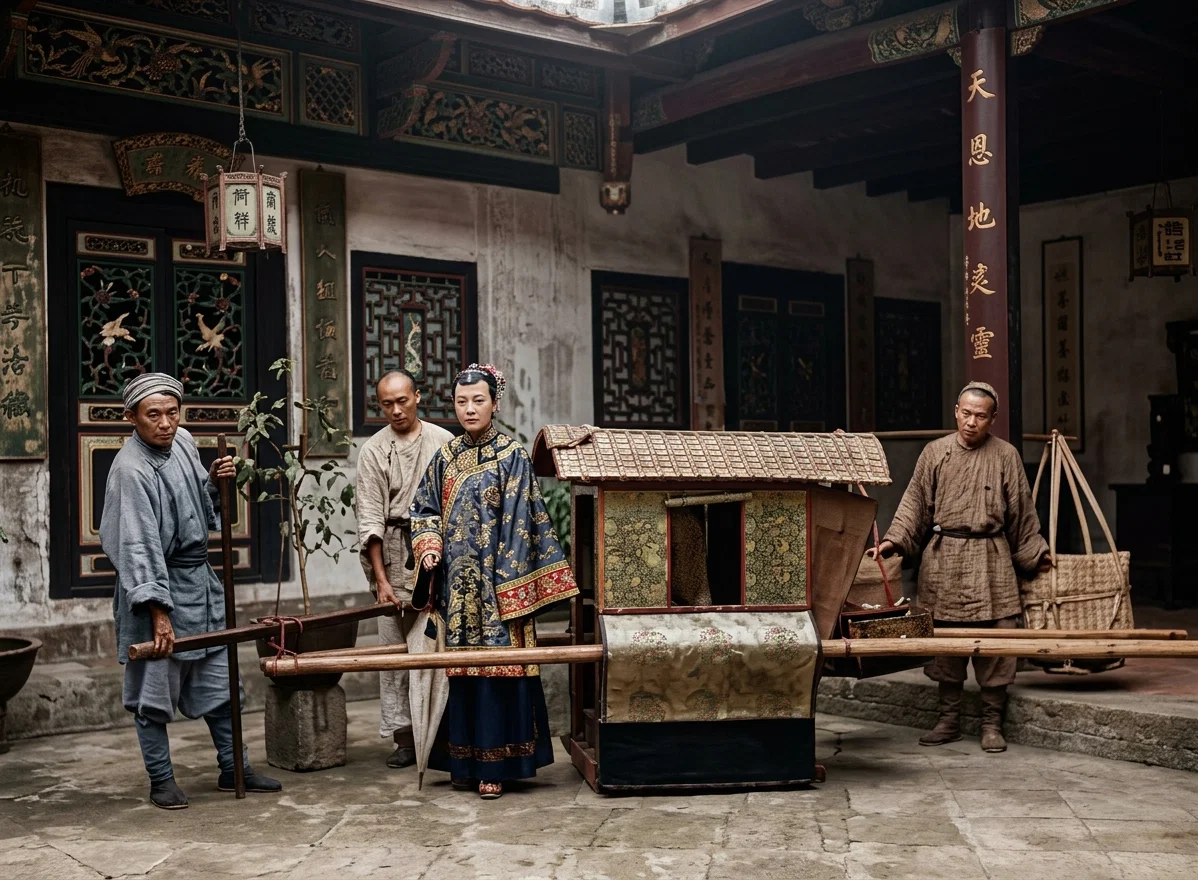
THROUGH the narrow, congested streets of Foochow a gaily decorated sedan-chair was borne with great pomp. In it sat a Chinese woman in gorgeous clothing, with the curtains of her sedan rolled up so that she appeared in full view, smiling and bowing to people as she passed by. This publicity alone would have attracted attention, even if it had not been for the red banners borne in front of the chair, announcing that on a certain day this same smiling little widow would hang herself in memory of her late husband. An act of such merit so cheerfully contemplated was heralded far and wide, and each day added numbers to the throng which followed the widow as she thus advertised her self-sacrifice. Rumors of the coming event had reached even my foreign ears, but lately accustomed to Chinese tones. Thinking that I must have misunderstood, I sought an explanation from that fountain of knowledge, my Chinese personal teacher, who only confirmed the rumor. “But why should she wish to do a thing like that?” I inquired. “It shows that she loves her husband so much that she wishes to go to him at once,” he replied. “Now she thinks of him constantly and grieves for him, but she fears that if she lives she may forget him,” he added, with delightful naiveté. Then he went on to tell me that in earlier times a widow who performed so great an act of merit as this would have been accorded the highest honors; her spirit would have been worshiped by the officials and the people. Now, however, since the coming of missionaries, the practise was gradually passing into disfavor.
Chinese Sedan-Chair
Chinese Sedan-Chair
On this occasion there was, indeed, a great deal of feeling aroused not only among the missionaries, but also on the part of all the foreign residents. But what could be done? No one had any authority to interfere, and it seemed as tho the widow’s plans were about to reach their consummation. The appointed day came, and the scaffold was erected in the center of a large open space near one of the foreign business houses. Hundreds of Chinese and a number of foreigners had gathered to witness the ghastly spectacle. The widow ascended the scaffold, and the halter of red cord was slipped over her head. According to custom, it was the duty of her nearest male relative to take from under her the stool on which her feet rested, thus leaving her to hang; but if this final act should be performed by any other person the deed would lose some of its virtue as an act of merit.
All were now waiting breathlessly for this next of kin to appear. Just as he was about to draw away the stool, however, a Chinese official stepped forward and forbade his going any further, thus putting a stop to the entire ceremony. The American consul had been using his influence with the officials, and had told them how disgraceful the whole affair appeared to the eyes of Westerners.
The widow was released, and was taken charge of by a lady of the English mission, who has been trying ever since to lead the poor, benighted creature into a knowledge of Christ. A number of these would-be suicides have become happy Christians, and have lived noble, useful lives.
With such “deeds of merit” as these held before the Chinese people, is there any one who will still cling to the time-worn argument that the old religious beliefs of China are “good enough” for the Chinese?—World-Wide Missions.