located, a meeting having been appointed for 9 A.M. the next day. The drive through the groves of coconut palms and the vanilla and coffee plantations, in the cool night air, was most refreshing. After reaching the home of Brother Adams at Arue, we lost no time in retiring; for it was essential, if we desired to see Tahitian life on market morning, to arise about 4 A.M.
It was still dark when we reached Papeete next morning, but the Tahitians are wise in preferring to do their shopping by electric light, before “old Sol” throws his tropical rays into their humid atmosphere. The scene presented in the market-place beggars description. It must be seen to be appreciated. One thing noticeable is the entire absence of that bustle which characterizes Australasian markets, the climate of Tahiti not conducing to the development of that trait. But while business proceeds leisurely enough, yet as there were multitudes of housewives to purchase the wide range of products marketed, the venders gradually disposed of their wares.
The Tahitian women dress in the very lightest cotton prints, the garment being loose from the shoulders, and reaching to the ankles. As they walk they usually hold up one side of their skirts very gracefully with their left elbows pressed against their sides, leaving the right arm free. Very few wear shoes, but they all wear hats. At the early morning market many of them wore also light silk shawls of various tints thrown about their shoulders. Some of them imitated their brothers and husbands by indulging in smoking cigarettes. While they purchased or sold their foodstuffs, they would leave their infant children lying asleep in any convenient spot. Evidently children do not cause Tahitian women the same anxiety that white women show for their offspring. In fact, no one need be without children in Tahiti, for the Tahitian mothers are always ready to find good homes for their babies. The writer’s wife was offered one of the first native babies she saw; but apart altogether from other valid objections, the “white Australia” policy of the commonwealth would not permit her to accept the valuable gift that was proffered.
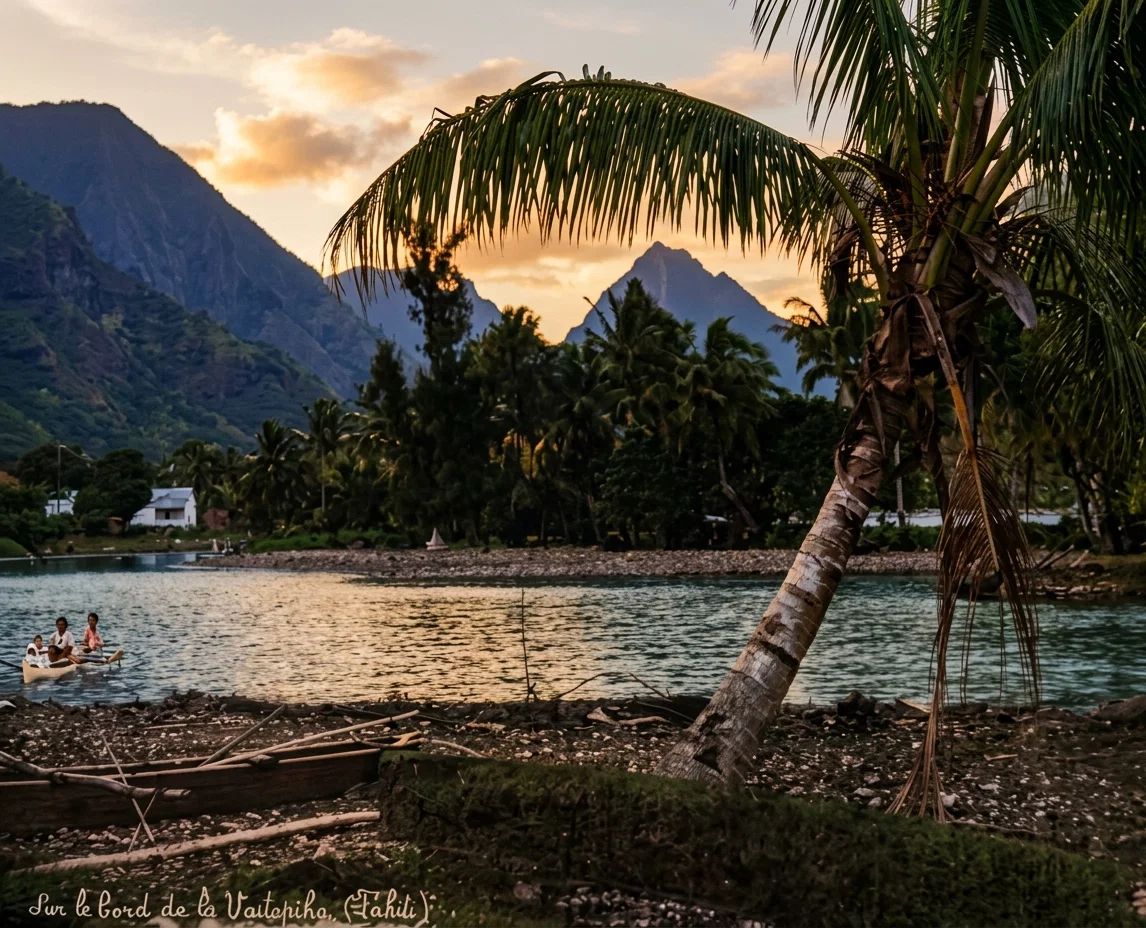
A scene in Tahiti, coconut palm in the foreground
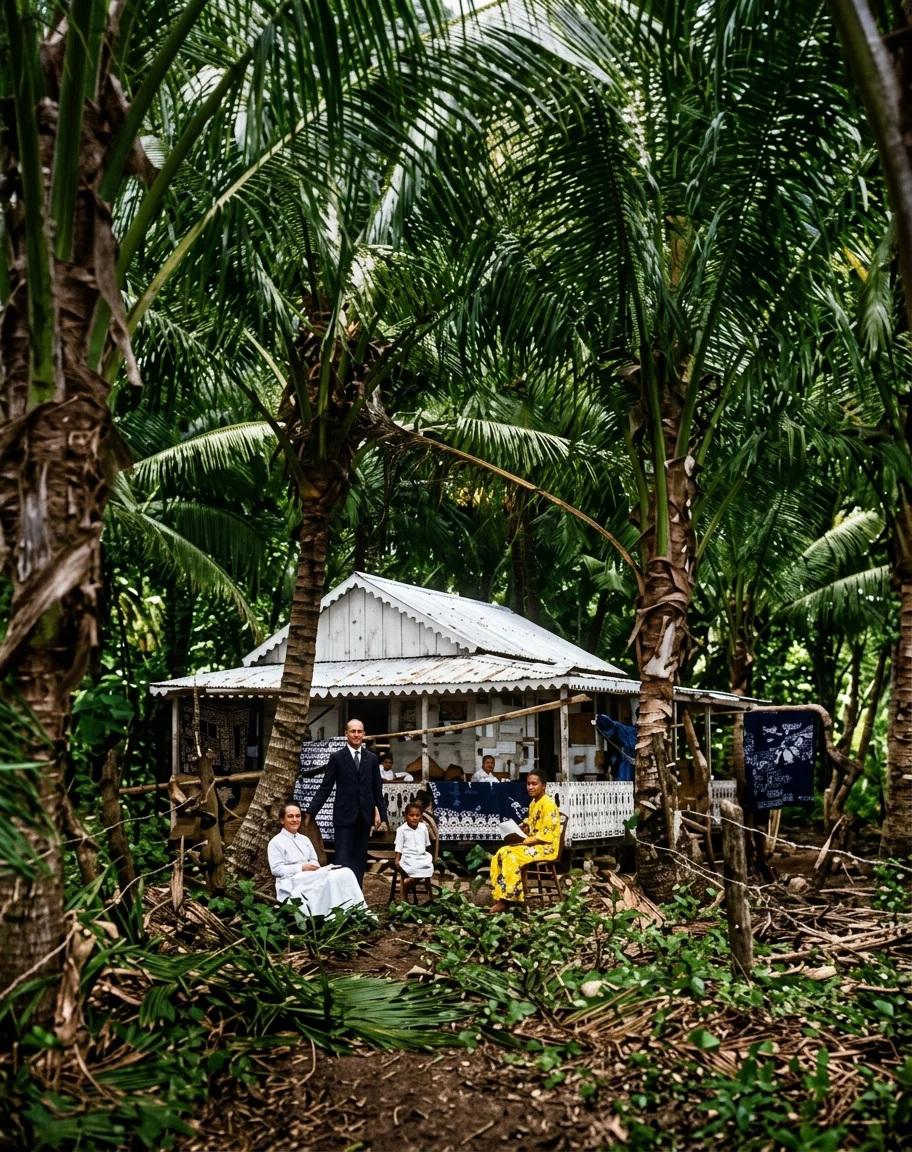
A home of our missionaries in Tahiti, Brother and Sister Thomas, just now in Australia
Our return drive to Arue along the dustless road in the fresh, early morning air was delightful. The narrow road was fringed with magnificent tropical trees on either side, many of which, being fruit-bearing, reminded us how wonderfully the Lord had provided for the wants of the natives of these islands. Not only are luscious and nutritious fruits to be found in profusion, but Tahiti abounds in rivers and streams. As we drove along the road, we crossed numbers of little creeks and swiftly flowing rivers whose clear, sparkling waters rushed over their rocky beds to the ocean below. In addition to a good water supply, the native can always quench his thirst with the milk of the ubiquitous coconut.
Half an hour’s drive through this delightful avenue of tropical trees brought us back again to Arue. After watching for a little while the mighty ocean rollers break with thunderous roar on the rocks just below the mission house, we partook of breakfast, and then repaired to the church about three quarters of a mile away, where we expected to meet some of the native converts.
The church is a very neat building indeed, and great credit belongs to the native deacons for the care that they exercise in keeping the grounds and general surroundings of the Lord’s house in such neat and excellent order. A large bell rang out its call to meeting, and the congregation assembled for worship. Pastor Lyndon took charge; and as the natives are particularly fond of music, a considerable part of the service was devoted to singing, all the hymns being sung by the entire congregation, in the Tahitian tongue, with organ accompaniment.
Short addresses were delivered by Pastor Fulton and the writer in English, Pastor Lyndon translating their remarks to the natives, who showed a most intelligent appreciation of all that was said.
After further singing, a few words were spoken by each of the other visitors from Australia and New Zealand, as the natives had expressed a desire to hear, from the lips of each one, who they were, whence they came, and whither they were going. In a few brief sentences, which were translated by Pastor Lyndon, the visitors appeased the curiosity of the natives. At the request of Pastor Fulton, several hymns were sung by the Tahitians, without organ accompaniment. Their rendering of these hymns gave unmistakable evidence that they possessed considerable natural musical ability, for they commenced to sing at a suitable pitch without the aid of organ or tuning-fork. They also kept excellent time and sang in tune together, and where any difficulty arose through the irregularity of the rhythm, they were always equal to the occasion, introducing little changes into the time and melody wherever they were demanded through exigencies of translation from English into the Tahitian language. Moreover, they sang in good three-part harmony, much of which was quite original, differing in many important features from the harmony we are accustomed to use for the same hymns in English.
The visitors were then called upon to sing some pieces with organ accompaniment, which they gladly consented to do. As all four parts were represented, we were able to give the natives a little idea of the beauty of English choral music.
At the termination of this most enjoyable meeting, the visitors were treated to a unique luncheon. In addition to the excellent