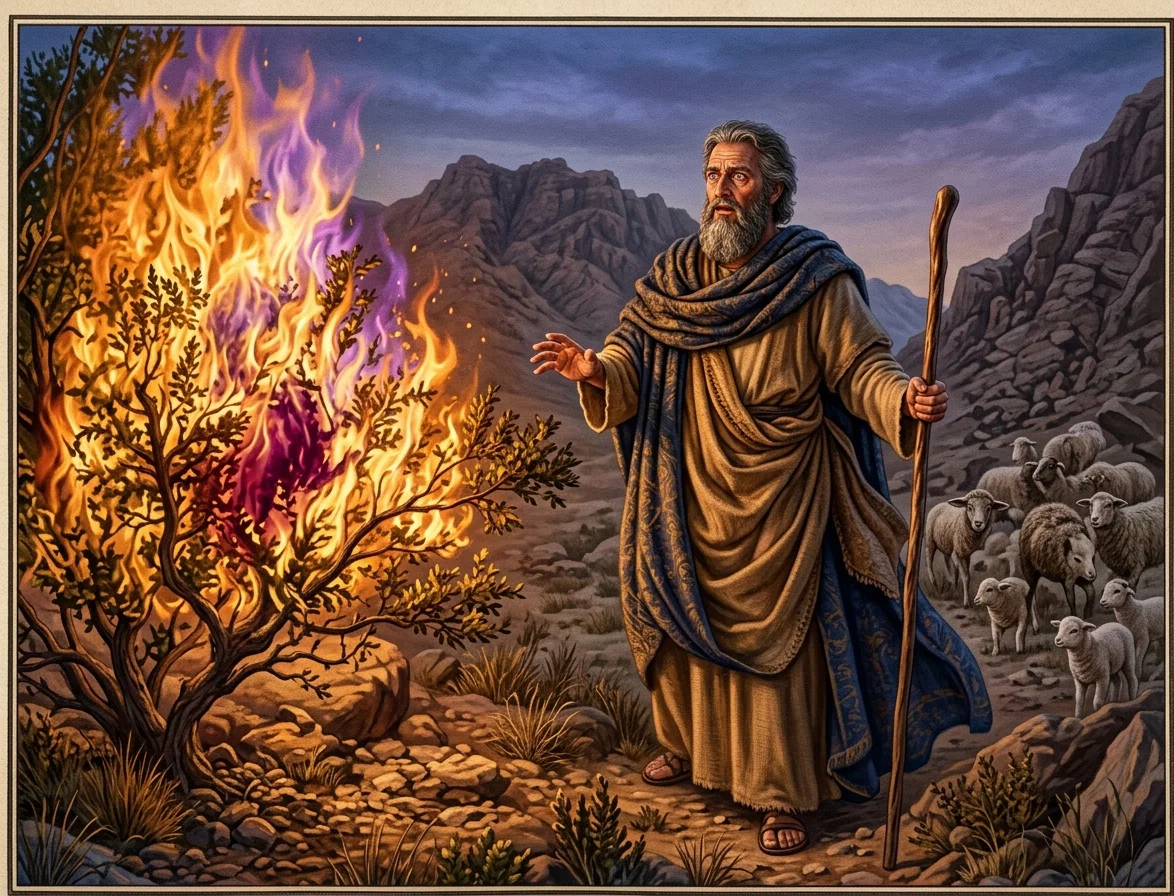
It is worthy of notice that when God selects a man for any distinct, difficult work He desires to have accomplished on the earth, He chooses the one who possesses, above all his other characteristics, the one or more traits indispensable to success in the undertaking.
The man may not be faultless. Indeed, he may possess defects of character, serious ones. It is difficult to find a man who does not. He may also through disobedience thwart God’s plan, so far as he himself personally is concerned, so far as his own welfare is affected, as did Saul, the son of Kish. But the qualities vital to the success of God’s definite enterprise he must have.
These qualities may exist in embryo, may need the pushing of powerful influences, potent circumstances, to bring them into action; but they must be on deposit, ready on call, at hand when emergency arises, else God’s plans, worked out by human hands, must often fall short in right results, in best fruitage.
In looking back over the world’s history one finds many clear-cut instances confirming these assertions. But space lacking, we may not cite them. It may be that, as we read on in this article, the names of some of these great workers under God may flash into mind.
God’s Call of Man
To-day we are considering him by whose lips were uttered, amid scenes awe-inspiring, face to face with demands affrighting, the words which form the heading of this article, a man about eighty years of age, a man who had been brought up a prince in the palace of Pharaoh, king of mighty Egypt, one who, as subsequent years evinced, had lacked no opportunity for high culture in the strong institutions of that land of learning.
This man was picked up by Jehovah on a desert side, at the foot of one of the grand mountains of the world, a fit, able shepherd of sheep, and was made the mightiest deliverer of MEN known to human history, with the single exception of the MAN from Nazareth—not slow of speech, not slow of tongue, as the Sermon on the Mount proclaims, as priceless chapters in the book of John assert.
As one studies from this far-distant viewpoint the superlative mental ability, the robust moral qualities of Moses, “the man of God,” together with his transcendent fitness for leadership of mankind in great concourse, he steps quickly to the supreme place. History fails to furnish his equal, none have surpassed him.
Alexander made appalling conquests, Cæsar subjugated entire countries, Napoleon won startling victories, Washington accomplished the independence of a then small nation, settled in homes, over broad territory, General Grant suppressed a wide uprising against just government.
But all these achieved their aims through disciplined troops, through men trained for war. Comparatively few years sufficed for their undertakings. There were home authorities in most cases to furnish munitions, rations, clothing, pay for service. Their armed hosts were not impeded by masses of women, children, flocks and herds, demanding care, ceaseless and peculiar.
Egypt and the Times
But take a look into Egypt 3,300 years ago, Egypt opulent, proud, despotic, but just then sorely punished, and witness emerge from that deeply humbled land—at night of the very day which completed their period of bondage, as promised by God to Abraham—a vast train of bond people, close to three millions in number; their fetters just broken by word of Pharaoh, most of them on foot, with flocks, herds, and cattle—an immense assemblage.
With hope high and heart glad they set out northward toward Succoth. Thence, circling eastward they crossed the Red Sea amid circumstances never before paralleled for awe, climax, unlikeness, and marched on toward exalted Sinai, with great Moses for leader—under “the angel of God which went before the camp.”
Humanly speaking, Moses was responsible for their safe crossing of the wild desert, amid privations new and irritating, amid enemies alert, resolute, yet stricken with dread.
Of what splendid order must have been the courage, the faith, the patience of that man! How broad, how tenacious his grasp of duty! How magnificent his self-abnegation! No $100,000 salary, annually, was assured him by the Governor of the universe.
If thought of a home and sweet rest in the promised land when the wilderness journey should be ended ever cheered his heart and mind, no suggestion thereof appears in the clear record of his brilliant forty years’ service as Israel’s leader.
His eminent self-forgetfulness—with the single, strange exception of when he smote the rock at Meribah, to bring forth water for the thirsting, murmuring multitude—illumines all that most remarkable history.
Unelated, unmoved by the Lord’s assertion—after Aaron had made the molten calf, to become leader to the uneasy host—that He would make of Moses himself “a great nation,” and remove Israel out of His sight, we hear the unaspiring man, the6man with great soul, entreat the Lord: “If Thou wilt, forgive their sin,—If not, blot me, I pray Thee, out of Thy book which Thou hast written.”
His Versatile Ability
How wonderful was the man’s ability to meet the thousand emergencies occurring daily in the life of that mixed host! How marvelous his endurance of stinging criticism, of hot complaints, of cutting accusation and watchful jealousy! And how amazing his steadfast singleness of purpose,—held with closest grip all through that desert wandering—that of planting redeemed Israel in the hungered-for land!
Like Paul, Moses was permitted to enjoy eminent personal interviews with God. The two prolonged periods with Him in Horeb, when he twice received the tables of commandments, are instances in point. Another signal occasion was when Aaron, Nadab, Abihu, and seventy of the elders of Israel were invited into the mount “and saw the God of Israel,” and saw under His feet the luminous “favored work of sapphire stone,” but Moses alone “came near unto the Lord.”
When God called Moses from amid the quieting shadows and sunlight of Horeb, the “Mount of God,” He knew that, notwithstanding the weighty excuses urged by the noble shepherd, and his intense shrinking from the momentous task proposed, he possessed, far beyond any Israelite in Egypt, the qualities essential to the success of the mighty undertaking of leading the enslaved children of Jacob out of bondage into joyous liberty in Canaan.
Further, the long and afflictive struggle with Pharaoh would require a man who possessed not only knowledge of Egyptian life and customs, acquaintance with kingly life and courtly etiquette, but also a man who would stand unflinchingly loyal to the supreme Ruler whose special ambassador he had become, and whose FAITH in that Ruler should never for a moment waver amid direct threats or punishments.
The lofty traits of Moses’ character became magnificently radiant during those last forty years of his life. Doubtless the eminent tests to which he was subjected daily, invigorated and gave luster to those qualities.
Yet splendid and altogether fitting had been his schooling during the preceding eighty years. In her highest, broadest courses Egypt had furnished him academic training through forty of those years. He “was learned in all the wisdom of the Egyptians, and was mighty in words and deeds.”
Deeper Knowledge
Following this, Nature, amid her eloquent, desert solitudes, in the vast Peninsula of Sinai, had opened before him books of far different order. Great mountains, broad, sandy wastes, green spots, gemmed with flowers and grasses, and the opulent, star-strown nights, with his typical vocation as a shepherd, all taught him in languages of God, and awakened powers and capacities which Egyptian scholarship ever failed to arouse.
But the acme, the climax, of mind-training of soul-training, of heart-expansion for Moses was attained during the many inspiring interviews, the long communions with the Maker of the universe Himself,—the exhaustless fountain of mental and spiritual endowment for the beings He has created.
No man could pass days in close, undisturbed converse with the Author of his being without blessed enlargement and uplifting of heart, mind, and soul, without the perfection of FAITH, without glad, finished submission to His will.
Moses’ ready, noble yielding to the will of God, when, after he had borne “the burden, the cumbrance, the strife of the children of Israel forty years,” and after his pathetic entreaty: “Let me, I pray Thee, go over and SEE the good land beyond Jordan, that goodly mountain and Lebanon,” God refused, saying: “Get thee up into the top of Pisgah, and lift up thine eyes westward, and northward, and southward, and eastward, and behold it with thine eyes, for thou shalt not go over this Jordan,” puts the finishing touch to the supremest trait of the grandest of men.