The Power of Home Influences

6%

Pacific Press Publishing Association · Mountain View, California · Jun 23, 1909

FromSigns of the Times, Vol. 36, No. 24.

Read the full edition

The Power of Home Influences

By Mrs. L. D. Avery-Stuttle
We sometimes talk about the influences which schools or workshops or factories exert over our youth, either for good or for ill. We rejoice over the influence of good companions, and lament the influence of others — the questionable sort.
But who can estimate the power of home influences either for good or for evil, over the plastic hearts and minds of the young?
The influences of home are the mightiest in the world
“Mary has taken a great notion to her Sabbath-school teacher,” said a care-worn mother. “I'm so glad. Now I'm really in hopes she'll be influenced to go to Sabbath-school every Sabbath. She has seemed so careless and unconcerned for a year or two. I haven't said much to her myself, nor has her father; it doesn't do any good. We have no influence over her. But now Sister A., her Sabbath-school teacher, seems to understand her. She is able to influence her.”
What! no influence over your own daughter! Let me tell you that you yourself certainly do have more influence over her than any one else. But whether that influence be a savor of life unto life or of death unto death, is for you alone to decide. But the influence which you, as the mother of your child, must possess over her, is mighty. You may not realize it; you may be quite indifferent to the truth of it; but the fact remains. And with this influence, and because of it, comes a serious responsibility — a responsibility which is not to be shifted to other shoulders or lightly to be thrown off.
It is a fact that the influences of home are the mightiest in the world; and O, the pity of it! this fact, tremendous as it is, is not half understood to-day. But men and women are largely just what their home training has made them. Are they generous, kind, gentle, forgiving, courteous? — they were trained to be such in early childhood.
It is a hard thing, I tell you, to teach courtesy and kindness, good manners and gentleness to a grown-up man who has been a clown or a boor all his life,—it is well-nigh impossible. If any doubt remains in the minds of any of my readers, I ask them to try it and see.
But how easy a thing it is to teach a little child to lisp its sweet “thank you,” or “I beg your pardon,” or, “yes, thank the Lord,” it is easy, if one only begins early enough, to teach most children to say, “I am very sorry; forgive me,” when a fault has been committed. O, if only more children were taught to say these sweet words of humility in their very babyhood, we would not now meet so many people who seem to consider it unmanly or unwomanly to confess that they have made a mistake.
“But,” some one says, “I pay my money to the church-school teacher, and I expect her to teach my child those things. The fact is, I have no time to do so.”
But, my friend, do you think that your responsibility ends with the employment of a church-school teacher? Ah, there are duties for you to do, which the mere payment of money will not excuse you from doing. Do you think that if John or Alice never or seldom hear the voice of prayer in their own home, the church-school teacher ought to be held entirely responsible if she fails to lead them to the Saviour? If Mary and William have never been taught to read the Bible for themselves, and very rarely see the blessed Book in the hands of their parents, do you think the Sabbath-school teacher ought to be criticized if she fails to interest them in its sacred teachings? Can we reasonably expect that a few hours' daily training at church school, or one hour weekly on the Sabbath, will counteract and undo the influence of a careless, prayerless, Christless home?
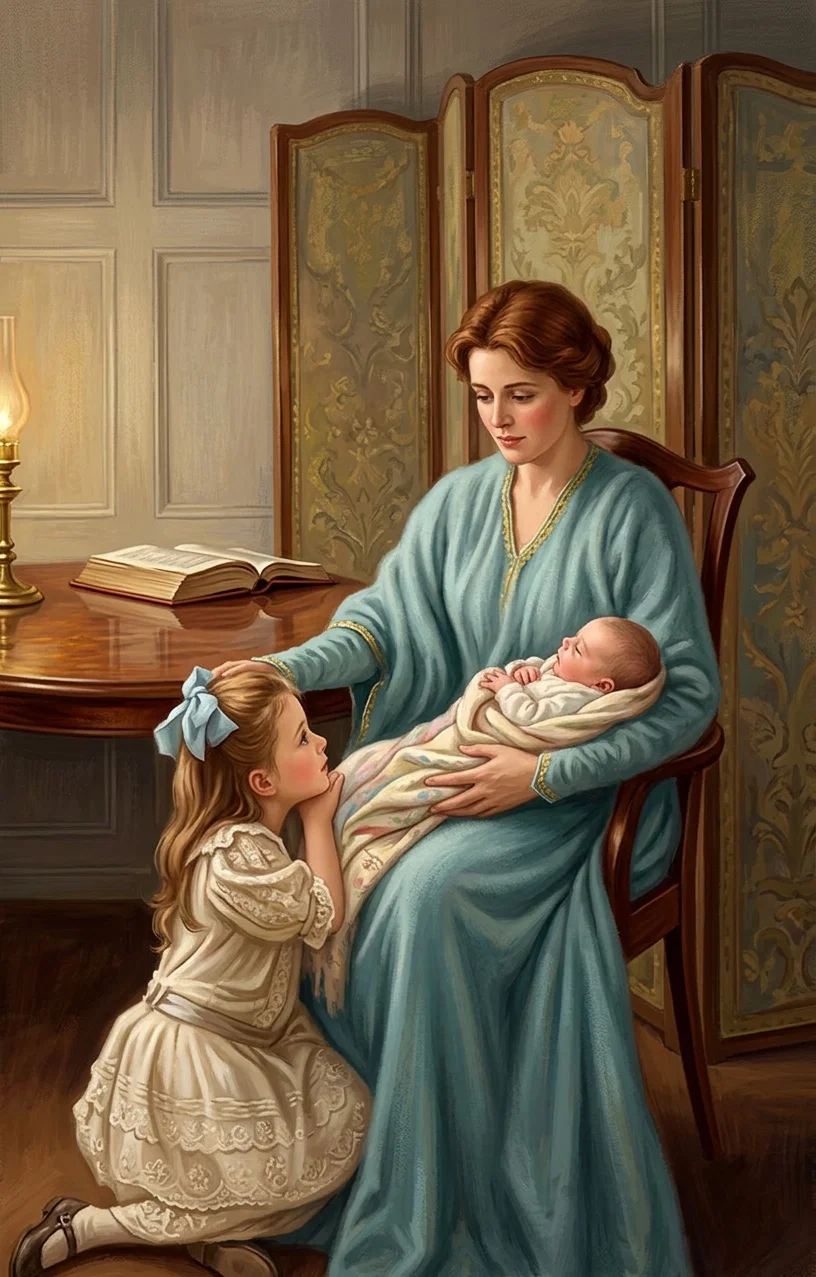
Ah, sad indeed and much to be pitied are those lives which have no sweet memories of childhood; no sacred remembrance of the evening and the morning prayer; on the tablets of whose memory lingers not the sound of mother's or father's voice in prevailing prayer for the children. They who have no remembrance of sweet twilight hours spent in the old home, of bedtime lullabies and evening visits, when father and mother seemed to get acquainted with the boys and girls, can never have experienced one of the sweetest joys of life.
Such evening hours as these are among the most sacred memories of after life. How many times when a child, have I watched the golden glory of the sky at sunset, and imagined I could see the spires and turrets of that city of which my mother used to read — the city whose gates are of pearl and whose streets are of gold. I could almost hear the rustling of the wings of that innumerable company of angels around the throne and hear their voices, singing, “Holy, holy, holy, Lord God Almighty.”
As I think these thoughts, the passing years are forgotten. Hush! I am listening again to one of the old songs we used to sing before our little household band was scattered, when we gathered for our evening prayer:
“The day is past and gone, The evening shades appear,”
O, the influences of a Christian home will do, have done, more for the betterment of humanity, than sermons or lectures of schools or lessons. Home influence is one of the mightiest factors in the world. Other influences, other memories may fade and become dim; but the sweet memory of a Christian home will never fade away in this life, and even over on the immortal shore, me-thinks this, the sweetest of earth's memories, may linger yet.