The Bible in Greece

2%

Pacific Press Publishing Association · Mountain View, California · May 26, 1909

FromSigns of the Times, Vol. 36, No. 21.

Read the full edition

The Bible in Greece

(From Our Own Correspondent)
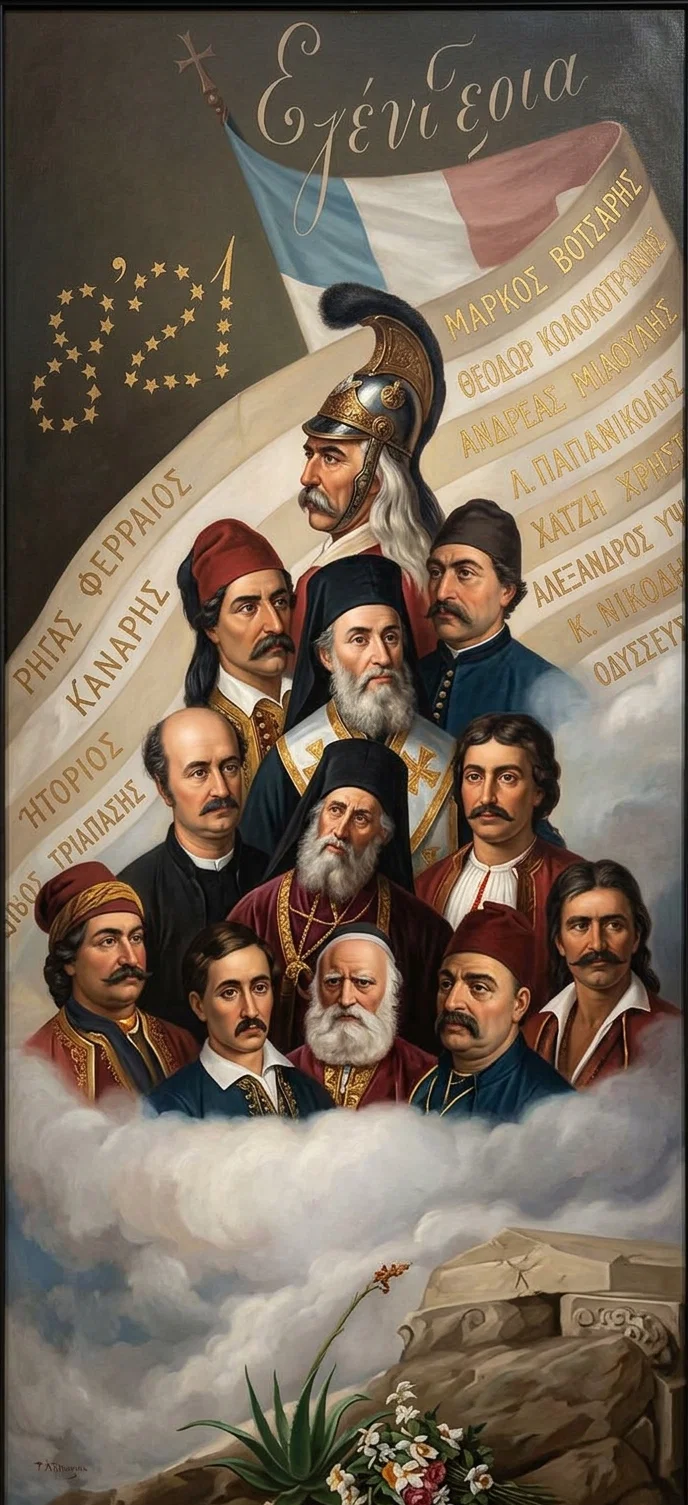
Heroes of the Revolution. At the top is General Kolokotrones. First below him, to the left, Marco Bozzaris. In the center, Patriarch Gregory V, murdered by janizaries.
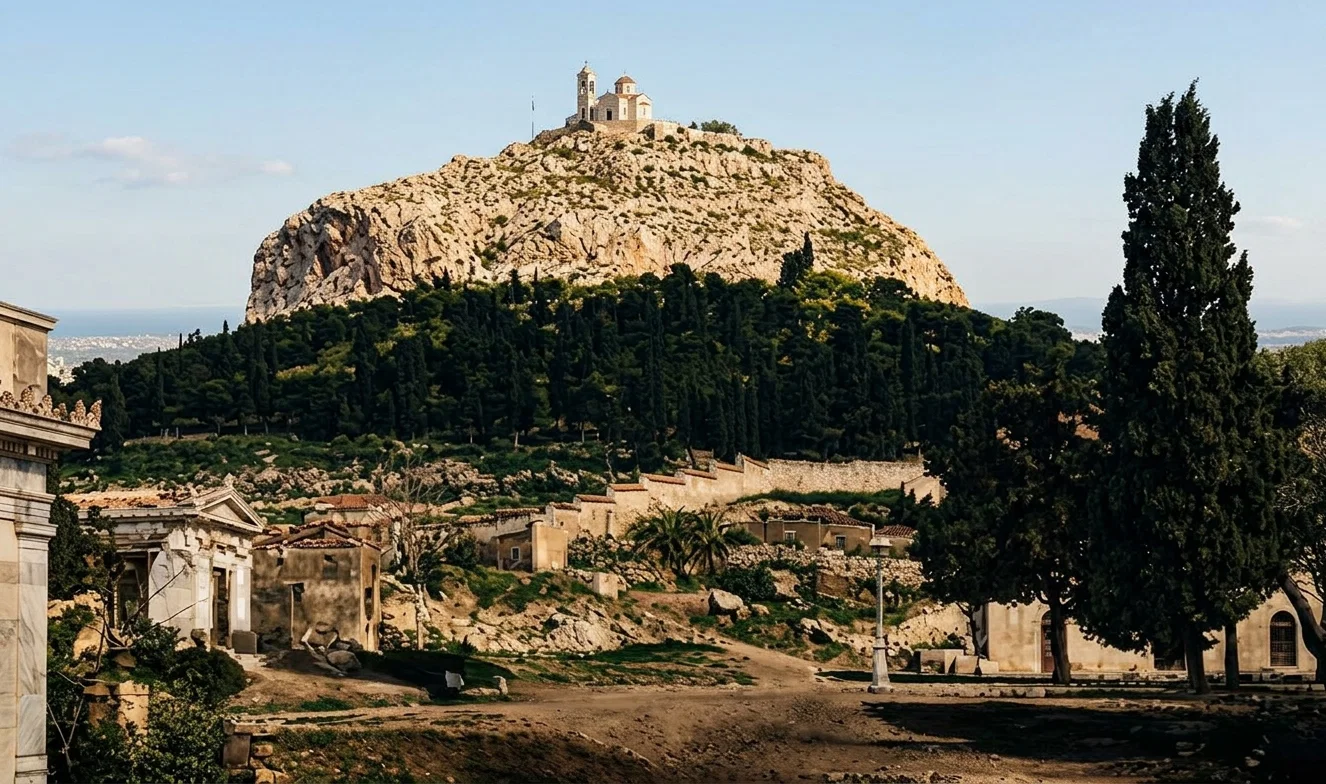
Mount Lycabettus, which overlooks Athens. On the summit is the chapel of St. George, built by Queen Olga.
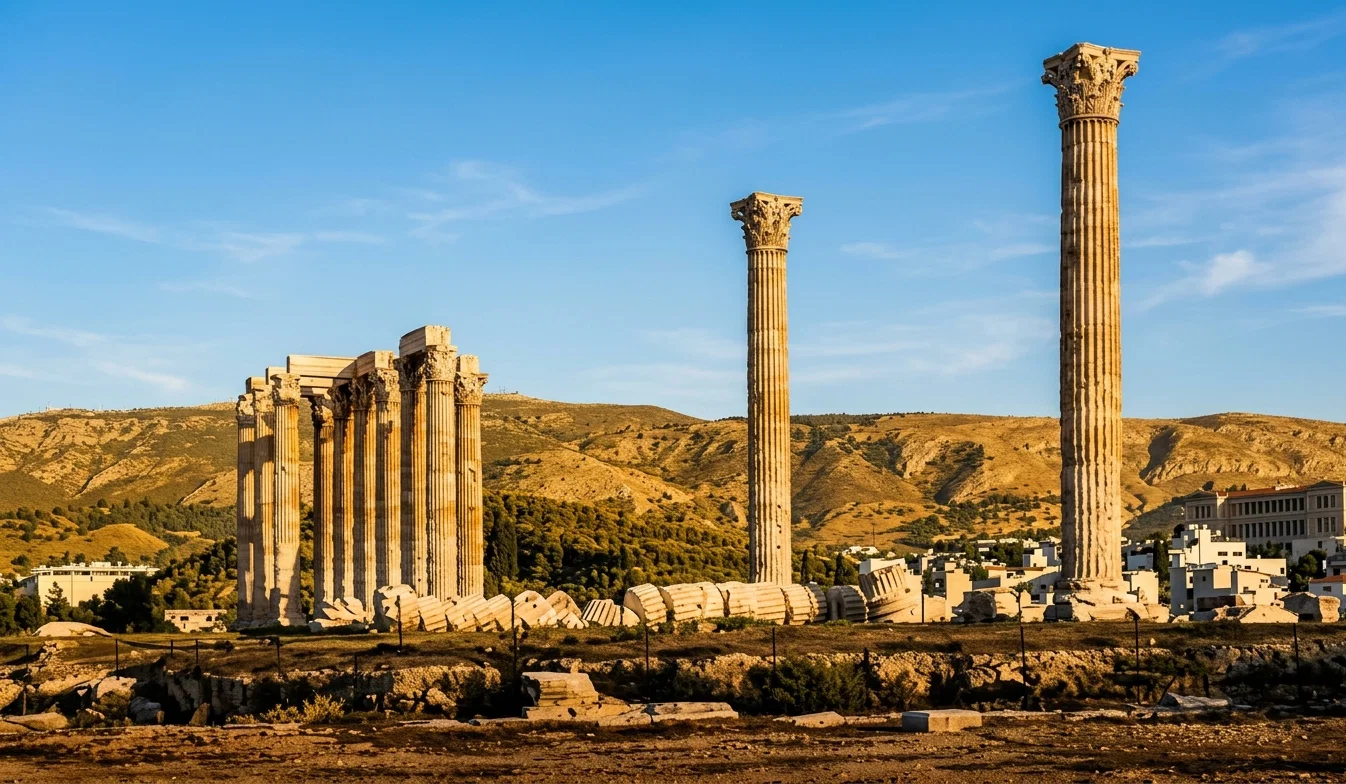
Temple of Zeus Olympus (Olympieion). Familiarly spoken of by the Greeks as “The Columns.” Here was held the great mass-meeting of the trades unions, students, and populace.

IV. The Episode of 1901

HAVING noticed in our preceding article some of the conditions existing in Greece that called forth strong opposition to the translation and distribution of the Scriptures in the common language, we are now prepared to follow and better understand the movements of the student demonstrators and the issues growing out of them.
The students did not leave the newspaper office to which they first went until assured that the printing of the translation would cease, the chief of police having so promised. They then went in a body to the Metropolitan to insist upon an immediate decision of the Synod on the protest sent in by the theological school. In his response the Metropolitan said:
“As to the question of the day, I find myself in the happy position to assure you that not only as president of the Holy Synod, but as an individual, I cherish the same sentiments that you do. I am sure also that the Holy Synod which has already taken up this question with care, will not consent to this innovation.”
“The church has had, has, and always will have, the Holy Scripture as she received it from the hands of the Evangelists, because as is known, the entire Scripture was written in Greek [sic!]. I promise to present your protest to the Holy Synod.”
The next day the students visited the offices of the “Acropolis” a second and third time, demanding the retraction of what had been said in the morning issue of that paper about the course of the students the day before, employing the same violent measure as on that first visit. As they passed through the streets they were cheered and commended by the crowd on the sidewalks and the trains, while women waved their handkerchiefs and applauded from the balconies. “Bravo, boys! They’ll never destroy our religion.” And the boys responded, “Long live our religion! Down with the translation!”
The Synod had written the Patriarch of Constantinople for advice on the question of translating the Gospel, and had received an answer recommending the prohibition of every translation of whatever nature. The students therefore procured a picture of the Patriarch and bore it on a standard in their procession to the office of the “Acropolis” and of the “City,” another paper that had commented favorably on the translation, whose sign was also destroyed and copies of the paper burned.

The Queen Suspected

On their first visit to the “Acropolis,” its proprietor had said to the students, “Why don’t you go to the palace and make your complaints? The queen was one of the first to begin the translating of the Gospel.” There had already been mingled with the shouts of the demonstrators the cry, “Down with the rubles! Down with the Slavs!” thus intimating that the queen, being a Russian, was seeking through her benevolent work of translating the Gospel, to profane the religion of the Greeks and to betray the nation into Russian hands. Now a deputation of students headed for the palace, shouting on the way, “Down with the rubles! Down with the deniers of the faith!” At the palace a committee of three presented a request to the king to stop the profaning of their religion and to prohibit rigidly every form of translation.

Theologian to the Rescue

In the afternoon the students were addressed by a professor of theology in the university, who said:
“From the time of Cyril arose the question of translating the Bible, but all the Synods and patriarchs condemned it. It is a weak and illogical argument that some of the patriarchs did not refuse permission to translate the Holy Scripture, because that happened only at a time when external pressure was great, and was done to ward off national calamity.”
What this “external pressure” was is told by a member of Parliament thus: “It is true that Gregorius V did grant such a permission, but it was given to the Protestants for fear of his being removed from the patriarchal throne. His act was not recorded in the official proceedings of the patriarchate and after the execution of that patriarch, the Holy Synod declared void a permission obtained by force for translating the Gospel.”
The theologian continued:
“Now the government and the Holy Synod and theological school have declared themselves against every form of translation. The students have taken the right course in a question of so great importance, not only from an ecclesiastical but a national point of view. If the necessary measures are not taken by the proper authorities for the settling of the question in harmony with the traditions of the church and the interests of the nation, then the university, and I myself, placing myself at the head of the students, will take steps to secure this end.”

Decision of the Holy Synod

The Synod handed down its decision the next day. It reads as follows:
“The Holy Synod of the Church of Greece, firmly adhering to the usages transmitted to it by the fathers, and of one accord from the beginning and forever with the yet uncontroverted opinion of the Orthodox Church, sleepless guardian also of the sacred traditions of the church—the second luminous and life-giving source of the Christian religion—the preservation of which has been entrusted to her by both ecclesiastical rulings and civil laws, “Rejects and disapproves and condemns as sacrilege, every change or alteration by translation into simpler Greek language, of the original text of the sacred Gospel, not only as superfluous, but also as a violation of the usages of the church, constituting an offense against the conscience, and adistortion of its [the Gospel’s] divine import and teaching.
“It is commanded you [bishops], and through you all the clergy, in the name of the Synod, to exhort continually your flock through paternal admonitions and persuasions, that no one at any time read any translation of the sacred Gospel whatever as forbidden and condemned by the church.
“Sufficient copies are sent herewith for distribution to the clergy under you and for reading in the churches.
“Done the 17th of October and given out the 7th of November, in the year of our Saviour, 1901, in Athens.
“Signed: Procopius, Bishop of Athens, Pres.; Methodius, Bishop of Syros, Tenos, and Andros; Arsenius, Bishop of Hydra and Spetsa; Neophytus, Bishop of Triphyllia and Olympia; Gregorius, Bishop of Paronaxia.
“By the First Secretary, “MELETIUS SAKELLAROPOULOS.”
This decision was telegraphed by the Department of the Interior to all the provinces, where there was already considerable agitation over events at the capital.
Apropos of this decision the “Onward” says in its leading editorial:
“The principal blame in this whole affair of the translation of the Gospel belongs to His Holiness the Metropolitan and to the government, for both could have put an end to the matter by a more timely intervention. But His Holiness the Metropolitan permitted the translation to incite and offend the people for two months and then presented us with a decision dated three weeks ago.
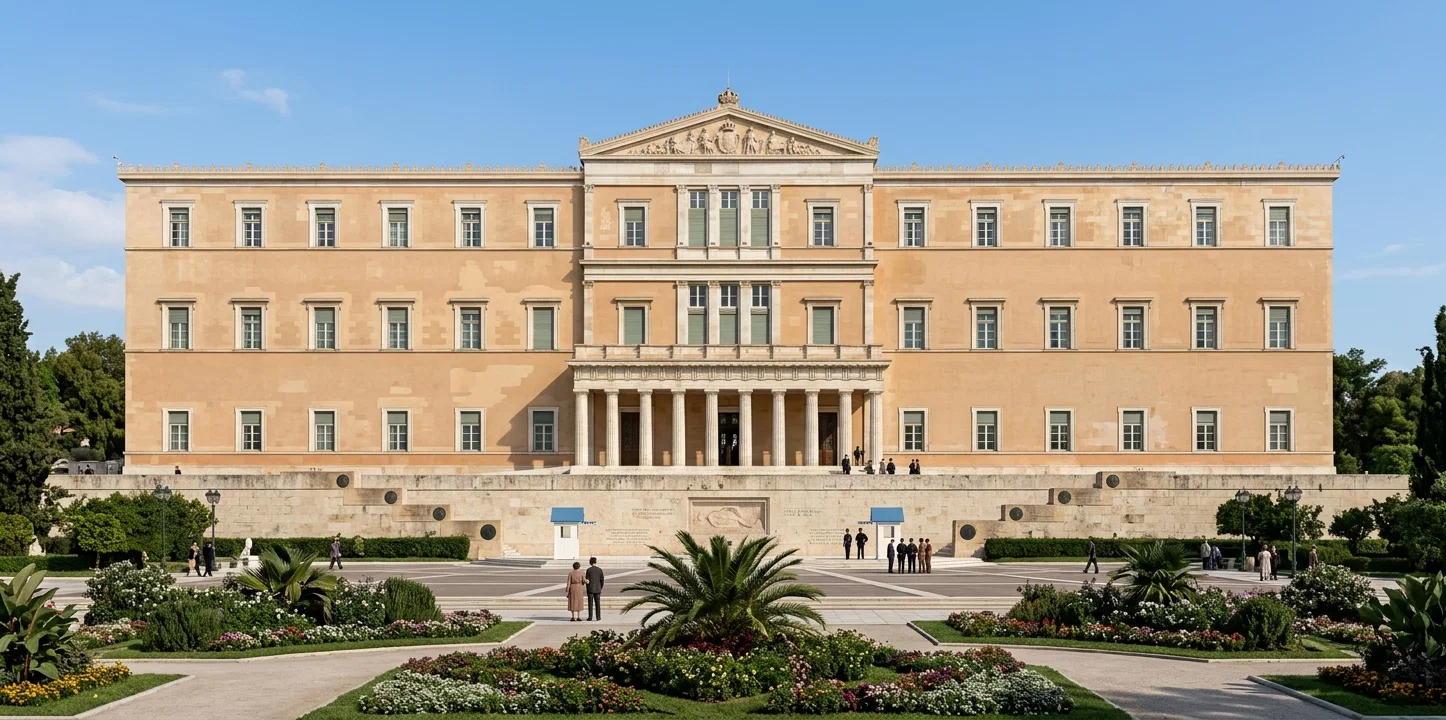
ROYAL PALACE IN ATHENS
Erected 1834-38, of Pentelic marble and limestone. Its spacious gardens were laid out by Queen Amelia, first queen of Modern Greece. Visited by student demonstrators in 1901.
ROYAL PALACE IN ATHENS Erected 1834-38, of Pentelic marble and limestone. Its spacious gardens were laid out by Queen Amelia, first queen of Modern Greece. Visited by student demonstrators in 1901.
“But a supplement to the decision of the Synod is needed. All the translations that have been printed and are in circulation ought to be seized and destroyed. Then the affair would be closed. The nation would be indebted to the students of the university, who through their noble and drastic initiative, saved the church and the language from the greatest of dangers.

Not Anathema

“Some of those who are opposed to the translation, in their righteous indignation are urging that the translations already made be anathematized [a curse put upon them so that any one who reads them would suffer excommunication]. But we regard this extreme. One of the translations was published under the patronage of the queen. No Greek would believe that the queen is guilty of suspicious tendencies, and that it is allowable to include her and her work in so serious an ecclesiastical punishment.

But Excommunication

“Instead of anathematizing the translations already published, from which we shall be relieved by their seizure, the Holy Synod can excommunicate every one who dares in the future to attempt a translation of the Gospel.”
After the decision of the Synod was given out, the students took up the cry of excommunication. Joined by a large number of citizens they marched through the principal street of Athens on their way to make another demonstration before the Metropolitan, shouting, “Inadequate [the decision]! Inadequate! Excommunication! Excommunication! We want excommunication!” The Metropolitan promised to submit their demand to the Synod.

Trades Unions Act

On the same day at a session of the Federated Trades Union of Athens and Piraeus, it was unanimously voted to call a general mass-meeting the next day in the square of Zeus Olympus, (1) To give the people opportunity “to declare positively and formally their desire to have the sacred Gospel remain intact;” and (2) “to petition the Holy Synod of Greece to issue a decree of excommunication against those who have profaned it [by translation]. In case the Synod of Greece should not comply, to petition the Ecumenical Patriarch and the Holy Synod of Constantinople as the highest authority in the Orthodox Church, to issue the desired bull of excommunication.”
That night a large body of students armed themselves with revolvers and took possession of the university to prevent its being seized by the authorities and closed.

At the Mass-Meeting

Here are three brief extracts from speeches made:
“You must persevere in this holy controversy till the last moment. We are the sons of the heroes of 1821 [Greek War of Independence]. Our fathers won their freedom only through the Gospel and faithfulness to their religion. We must sustain their honor to-day.”
“Those who have taken advantage of the simplicity of the masses have translated and distributed many thousand copies of the Gospel. Now the Holy Synod must order these books to be seized and destroyed.”
“Unknown enemies, without swords and guns, are undermining the Christian religion. If they came against the Gospel, no one would fear them; but they come as its friends and protectors, and this is what we must fear the more.”
Here is the text of the resolutions passed:
“The students of the university and the tradesmen of Athens and Piraeus, having assembled today (Nov. 8, 1901) in general mass-meeting at the Columns of Zeus Olympus to consider the question of the profaning of the Gospel, and the inadequate decision handed down by the Holy Synod, after many addresses setting forth the leading features of the situation, unanimously adopted the following resolutions:
1. “That the original text of the sacred Gospel be preserved in the future intact and immaculate, as it was received by the divine [sic] fathers of the church.
2. “That we petition the government to grant permission to the Holy Synod of Greece to impose its regular excommunication upon those who have profaned our sacred Gospel, thus supplementing their incomplete decision of yesterday.
3. “That the same ecclesiastical authority seek through the proper court the seizure and destruction of every copy of the translation.”
Copies of these resolutions were sent to the king, the government, and the Metropolitan.
There remains to be told in our concluding article: Riot and Bloodshed, Resignation of the Metropolitan, Funeral of the Victims, Eulogy of the Martyrs, Anathema and Excommunication, Queen Olga Again, Rays of Hope.
W. E. HOWELL.