A Trip Through Java

10%

Pacific Press Publishing Association · Mountain View, California · May 12, 1909

FromSigns of the Times, Vol. 36, No. 19.

Read the full edition

A Trip Through Java

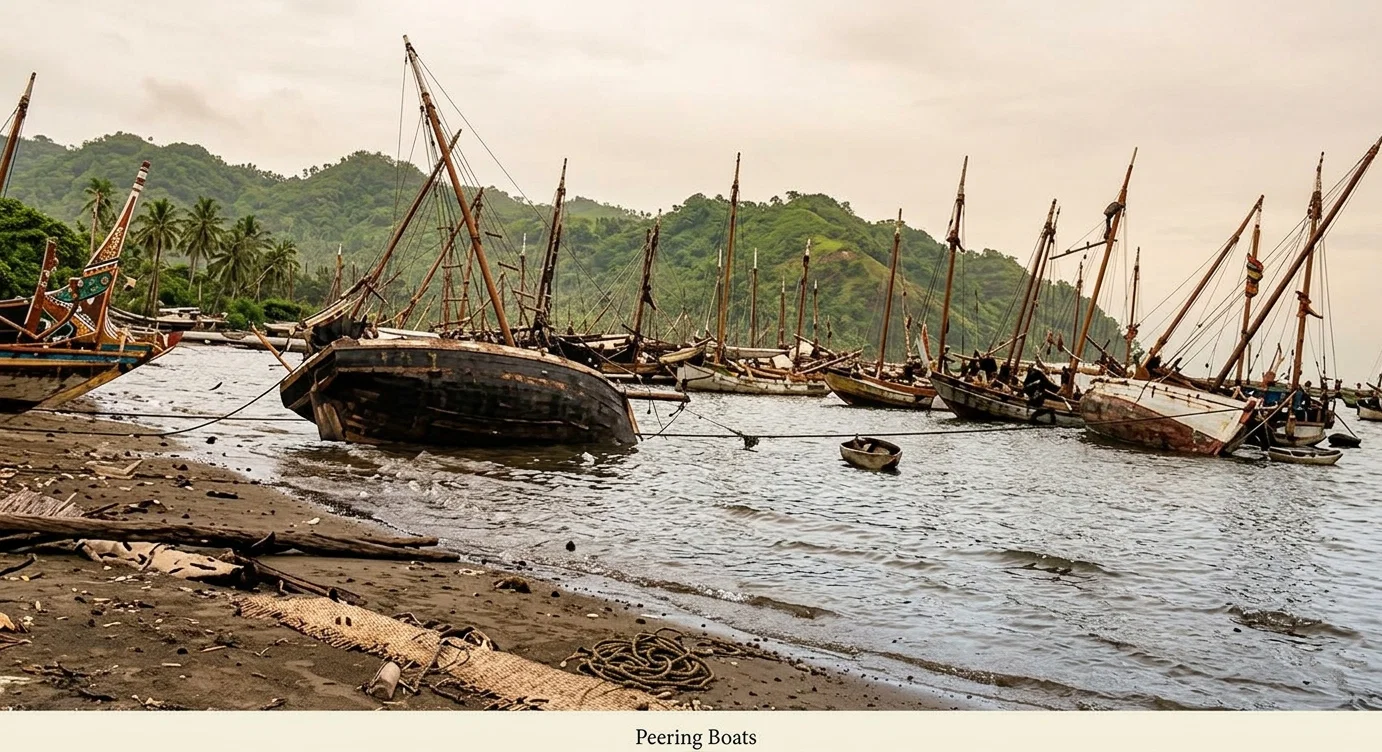
While in Java we made a very interesting trip into the interior. Some one has styled Java the “Garden of the East,” and from what I have seen I think the term very appropriate indeed. Everywhere we traveled it is one magnificent garden of luxuriance. We went through thousands of rice-fields in every stage of development, some lovely green and others golden. I never saw such intense cultivation anywhere; neither have I seen such a picturesque and satisfactory bit of tropical scenery anywhere before.
Speaking of the rice-fields, we saw the natives plowing with the clumsy water-buffaloes and the antiquated wooden plow. I saw many of the natives on their way to the rice-fields with their buffaloes, driving them before them and carrying both the plow and the yoke on the shoulder. The plows seem to me to be about as good as crooked sticks. The rice-fields are divided off into small, diked-in paddocks, inside of which the water can be turned off or on at pleasure. The rice grows in the water much of the time. I noticed that, as a rule, the plowing is done while the land is under water, the buffaloes wallowing along through mud and water dragging the harmless plow and the lazy driver. Both animals and driver seem to enjoy the “mud-pie” business equally well. The deeper the water the better satisfied the buffaloes were.
We visited Miss Jansz’ mission some distance from Soerabaya. We were all day and part of another on a steam tram, and finished our journey by a ride in a cart and a horseback ride up a mountain. It was all very interesting, and the scenery was too beautiful for any description that I can give. I thought of some of the Bible statements about the land of Canaan, “a land of hills and valleys, and drinketh water of the rain of heaven.” “A land wherein thou shalt eat thy bread without scarceness, thou shalt not lack anything in it.”
We had a right welcome from Miss Jansz, and we were glad to see her and her work. She has been keeping the Sabbath now for over fifteen years, and for over six years she has been doing mission work here; has a little colony of 200, all of them resting on the Sabbath, and a number of them converted. Sister Jansz has not identified herself with us, but she is an earnest Christian and believes in the soon coming of the Lord and other points of the message. She now desires to turn the whole work over to us and work under us. I was much interested in what I saw there. We have arranged for Miss Tunheim to go there till we can get some one from Australia. Miss Jansz will take a rest and then do some translating for us.
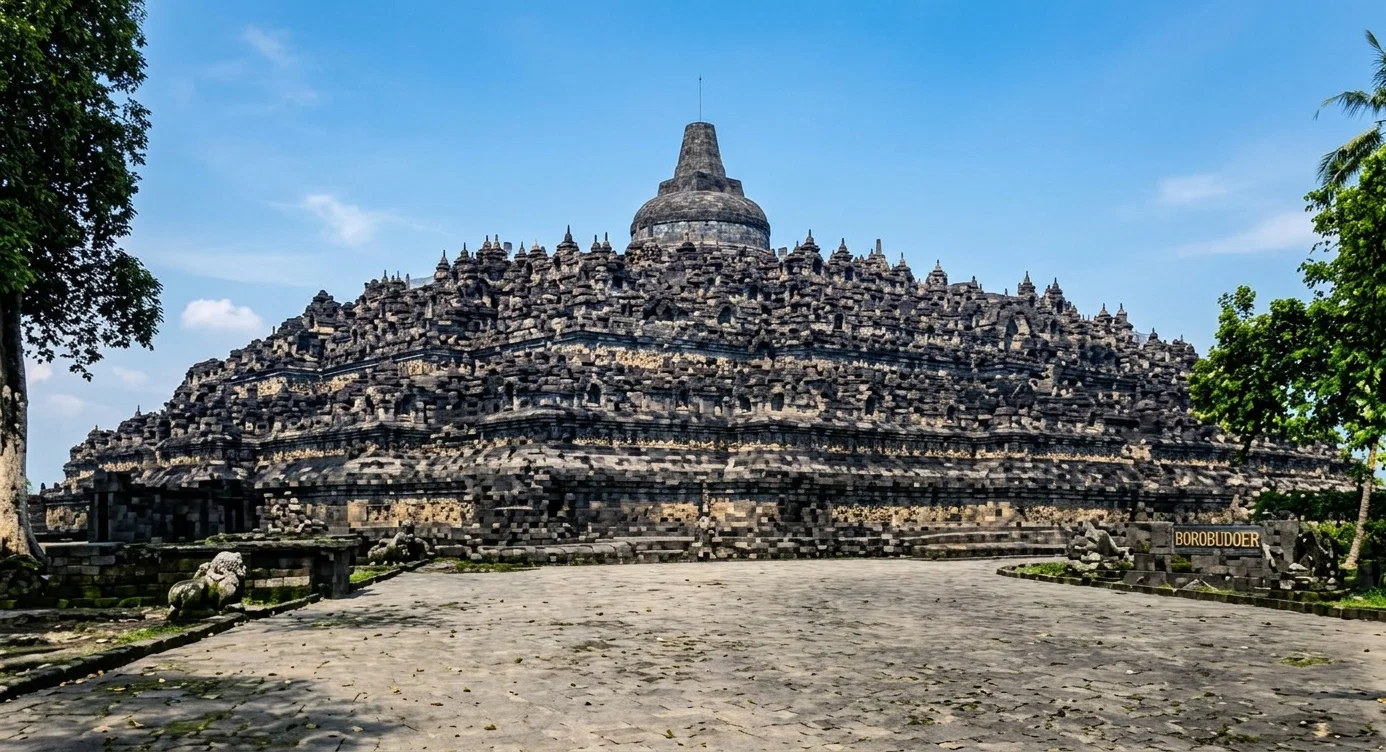
While in the interior of Java, we visited the old Hindu temples, among the greatest and most interesting ruins of the world. Here the admirer of noble workmanship, both in architecture and ancient art, will have much to interest him. There are a number of these temples in Java, but the ones at Boro Budoer are the largest. We visited these and two smaller ones. There are hundreds of life-size images of Buddha, many of them in an excellent state of preservation, altho the temples have been in ruins for hundreds of years,—how long we can scarcely say, from the time no doubt that Hinduism sank under the tide of Mohammedanism.
These temples are supposed to have been erected over a millennium ago. The workmanship is truly wonderfully executed; every face is a study, none are expressionless. There are not only statues of Buddha, but also of sacred bulls, and carvings of monkeys, beasts of various kinds, and birds and trees. There are carvings of soldiers with spears, and others in battle array; pictures of ships under sail, tables of offerings to their god, of kings upon their thrones. It is wonderful how these have stood the ravages of time. Earthquakes have disjointed the walls in many places, rain and rank vegetation have disintegrated the foundation works, and no doubt zealous haters of idolatry have effaced much that no longer appears, but a great part still stands, wonderful monuments of human skill and industry. In Boro Budoer alone I am told there are three miles of walls, if each were placed one after another, all studded with wonderful carvings.
J. E. FULTON.