Thursday Island

13%

Pacific Press Publishing Association · Mountain View, California · May 5, 1909

FromSigns of the Times, Vol. 36, No. 18.

Read the full edition

Thursday Island

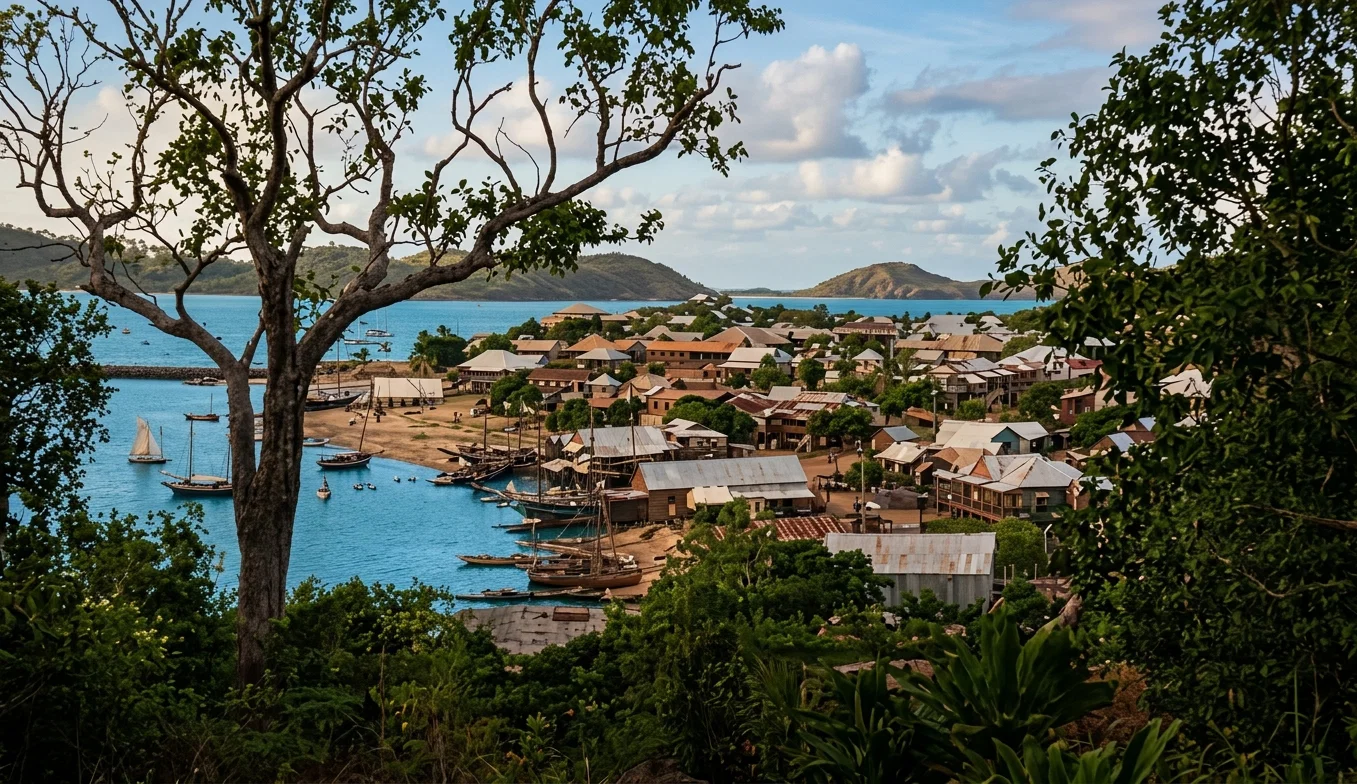
After about nine days’ travel by steamer from Sydney, we were brought to Thursday Island, a few miles north of Cape York, at the very extreme north point of Australia, and only about ten degrees south latitude. Situated so near the equator, the weather is warm, but being a small island exposed to the tempering sea-breeze, we did not find our stay uncomfortable on account of heat.
Thursday Island.
Thursday Island.
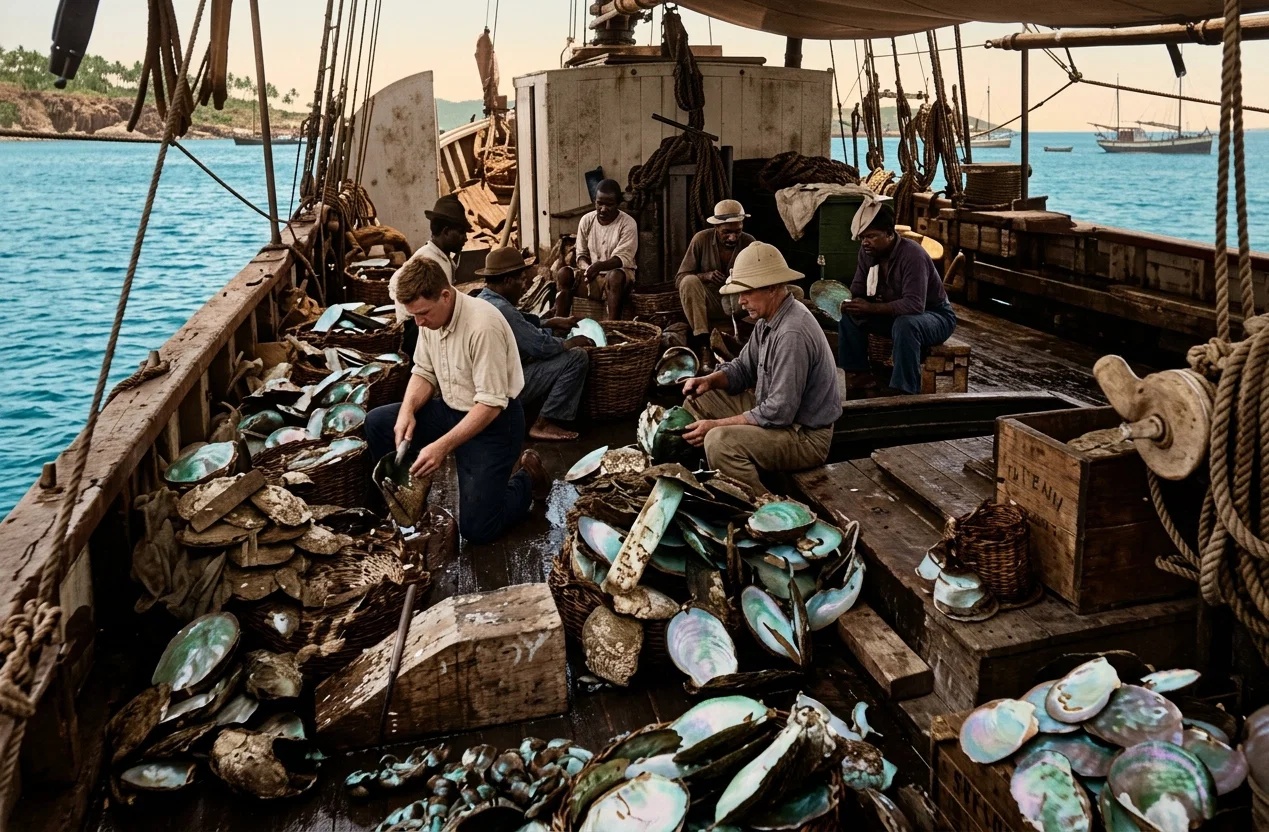
Opening Pearl Shells, Torres Straits.
The town on the island, the small, is not an unimportant one, being a port of call for the ships passing from Australia to the East Indies, the Philippines, China, and Japan. From the number of hotels in the town one might wonder if the real name were not Thirsty Island. This place is the headquarters for the pearl-fishing industry, there being 347 pearl-fishing boats registered at this place, many of which lay at anchor on our arrival. They were of all sizes and shapes, from the ten-ton cutter to the fair-sized schooner. In company with the captain and harbor pilot, I visited one of the largest of these schooners, a rather fine, well-fitted little vessel, and here I was shown into some of the mysteries of the pearling business. I was first attracted to the diving apparatus, a very cumbersome looking suit. The body is first clothed with flannel and then in the diving suit, which keeps out the water, the head and face being covered with an immense helmet with a window in front through which the diver looks. The helmet has a long rubber tube connected with it, reaching from the vessel above down to the lowest depths below to which the diver can go, and through this tube air is pumped down to the diver as he pursues his pearling work down in the “lower regions.” The work is a perilous one, for the diver is forced into unnatural conditions,— the vitiated air, great water pressure, and then the sharks which abound in the tropical waters are fierce at times, often attacking the diver even when dressed in this formidable attire. The diver thus dressed for his hazardous task and equipped with an instrument for cutting the oysters off the rocks to which they cling, and a bag to fill with the valuable fish, descends in a likely spot and commences his work. He is lowered by ropes from the vessel, and by a signal from the diver he is drawn up to deposit his find. The oyster is opened, the fish removed, and then the shells are packed in large cases and sent away to London or other places where they are used for various purposes, such as buttons, knife handles, and ornaments.
Sometimes valuable pearls are formed in the oyster and, of course, when found, are especially valuable. The shells we saw were large, flat, plate-shaped shells, rough and dingy on the outside, but bright and shiny within. The fish which we mention being taken from them are not in all cases thrown away. Many of the Japanese, and others who follow the business, string the fish on cord and dry it, after which it is ground up, mixed with curry, and so used as a table delicacy. There is no doubt that much money is made by this pearling business.
But we looked upon these hundreds of men who throng these fishing-boats as being the greater pearls. Here they were from the many surrounding islands of the great Malay Archipelago, and from far-off Japan, all looking downward and seeking pearls, and scarce one knowing ought of the “Pearl of great price.” Could they but know Him who called the fishermen of old! Could they but know the value of a human soul, they would no longer squander their lives for naught but these sea-born treasures. Could they look up instead of down, and learning of His priceless value, be led to “search after Him, and find Him,” what boundless and enduring satisfaction and wealth would be realized by them!
So here at the very beginning of our voyage into the tropics, on the outskirts of the great island, we are at once beset with the enormity of the task set before us in giving the message in this generation to the many, many thousands, yea, millions, of these tropical seas, that they may be led to see the emptiness and uncertainty of worldly wealth and pleasure, and be drawn to the enduring riches, and to the beauties of divine truth. J. E. FULTON.