The beast here referred to is the one to whom the image is made, for the text reads, “the beast and his image.” In Rev. 13:14 we find it stated that the image is made to the beast which had the wound by the sword and did live. Verse 3 reads: “I saw one of his heads as it were wounded to death; but his deadly wound was healed.” From this we learn that the image is an image to one of the heads, but an image to the head must in a certain sense be an image to the beast, for a beast must work through its head. And yet there must be some reason for thus stating that the image is made to the beast that was wounded and did live, and also that one of its heads was wounded and healed.
What Constitutes a Head?
Revelation 17:9 reads: “Here is the mind that hath wisdom. The seven heads are seven mountains, on which the woman sitteth: and they are seven kings,” or kingdoms. A woman represents a church (2 Cor. 11:2), and a mountain, a kingdom (Dan. 2:34, 35). Then a head is not a church alone, nor is it a kingdom alone, but it is a mountain (kingdom) on which a woman (church) sits, or a union of church and state. Thus we find that the image is to be made to a union of church and state, which union or head constituted the beast herein described and which has existed in the past and which has received a deadly wound. It was not the church nor was it the state that received the deadly wound, but the union of the two was so wounded that had no healing come the thing would have been forever dead. The state (civil power) has existed all along, and so has the church or religion, and the union of the two, altho having received a deadly wound, has been preserved in principle with sufficient life in it to finally produce an image. This image must be a union of the civil power with an ecclesiastical, not with the old, for that would be the thing itself instead of an image, but a union between the civil and another ecclesiastical power, which has in it so many of the characteristics of the old as to closely resemble it and thus constitute an image.
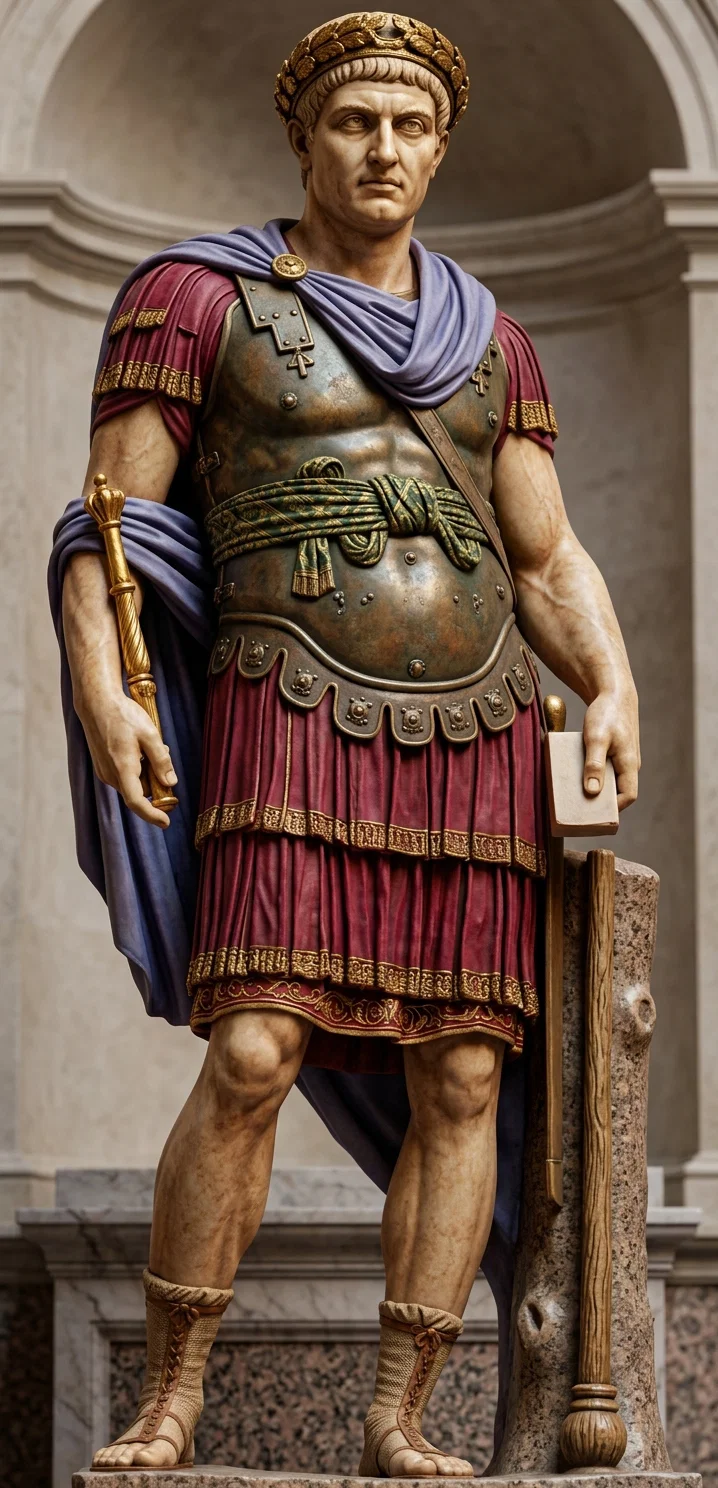
Going back in the history of the world to the third and fourth centuries of the Christian era, we find a church which was working in every possible way to bring to her support the civil power. This movement accomplished its purpose when the bishop and clergy of the Roman church sent a delegation to Constantine asking him to come to the rescue of the church, which he did, and there was effected a close alliance between that religion and the state. This alliance was strengthened from time to time by legislation favorable to the church and the clergy, until the time came when the church became the dominant factor in the alliance, and in that condition we see the figure of the revelator fulfilled — the woman sitting upon the mountain; that is, the church holding the supremacy over the civil power, so that it is subservient to her will and carries out her wishes.
But such a union of the civil power with the Christian religion must be destructive of both, for the sphere and operating principle of each are distinct and separate. The sphere of the civil is to restrain the evil; the sphere of the ecclesiastical is to cure the evil. The principle of the first is to administer punishment in justice for all civil offenses; the principle of the second is to present before men God’s mercy and forgiveness of all sins upon confession and true repentance. Both are ordained of God, and each is to serve God’s purpose in its own sphere; but the introduction of the principles of the church (mercy and forgiveness) into the civil affairs did defeat the object of the civil power and virtually set aside its authority, because it enabled the wickedest men in the Roman Empire, the worst criminals that age produced, to escape punishment and go free if they would only profess the established religion and claim the benefits of the mercy and forgiveness; while on the other hand, the introduction of the principles of the civil (punishment of the evil) into the church subjected the heretic, even the guilty of no civil offense, to the severest penalties of the law.
The Scriptures foretold a falling away which was to take place among the children of God and which would result in the development of the man of sin who would sit in the temple of God acting “as if he were God;” that is, exercising the rights and prerogatives which belong only to God. See 2 Thess. 2:3, 4, Douay translation. In this falling away, corrupt men became bishops of the Roman Church, assuming authority and power which did not belong to any man. By influencing legislation to back them up in this, they soon became recognized by powers of Western Europe as the head of all churches and the corrector of all heretics. The religion of Jesus was corrupted, persecution followed, and thousands of innocent persons were put to death for no other reason than that of not accepting the degenerate Christianity of the See of Rome, while unscrupulous, scheming knaves stood in high favor simply because they professed the established faith and allied themselves with the church.
All this was the direct result of the union of church and state; the church wielding the civil authority, and assuming the right to judge heretics and to forgive sins. This produced an almost intolerable state of affairs in Europe, and while she was thus groaning under this burden of oppression, and the waves of persecution were even sweeping farther and farther into Asia and Africa, America was discovered, and with open arms invited the oppressed of all lands to her borders. The purpose of the Pilgrim Fathers in seeking this country was to found a kingdom without a king, and a church without a pope. But alas, they had not fully learned the lesson, for in some of these colonies persecution was soon begun, and the Quakers, Baptists, and others suffered at its hand.