Gethsemane

7%

Pacific Press Publishing Association · Mountain View, California · Mar 31, 1909

FromSigns of the Times, Vol. 36, No. 13.

Read the full edition

Gethsemane

GETHSEMANE is a name endeared to every Christian. It is associated with our Lord and Saviour and His agony of blood on behalf of humanity. Locally, Gethsemane is the name of a plot of ground in the days of Jesus, in which was a garden, where Jesus often resorted with His disciples. It was across the brook Kidron from Jerusalem, on the slope of Olivet. Here grew many olive-trees, from the fruit of which was pressed the olive-oil. “Gethsemane” means “oil press,” in a double sense.
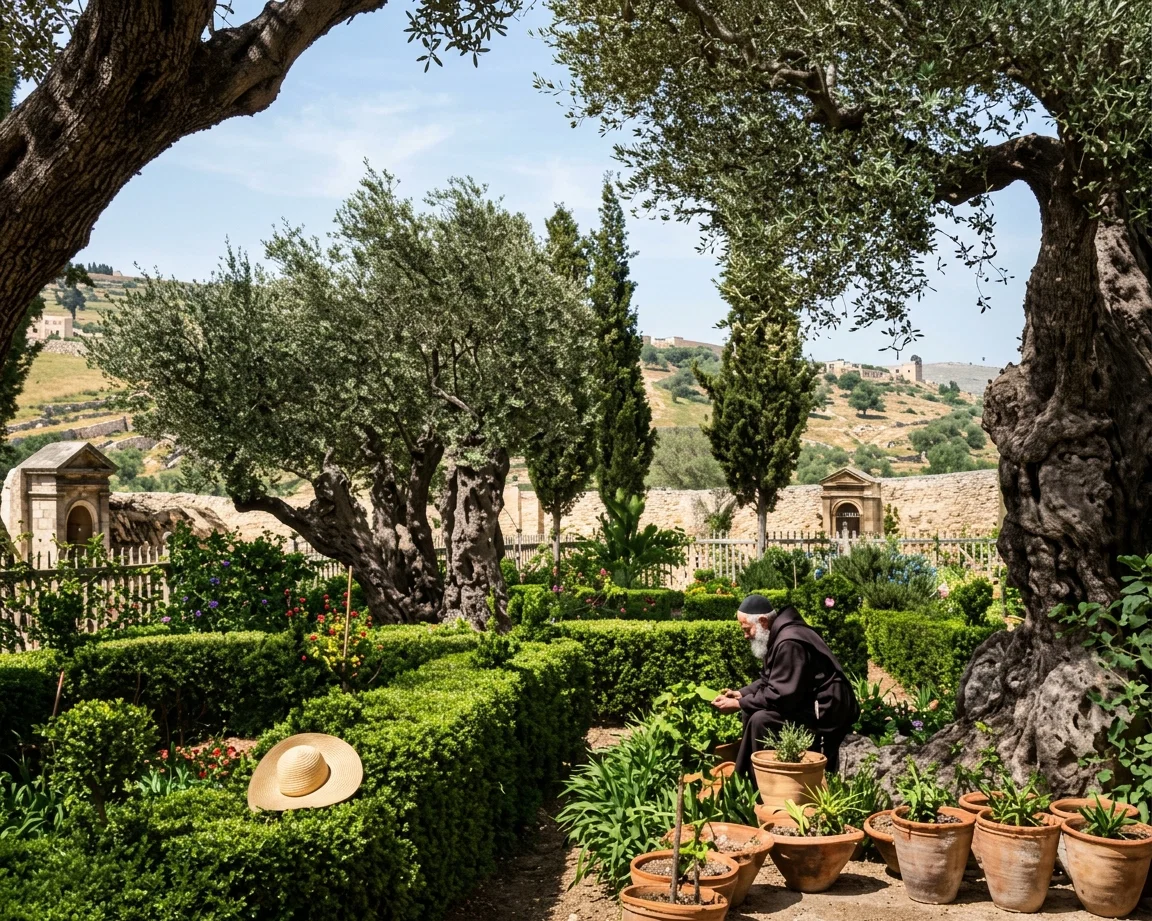
Modern Gethsemane is a matter of doubt. Our illustration is that of a flower-garden and olive-grove controlled by the Roman Catholics, while “the Greeks,” in the language of Dr. Schaff, “have set up a Gethsemane of their own farther up the Mount of Olives.” A few large olive-trees are growing here, some of which are nineteen feet in circumference, descendants, perhaps, of those in our Lord’s day. There are also younger olives and a dozen or so cypresses. The monks derive an income from the sale of olive-oil and rosaries made of olive-stones. A bouquet of flowers is presented each visitor, for which one franc (twenty cents) is expected in payment.
But let us leave the empty, mercenary form, with its vain superstitions and traditions. Gethsemane should have a deeper meaning to Christians; for here came the greatest temptation of Jesus, the Saviour of men; here was fought out the battle which decided the destiny of the world. Here was met the crisis of all the world’s ages. Here Jesus of Bethlehem, burdened with the sins of the world as His very own, met the arch-enemy in the great climax of conflict, and conquered. The record is found in the three Synoptic Gospels; we give the combined account:
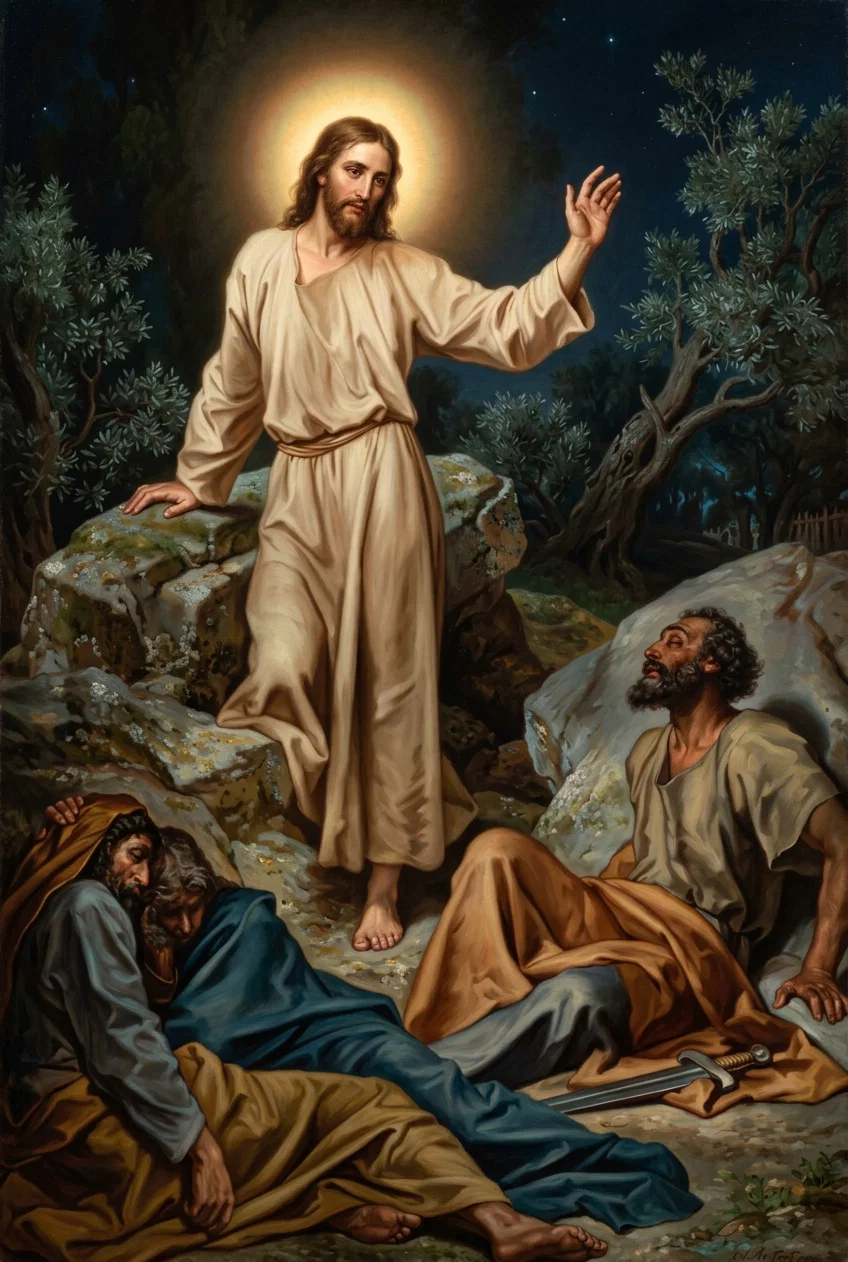
“Then cometh Jesus with them unto a place called Gethsemane, and saith to His disciples, Sit ye here, while I go yonder and pray. Pray that ye enter not into temptation. And He took with Him Peter and the two sons of Zebedee, and began to be sorrowful, greatly amazed, and sore troubled. Then saith He, My soul is exceeding sorrowful, even unto death; abide ye here and watch with Me. And He went forward a little, about a stone’s cast, and fell on the ground, on His face, and prayed that, if it were possible, the hour might pass away from Him, saying, Abba, Father, all things are possible unto Thee; take away this cup from Me; nevertheless, not what I will, but what Thou wilt. And He cometh unto His disciples, and findeth them sleeping, and saith unto Peter, What, could ye not watch with Me one hour? Watch and pray, that ye enter not into temptation; the spirit indeed is willing, but the flesh is weak. Again, a second time, He went away and prayed, saying, O My Father, if this cannot pass away except I drink it, Thy will be done. And He came again and found them sleeping, for their eyes were heavy; and they knew not what to answer Him. And He went away the third time, saying again the same words. And there appeared unto Him an angel from heaven strengthening Him. And being in an agony He prayed more earnestly; and His sweat became as it were great drops of blood falling down upon the ground. And when He arose up from His prayer, then cometh He to His disciples, and saith unto them, Sleep on now, and take your rest; it is enough; behold, the hour is at hand and the Son of Man is betrayed into the hands of sinners.”
Brief indeed is the inspired account of this crisis of the ages. In the fierce temptation, the fate of the world hung in the balance. We need not ask how all this could be. Let it suffice that it was. The eternal Son of God came to this earth and became one of us, having a body of “sinful flesh.” His eternal power and glory were laid aside. His human weakness, strong only by the word of God through faith, met every temptation of the race. The prince of evil and all his host were pitted against the man Jesus, the second Adam. What seductive wiles, what appeals to every fiber of the mortal flesh, what cavernsof discouragements, what abysses of darkness pressed upon and yawned before the Son of Man in this awful struggle, none will ever know. Only those who witness in the last great day the eternal glory and bliss of the redeemed and see themselves shut out forever will be able even to approximate the fearful anguish of the last hours of Jesus before the cross. This fearful personal agony, due to the sins of the world which were resting upon Him, was set over against the refusal which He might have made to drink the cup. But infinite Love could not do otherwise. Whatever the suffering, eternal tho it might be, Jesus will meet it for the sake of a dying world who were crucifying Him. He could not let them perish. He had voluntarily taken upon Himself the dread load of man’s guilt that man might be made innocent, and He must not shrink from the duty.
And yet human nature trembled in that crisis of the ages,—deep, and black, and hopeless, rendered if possible more so, by Satan’s hellish art. Jesus longed for human sympathy. He took with Him Peter, who had just said, “Tho all men forsake Thee, yet will not I;” “I will lay down my life for Thee,” and James and John, who had declared, “We are able to be baptized with Thy baptism.” Surely these men would offer Him sympathy in His hour of trial! But even as on the Mount of Transfiguration, when this very hour of trial was talked over with Moses and Elijah, the disciples slept. They could not watch the one hour. Jesus was treading the wine-press alone, and of all the people there was none with Him. So He passed through the mightiest trial known; passed along, save the presence of the invisible God, that He for God might be infinitely able to help every soul who alone must pass through the great crises of his existence.
Modern Gethsemane.
Modern Gethsemane.
While the human longed for human sympathy, the perfect faith laid hold of the Infinite God; and in the petition we have the perfect example of submissive prayer, prayer always heard. (1) Note the confidence in God’s love: “Abba, Father,” “My Father.” It is the address of the child, the confident plea to the One He loves. (2) Note the confidence in God’s power and wisdom: “All things are possible unto Thee. Thou seest the end from the beginning; Thou knowest how to work all things after the counsel of Thy will; Thou hast almighty power; Thou lovest Me, Thine only begotten Son; take away this cup from Me.” So pleads the shrinking, human flesh. God did not despise the prayer. He does not blame His children if they pray in submission to be delivered from the sore trials. And Jesus prayed in submission—“Take away the cup, Father; nevertheless,—not-the-less however bitter the draught,—not what I will, but what Thou wilt.”
This was the prayer, this was the crowning petition, this the wish by which all others must be regulated. Such a prayer will always be answered by God, and always for our good, even tho the bitter cup be ours to drink. Surely here is a basis for unwavering faith for every child of God,—God’s infinite power, and wisdom, and love. Only in such confidence can we win the victory. Jesus won the victory of the cross in the garden; and we must win the mighty conflicts with the enemy in active life by submission to God, when alone in our Gethsemanes.
“We do not know it, but there lies Somewhere veiled under evening skies A garden all must sometime see— Gethsemane, Gethsemane, Somewhere lies OUR Gethsemane.”
“With joyous steps we go our ways; Love lends a halo to the days; Light sorrows sail as clouds afar; We laugh, and say how strong we are; We hurry on, and hurrying go Close to the border-land of wo That waits for you and waits for me, Gethsemane, Gethsemane, Forever waits Gethsemane.”
“Down shadowed lanes, across strange streams, Bridged over by our broken dreams, Behind the misty cap of years, Close to the great salt fount of tears, The garden lies. Strive as you may, You can not miss it in your way; All paths that have been or shall be Pass somewhere through Gethsemane.”
“All those who journey, soon or late Must pass within the garden gate— Must kneel alone in darkness there, Must battle with some fierce despair. God pity those who can not say, ‘Not mine, but Thine;’ who only pray, ‘Let this cup pass,’ and can not see The purpose in Gethsemane. Gethsemane! Gethsemane! God help us through Gethsemane.”