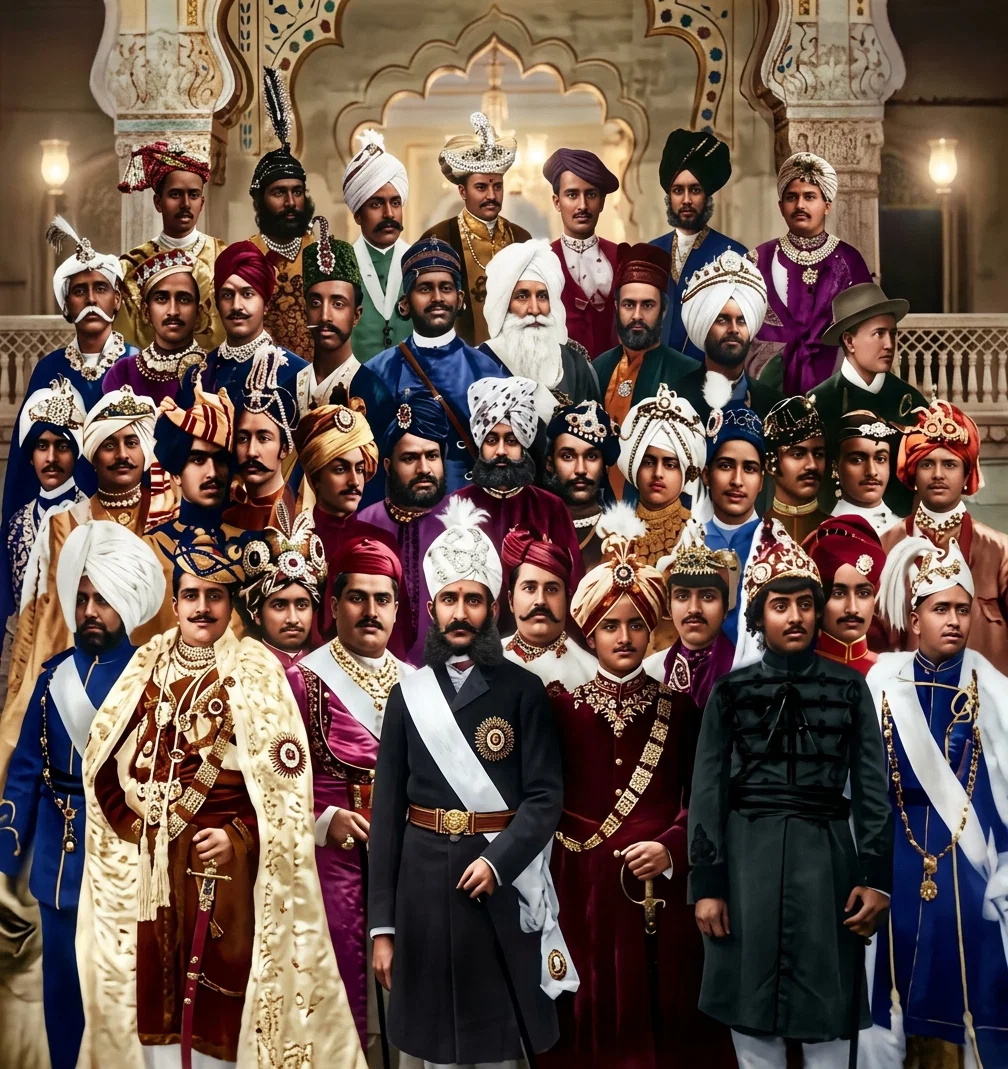
SATARA is the ancient capital of the old Marathi Empire. It has a native population of about 23,000, and is cozily nestled in the mountains known here as the Western Ghauts. The descendant of the ancient rajas, or kings, of Maharashtra still lives here, receiving a pension from the British Government. He has little of royalty about him now, excepting the splendid old royal elephant, the largest that the writer has ever seen.
The city of Satara itself is the center of a large agricultural community, there being more than 700 villages surrounding it, and in what is known as the Satara District. It is also something of an educational center on a small scale, there being a number of good native schools. There are many Brahmans here, the descendants of the old-time leaders of the country, and still the proudest and most exclusive as well as the most intelligent and best educated of the entire community.
The writer with his family is located here for the time being, diligently engaged in the study of the Marathi language. In this work we have been brought into contact with some whom one could scarcely hope to meet in any other way. The problem of giving the Gospel message to these people is a most perplexing one. The Congregationalists have had a mission here for many years, and the Salvation Army is also working, but aside from the children received in the time of famine, some years since, progress has been very slow. In a territory having a population of 500,000, there are but 122 Christian communicants. We do not know what will be our plans for future labor, for now there is a tremendous barrier between us and the people—the Marathi language, but we have had one need pressed in upon us that seems most worthy, and we pass it on to the SIGNS readers.
In the center of the native city stands the Satara Native Library. This is the daily gathering-place of the educated and best informed in the community. It would be a surprise to some of the people in Christian lands, from the standpoint of their idea of a “heathen,” to step some evening into this library, meet these Indian gentlemen, and see the evidences of education and culture. Here they meet and eagerly read the news of the world, both foreign and Indian. The tables of the library have a large selection of native vernacular papers, also papers issued in English by Indian natives, as well as those edited by Europeans, and a small but select number of magazines from across the seas.
Then as you turn to the book-shelves you find several thousand volumes, some in Marathi, some in Sanskrit, and a large number in English, the most of them bearing marks of being much read. In a number of books dealing with Indian history and Indian questions which I have read, I have noticed all through them words underlined showing that the readers have been diligently improving their English vocabulary in this way. In fact, there is a most eager desire among educated natives to learn all they can of the English language and literature.
I am sorry to have to report that such works as Ingersoll’s, Tom Paine’s, and Haeckel’s are very popular here. Now it has occurred to me that here is a splendid opportunity for us to do some real good missionary work. Why can not we put in the native libraries all over India a good selection of our books. Such books as “Desire of Ages,” “Great Controversy,” “Patriarchs and Prophets,” “Object Lessons,” “Ministry of Healing,” and many others would find an acceptable place on these shelves, and would gain a large circle of interested readers. The purity of their diction, to say nothing of the sublimity of the truths found therein, would doubtless be manna to many hungry souls. It is sad to think that the Christianity with which most of these readers have a very limited acquaintance, is tainted with such errors as eternal punishment of the wicked in a never-ending hell, and weakened by the obscure notions prevailing about the origin of evil and the future state. Shall we allow Robert Ingersoll and Tom Paine to occupy undisputed these bookshelves where the hungry Indian soul is seeking for light?
I have consulted the authorities in charge of this library, and they assure me that they will be most happy to receive any donation of books that we will be willing to present to them. I pass on this plea to you and trust that it will meet with some substantial response. If more means comes in than necessary to furnish a few of our books to this library, there are scores of such libraries all over this great land, whose hungry shelves are waiting for such books, and will be as glad to accept them as the library here in Satara.
GEO. F. ENOCH.
Satara, India.
Brother Enoch adds this note: “Since coming here the above need has pressed itself home to my heart and seems to me to be a very great one. No one can measure the amount of good that will come through putting these books on these shelves. Many a reader whom the rules of caste and prejudice shut away from us as absolutely as tho we were in two different worlds, may thus be reached. If you think it wise to put such an appeal in the SIGNS, do so.”
We gladly pass it on, and ask our readers who may wish to donate to this worthy cause to send the money to the SIGNS OF THE TIMES, Indian Libraries.—EDITOR.