(From Our Own Correspondent, at Gland, Switzerland)
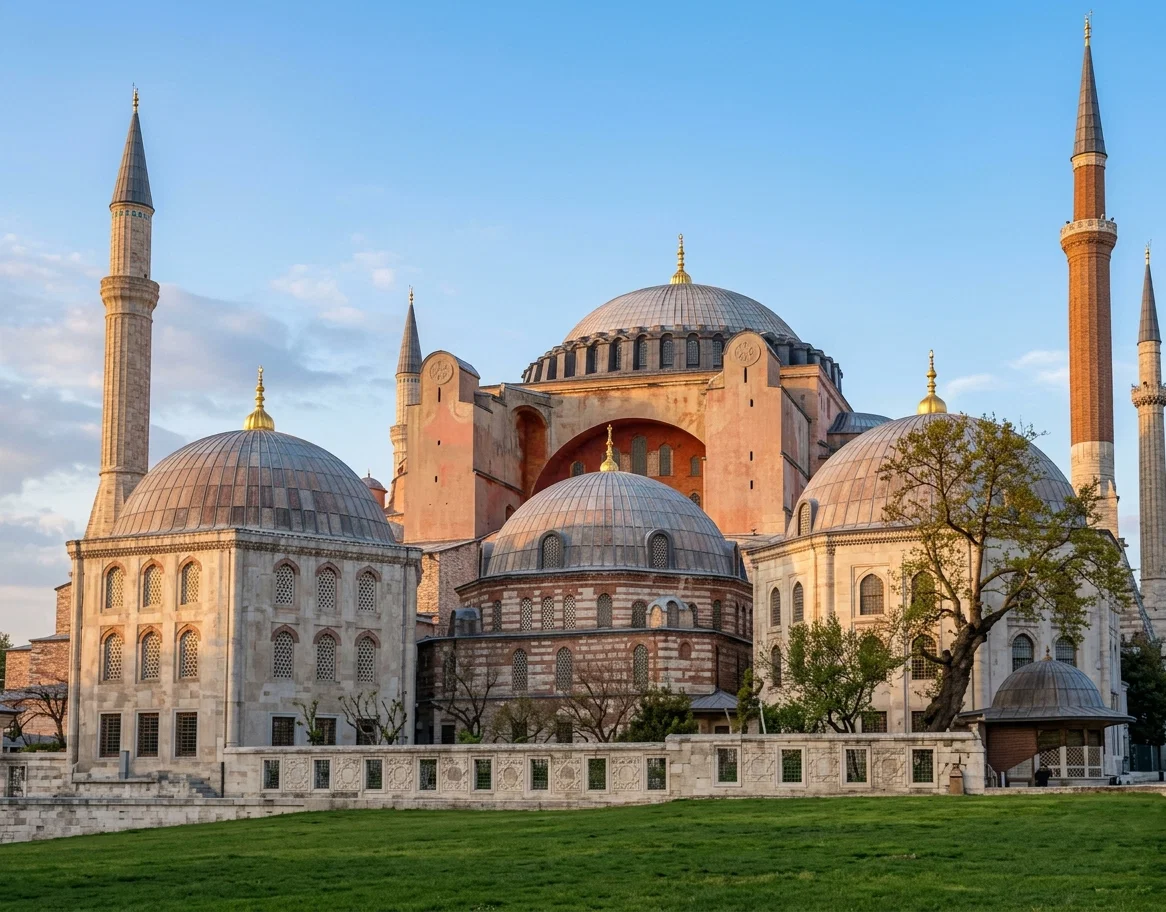
The Celebrated Cathedral of St. Sophia in Constantinople.
The remarkable statements of which I am giving below a translation, are from the pen of the editor-in-chief of a French magazine entitled Bibliotheque Universelle, published at Lausanne. It was founded in 1796. The present editor, Mr. Ed. Tallichet, is nearly eighty-two years old, and is recognized as one of the soberest and best informed political writers in Europe. He is now writing an important series on the Oriental question. The following is a digest of the series, as far as it bears on the future of the Levant crisis. The statements made are so clear and startling, that I purposely refrain from making any comments, except by way of italicizing. One of the articles begins as follows:
“FALL OR RESURRECTION OF THE OTTOMAN EMPIRE—WHICH?
“The above question applies, not only to Turks, but to the entire world; for the present crisis contains the winding up of all that has transpired since the beginning of the Christian era. . . .
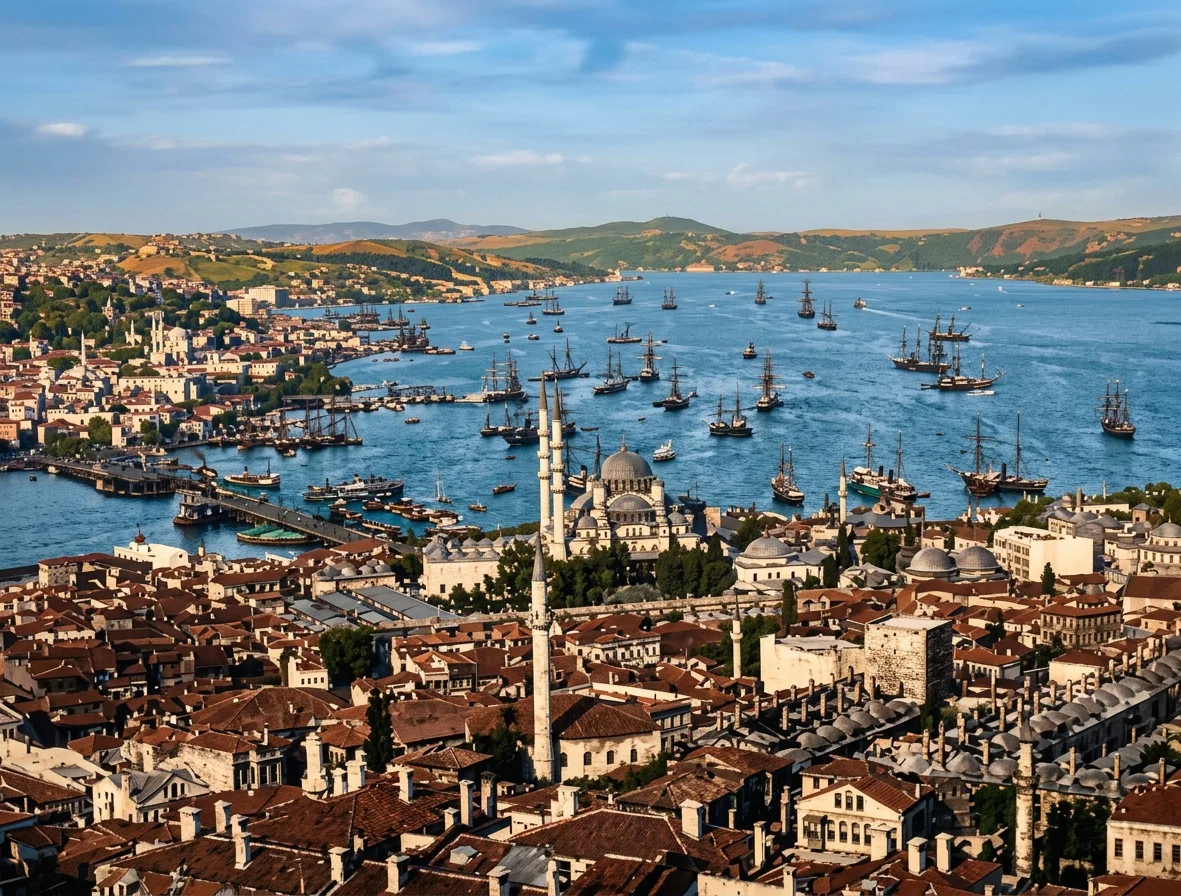
“Constantinople has become again what it was for a long time, the center and pivot of the world. . . .
“During the larger part of the past century, the Ottoman empire—in a half-dying state—has been able to live only on account of the rivalries and the jealousies of the great European powers. . . . As a division of its territory or its conquest by one or two powers seemed impossible, the Turkish regime was accepted as the lesser evil. When this regime became decidedly too tyrannical, and when some of its people raised up in rebellion, they were helped in obtaining their freedom. Thus Greece, Roumania, Servia, and Bulgaria became autonomous, under the suzerainty of the Porte, and finally entirely free. . . .
“The Ottoman empire has thus been diminished, and every progress made in Europe has made it weaker. . . . Several times Russia tried its luck, but to see herself stopped just as she was preparing to seize her coveted prey. Ever since, her whole policy has consisted in letting Turkey sink under her own weight, while watching for her chance to materialize her dream—in which the whole Russian nation concurs—make her home in Turkey with Constantinople as her capital. . . .
“The recent Turkish revolution has entirely changed the political situation of the world, not only of the Mediterranean world, but of the universe. . . .
“We have already eulogized the admirable awakening of which Turkey has been the theater. . . .
“After a short period of calm—during which the interested parties in Europe took time to recover from their surprise—we have seen two parallel storms break out over Turkey, one in the interior of the Ottoman empire, the other on the exterior. . . .
“Let us look first to the Ottoman empire. Marvelous as the turn-about of young Turkey has been, one must still ask himself if it is not like a beautiful flower blooming suddenly upon a heap of corruption, but destined to loose its brilliant colors in a few days. Indeed, the most sober-minded observers consider the enterprise of the Ottoman revolutionists not only as a most extraordinary one, but also, from the human standpoint, as an impossible one.
“How can a bond of unity sufficiently strong and elastic be established between nationalities—Turks, Bulgarians, Roumanians, Servians, Albanians—who until recently hated each other with a hatred which could be satisfied with nothing less than murder, incendiarism, and torture? . . .
“The second storm which we must now give our careful attention to, is the attitude of Europe toward the Ottoman empire.”
Here the writer retraces the political events which followed each other in quick succession after the Turkish revolution—Bulgaria declaring its independence, Bosnia and Herzegovina annexed by Austria, Crete uniting itself to Greece—all of which were not only unexpected, but a direct violation of the treaty of Berlin, and were accomplished without a single protest on the part of Europe. The writer then goes on:
“If the new government of Constantinople had lost its balance, it would probably have opened one of the most formidable crises of which the world has been a witness. . . . Bulgaria thought itself strong enough to beat the Turks and take Constantinople. Europe would have opposed this move, and thus would have been unloosed the scramble that has long been hanging over the Ottoman empire, and will take place as soon as its neighbors see the approach of its final doom. . . .
“Whatever chances of success might be on4their side, the directors of the Turkish movement knew also that a war with Bulgaria or Austria would be almost certain to open a most fearful crisis which has long been foreseen and warded off by all kinds of expedients, a crisis involved in the overthrow of the Ottoman empire, and which, to all appearances, would unloose a general war and bring about the complete transformation of the Old World. . . . The new Turkish government was not willing to take the responsibility of the most terrible conflict of which the modern world can conceive. . . .”
The writer then passes on to the new Congress or Conference among the great powers which it has been proposed to hold in order to readjust matters:
“Whatever care be taken to circumscribe its deliberations, we may be sure that claims and propositions will come up at the Conference, liable to provoke a general conflagration. . . .
“Europe should devoutly wish the success of the enterprise of the Young Turks, for it would keep off for a long time the dangers of a general liquidation, almost impossible to foresee without bloody encounters.
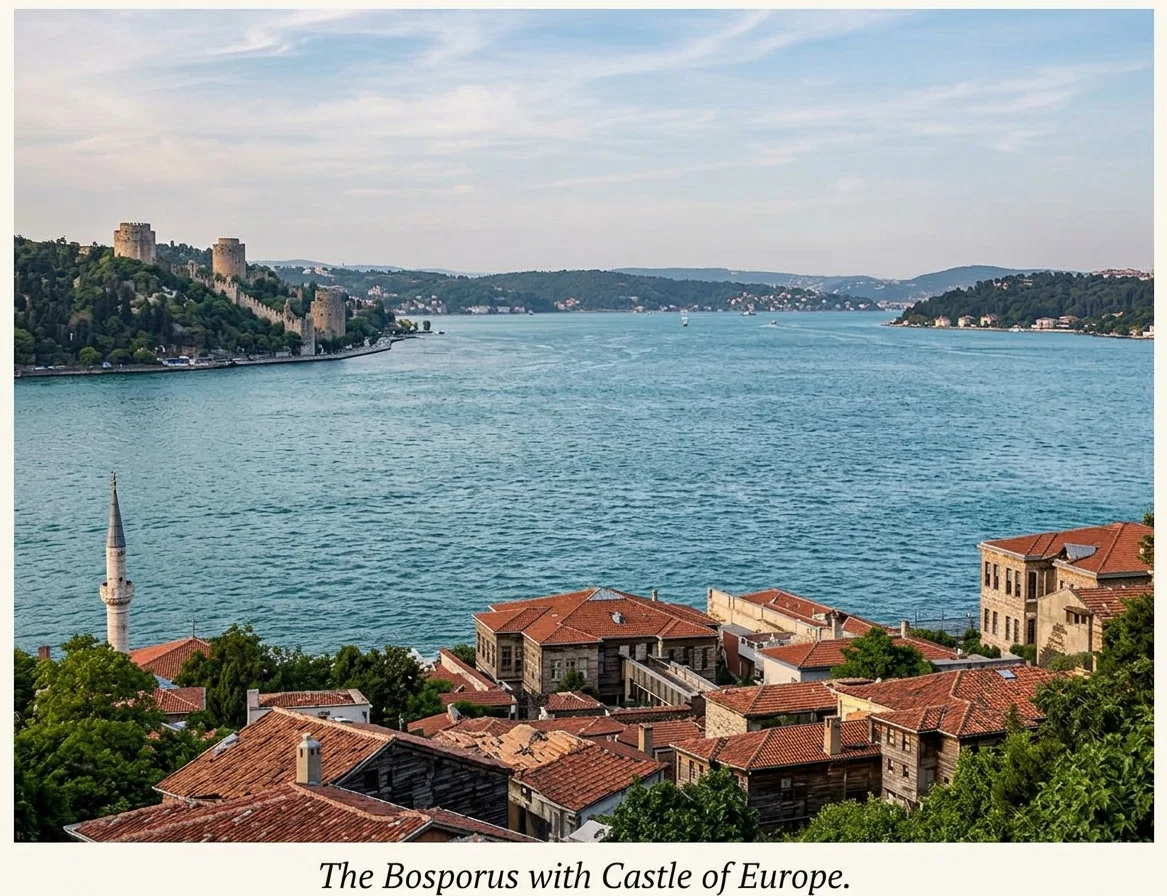
“The restoration of the Ottoman empire constitutes the only efficient means of solving the question of Constantinople and the Bosporus, a question which otherwise promises to bring about a general war, the most ruinous which has ever been witnessed. . . .
“Such is the peril before us, and it is an extremely great and pressing one. . . . It involves no less than a general liquidation in which the whole European polities will be thrown into the furnace, bringing about a new order of things from which all organizations based on injustice and despotism will have disappeared. . . .
“Whatever happens, it will come.
“Unquestionably, it will be accomplished, but how?
“In peace or through war? . . .
“This work can be accomplished peaceably if men will seek wisdom from above. Nothing will be done without the cooperation of a purified Christianity. . . .
“The nations are now called upon to choose their road; . . . a transformation of the world has become unavoidable; it has commenced and will follow its course; nothing can stop it now.
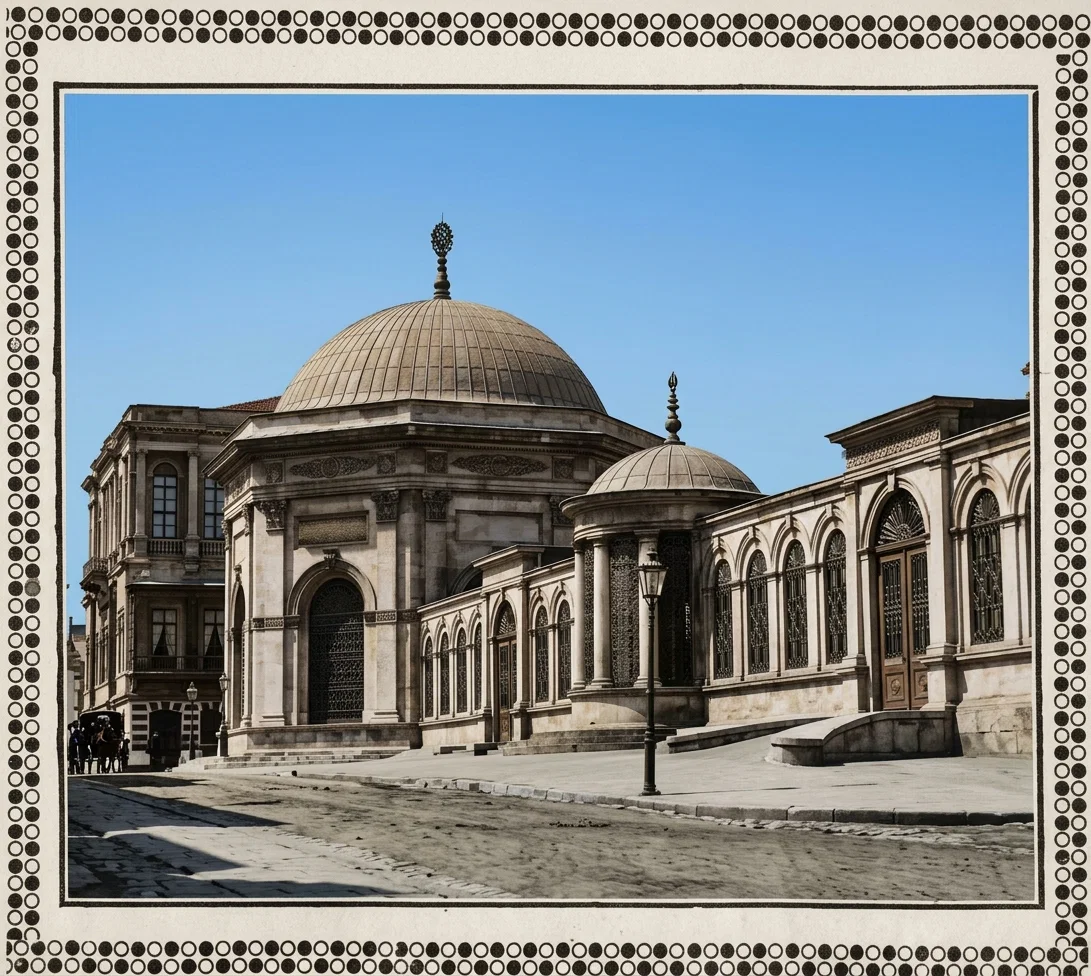
Tomb of the Sultan Mahmoud at Constantinople.
“In peace or through war? Such is the question now before the world, but more particularly before Europe.”