The Near East

4%

Pacific Press Publishing Association · Mountain View, California · Jan 20, 1909

FromSigns of the Times, Vol. 36, No. 3.

Read the full edition

“The Near East”

By Claude D. AcMoody
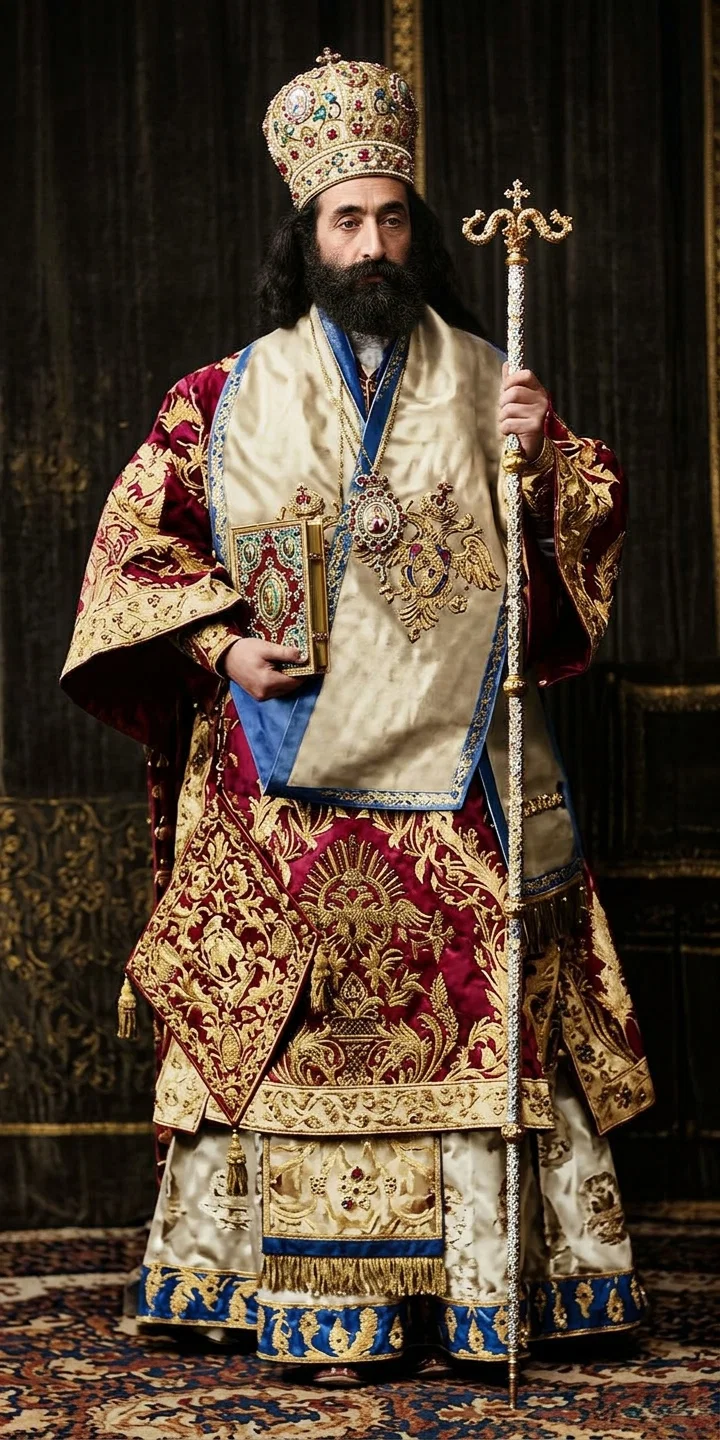
HIS HOLINESS JOACHIM III.
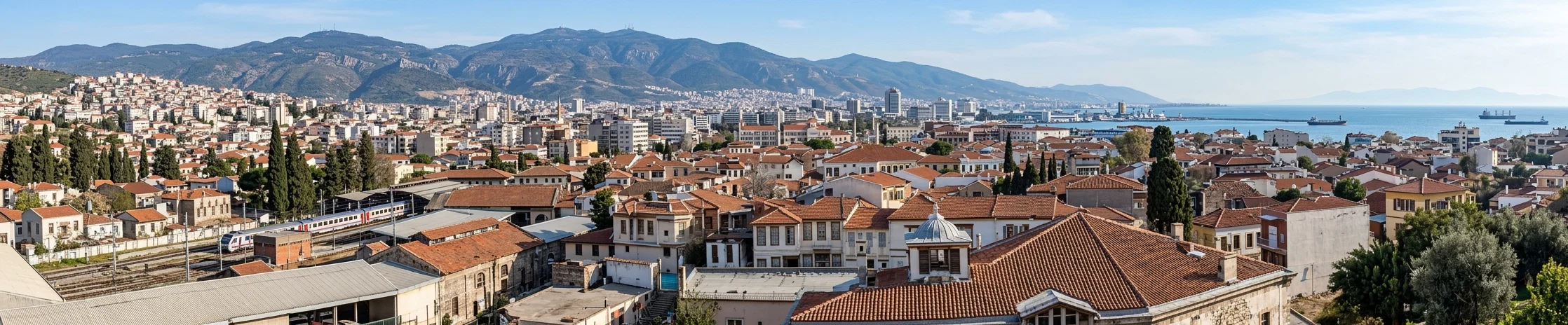
Panorama of Modern Smyrna.
[We regret that this could not have been printed before, but it is of interest now. It throws light upon present problems, shows the unsettled condition of things, and emphasizes the fact that now is the time to work for souls.—EDITOR.]
Since the close of the Russo-Japanese War there has been a renaissance in the Eastern world. The victory of the yellow race over a powerful European nation has awakened China from her millenniums of sleep, and has aroused her to follow the lead of Japan in organizing a form of constitutional government. For several months Persia has been in the throes of a revolution,—the travail occasioned in the effort to bring forth constitutional government. And now, only a month ago, comes the Sultan of Turkey, following in the path of the general awakening, granting a constitution, and calling for the election of a parliament. This is the third Asiatic power—to say nothing of Russia, which, with Turkey, is both a European and an Asiatic power—which has been struggling in the same revolution to establish a constitutional monarchy. The next on the program would seem to be India. The seismic disturbance, originating in the “Land of the Rising Sun,” has shaken a whole “continent from Tokyo to Monastir.”
To just what extent the events in the “Far East” may affect the politics of Europe and the rule of the white race, remains to be worked out in the near future. The “Near East” is the field of greatest political importance just now. Mohammedan government has had the Koran as its constitution and the absolute will of the Calif as the executive, judicial, and legislative functions, all in one. The present departure toward representative government is entirely incompatible with the fundamental principles of Moslem government. The present constitution is not the first attempt at constitutional government, but the Midhat Constitution granted in 1876 was but a fraud, and was drafted for the purpose of side-tracking Europe for the time being.
Ever since the days of Peter the Great, aggression upon Turkey has been a fixed factor in Russian policy. The climax of the first epoch of this policy was reached in the Crimean War. But the articles of the treaty of Paris in 1856 have evidently never been considered as final on the part of Russia. Carefully has she worked up European
public opinion to the belief that another Russo-Turkish war was necessary, so that in 1877 she again burst upon Turkey. European powers watched carefully the progress of things, but with a hand-off policy, until the treaty of San Stephano, signed on March 30, 1878. The stipulations of the
treaty being a patent violation of the articles of the treaty of Paris, the powers demanded that the former be submitted before the signatory powers of the latter for consideration. Russia at first demurred, but finally consented, and a congress was called at Berlin. Russia being thus forced to place her exorbitant demands upon Turkey before the powers, Count Schouvaloff maintained that the treaty of San Stephano was only drafted for the purpose of informing Turkey what plans Russia would formulate before the other powers. Thus did smooth-tongued diplomacy suffice for another temporary settlement of the affairs in the Balkans.
But in the Berlin congress the Bulgarian Empire was born. Since then Russia has been using Bulgaria as a tool to stir up trouble in Macedonia, and to excite war with Turkey, if possible. The same old plea is raised that in the interests of humanity something must be done for the pacification of Macedonia. We have heard much about the activities of Greek bands, of Albanians and Turks in Macedonia. We also hear of Bulgarian bands, but whatever depredations are done by Bulgarians are usually construed as being defensive, that the Greeks, Albanians, or the Turks are to blame for all the trouble. Bulgaria simply plays in the hands of Russia. England also has done all in her power to magnify the virtues of Bulgaria. Bulgaria fears nothing, because she has big guardians of her interests near at hand. Last spring Grand Duke Vladimir made a speech in Sofia in which he gave encouragement to Bulgarian aspirations. This stirred the Komitadjis anew in their campaign in Macedonia. I would state here that the Komitadjis are organized ostensibly for the purpose of protecting Bulgarian interests in Macedonia, but are really being used in the great game of working up trouble in Macedonia, and massacring the Greeks within their borders.
I can do no better in setting forth the real condition of affairs relative to Bulgaria’s propaganda, than to quote Mr. Gregory Natchevitch’s confession when he resigned several months ago from the position of Bulgarian diplomatic agent in Constantinople.
**“I left Constantinople because I was toodeeply ashamed to look the world in the face. . . . I desired Bulgaria to be regarded, throughout the world, as a model of order and tranquillity, a land of liberty and progress, where law is respected, life and property safeguarded to all, without any distinction of race or creed. Read the ‘Vetcherna Patcha’ and you will see what is the idea of Daskaloff and his mighty protector. They dream of nothing but war upon the Greeks, persecution, ruin, and destruction of them on Bulgarian soil. Their instruments are brigandage, sedition, and atrocity. And it is this land of anarchy which is to pose as the savior of Macedonia! We have seen how she is saving it!”**
True it is that nothing can be said in behalf of Turkish administration. It has been corrupt to the core. No one could be trusted. But it must also be admitted that the Christian nations of Europe, and especially Russia through her Bulgarian arms, have only aggravated the difficulties in Macedonia. Since 1840 Turkey has been the “shuttlecock of Europe.” Whenever it is more advantageous for a European power to be at war than at peace, the Eastern Question is always revived in one way or another.
For several months the whole attention of Europe had been directed to the Macedonian question as it has not been since 1878. Plans had been conceived for bringing Macedonia under a governorship, the governor, of course, to be appointed by the powers. King Edward visited the Czar at Reval, and an understanding was reached whereby the foregoing plan was to be put into execution. It is also reported that Germany had “accepted the English note on Macedonia.” Austria was the only power whose decision remained questionable, and then the storm broke in Constantinople, and on July 24 the Sultan granted a constitution and called for the election of a parliament.
This came as a surprise. It came about in this way: For months there had been disaffection in the army in Macedonia, but no particular attention was given to it outside of Turkey. For a long time the Young Turks had been organized and had been working against the old regime of government. A great secret army of them had developed. Suddenly, when the opportune time came, part of the garrison at Monastir left the barracks, and carrying a good store of fire-arms and ammunition, retired to the mountains. Immediately a Turkish pasha was sent from Mitrovitza to quell the revolt, but he was killed immediately. The whole garrison revolted. Another pasha was then sent, and, while reading a severe message from the Sultan, was shot in the presence of 2,000 troops, and not a hand was raised to molest the man who did the firing. It was soon seen that the whole Macedonian army was going over to the Young Turkey Party, and the Sultan could resort to nothing but to grant their requests, and establish a constitutional government.
So far the new regime has things fully in hand. The work of the bands in Macedonia seems to have subsided. Constantinople, though heated to a high degree, is held within bounds. But it remains to be seen whether Turkey can pull herself together, and permanently correct existing evils,—shall I say to the satisfaction of the powers?—No, but so that the powers will have no further excuse for performing humanitarian work for Macedonia. Some other excuse would then have to be found for driving the Turk out of Europe. Necessarily Sir Edward Grey’s plan is nipped for the present. Russia has sent a note to the powers to the effect that she will withhold from interfering in the affairs of the Porte until the new regime has proved whether it is capable of correcting the existing evils or not; but that in the event that it is not able, she shall continue to press her claims with reference to reforms in Macedonia.
This is a most critical moment in the Near East. We almost hold our breath to see which way the scale will tip. Europe is destined to work out her drama of nations in the theater of the “Sick Man.” What will be next? The most unexpected has just come. Will the next act be as unexpected?
Lord Cromer, in a recent speech before the House of Lords, said:
“I would ask, in the present condition of Europe, what is the main duty which devolves upon the government of this country? For my part I have no sort of hesitation in replying to this question, for their main duty is to make provision betimes for the European conflict which might probably be forced upon us before many years have elapsed. It is the duty of the government to provide betimes for that danger of which I, in common, I believe, with most people who can speak with real authority on foreign affairs, am very firmly convinced.”
The European Conflict must come, and Constantinople will be the storm-center. In spite of all the attempts at bringing in universal peace, war, not peace, is the ultimate in the minds of the greatest statesmen. Once Constantinople passes from its present neutral position, and the winds are let loose.
Now is the time for missionary effort in Turkey. The door is thrown open. The new form of government grants equal rights to all religions in the empire. Christian nations, so called, can never bring about the conversion of the Moslem world. They may intrigue against her, they can conquer with the sword, but the powers can not fill the place of the divine power. They can not carry the Christ to the Moslem. Christ never taught us to carry His message with the sword of steel. Only the true missionary can be the agent of real reform to the inhabitants of Turkey.
Now is the time for the Christian world to bestir itself. Not as nations; for they are astir, but as Christians,—citizens of the commonwealth of heaven. Christ has defined the last act in the drama of nations,—His kingdom will be established.
Christian, watch, work, pray, and look for the “Coming King.”
Bagtchedjik, Asia Minor, Sept. 4, 1908.
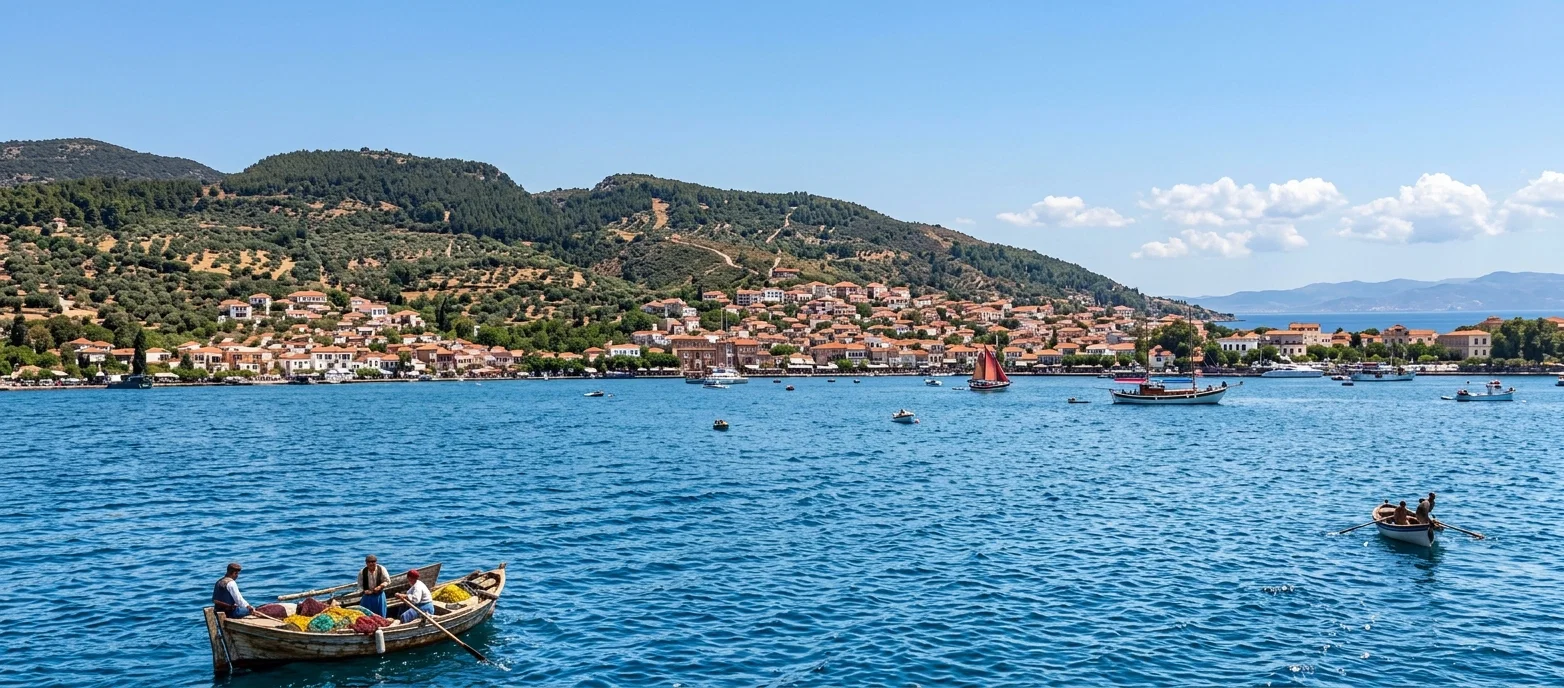
Panorama of Modern Mytilene.