IDOL-WORSHIP IN CHINA

7%

Pacific Press Publishing Company · Oakland, California · Jul 27, 1904

FromSigns of the Times, Vol. 30, No. 30.

Read the full edition

IDOL-WORSHIP IN CHINA.

BY MAUD A. MILLER, M.D.
The study of the Chinese language is so difficult that one will never gain the mastery over it, except by continual work. So most of our time is spent at this task. We expect that within a year from the time that we came here we will be able to teach the Gospel in the Chinese tongue. This we are very anxious to do; for as we look upon this land with its 426,000,000 of heathen, who know not God, but when they desire good things, bow down and worship their idol of brass, wood, or stone, we feel the great responsibility laid upon us. In this city I saw one idol of gold.
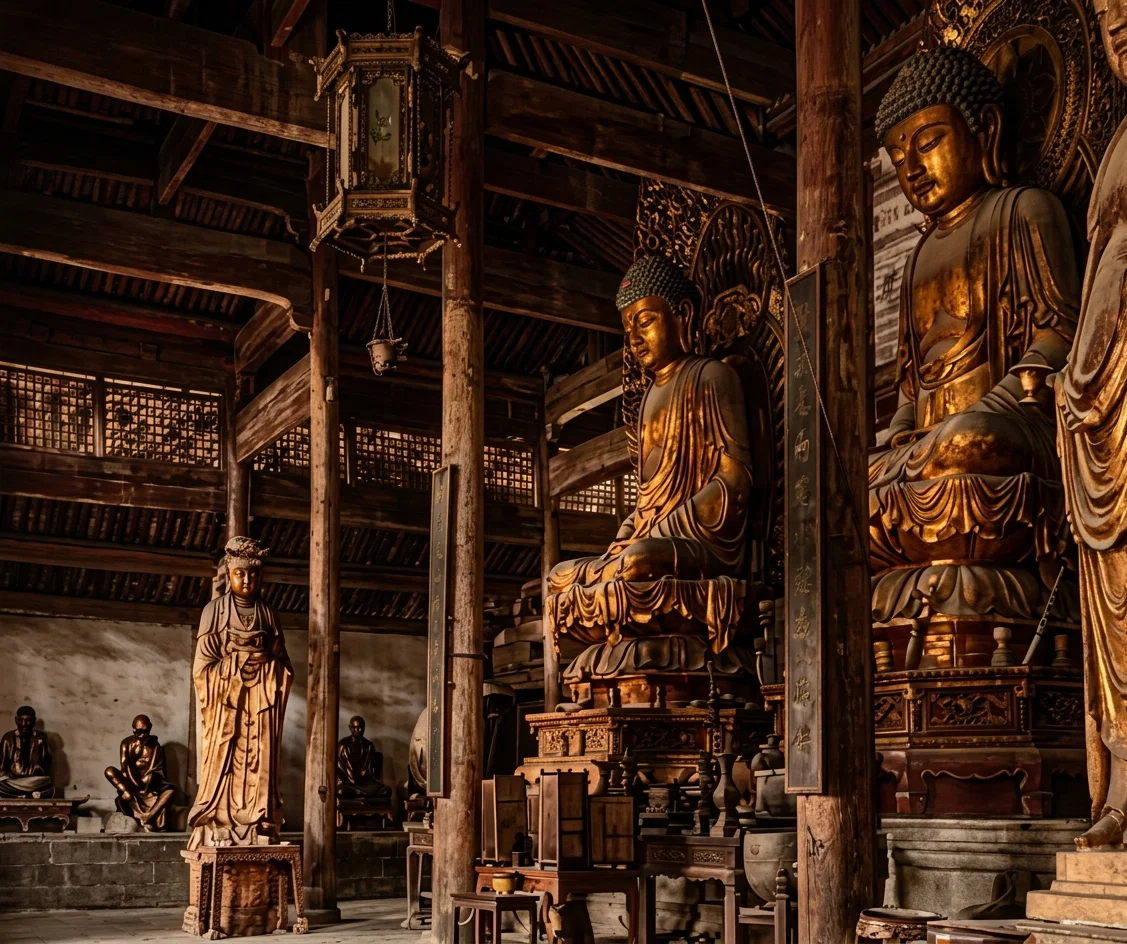
The other day I visited the Buddhist temple in which they have many gods. The priests received us very friendly and allowed us to see all the different gods, a favor which they seldom grant visitors. On our way to the temple we were followed by a long procession of Chinese, so by the time we reached the temple there were at least two hundred spectators, who were anxiously expecting to see foreigners worship their gods; but they were disappointed, for, as they closed around to look at us, and particularly at the ladies’ large feet, we were busily occupied looking at their hideous gods. Some have countenances so terrible that even a believer in the true God shudders to look upon them. Some are patterned after their idea of the great and terrible dragon, while others have their bodies covered with fish scales, a heavy armor, or many heads placed in all parts of its body.
In one place there stood a god, in front of the others, bearing on his arm a large number of ear tabs; these were to keep the ears of their dead ancestors from getting cold. Another god had many eyes which were also for the use of these same people who needed them. The Chinese, as a rule, have bad eyes, and many are blind, so these are provided for by these gods. In this they acknowledge the weakness of their gods, as they know them to have no creative power, but they hold in store that which they need after they die, and will at that time give what has been placed in their keeping.
Some of the gods have great iron spears, and others fierce-looking weapons; while others are in an attitude of a king or queen wearing stately robes, and having a good-natured look upon their faces. In this section of the temple there were ninety-four gods; other rooms had many more gods.
We now took our departure from this temple and visited another only a short distance from our home. Here we saw many more hideous idols in the form of different animals, some being quite large. In the room were great drums and large bells. The room was filled with incense, most of it burning in front of the large idols, where were boxes of ashes accumulated as the result of combustion of large quantities of incense. The Chinese seem to have no respect whatever for these gods, as they crowded around us in the temple to see us, with no sense of reverence whatever. I am sure they would respect the true God, if they only knew about Him, much more than these idols.
Interior of a Chinese Temple.
We passed out of this room into a courtyard, which was limited on either side by great long stables of idols, which made me think of the animal exhibits at the county fairs. Each room contained ninety idols. The number of idols counted in both temples were over five hundred. The worshipers bow down in front of the idols and eat, asking for good things in this present life.
They will often place one or more idols in a sedan chair and carry them through the streets with a great deal of pomp and glory; and they also carry long sticks of incense in the form of a coil, which are fastened to the flesh of the forearm by an old rusty hook thrust through the skin. A little over a week ago there were at least one thousand people that endured this inhuman torture, and marched the entire day through the city, carrying the incense by means of this hook in the skin. This worship was for the purpose of bringing down rain, as we had had dry weather for five months and the crops were perishing.
Yesterday was the day to worship Adam, the first man, and also Noah. They carried Noah’s three sons to bow before him. They worship these gods in order that they may have abundance of food, money, and goodness.
They have gods for everything: gods to bring rain and gods to stop rain. We have now had six days of hard rain, so the people are worshiping the god to stop rain. They carry the gods to each of the four gates of the city, and after the god has been carried out through the gate, he is then brought back into the city face backwards so he will not bring rain back in the city again.
They have gods to stop the thunder, to keep away evil spirits, to grant them a safe journey, to bear them male children, etc. The most common one is for righteousness. They go before this god and burn paper, and no difference what they have done, this god clears their case.
In every home is a kitchen god which they worship daily during the year. At New Year’s time they put sweetmeats on its lips, and all over it, then they burn it, believing that as it ascends to their ancestors it will only have sweet things to tell us.
I often feel that if the people in the home could only realize the extent of heathen work, it would certainly arouse them to hasten the glad tidings to the heathen. It seems a shame that a million a month of idol worshipers should go to the grave without a knowledge of the Savior. God places human agents under obligations to do their best. Bring this question to yourself. Does it lie in my sphere to do something for China’s millions? Pray for us.—Welcome Visitor.