Our General Conference Committee, after a careful review of the work in many lands, and the necessities and opportunities in many fields, has requested all our people to contribute liberally, July 7, to the support of our missionary enterprises in Australasia.
It will be of interest to those who have made gifts to the Australasian field, and to those who are now asked, for the first time, to contribute of their means to this work, to know what has been accomplished by the financial assistance rendered to the Australasian work in past years.
From their earliest experiences the Australian and New Zealand Conferences have made a brave effort to be self-supporting, and to take the message of present truth to the vast, unworked portions of their territory. The records of the tithes and offerings they have paid in seasons of great adversity, as well as in times of prosperity, stand as a worthy example to our brethren in other lands.
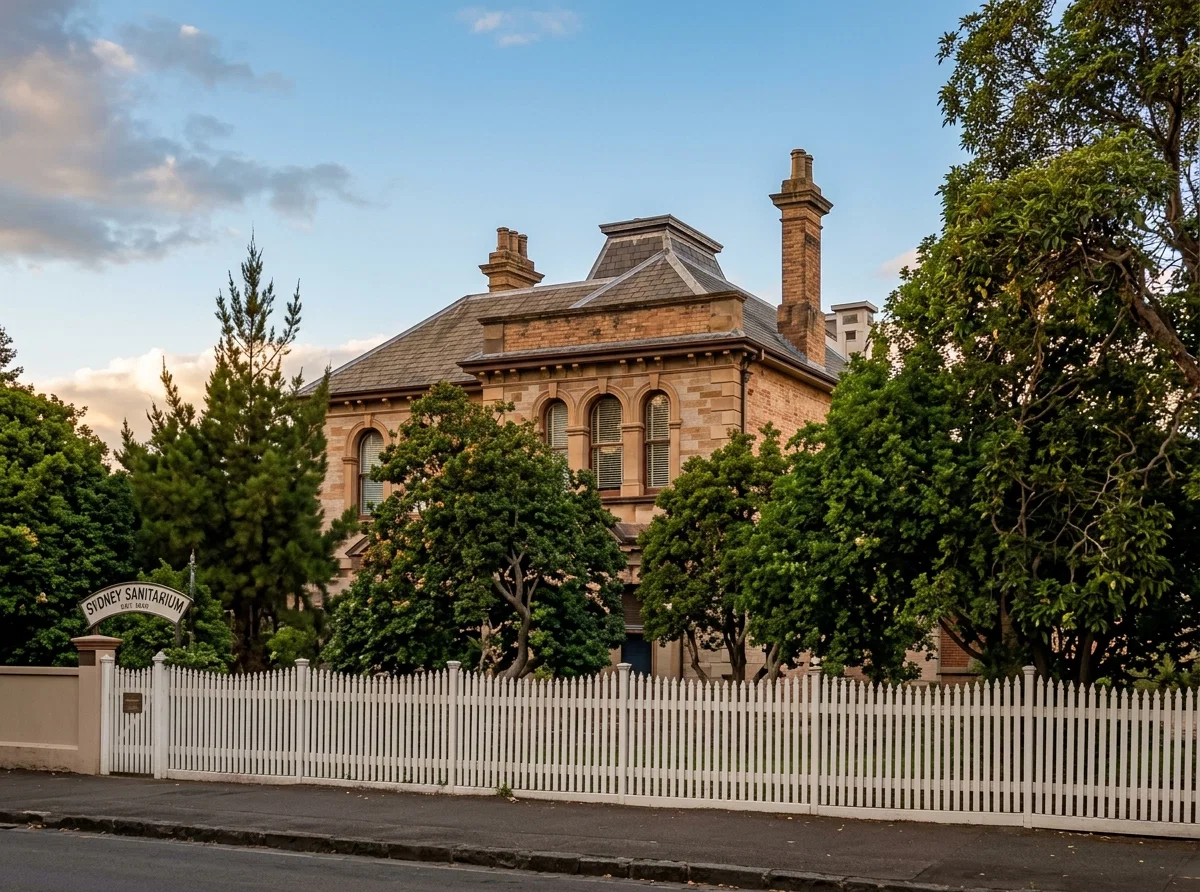
The conditions of the field threw upon the workers in Australasia extraordinary responsibilities. It was found necessary to establish a publishing house, a training-school for Christian workers, also to build meeting-houses in many places, and later, to establish sanitariums, hydriatic treatment rooms, and a health food business.
The need for these institutions, and the fact that the adherents of the cause were but few in each colony (about 500 in all when the Echo Publishing Company was organized, 1,200 when the Avondale School was started, and not more than 2,000 when the sanitarium building was begun) appealed strongly to our people in America, Africa, and Europe, and they have contributed freely for the building of churches, and the planting of necessary institutions in Australasia.
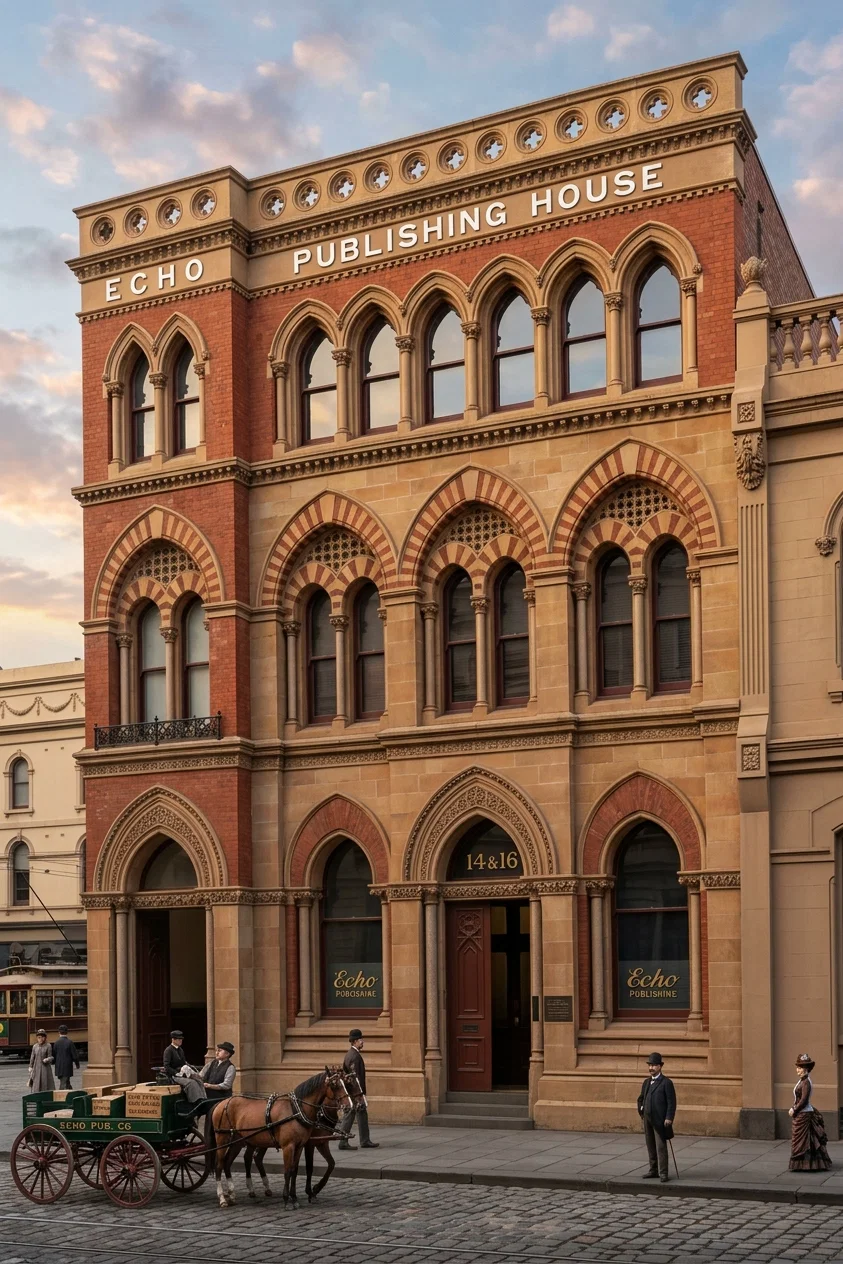
Office of Echo Publishing Company.
This brief review is written that our friends may know that the contributions have been wisely used.
The Echo Publishing Company.
Six months after their arrival in Melbourne, in 1886, Pastors Haskell, Corliss, and Israel laid the foundation of our publishing work in the southern hemisphere, by the issue of The Bible Echo and Signs of the Times, a sixteen-page, monthly journal. For this work a building was erected in North Fitzroy.
During 1886, 1887, and 1888 the blessing of the Lord attended the workers and the work. As the message was given by the ministers, churches were raised up. The Bible Echo was widely circulated, and books were freely sold by consecrated canvassers. The growth of the publishing work demanded more room and better facilities for printing. In April, 1889, the Echo Publishing Company Limited was incorporated, and the erection of buildings begun on Best Street, North Fitzroy, a suburb of Melbourne.
In 1891 an effort was made to begin the publication of our smaller books. “Steps to Christ” was the first book issued by the company. Then followed “Coming King,” “Christ Our Saviour,” “A Friend in the Kitchen,” “The House We Live in,” and “Desire of Ages.” Step by step the work of the Echo Publishing Company has been developed until the institution is in a position to print the greater part of the subscription books sold in Australasia.
Notwithstanding higher prices, fewer workers, smaller and more scattered population, and harder times, our Australasian brethren have sold more books proportionately than any other field. During the past thirteen years $725,000 worth at retail value have been sold, and $13,000 have been donated in various ways. Despite the disasters which have befallen Australia, loss has been recorded but once in ten years. The Echo office is one of the best equipped in the Southern Hemisphere. Value of business last year was $95,000; 90 persons are employed, and the profits were larger than any previous year. Present net worth, $25,000.
Sanitarium and Medical Missionary Work.
Through the action of the biennial session of the Australasian Union Conference, in 1896, which convened in Melbourne, the “Health Home” was opened in Sydney. About two years later Dr. E. R. Caro took charge of the “Health Home,” afterward known as the “Summer Hill Sanitarium.” The organization of an Australasian Medical Missionary and Benevolent Association was effected.
For lack of means nothing worthy of mention was, for a long time, done by way of increasing the facilities, and only very limited additions were made to the furnishings. In 1899 the matter of more suitable accommodations for the sanitarium work was earnestly considered, and, in view of the encouraging prospect for means, a committee was appointed on location for a sanitarium and plans for the same. Earnest appeals to this end were made by Mrs. E. G. White, whose time and means were freely given for this purpose. After a meeting, in which an earnest appeal was made, the Spirit of the Lord moved all hearts present, and $4,500 were subscribed. The work of building progressed slowly. Mrs. White wrote:—
All our buildings were erected upon the most strictly economical plan. I do not see how we could have put up the buildings with more economy. (Aug. 12, 1900.)
The building of the sanitarium is the will of God. The work is His work, and we greatly desire that sufficient means shall come in to complete the building. (Oct. 16, 1900.)
Jan. 31, 1901, Mrs. White again said:—
Our brethren have selected a site for our new sanitarium. It is about thirteen miles from Sydney, and is in an excellent, healthful location. The altitude is about six hundred feet, and the place receives the cool, life-giving breeze from the sea. Thus, while in the low-lying towns the atmosphere is impure, hot, and oppressive; here it is pure, cool, and refreshing. Excellent roads and beautiful, picturesque scenery afford opportunity for pleasant drives. Freedom from the dust and the smoke, the din and the confusion of the city, will be most grateful to the brain-weary and the sick.
It was not God’s purpose that people should be crowded into cities, huddled together in terraces and tenements. In the beginning He placed our first parents in a garden, amidst the beautiful sights and sounds of nature, and these sights and sounds He desires men to rejoice in to-day. The more nearly we can come into harmony with God’s original plan, the more favorable will be our position for the recovery and preservation of health.
Our retired location will offer comparative freedom from many of the temptations of city life. Here are no liquor-selling hotels or dram-shops on every corner to tempt the unfortunate victim of intemperance. And the pure sights and sounds, the clear, invigorating air, and the sense of God’s presence pervading all nature, tend to uplift the mind, to soften the heart, and to strengthen the will to resist temptation.
While affording the benefits of country life, our sanitarium will be sufficiently near Sydney to secure the advantages of connection with the city. There are two railway lines leading into Sydney. The stations are about twenty minutes’ drive from the sanitarium farm, and trains run almost hourly into the city. Five or six little villages, within a few miles of our site, are fast filling up with the residences of business men from the city. This district seems destined to be the most desirable of all the suburbs of Sydney. Not a person who has seen our location of land has one word of criticism to offer. All are surprised13that we have purchased it so cheap. We are sure that it possesses advantages above any other place we have seen.
Through necessity the Summer Hill Sanitarium was at last closed, and the new building, by donation and sacrifice, was completed sufficiently to be opened Jan. 1, 1903. The buildings, and grounds of 80 acres, have cost, to date, $70,000. Of this $30,000 have been paid; $40,000 still stands against the institution, and urgent help is needed. Three thousand dollars are needed to properly equip the building. Here is room for those who have means to exercise large-hearted generosity. It will pay. The workers there are sacrificing much; can not our readers help them?
Educational Work.
Another important institution is Avondale Industrial School. Work on this began in 1895. A site was purchased, the swamp portion of it drained, land was cleared, buildings erected, and much of this done by student labor. In the first term of thirty weeks a thirty-acre swamp was drained, ten acres of heavily timbered land was cleared, ploughed, and prepared for orchard, and one thousand choice fruit trees planted. Several months passed without material progress. The unjust and unfavorable termination of an unnecessary lawsuit into which the managers were dragged by the hasty action of their solicitor, in beginning action before consulting them, had thrown a discouragement over the work. Promised funds came in very slowly, and it was with some difficulty that a saw-mill was equipped, and timber prepared for the first building. Yet, during the winter of 1896, a night school was held in the room over the saw-mill, in which some good work was done.
October 25, 1896, at 5.30 P.M. a little company gathered at the site of the Young Ladies’ Home, and Mrs. E. G. White laid the first brick of the foundation of the first school building. This building is 65 x 36 feet, two stories high and accommodates thirty-six day students and teachers. The dining-hall, 30 x 26 feet, two stories high, was erected at the same time. In these two buildings school was opened April 28, 1897.
During the next vacation, the Young Men’s Home was built, and was ready for use at the opening of the second school year, which began March 6, 1898. This building is 62 x 36 feet, two and a half stories high, and accommodates fifty-six young men and teachers.
A bakery, a laundry, and a carpenter’s shop have also been built, and a neat seven-roomed cottage for the principal.
A health food factory and sanitarium are connected with the school. It has grown and prospered. The situation has more than justified its selection (condemned by many at the time) by Mrs. White. After the fearful drought of years Avondale is about the only green portion in all that section of the island. Beautiful crops have been raised, a most earnest missionary spirit pervades the school, and excellent work is being done in mental, industrial, physical, and moral training.
In view of all these things,—the needs of these various institutions, the needs of the great field, the weakness and poverty of our self-sacrificing brethren in the hard times through which so much of Australia has passed,—appeal is made to our friends to help. Funds may be sent to Foreign Mission Board, 267 West Main Street, Battle Creek, Mich., or to this office, if desired, and we will forward.