Since the work was opened in Brazil five years ago in the State of Santa Catarina, the small company of persons who decided to keep the commandments of God and the faith of Jesus has increased to over 700. It is not my object to report for the different churches in Brazil, but to give a brief report of the development of our church and school in Curityba.
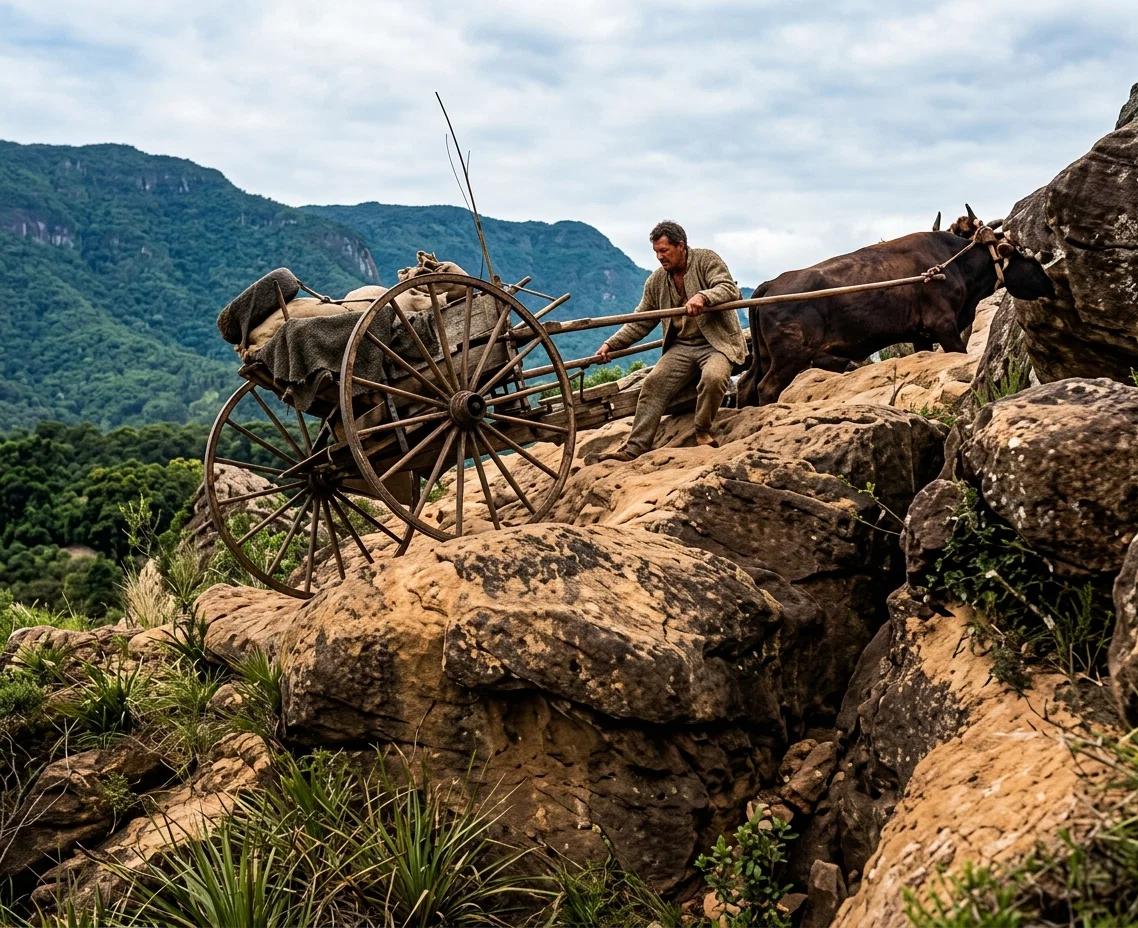
No. 3. Difficult Piece of Brazilian Highway.
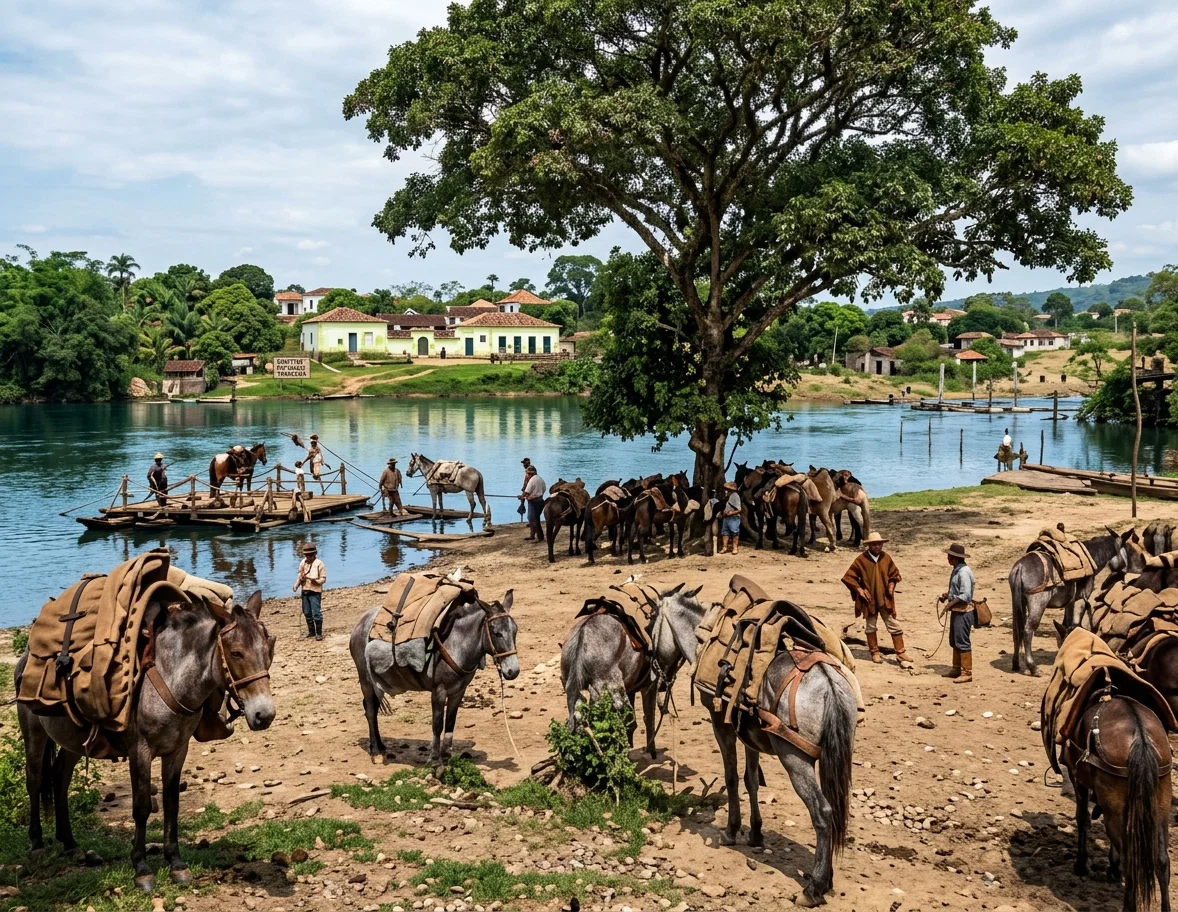
No. 5. At a Brazilian Ferry.
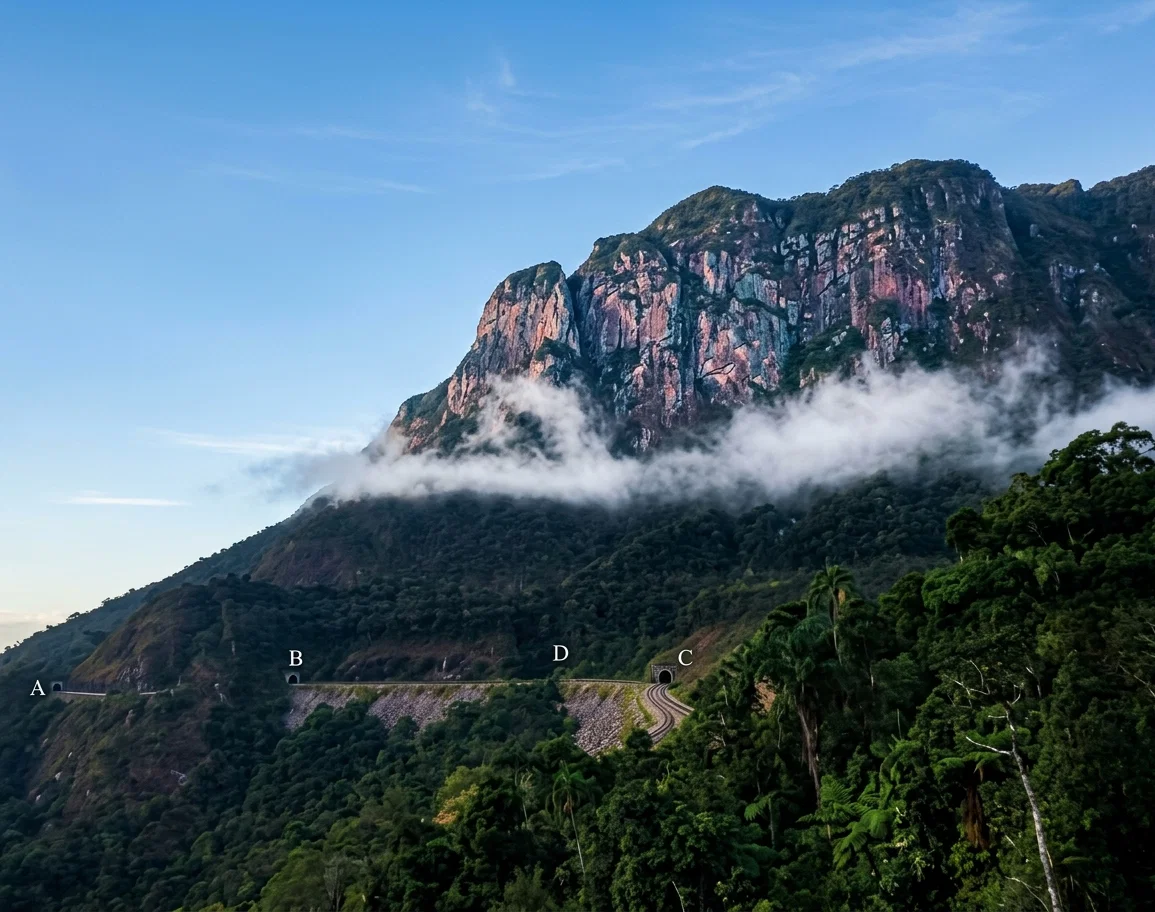
No. 1. Where the Railway Runs in Brazilian Mountains.
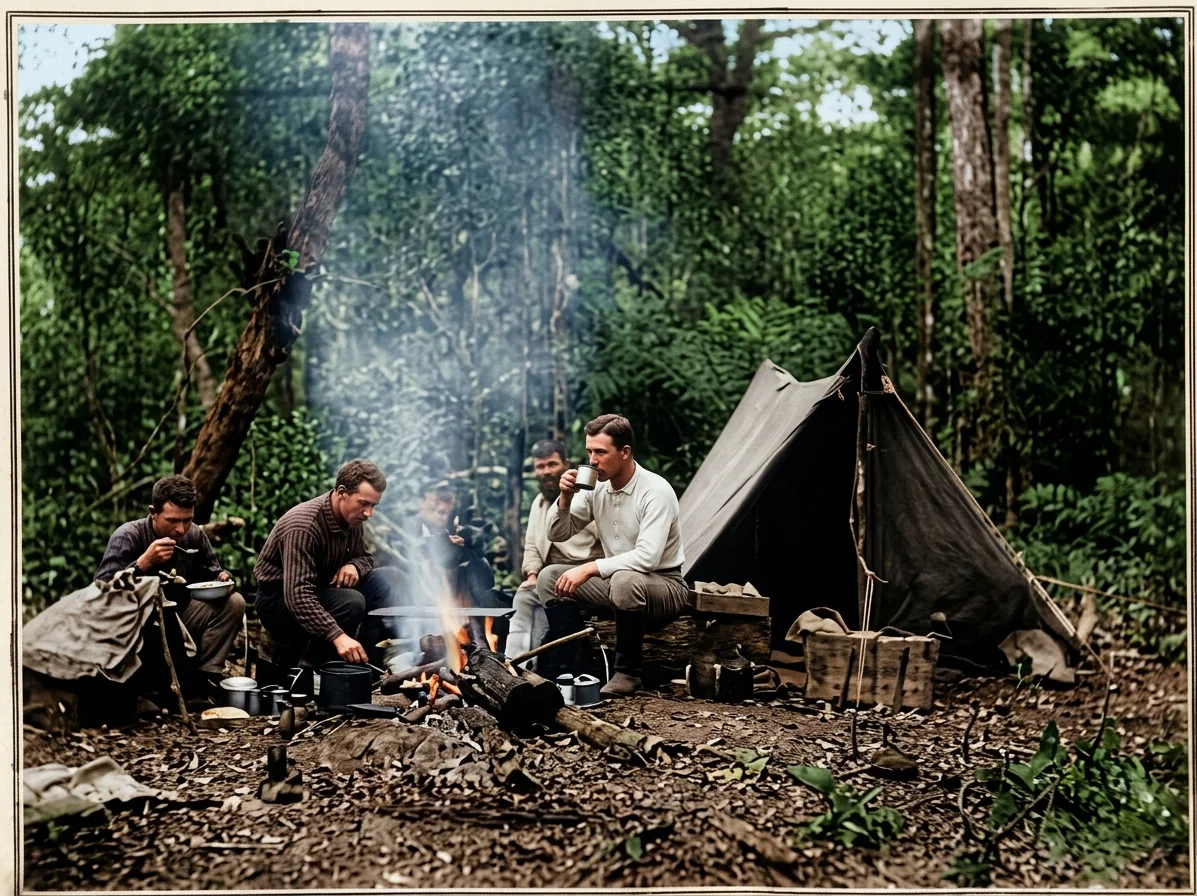
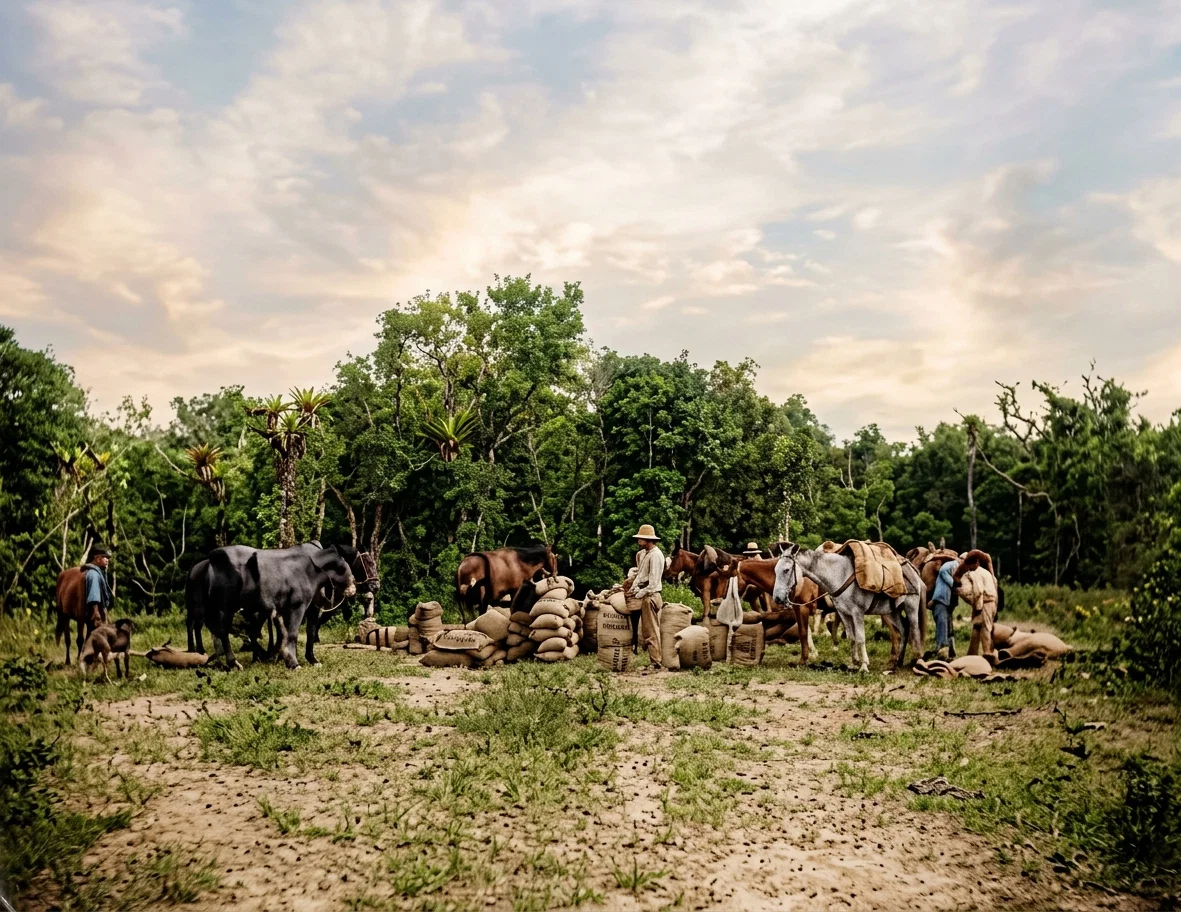
No. 6. Midday Meal in Brazilian Forest.
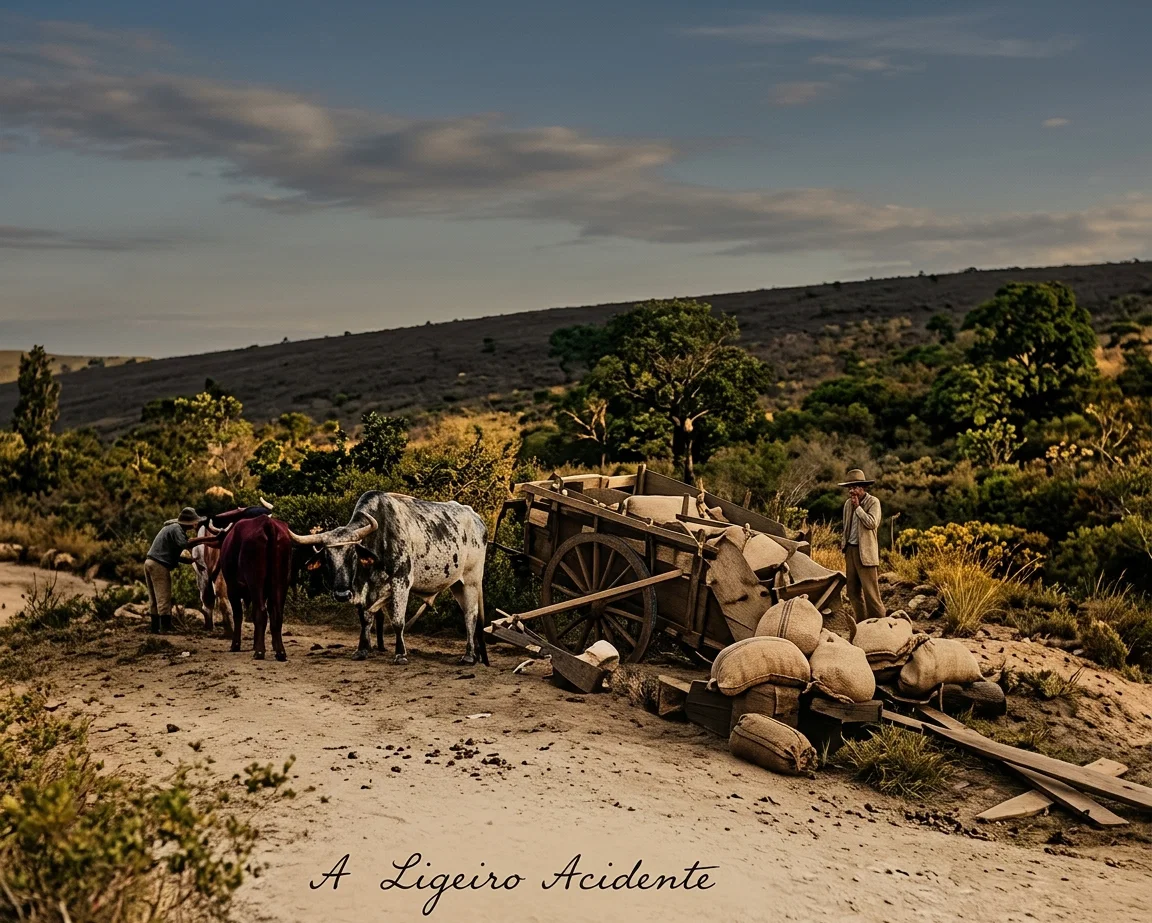
No. 4. A Slight Accident.
In order better to comprehend what is to follow, I will make a brief statement in regard to the customs of the people in the State of Parana.
When forming a Republic in 1888, Brazil followed the example of North America, and at that time organized itself into twenty federal States. Parana, with Curityba as its capital, belongs to the three southern States of this country, and is renowned for its healthful high altitude and climatic advantages above all other States in Brazil. In the lowlands along the coast which covers only a small area, the heat of the tropical sun is almost unbearable. In order to reach Curityba from the coast one must ascend through a wild, mountainous country; the highest point reaching about 6,360 feet above the sea. (See Picture No. 1.) A truly picturesque trail leads around this mountain; and with the high peaks on one side and the deep ravines on the other, one has an enchanting view of the mighty, creative works of God. (See Picture No. 2.) A constant change of this beautiful scenery rolls before our eyes as one grand, continuous panorama.
On Picture No. 1, A, B, C, represents some of the tunnels of which there are 17 to pass through in a short time. The somewhat irregular line marks the tracks of the railroad. D represents an immense curve, after which the train disappears in a long tunnel, as marked by C. It would not be just, however, to conclude that Brazil, as a country, is well supplied with transportation facilities. In proportion to the area which it covers, there are very few railroads, and the methods used for transportation make it very difficult to travel through the country.
Picture No. 3 represents some of the difficulties which a traveler in Brazil must meet, and it often occurs that a driver is forced to draw his vehicle over the rocks and stony hills himself. The horses have to be unharnessed and led over the dangerous places. Four-wheeled vehicles have to be taken apart and carried in pieces over these impassable portions of Brazilian highways. From this one can form a vague idea of the difficulties which the traveler in Brazil often encounters.
After reaching the summit one finds himself on a wide level stretch of country, 2,900 feet above sea level. This plateau forms the prairie of Parana, and its pastures make it well adapted to the raising of cattle. (See Picture No. 4.) Thousands of horses and cattle live on these prairies. Large and small clusters of trees artistically arranged by nature, greet the traveler’s eye and welcome him to rest. (See Pictures Nos. 5 and 6.) Even these endless prairies preach the wisdom of God and bear witness to His watch-care everywhere over the works of His creation.
The roads compare favorably with the conveyances used. Large two-wheeled carts drawn by from four to sixteen oxen, according to the size of the cart, move along at small pace with loud squeaking wheels that can be heard a mile away. The driver accompanies his team alongside on horseback and is armed with long bamboo sticks which he applies from time to time to remind the oxen that it is not yet time to go to sleep.
One does not lose his paciencia (which means the Brazilian stolid patience) when through little or greater interruptions the journey is considerably prolonged through some such cause as shown in Picture No. 4, or when one spends hours with the mules (which take the place in Brazil of the camel in the deserts of Asia and Africa) when crossing a river or stream, which intercepts the path of the traveler. (See Picture No. 5.)
The climate in the higher altitude is raw and cold when compared with that of the lowlands and is therefore more agreeable to the European emigrant. In the winter months, June and July, the thermometer sometimes drops to 21° Fahrenheit. At such times one willingly dons warm, woolen clothing and the stove is much appreciated.
The most primitive methods are used in farming, and the chief products are corn, rye, potatoes and black beans. The latter are prepared with flour made from the roots of manioc and this is called the national dish of Brazil.
So far wheat-growing has not been a success, as there are many birds here and they often destroy the entire crop.
On the mountains in Parana grows the tall maté tree, from which the Paraguay tea is obtained. The dark, shiny leaves together with the smaller branches are dried in the woods before an open fire, which gives it the smoky flavor, after which it is ground up and the dry powder put in colored bottles. When wanted for drink, hot water is poured over it and it is sipped through a silver tube, which has a fine strainer at the bottom. The bottle is then passed from mouth to mouth, as the Brazilians seem to be devoid of any sense of propriety in this respect. This tea is the most popular drink in all South America.
They use a great deal of tobacco, especially among the lower classes, where men, women, and children are addicted to the habit.
Of the fruits, peaches and grapes are the most abundant. Oranges do not thrive well in the highlands and are quite sour.
The city of Curityba has a population of between 30,000 and 50,000. It is impossible to obtain a correct census with the deficient methods used. All possible nationalities are represented. There are between five and six thousand Germans.
In the year 1896, Brother Graf began to preach the truths of the Bible, but only a few accepted the message. The desire to become rich, and the pleasures of this world made many indifferent to the Word of God. It was purely a work of faith when Brother Graf in June 1896, by request of the pastor of the Evangelical State Church, opened the International School with eight children. Brother W. Stein was the only teacher for a time, tho the attendance had increased by December to forty-five. At the beginning of the new school year, this number was doubled. It is only by the help of the Almighty that our school has developed until it is considered the best school in the city. Altho we may appear as only a nutshell on the stormy sea of life, He is with us, and the winds and the waves obey His voice.
In the year 1897, by request of Brother Graf, I took the supervision of the school, with my wife as assistant. In August 1898, Brother Waldermire Ehlen from Hamburg came to our assistance, and our son, aged twenty years, is also one of the assistant teachers. An instructor in the Portuguese language has also been added to our corps of teachers.13
The constant growth of our work, and the public sentiment in our favor, aroused the jealousy of the pastor of the Evangelical Church, the successor to the one who encouraged the enterprise in the beginning. He received no encouragement or sympathy in his opposition, and many scorned him. In order to accomplish his plans, he organized an Evangelical school. His church, however, opposed this; but as he insisted on carrying out his purpose, he was finally released as pastor of the church, and had to leave Curityba. We see in the outcome of this the overruling hand of God. We do not always understand why the Lord uses such means to advance His work; but His deeds are wonderful and His name is glorious. To Him be all the praise.
No. 7. Resting at the Edge of a Forest.
An interesting incident occurred last year, when Brother Graf visited Curityba and through the pupils invited the parents to attend our meetings. A large number attended, and as a result, six parents of our students were baptized.
Brother Graf has spent some time in Curityba and has put forth a renewed effort in the State of Parana. In a short time four decided to follow the Lord. Our church numbers at the present time fifty members, and there are a number who are interested, and the prospects for a good work are encouraging.
At the Bible classes conducted for the children on Sabbath morning from 9:00 until 10:30 the average attendance has been about seventy. May the seed sown spring up to the honor and glory of God, and may we be ready when the Lord comes to enter with Him into His glorious kingdom.