(All titles of ministers are omitted in these notes, as nearly all mentioned are ministers.)
THE thirty-fifth session of the Seventh-day Adventist General Conference has entered upon its work in the appointed place, Oakland, Cal. From all parts of the great, needy, hungry field men and women have come to counsel in reference to the forwarding of the work of God. In their presence here, as in their presence there, we hear the power-giving command of Christ encircling the earth through the cycles of more than eighteen centuries: “Go ye into all the world, and preach the Gospel to every creature.” Those were living words, energizing words, and nothing has yet been diminished of either their life or power. Because He spoke them, these men and women are here to plan for that work which He bade His people do. The ring of God’s last great, warning, saving message is heard in the voices, and the purpose of the everlasting Gospel is seen in the faces, of these earnest, devoted workers who have been chosen to deliberate at this convention. But it is not confined to those elected as delegates. We hear it and see it in those who, undesignated as delegates, have come to hear and to see what God has in view for His people at this time; and of these there are several hundred in addition to the delegates.
THE Oakland church of Seventh-day Adventists has thrown open the doors of its homes to welcome the delegates and friends that have come to us, in so far as their abilities permit, and a blessing has come to those who have made a privilege of this burden. To them it has thus been no burden, but rather a lifting power, strengthening their own hearts.
THE first public meeting of the conference was held Friday afternoon, with A. G. Daniells, chairman of the General Conference Committee, presiding. The first hymn sung struck a note that is still resounding in the meetings of the conference, “O Worship the King.” J. N. Loughborough read the Scripture lesson from 2 Chron. 20:1–25, and G. A. Irwin offered prayer. Before throwing the conference open to business, W. T. Knox, president of the Pacific Union Conference, extended a hearty welcome to the delegates and friends on behalf of the Union Conference, the California Conference, and the Oakland church, and C. H. Jones extended an invitation to all to visit the Pacific Press Publishing Company’s plant and see how the work of the institution was carried on.
THE list of delegates showed 134 appointments, and of these 124 have arrived, without mishap, and in the full expectancy of glorious and refreshing seasons.
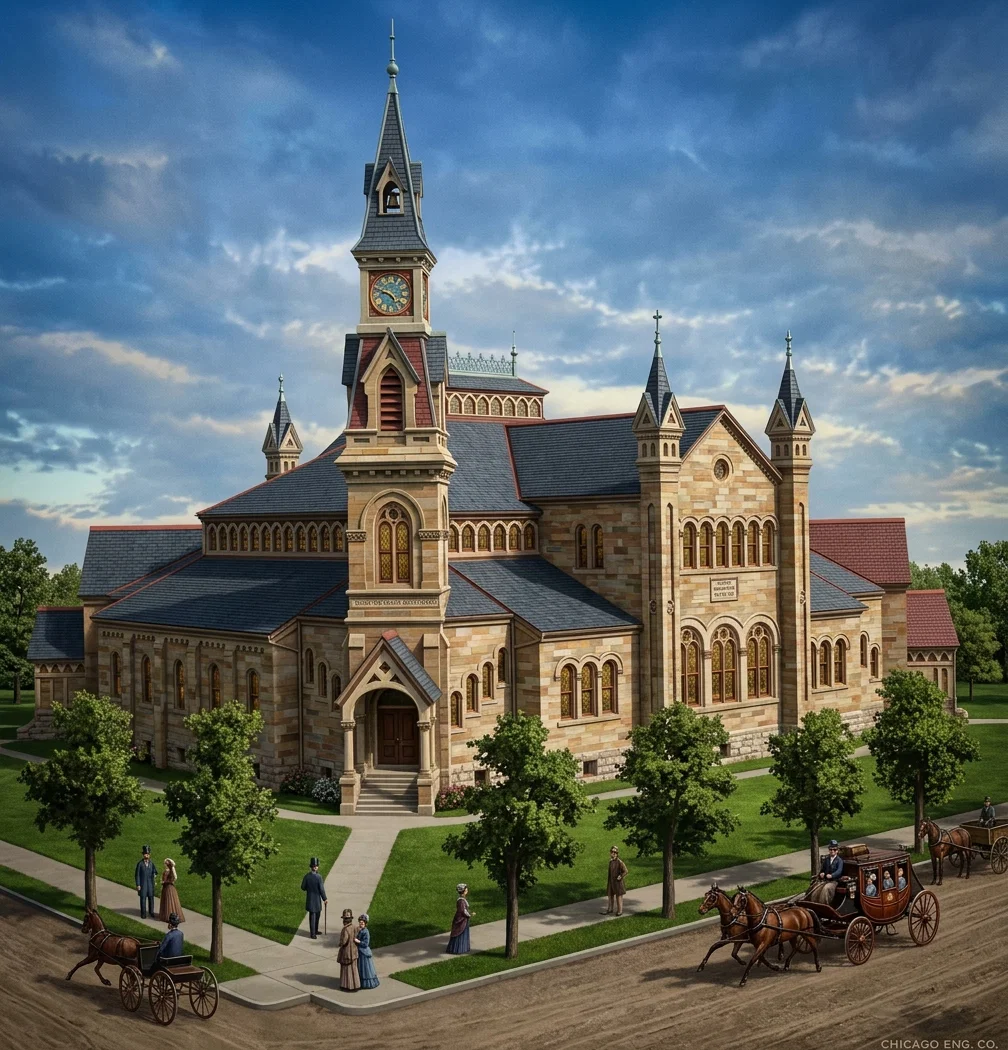
Building in which the last General Conference was held, The Tabernacle, Battle Creek, Mich. Seating capacity 3,500.
Building in which the first General Conference of Seventh-day Adventists was held, May 20, 1863, at Battle Creek, Mich.
THE first business of the conference was the vote to receive into the General Conference formally the various Union Conferences concerning which such action had not yet been taken. These included fourteen Union Conferences, eight mission fields, and three State Conferences. Brother Conradi stated that three Union Conferences had been organized in Europe, and Brother Spicer made application for the four new conferences recently organized in the West Indies and South America. As an indication of the oneness of the people who accept the Third Angel’s Message, W. A. Spicer, Foreign Mission Secretary, stated that on his recent trip through the West Indies and South America, he found the believers strong in the truth, which they seemed to appreciate as deeply as we do, and standing heartily with us in the march toward the kingdom of God. The hearty vote which was given on the reception of these new conferences showed still further the common love for the common cause.
AFTER this matter of business was arranged, it was voted that the time from Friday evening to Sunday evening be devoted to the presentation of the subjects of the message, the field, and the finishing of this work committed to us. Upon other days the time from 8 to 9 is devoted to social worship or instruction; from 9:30 to 11:30 A.M., and from 3 to 5 P.M. the time will be devoted to conference business.
AT this first meeting of the conference twenty-five persons were chosen from the floor, to act with the presidents of Union Conferences as a committee of counsel, and to appoint the various standing committees.
ON Friday evening the first sermon of the conference was preached by Prof. W. W. Prescott, the subject of the discourse being, “The Time and the Work.” The following scriptures formed the basis of his remarks: “One calleth unto me, Watchman, what of the night?” “And I saw another angel flying in mid heaven . . . and he saith with a great voice, Fear God, and give Him glory; for the hour of His judgment is come.” “And I looked, and behold a white cloud; and upon the cloud one sat like unto the Son of Man, having on His head a golden crown, and in His hand a sharp sickle.” The burden of the discourse was God’s last message to the world in this generation; the removal of hindrances to the progress of the work; and the enduement of the Holy Spirit. The sermon in brief was as follows:—
When the voice asks, “Watchman, what hour of the night?” it is time for him to take up the words for this hour and say: “The hour of His judgment is come,” and every plan for the advancement of His work should be inspired with that one thought, The hour of His judgment is come; and the next event for which we look is the coming of the King.
The prophecies which deal with the present situation may be divided naturally into four classes: Prophecies which deal with definite time; prophecies which mark the condition of the church in its relation to the world; and prophecies which deal with the general condition of the church and the world, prophecies telling us that as it was in the days of Noah and Lot so it would be in the days of the coming of the Son of Man, and that speak of the oppressions of the rich and the heaping together of wealth, of the banding of bands against bands.
These are not cunningly devised fables. I put this in review before your eyes that we may have before us at this time a complete picture of these prophecies, and that it may be impressed anew upon our minds and hearts that this is the last generation. One special prophecy which I wish to emphasize is the oath of the angel who stood with hand uplifted, and swore by Him that liveth forever and ever, that “there shall be delay no longer.” Two years ago that message came to us with great distinctness and with a power witnessed of God, and there was a response to that message. There went forth from that meeting an inspiration which has been with us during these two years; and the people’s hearts have responded to the idea of a revival of the Advent hope in the hearts of many where the hope was almost dead and where faith seemed to be flickering. Now we have compassed another two years, and I invite this conference to listen to the remainder of that prophecy, and put the two together: “There shall be delay no longer; but in the days of the voice of the seventh angel when he is about to sound, then is finished the mystery of God.” These prophecies all emphasize to us that this is the last generation; but how long shall this generation continue? Where shall we draw the line that shall mark any sort of limit to this time? Christ told His followers of the overthrow that was to come upon Jerusalem, and of the false Christs who should arise. The generation in which that prophecy was uttered witnessed its fulfilment. The children of those who cried “Crucify Him, crucify Him,” heard the Gospel message of that Messiah, had an opportunity to accept or reject that message, and then the prophecy was fulfilled: Jerusalem was in ruins.
Now all that was a true picture and a typical picture. All that had its definite fulfilment in reference to Jerusalem. It has also its definite fulfilment over again; and this present generation is, as it were, the second edition of that first generation. The Gospel of the kingdom was preached in all the world for a testimony, and that generation saw the end. Just so in this time. Those who heard, when it was first preached, the message to fear God and give glory to Him because the hour of His judgment was come—their children have lived to come upon the stage of action as the responsible workers in our day, and they are given opportunity to hear this three-fold message and accept or crucify it. But before that generation passes off the stage of action which preached and heard that first message, the Gospel of the kingdom, the Gospel of the soon coming of the Son of Man, will be preached in all the world for a witness unto all nations, and the end will come.
Now, I ask these men with gray hairs, how much longer can we of middle life so conduct this work as to delay and delay, and yet bring the end in this generation? I ask you to face it, to examine each himself whether he be in the faith; whether he is willing to take his stand anew upon this platform, that this generation shall see the end.
All hindrances must be removed, all bands must be broken, the message must go free. No human power is sufficient to grapple with the situation now, and there must come upon the servants of God in this generation what came upon the servants of God in that first generation that they might do the work in their day, and that is the fulness of the Holy Spirit. There are now interpretations of this message and plans for the work which will throw it beyond the limits of this generation; but we must take our stand in a definite manner upon a definite message to be finished in this generation, or back off from the ground we have been attempting to occupy for these years. Anything that tends longer to delay must be set aside at this conference.
Our work is not simply to keep from something that hinders; but to lay hold of something that helps.10
There is only one message to be given in this generation—not several; and that one message is the message which will prepare a people for the coming of the Lord and prepare the way for His coming. That message finds its key-note in the truth that the coming of the Lord draweth nigh. The day of the Lord is near, it is near and hasteth greatly. That is the message which the watchmen are to take up with one voice, so that scattering to all parts of the world, there will yet be heard in every land one voice sounding, one voice rising higher and higher, one voice thrilling the hearts of the people who hear it and bringing conviction upon hearts: The coming of the Lord is near; the hour of His judgment is come. But little time remains; the hour is late; but our God is able to do exceedingly abundantly above all that we ask or think, and only waits for human instrumentalities through which He may pour the abundant tide of His power, that His work may be cut short in righteousness.
THE hearts of those present were warmed with the old-time enthusiasm as they listened to these ringing words upon the definite message for the definite time; and this seems indeed to be the keynote of the conference. The brethren and sisters are thrilled with the great and glorious truth, and courage has sprung up anew, and zeal for the work is seen in every face.
AT the morning service on Sabbath Mrs. E. G. White addressed the gathering, the theme for her remarks being the lesson for this people in the sending out of the twelve spies. From the Scripture account of the searching of the land, the report to the ones who sent them out, and the manner in which the reports of the spies were received, she gave, among others, the following practical lessons:—
The unbelief manifest in the report of the ten cast a gloomy shadow over the congregation. Caleb comprehended the situation, and did all in his power to counteract the evil influence of his unfaithful associates. His message was: “Let us go up at once, and possess it; for we are well able to overcome it.” The children of Israel had on their side the mighty powers of heaven, but the leaven of unbelief in the report of the ten had worked in the minds of the people. They murmured against Moses and against Aaron, and said, “Would God we had died in this wilderness.” That shows to what desperation unbelief will bring people. When thoughts of unbelief and distrust come to you, remember that silence is eloquence. Speak no words of unbelief; for they are seeds which will spring up and bear fruit. There is among God’s people too much talking and too little praying. We think and speak of the difficulties which exist, and forget to trust God. His Spirit would work mightily in behalf of His people if they would give Him opportunity.
We shall be brought into straight places, but we do not want to wait until then before we learn to trust and obey. Now, when the light of truth is shining upon us, we are to learn the lesson. We are to stand in the strength and power of Israel’s God. Shall we do it, or shall we murmur and complain at the obstacles in the way? God is giving His people to-day evidences of His power. Will they make these evidences of no effect? Will they act as though God had not wrought in their behalf?
We have not done one-hundredth part of the evangelical work that God desires us to do among our neighbors and friends. In every city in this land are those who do not know the truth. There are many new fields in which we must plow the ground and sow the seed. When we see what God can and will do for us, when we know that His church is the supreme object of His regard in this world, why are we not willing to believe His Word? The powers of darkness will assail us, but we have a God who is above all. He can take care of His people, can make a refuge for them wherever they are. What He wants us to do is to stand where He can reveal His glory through us. Seek the Lord with the whole heart. Let your hearts break before God. Repent that you have so poorly glorified Him. Bear witness to the truth. If you were in the habit of doing this, it would remove many difficulties. Work in right lines, and God will help you.
DURING this discourse the fervent Amens, which were heard from all parts of the auditorium, showed that the message was meeting a response in the hearts of the people.
THE address of the afternoon was by G. A. Irwin. His theme, “The Song of Victory,” was based upon the fifty-fourth chapter of Isaiah. He stated that this chapter was of peculiar interest to the people of God. It is a prophecy of the power and extent of the Gospel in the Third Angel’s Message. One thought of the sermon is thus expressed: The chap ter opens with the command to sing. “Sing; break forth into singing and cry aloud.” It seems to me that we can not refrain from singing when we know that we have passed from death unto life; that there is no longer condemnation. We will keep right on singing just as long as the faith that brought this justification to our hearts and lives is being exercised so that it will continue that justification. Many shall hear the new song that we sing because our feet have been taken from the miry pit and have been placed upon the eternal Rock, and they will fear when they realize that they are not in that condition; and as they fear, they will trust in the Lord.
THIS address was followed by a short testimony meeting. R. A. Underwood declared that it had been years since he had attended a conference when the truth struck the same chord in his soul that it had here. It was not a new chord. H. W. Cottrell said he praised God that he had lived to see the day when the message is being sounded in plain and simple terms again. He was sure it would go on to certain victory. W. W. Prescott said that the strength of this denomination and of this movement was not in men as men, but in the message in men. A weak man might become as David when a mighty message fills his soul; and when we look to the message, and give the message a chance, the message will triumph in weak men.
AT the evening service after the Sabbath, A. G. Daniells spoke on “Our Time, Our Work, and Opening Providences,” reading 1 Thess. 5:1–10 as the basis for his remarks, and connecting with this Paul’s warning to the Thessalonians concerning their expectation of Christ’s coming in their day, which is found in 2 Thess. 2:1–8. The following is a very brief summary of the address:—
We see from these scriptures that it has not always been proper for the people to look for Christ’s return in their day. It has always been clearly taught that Christ would come. Enoch taught it; Abraham taught it; all the patriarchs and prophets taught it most clearly and emphatically; but none of them taught that Christ was to come and establish His everlasting kingdom in their generation. But a generation will come upon the stage of action that will see Christ come in His glory. That generation will be justified in looking for Him, and the church living at that time will be commissioned of God to give the world warning regarding that event. We, as a people, believe that the hour has come for Christ to close His work and return to the earth for His church. We believe that the evidence is abundant and clear and unmistakable; and we believe that we are commissioned by God to take up this evidence and herald it to the world. Are we right here? This is the question to consider at this conference, as we have never considered it before.
The movement for this time is the great three-fold message of Revelation. It is more than a theory. It is a great system of truth and a great Gospel missionary movement. You can not think of this message without seeing its truth stirring men and women to action. They are tremendously in earnest. They are going from place to place, all over the world earnestly proclaiming to the people the message God has given to them. Our fathers started this movement when the hour came for it to start—1844. They began to proclaim a new message. We have come along fifty-eight years, and now we see what we can really call a world-wide movement in perfect fulfilment of these lines of prophecy. The work is forward. There are sixty or seventy thousand believers in the message. Our hearts ought to thrill with courage and enthusiasm. We ought to make a new consecration to-night of our lives regarding the finishing of this work.
L. R. Conradi, of the European General Conference, spoke at the morning service Sunday upon the theme of “God’s Hand in the Work,” showing the keeping and leading power of God in the advancement of this message. He dwelt upon the thought that Christ holds the churches and the individual workers in His hands. He said, “Christ wants us to wake up, and be the light of this world.” In the ascendancy of the European nations, the descendants of Japheth and the way they have opened the world for the preaching of the Gospel message, he saw the special providence of God as well as the fulfilment of that early prophecy concerning Japheth. All this, and the facilities for the spread of knowledge, was in the providence of God, that the world might be warned of the second coming of Christ. Elder Conradi gave an interesting account of his experiences in Russia, his imprisonment and release, and the providence of God in connection therewith.
THE second meeting of the conference was held Monday morning, March 30, at 9:30, A. G. Daniells in the chair. H. W. Cottrell offered prayer, and the roll-call of delegates followed. The chairman opened his address with thanks to God for His love, His care, and His merciful long-suffering. While welcoming new recruits to our ranks, he made reference also to those who had fallen at their posts of duty. This included fifteen ordained ministers and six missionaries in the field.
An important feature of the chairman’s address was the purpose that was now laying hold of the denomination to roll away the burden of debt. He showed how this was being rolled away from our schools, conferences, and the General Conference Association. He stated that while the people had been lifting the debts during the last two years, they had also been supporting liberally the work in the foreign fields. The sum of $263,000 had been applied on our school debts; the financial condition of the General Conference Association had been improved to the extent of $183,000; all but $6,600 of the Christiania Publishing House debt had been raised; and during the two years $271,000 had been raised for missionary purposes. During the two years the Board had sent out 183 persons to other lands; and the conferences had come forward in an encouraging way to support the Mission Board in carrying forward its work. The report closed with a number of recommendations concerning the enlargement of the work in foreign fields and a systematic plan for missionary contributions for the support of this work.
At the third session of the conference, March 30, at 3:00 P.M., the time was given over principally to a discourse by Mrs. E. G. White, the theme of the sermon being the lessons for us in the record of King Josiah’s reign. It began with an investigation of Israel’s condition in the sight of God, followed by repentance and reformation. The lesson was an important one for us because of our position, our condition, and the great work before us. It meant a drawing nearer to God and nearer to one another. The address closed with an earnest appeal to preachers and teachers to give to the world the true Advent message in its purity and power.
At the fourth meeting of the conference, March 31, at 10:30 A.M., the report of the treasurer of the General Conference was read, and the remainder of the time of the session was given to a report from the Atlantic Union Conference, showing the progress of the work in the various departments throughout the various local conferences in that field. The summary of that report showed: Total number of Sabbath-keepers in that Union Conference, 8,239; number of laborers employed, 124; total amount of tithes for 1902, $75,324.54; total foreign mission offerings, $13,145.54. H. W. Cottrell, who presented this report, also presented a memorial from that field to the General Conference, urging that the offices of the General Conference and Foreign Mission Board be established in or near New York City, and requesting further that this General Conference favorably consider the idea of removing the Review and Herald plant to some suburb of New York City, provided arrangements could be made satisfactory to the Pacific Press.
THE sermon on Sunday afternoon was by A. T. Jones upon “What It Means to Be a Church Member.” It was a forcible setting forth of what church membership means to the individual; and from it we have room to quote but the following striking paragraph:—
There is to be a cleansing of the sanctuary in heaven—that is true; and while that is going on in heaven, and there is the making an end of sins there, and a reconciliation of iniquity there, and a finishing of transgression there, yet if that is not also done in the saints and believers on the earth, then that cleansing of the sanctuary can never end. So the cleansing of the church on earth must keep pace, must be exactly in proportion with the cleansing of the sanctuary in heaven, or that church will not be up to date. Now, let me put it in the other way. Though I preach the finishing of transgression in the lives of individuals, the making an end of sins there, etc., and yet do not preach with it the sanctuary and its cleansing, that is not the Third Angel’s Message. That great day can not come till the sanctuary is cleansed. The sanctuary can not be cleansed until transgression is finished and everlasting righteousness brought in. Then shall we not give ourselves to belong, literally to belong, to the church, loving it, giving ourselves for it and to it; and thus we may be cleansed in this day of the cleansing of the sanctuary.
THE fifth meeting of the conference convened on March 31, G. A. Irwin in the chair. The chair stated that the advisory committee recommended that the nominating committee for the General Conference be selected by the several Union Conference delegations, each union to choose one member. A recess of a few minutes was taken to enable the Union Conference delegations to comply with this recommendation. When the meeting was again called to order, G. B. Thompson, secretary of the Advisory Committee, submitted that committee’s recommendations for the standing committees on delegations, institutions, nominations, plans and Constitution, credentials and licenses, distribution of labor, publishing, finance, and education. The report as a whole was adopted. The remainder of the session was taken up in the reading of reports on the financial condition of the General Conference Association and the Mission Board.