ACAPULCO, the famous old sea-port known the world over, was the birthplace of organized Protestant work in Guerrero, a quarter of a century ago.
The historian notes with interest that Cortez discovered the bay in 1531 and from Acapulco he sailed to conquer Sinaloa. On May 9, 1540 set sail from here Hernando de Alarcon, the discoverer of California.
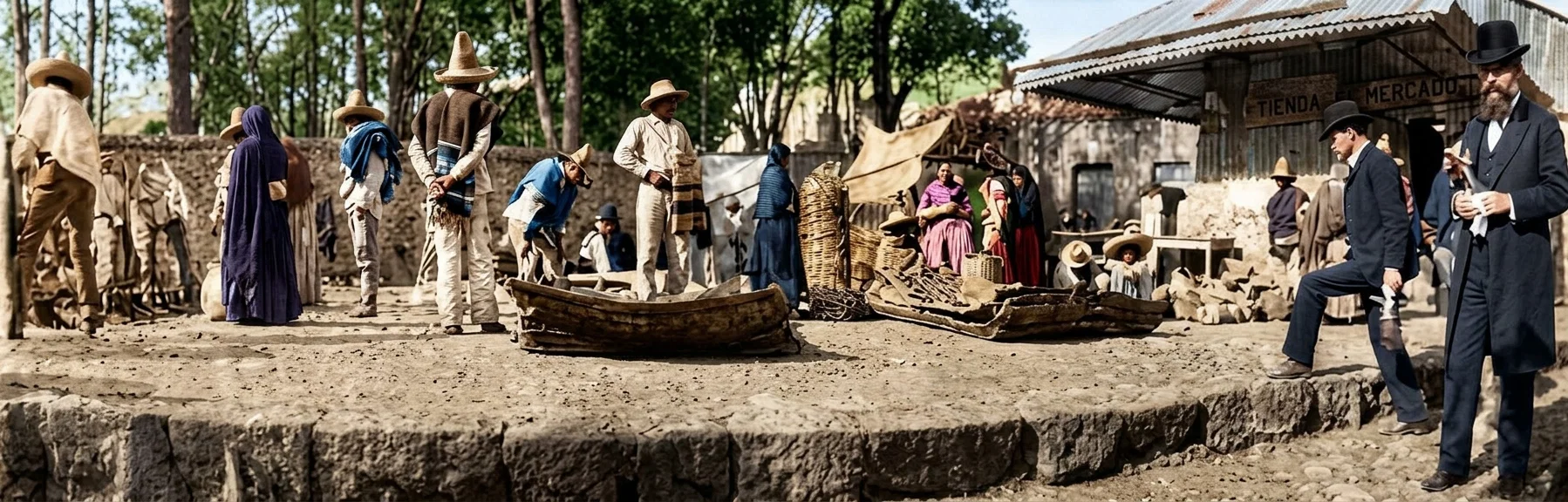
Market Scene in Mexico.
From Acapulco the galleons of Spain returned to their native land bearing the silver and gold and precious things of the New World. Here was once the gateway of China and the far-off Indies of the East; the place where the old world reached across the new to clasp the still older world beyond. From here in 1591 Felipe Jesus sailed for Japan to meet a martyr death in missionary work. In 1773 the Viceroy Bucareli came down from the capital to build the fortress of San Diego on the threshold of the western seas. Here the wars of independence and after, raged fiercely, and here the heroic Vicente Guerrero was betrayed into taking the voyage that cost him his life.
To the traveler there will come the never-to-be-forgotten picture as one descends from the interior to the coast,—the laborious climb up to the last ascent and then the sudden flash of the blue waters of the bay far below with the waves breaking in white foam for miles around the long curves of gray sand edged with green, and beyond all, the placid majesty of the limitless Pacific Ocean. A little further and the road passes through the palm gardens and fields of green pará grass and the music of the surf sounds louder and nearer. Soon the town comes into view: —the gaily colored red tiled houses, the portales and high sidewalks; the brightly dressed people—and one is in Acapulco. But above all, to the Christian, this little seaport is interesting as the cradle of organized Protestantism in the State of Guerrero.
Here in 1874 Procopio Camilo Diaz, a native of Tixtla and an old school liberal who had risen to the rank of colonel in the wars of reform, was engaged in his trade of printer. José Matilde Rodriguez gave him a tract and then spoke to him about the Bible. Catarino Franco described to him the Protestant services he had attended in San Francisco, California, and the Word took root, and Procopio Diaz became the first Gospel preacher not only of the port of Acapulco but of the whole State of Guerrero. Towards the closing months of 1874 it was resolved to send a committee of four up to Mexico City to investigate the methods of church government. Of this committee only one, Simon Diaz, was able to make the arduous trip of nine days on horseback to the capital of the republic. He lodged with Arcadio Morales, and on his invitation Rev. M. H. Hutchinson, our first missionary to Mexico, visited the new congregation. Previously the services had been in a private house, but upon Mr. Hutchinson's arrival, the abandoned Romanist chapel of San José, situated on the rocky bluff close to the waters of the bay and only a short distance from the fortress of San Diego, was rented. January 23, 1875, the first service was held and the Lord's Supper celebrated.
On January 24th the enthusiastic worshipers again assembled to worship, and on January 25th the end came. The priest Don Justo D. Nava had viewed with alarm the spread of Protestant influence in his parish, and had preached against the new believers. His words bore terrible fruit. At 8.15 P.M. while the sixty worshipers were singing the hymn, “A nuestro Padre Dios, Demos en alta voz” a mob of about 300 ruffians, drunken Indians from the neighboring mountain villages, together with those desperadoes always found in port towns, broke in and began a murderous assault with machetes, rifles, and pistols. The believers gathered round their leader, Don Procopio, and on the pulpit a desperate struggle took place. About thirteen Protestants were killed and more than twenty seriously injured, among them Señor Diaz himself, who with one hand crippled from a machete cut was only saved from death because his wife interposed a chair between the murderous blade and her husband's head. It was not long before the uproar brought the soldiers down from the fortress to quell the riot, but in the meantime the attacking party had fled. The dead were carried to the municipal building, and the wounded were helped to their homes. Mr. Hutchinson was not present that night, as illness confined him to his room. On the tumult arising, however, John Sutter, the American consul (the same John Sutter who discovered the gold in California) put him on an American ship and sent him to San Francisco.
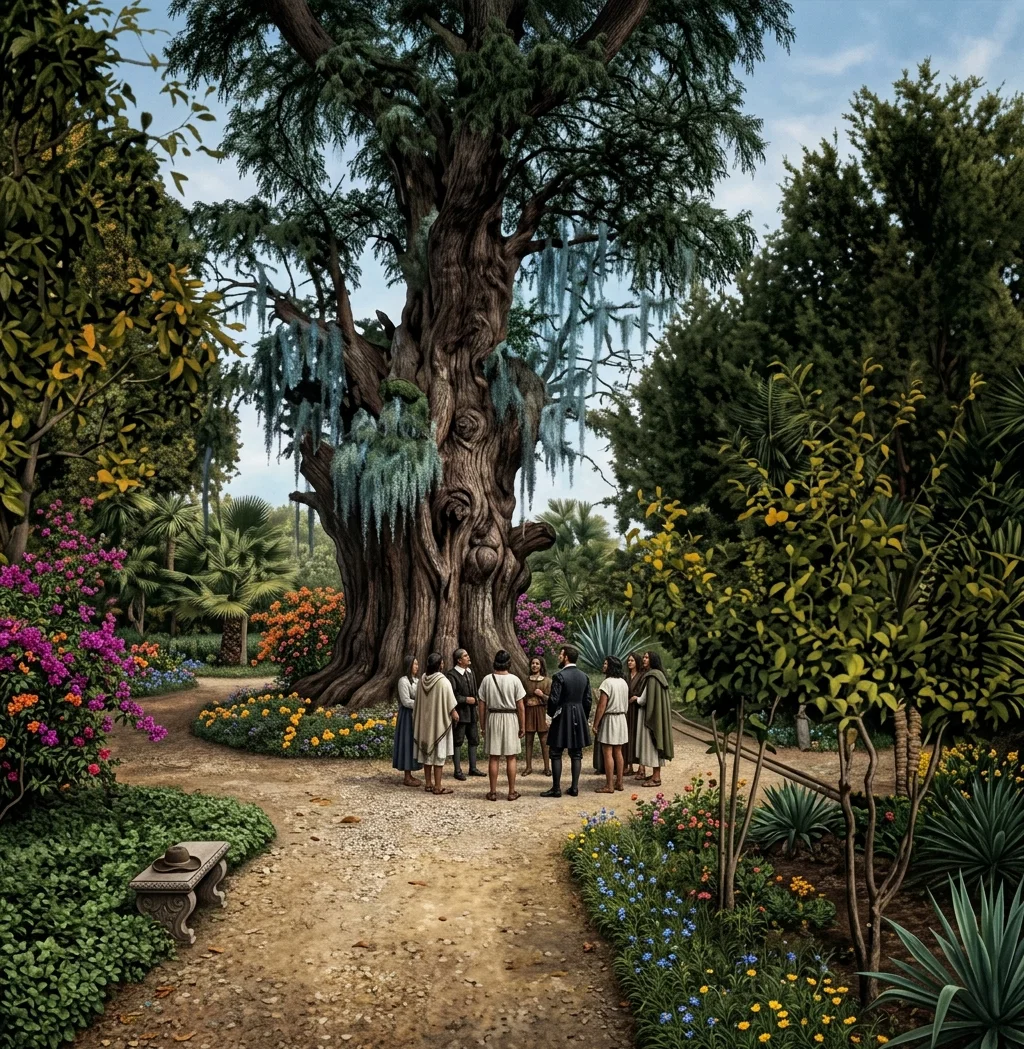
Tree of the Sad Night Where Cortez and Party Were Captured.
Thus God stirred up the nest of Protestantism. Governor Dr. Diego Alvarez came in person to investigate the affair. On the “Quebrada,” the cut above the town made to let in the cooling breeze of the ocean, the people of Acapulco gave him a banquet, and the fanatics presented a petition asking to have the Protestants exiled or punished. The governor offered the wounded a room in the castle while they were convalescing. This was refused, for it was justice and not favors that they asked. But if the authorities were slow to act, evidence was not lacking to show that God Himself took vengeance on the murderers. Of these Juan Fajardo was found dead one morning soon after, his body thrown out near the old cemetery and the dogs and vultures feasting on it. Victor Maya became blind soon after, and within a short time Petronilo Mendoza died vomiting blood. The priest himself, robust and vigorous at the time, died, and those who know say that he died soon after in the far-off hot country of the lower Balsas, wasted to a mere skeleton.
For a few weeks services were continued in Acapulco in the house of Juan Tunes until this, too, was wrecked by the fanatical populace. Then it was decided best to separate. On March 18, 1875, Don Procopio came to Chilpancingo and founded the Protestant work there. From here he and his brother Adrian, together with Matilde Rodriguez, Simon Diaz, worked out to Tixtla and the neighboring towns and villages. Others went up the coast north of Acapulco and even penetrated through the Sierra to the lower Balsas country, and everywhere founded groups of believers and preached the Gospel. It was a hard struggle for ten years. In Chilpancingo there were two uprisings against the Protestants, but for some reason they both failed. Several attempts were made to break up the services, as the door of Julian Alarcon's house, riddled with Winchester balls, silently testifies to this day. At one time the church members were imprisoned on a charge of burning the crosses of the Romanists. At last the leaders were virtually banished and told never to return. But in 1885 the church had rest; for General Arce became governor and at once enforced the laws granting equal religious liberty to all. “Hitherto hath the Lord helped us.” Out of that persecution came the greatest blessing that Guerrero has ever known, for the Gospel was not confined to one place, but spread east and north and south. In the new century we cry for more fervor, more Pentecostal power and Pentecostal results, and more of the Spirit's influence on the hearts and lives of our converts.