As the year closes, another year of fiestas has been ushered into eternity, for the people of Porto Rico.
To the student of history and of the Word of God the advancement that the church of Rome is making is full of interest. Often we lose sight of facts, when living in a country where Protestantism is in the majority; but brought constantly in contact with Catholicism, its ignorance and superstition, we are bound to think of the terrible chain with which this church binds her peoples.
The past year has been full of interest to me as I have been brought in close contact with all classes of this island. While we do not doubt the sincerity and loyalty of its people to what they believe to be a pure religion, our hearts have ached for them as we have watched them daily, seeking an entrance to the kingdom of God, through a continual round of dead ceremony. If they only knew that “salvation” is not earned; that it is a “gift,” how many would be willing to give up their rosaries, their pilgrimages, their fast days, the affliction of their bodies, and the constant payment of money for the priests’ work! Many are waiting just for this knowledge.
I have been deeply interested in their many fiestas, and have watched with interest their results, both spiritually and physically upon the people. Beginning with the first of January these holidays assume an important place in the home and hearts of the religious classes, and are a constant reminder of the obligation that rests upon them as members of the Catholic Church.
We have only selected the most important fiestas for this article, those that are celebrated in all parts of the island. Besides these each town or village has its own particular patron saint, in whose honor several days are given to celebration. The following fiestas will give one some idea of these things.
On the first day of January is the Circumcision of Our Lord. The sixth is The Visit of the Three Kings. These take the place of the so-called Santa Claus. A pile of grass is placed in the homes, and the children understand that if they have been good during the year presents will be left for them; but if bad, the mules will eat the grass, and the kings will leave no presents. February 2, The Purification of Our Lady is celebrated, and on the 22d, The Quinquagesima, or The Commemoration of the Passion of Our Lord. April 5 is the Fiesta of Ramos, or Palm Sunday, and occupies all the week, including, 9th, Holy Thursday; 10th, Holy Friday; and 11th, Holy Saturday. The 12th, Sunday, is The Pascua. May 21 is the Fiesta of The Ascension; May 31, Pentecost; June 7, Holy Trinity; June 11, Corpus Christi; July 25, Santiago or James, Patron Saint of Spain; August 15, The Asuncion of Our Lady; August 30, Santa Rosa, Patron Saint of the Indians; September 8, Nativity of Our Lady; October 2, Rosario and the Holy Angels; November 2, The Day of the Dead, or All Souls’ Day; December 8, The Pure Conception; December 24, Buenos Noches, or Good Night; December 25, The Nativity of Christ.
This makes just twenty-two of these days. At these times the people put forth the greatest efforts for pleasure. Feasting and dancing continue during the evening and night of the 24th of December and into the early hours of the following morning. It has been the custom until this year for the Catholic Church to hold a service at twelve o’clock at night. Then the people returned to their homes to eat their Buenos Noches supper, to which friends are invited. At this time I understand they make a practise of having young pigs roasted whole, baked plantain and lettuce, instead of the conventional roast turkey of the United States.
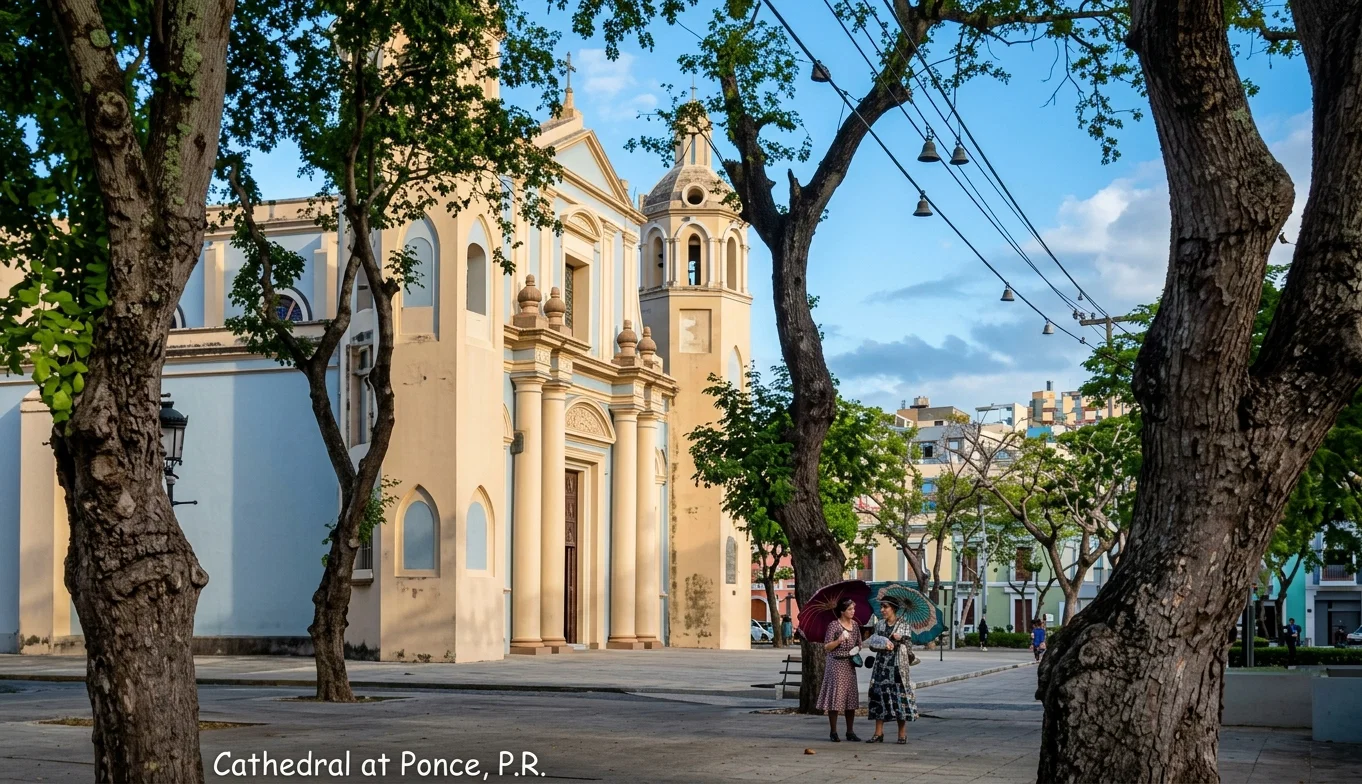
This year the American priest reversed the mass, and it was held at four o’clock on the morning of the 25th. At this mass the cathedrals are crowded, scarcely standing room being available. We were awakened early in the morning by the laughter of the dancers going from the dance to attend mass, many of them honest and sincere, only waiting an opportunity to hear the blessed truths of the Gospel.
What solemn responsibility God has placed upon us as “light-bearers” to a world of darkness. How can we close our eyes to the fact that “God requires me to bear the light of salvation to some soul in heathenism,” either in the home land or afar? There are heathen all around us, souls that are sighing and longing for a life free from sin, and yet who know not how to obtain it.
May God help us to arouse to the responsibilities resting upon us, and the opportunities that are thrust upon us. IDA M. FISCHER.