The Awful Destruction of the Angry Elements a Fulfilment of Prophecy.
BY O. O. BERNSTEIN.
On the evening of August 20, the northern Mississippi Valley experienced the worst storm in its history. Death and destruction followed in its path for hundreds of miles from Dakota to Wisconsin. St. Paul became the center of the wind-wrecked territory.
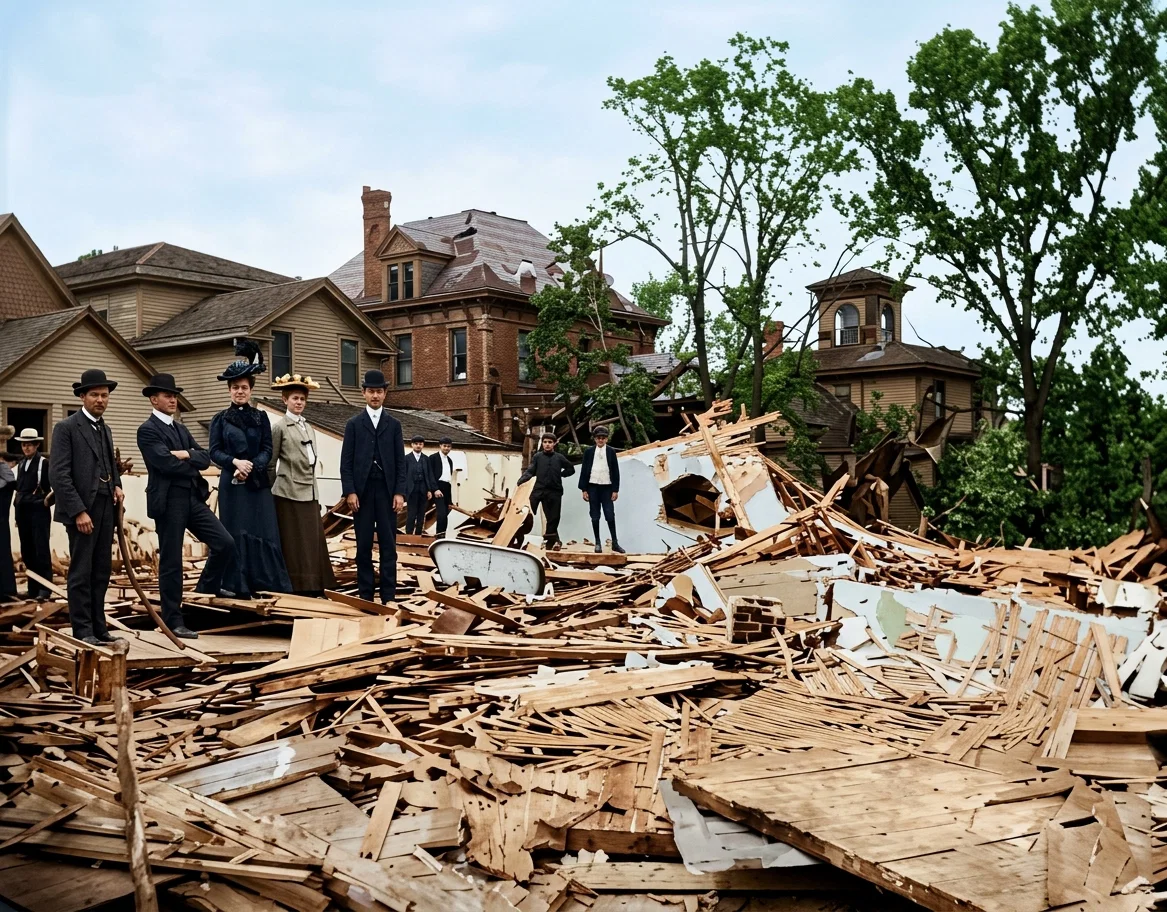
A Demolished Home at the Foot of De Soto Street.
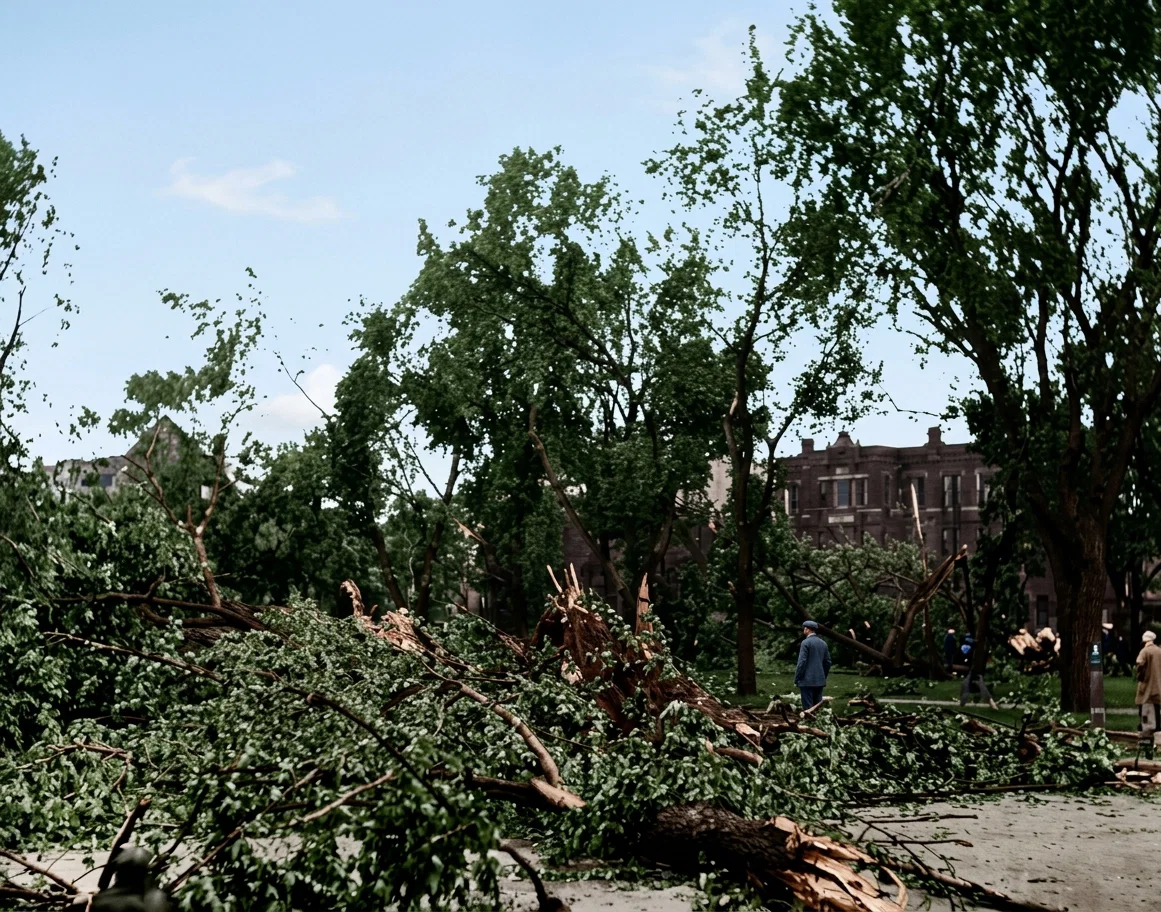
Lafayette Park After the Cyclone.
It was at 8:56 that the death-dealing blast reached the center of the saintly city. The sharp play of lightning, accompanied by a brisk shower, preceded the tremendous gale, and caused the frightened people to leave the streets. Six minutes later came the whirlwind with the velocity of 180 miles an hour, when the recording apparatus at the weather bureau broke. This speed is the highest ever recorded, being three times faster than the swiftest limited trains, and about sixty miles faster than any previous velocity recorded by the United States Weather Bureau. The anemometer recording the speed was owned by the St. Paul Weather Bureau, and its record must therefore be taken as authentic.
One can scarcely grasp this rate of speed—one hundred eighty miles per hour. Well did the seer prophecy, “Stormy winds fulfilling His word.”
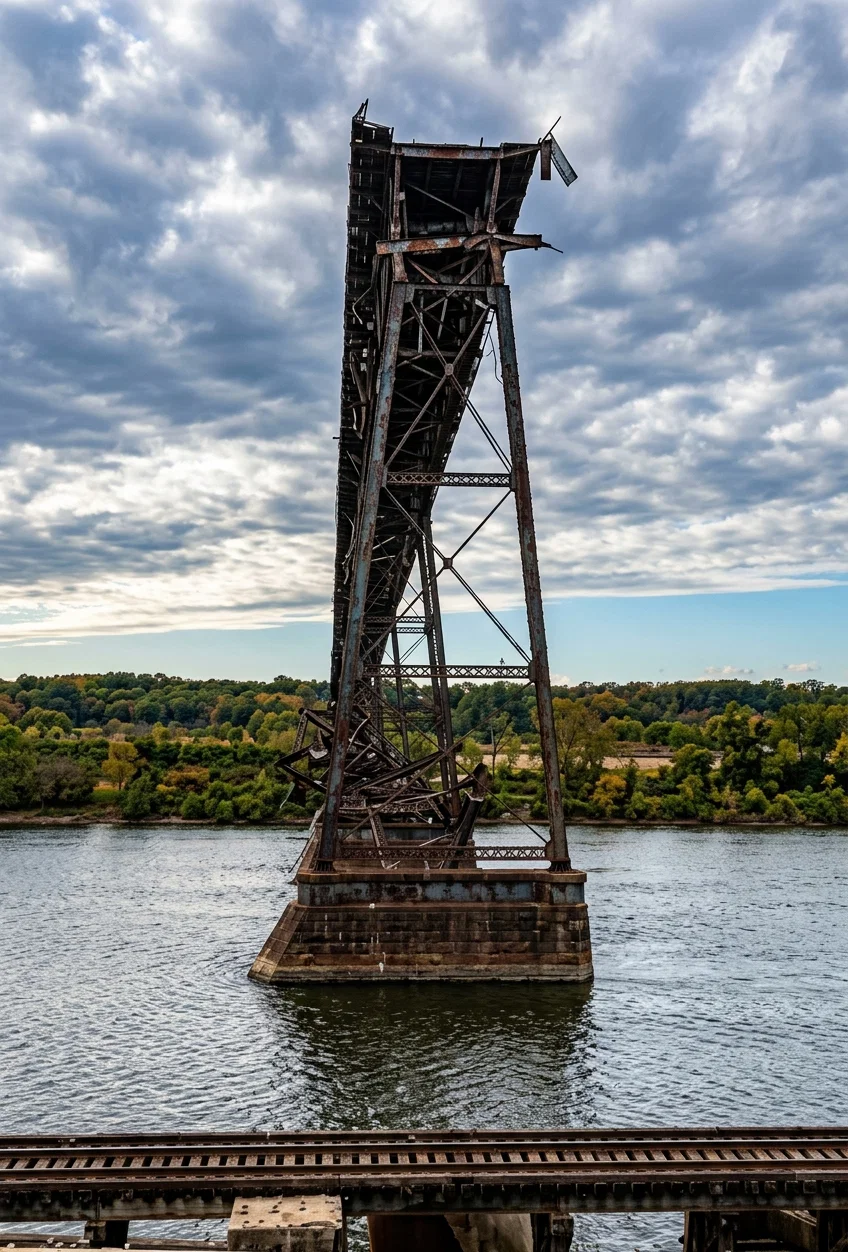
The brisk shower preceding the storm seemed a providential forerunner, and sounded the alarm. Had not the people heeded and cleared the streets, hundreds would have been killed, for, a moment later, the cyclonic gale came tearing along the valley of the Mississippi with a screaming noise above the roar of the thunder, meeting its first obstruction in the aerial heights of the high bridge which spans the river. Nearly 400 feet of this massive iron and steel superstructure was picked up, twisted into a shapeless mass, and then hurled into the abyss below. The storm threw itself against the tall bluff on the west side and was hurled back undaunted. It skipped across Harriet Island, cutting off the tree tops, as if with a reaper’s scythe. It carried away the minor buildings along the bank, picking up one here and there. At the city end of the Wabasha Street Bridge stood the Tivola Theater, an old structure, but aglow with light and resounding with popular music and the laughter of several hundred people. The awful roar of the coming storm brought a moment of breathless silence. The poor, powdered, painted creatures of the stage stopped their jokes and shrieked with terror, and there was a general rush made for the exits. Before the doors were reached, however, the storm was upon the place. In a moment it was laid low to the bluff upon which it stood, but while many were injured, only two were killed. The frailty of the building was the salvation of the people.
The storm’s course was now toward the heart of the city, and it passed on, doing its awful work of destruction. Everywhere, amid its deafening roar, the crashing of glass, and the din of falling timbers, people quaked with terror.
How strikingly were the Lord’s words fulfilled when He mentioned, among other signs enumerated in Luke 21:25, 26, roaring storms, and “men’s hearts failing them for fear.” Surely God’s children can not fail to read such signs. The day of the Lord cometh; it is nigh at hand.
Rain fell in torrents, as, whirling and swirling, carrying everything before it in the black vortex, the cyclone swept over the city.
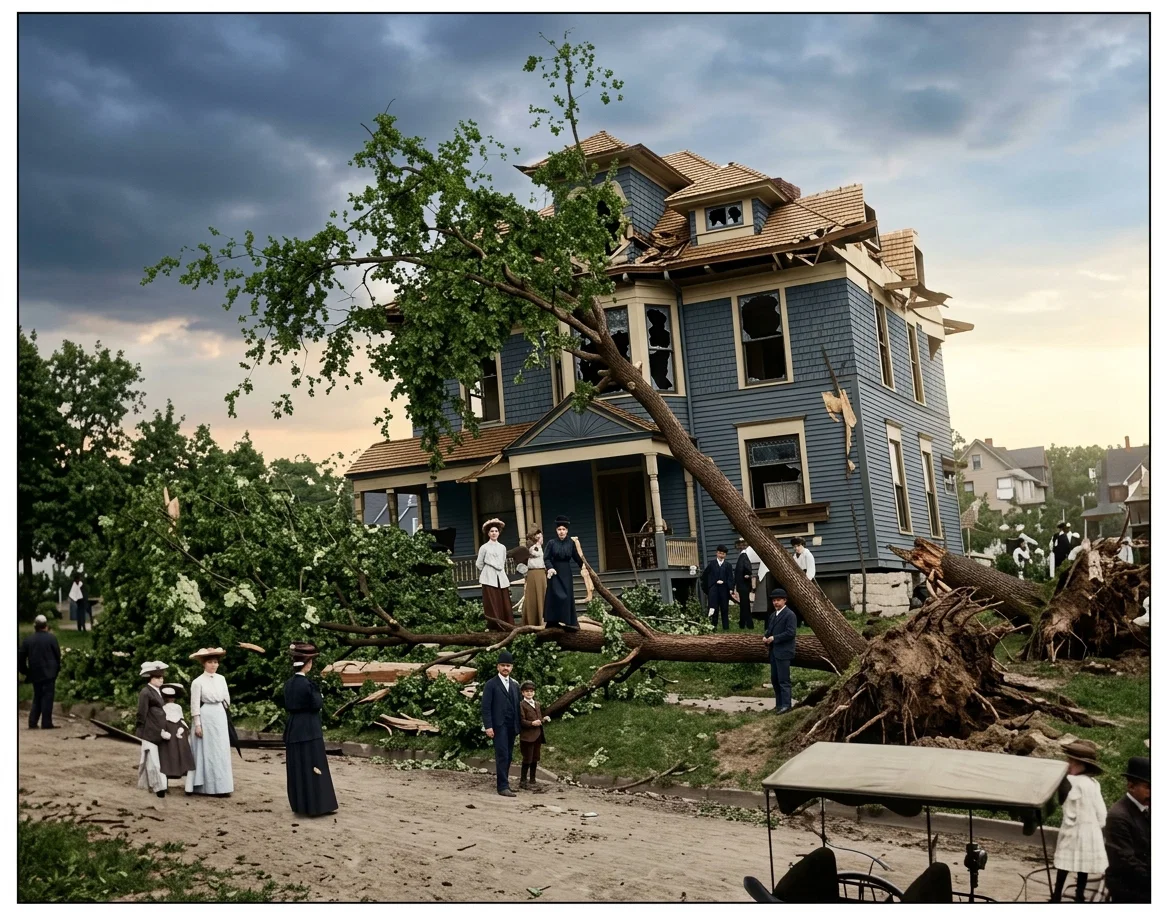
A Wrecked Residence on Monroe Place.
The storm was a blow struck in the night, and a realization of its extent and details did not come until St. Paul awoke Sunday morning to a scene of devastation unparalleled in the history of the city. Hundreds of buildings were unroofed, wrecked, or demolished; thousands of beautiful trees uprooted or broken to the ground; parks effectually destroyed and made barren; telephone and telegraph wires a tangled mass.
Looking Up at the High Bridge Wrecked by the Cyclone.
The total damage, saying nothing about the dozen dead and one hundred injured, was immense, and is particularly difficult to estimate, owing to the innumerable small houses scattered over the large storm area. A conservative estimate of the loss is one and one-half millions.
In conclusion the writer wishes to say that, since passing through this storm and experiencing its power, in the racking and unroofing of his home, he is better able to appreciate the sentiments of that beautiful hymn:—
“The Lord’s our Rock, in Him we hide,
A shelter in the time of storm;
Secure whatever may betide,
A shelter in the time of storm.
“A shade by day, defense by night,
A shelter in the time of storm;
No fears alarm, no foes affright,
A shelter in the time of storm.
“The raging floods may ’round us beat,
A shelter in the time of storm;
We find in Him a safe retreat,
A shelter in the time of storm.”